Phonics skills improvement Alphabet Worksheets for Ages 6-7
7 filtered results
-
From - To
Boost your child's reading and writing skills with our Phonics Skills Improvement Alphabet Worksheets tailored for ages 6-7. Designed to reinforce essential phonetic concepts, these engaging worksheets help children connect letters sounds and improve their vocabulary. Each activity focuses on sound recognition, blending, and decoding, allowing young learners to practice at their own pace. With colorful illustrations and fun exercises, phonics learning becomes enjoyable and effective. Perfect for home or classroom use, these worksheets provide the tools needed to foster confidence and fluency in reading. Help your child master phonics and set the foundation for a lifetime of literacy!
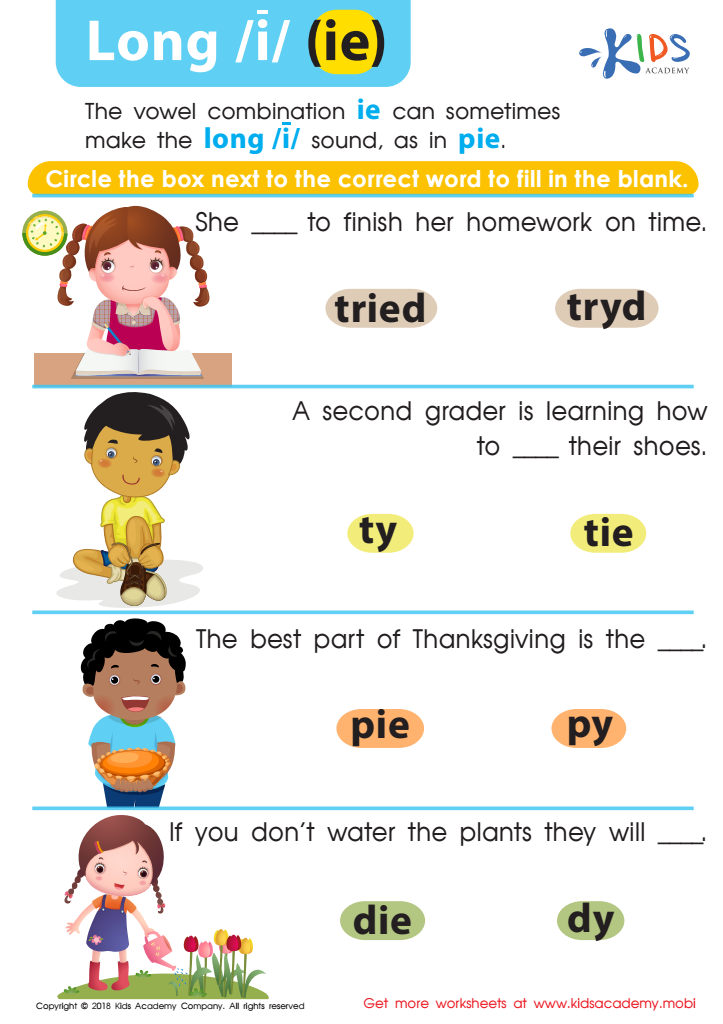
Reading: Long I and IE Worksheet
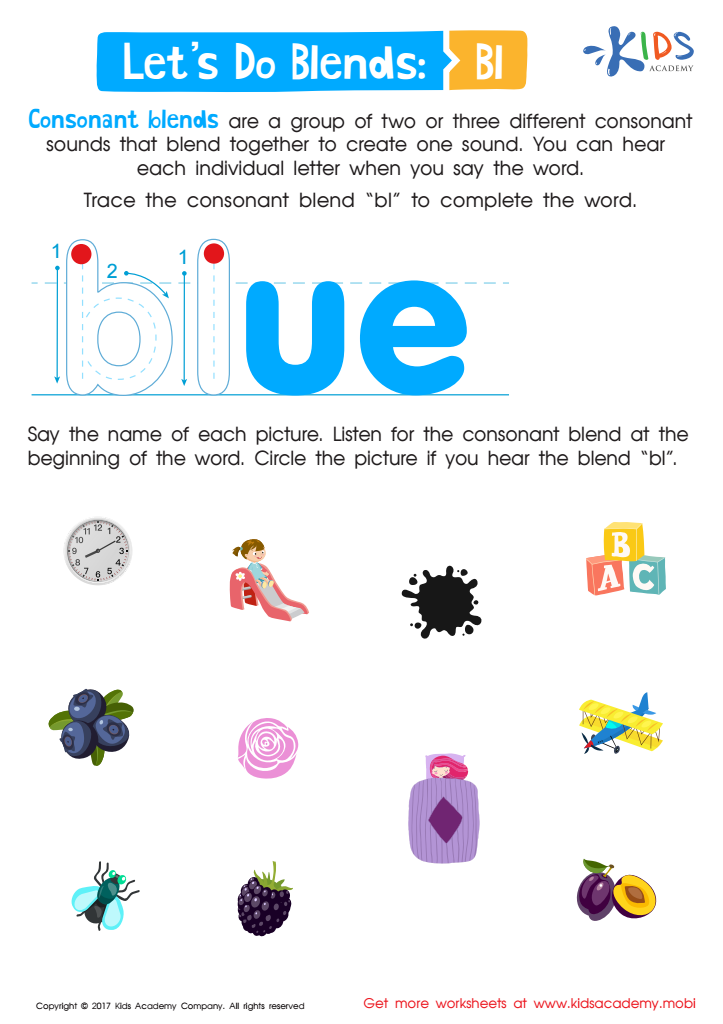
Beginning Blends: "Bl" Words Worksheet
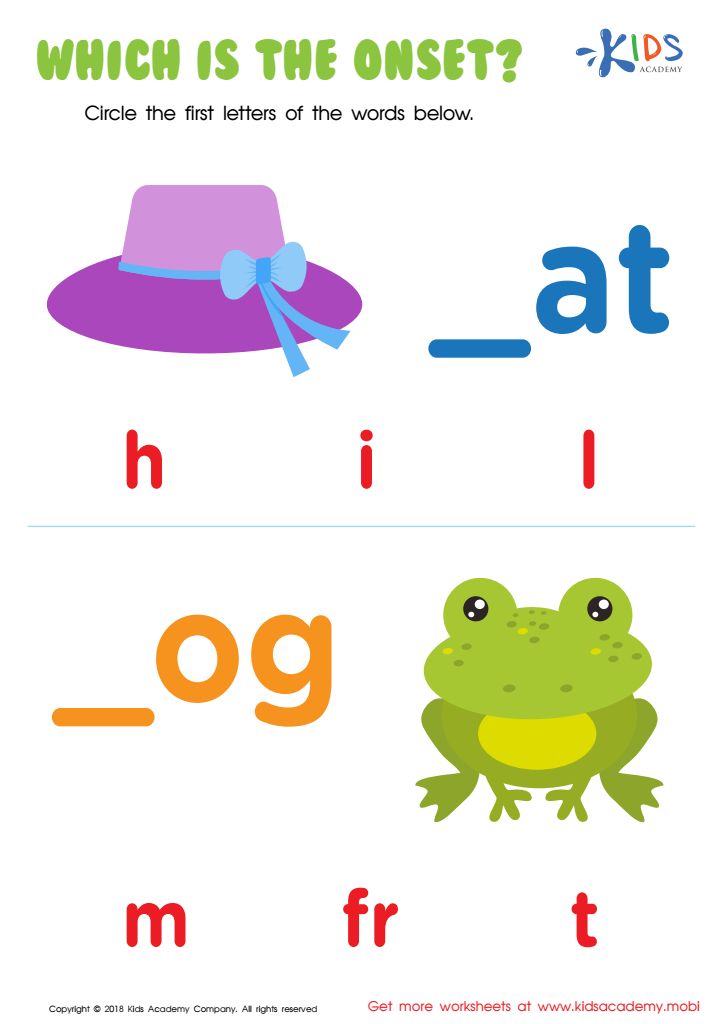
Which Is the Onset? Worksheet
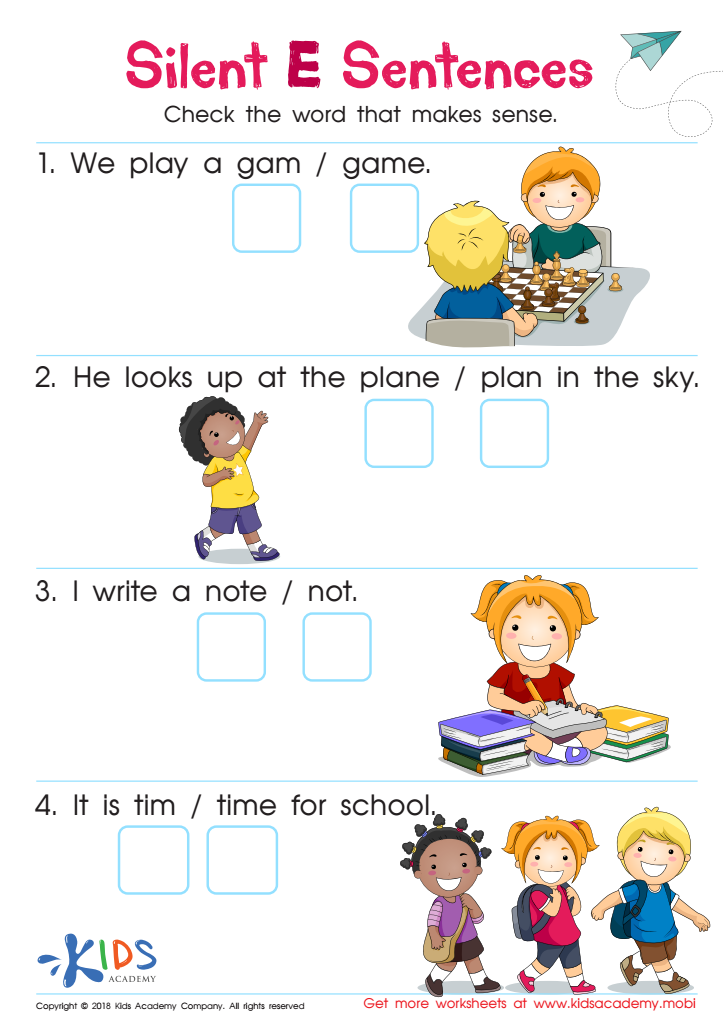
Silent E Sentences Worksheet

Long and Short U Worksheet
 Assign to My Students
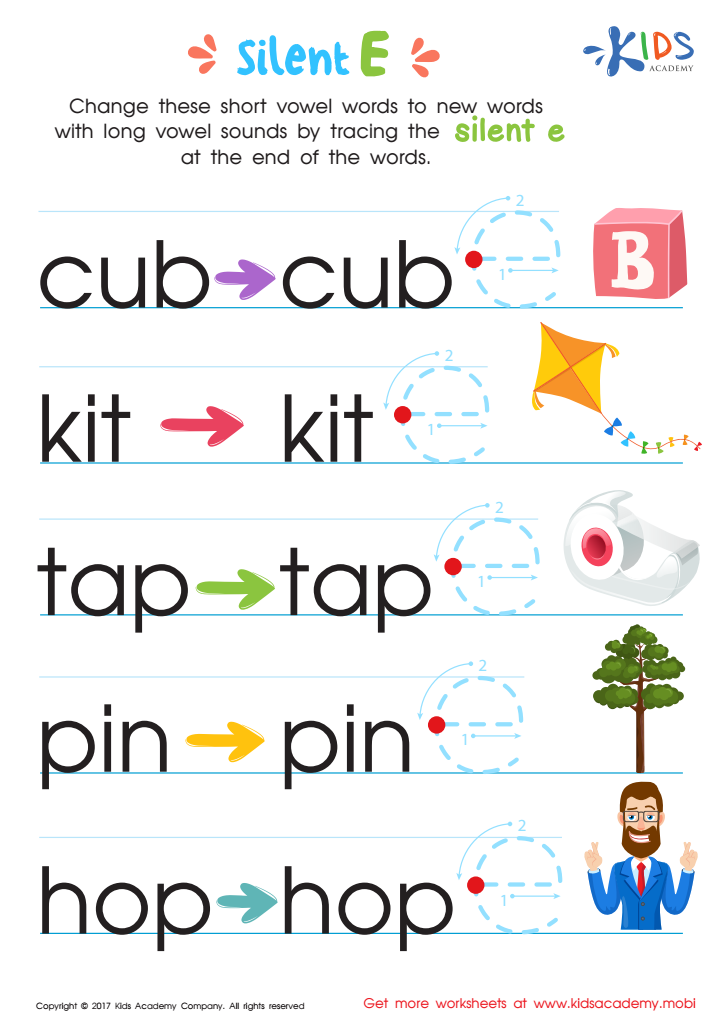
Silent E Words Worksheet
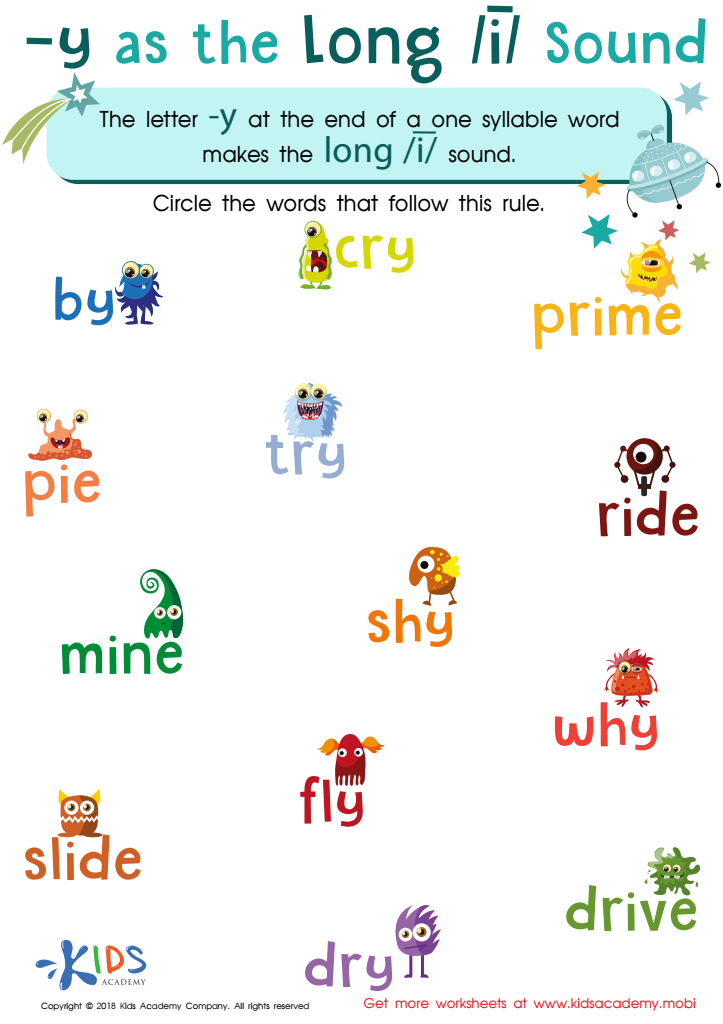
Reading: Y as Long I Worksheet








Phonics skills are foundational for reading, making them crucial for children ages 6-7. At this stage, children transition from learning to read to reading to learn, a significant milestone in their educational journey. Proficient phonics skills enable children to decode words effectively, enhancing their fluency and comprehension. By understanding the relationships between letters and sounds, children become more capable of sounding out unfamiliar words, building their confidence as readers.
Moreover, focusing on phonics improvement at this age impacts overall academic performance. Strong phonics skills foster a love for reading, which can enhance vocabulary, critical thinking, and communication abilities. This lays the groundwork for success not just in literacy, but across all subject areas.
Parents and teachers should also recognize that early investment in phonics skills can prevent future reading difficulties. Children struggling with phonics may experience frustration and disengagement, setting them back in their education. Supporting phonics development through engaging activities and consistent practice is essential for instilling a positive attitude toward learning.
Ultimately, prioritizing phonics education at this critical age helps ensure that children become competent, confident readers, ready to tackle future academic challenges.







