Letter-sound recognition Phonics Worksheets for Ages 6-7
3 filtered results
-
From - To
Discover our engaging Letter-Sound Recognition Phonics Worksheets designed specifically for children aged 6-7! These resources are perfect for enhancing early literacy skills by helping young learners connect sounds with their corresponding letters. Our worksheets promote interactive learning through fun exercises and visually appealing designs. Children will enjoy practicing sound identification, blending, and letter recognition, setting a strong foundation for reading success. Ideal for use at home or in the classroom, these worksheets are geared towards fostering confidence and fluency in young readers. Empower your child's phonics journey today with our comprehensive selection of letter-sound recognition activities!
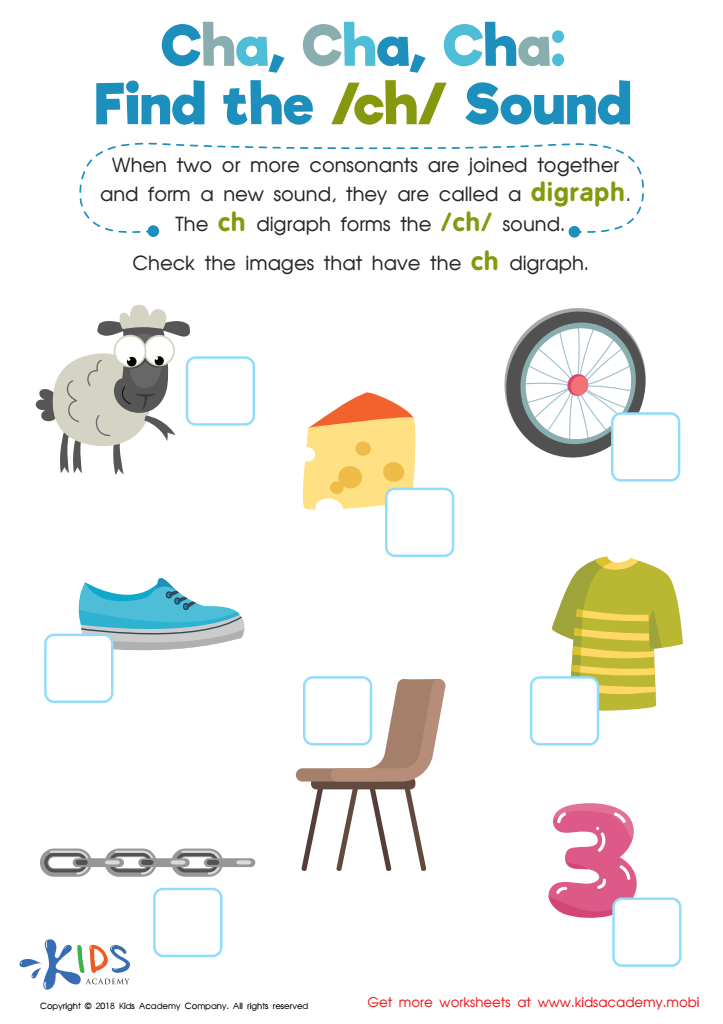
Cha, Cha, Cha: Find the /Ch/ Sound Worksheet
 Assign to My Students
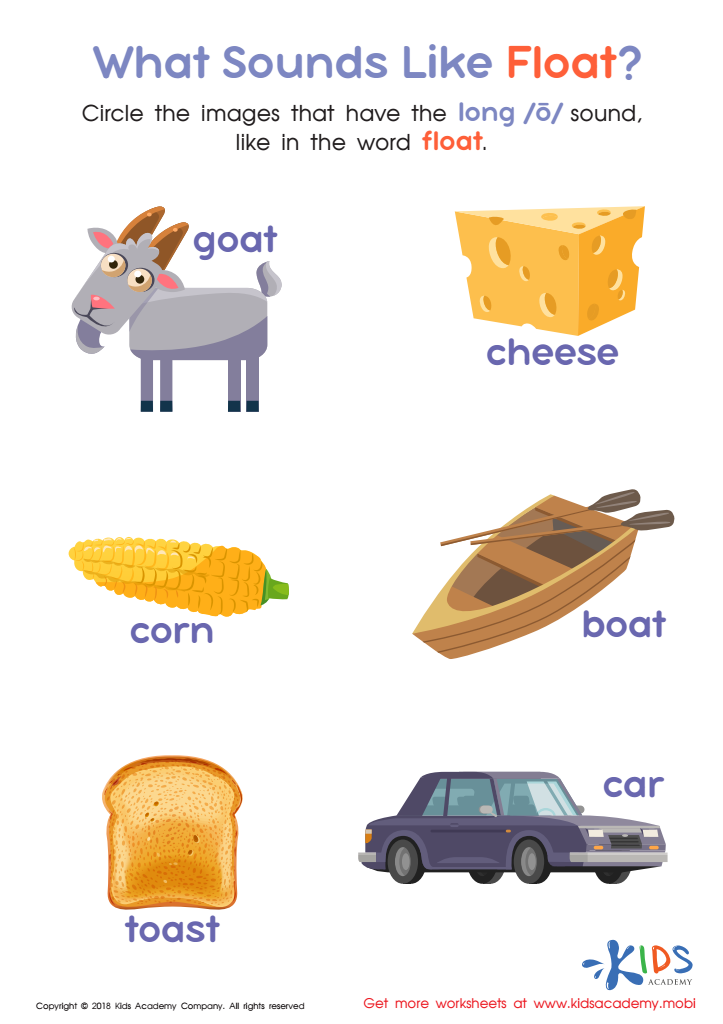
What Sounds Like Float? Worksheet
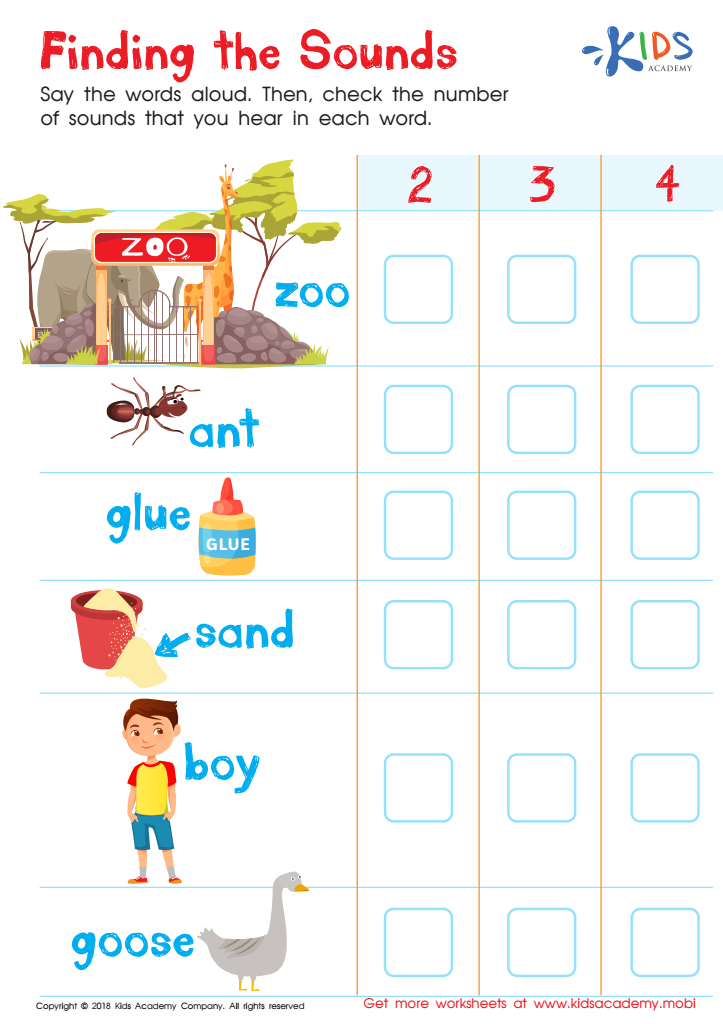
Finding the Sounds Worksheet








Letter-sound recognition, or phonics, is crucial for children aged 6-7 because it forms the foundation for literacy skills that are essential for future academic success. At this age, children are typically transitioning from learning to read to reading to learn. Mastering phonics helps them decode new words, enhancing their reading fluency and comprehension. Understanding the relationship between letters and their corresponding sounds allows children to tackle unfamiliar words, promoting confidence and independence in their reading abilities.
Moreover, phonics instruction supports spelling and writing skills, which are interconnected with reading proficiency. When children comprehend letter-sound relationships, they are better equipped to express themselves through writing, making their educational experience more holistic.
Additionally, proficient reading skills are linked to broader cognitive development, including critical thinking and problem-solving. Educators and parents play an essential role in fostering these skills, particularly through engaging activities that reinforce phonics concepts. Supporting phonics learning at this developmental stage is vital, as it sets the groundwork for a child’s ongoing educational journey, ultimately impacting their overall academic performance and enthusiasm for lifelong learning. Advocacy for phonics by parents and teachers strongly correlates with improved literacy outcomes, paving the way for successful futures.







