Upper & Lowercase Letters Worksheets for Ages 6-7 - Page 3
49 filtered results
-
From - To
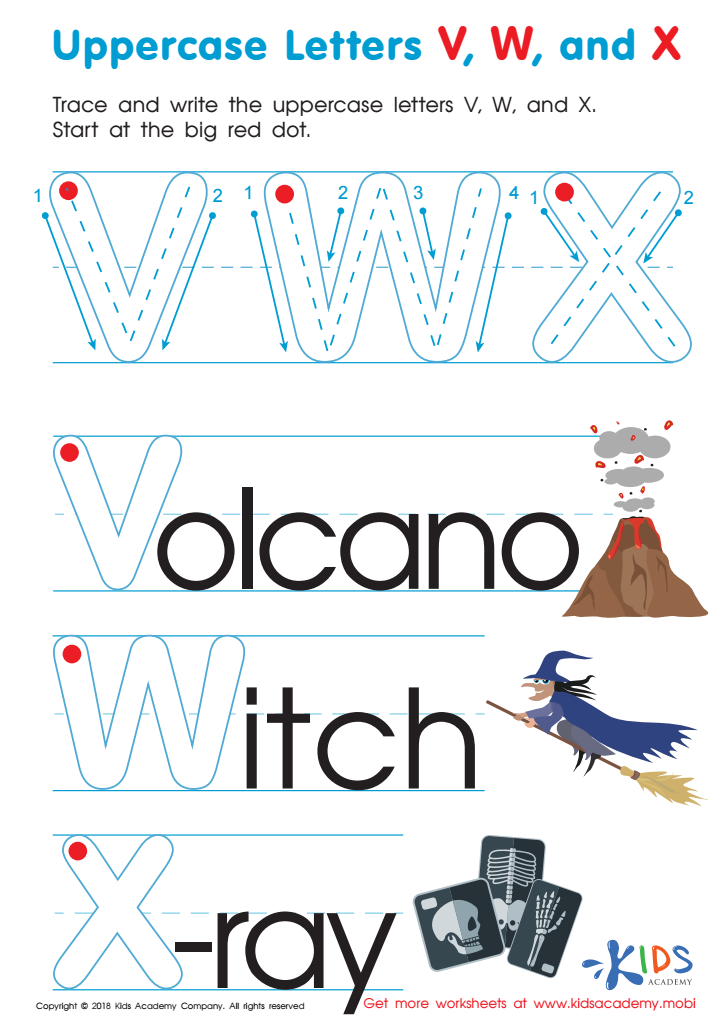
Uppercase Letters V, W, and X Worksheet
 Assign to My Students








At ages 6-7, children often experience pivotal growth in their reading and writing skills, making it essential for parents and teachers to emphasize the importance of both uppercase and lowercase letters. Mastery of these letters is a foundational component of literacy. Uppercase letters help young learners recognize the start of a sentence, proper nouns, and titles, fostering better comprehension and writing clarity. Additionally, uppercase letters are often easier for children to distinguish due to their distinct shapes, serving as a helpful starting point for early readers.
Conversely, lowercase letters dominate the majority of print in books and written communication. Understanding both cases aids in smoother reading flows and overall text recognition, which enhances a child's ability to tackle more advanced reading material with ease. Integration of uppercase and lowercase learning also improves fine motor skills through varied handwriting practice, thus promoting neatness and proper letter formation.
In short, dedicating attention to both uppercase and lowercase letters provides young children with crucial literacy tools that support reading fluency, comprehension, and expressive writing. This dual understanding allows kids to navigate the complex world of written language more confidently and successfully.







