Phonics Skills Vowel Blends Worksheets for Ages 6-7
5 filtered results
-
From - To
Enhance your child's reading journey with our Phonics Skills Vowel Blends Worksheets for ages 6-7. Our expertly crafted worksheets focus on mastering vowel blends, which are essential for fluent reading and spelling. With engaging activities, these printable resources make learning fun while boosting your child's confidence. Each worksheet aims to reinforce phonics skills, ensuring your child understands how vowels work together in words. Discover a world of engaging, educational worksheets designed to develop critical reading foundations. Set your child up for success with a solid grasp of vowel blends. Visit Kids Academy for more phonics resources!
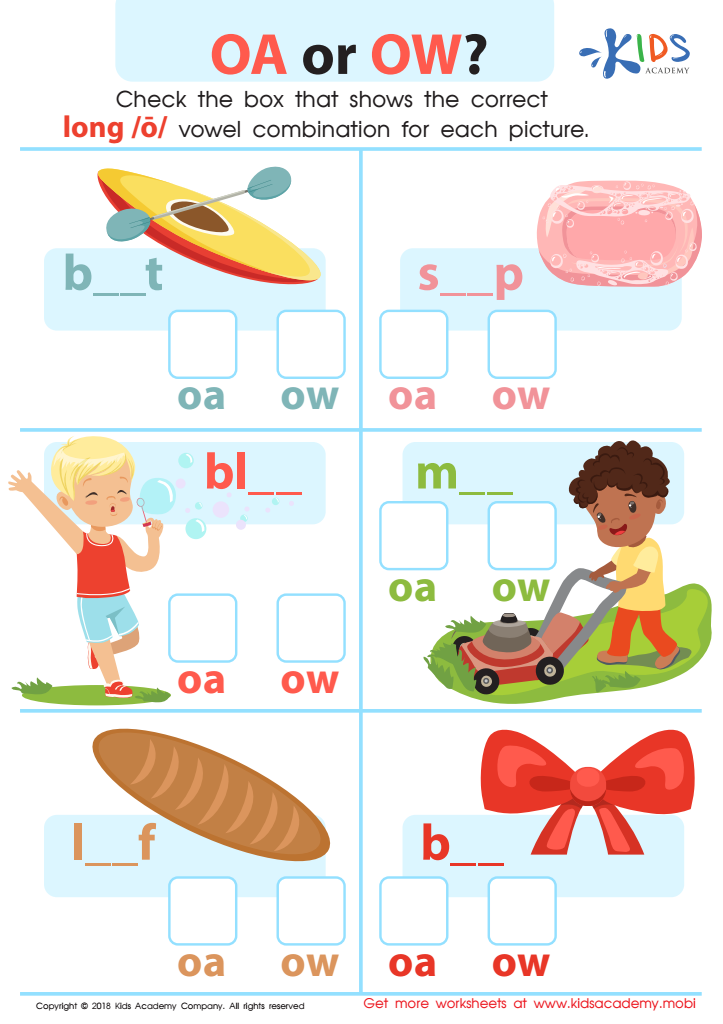
Reading: OA or OW Worksheet
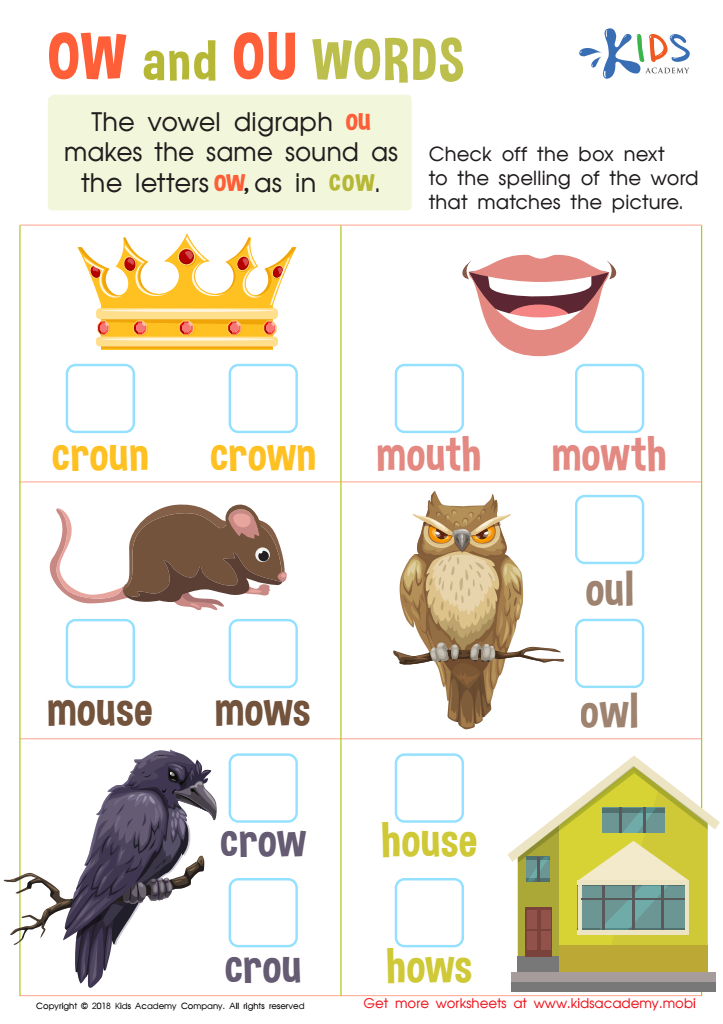
Reading: OW and OU Words Worksheet
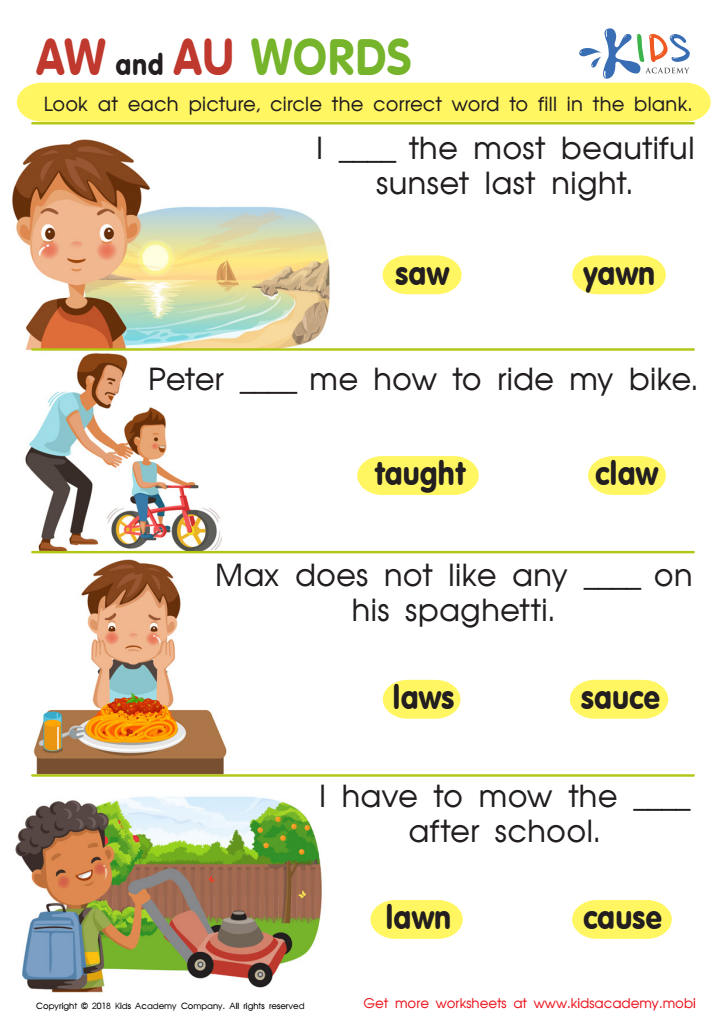
Reading: AW and AU Words Worksheet
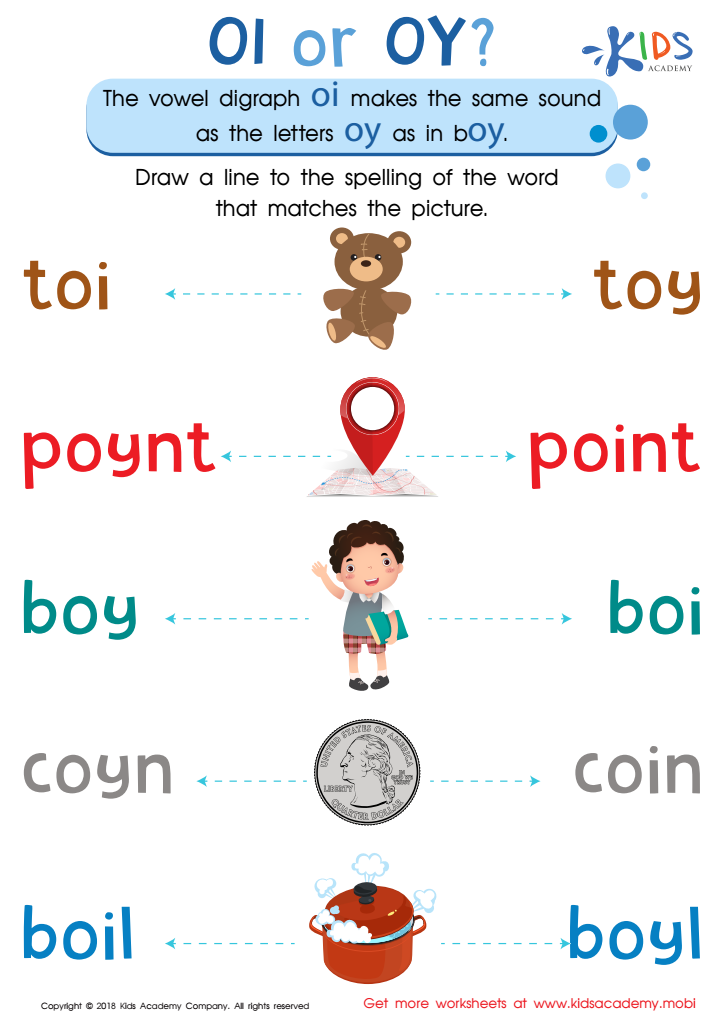
Reading: OI and OY Worksheet

Long and Short E Worksheet
 Assign to My Students





Phonics, particularly vowel blends, is fundamental for early literacy development in children aged 6-7. Vowel blends, such as "ai" in "rain" or "ea" in "bread," help young learners decode written language, streamlining their reading and spelling abilities. Mastering phonics skills ensures that children can recognize and understand the relationship between letters and sounds, which is crucial for reading fluency.
By focusing on vowel blends, parents and teachers break down the reading process into manageable pieces. This systematic approach enables children to sound out words and enhances their ability to read unfamiliar text independently. Importantly, children who grasp vowel blends early on tend to develop a love for reading, which has a cascading effect on their overall academic performance.
Moreover, strong phonics skills contribute to better vocabulary, comprehension, and pronunciation. Children who can read confidently are more likely to participate in classroom activities, improving their social interactions and self-esteem. For parents and teachers, investing time in teaching vowel blends yields long-term educational and emotional benefits for children, paving the way for academic success and a lifelong passion for learning. Therefore, phonics and vowel blends deserve focused attention in early education.








