Understanding chess rules Chess Worksheets for Ages 6-7
7 filtered results
Difficulty Level
Grade
Age
-
From - To
Subject
Activity
Standards
Discover the exciting world of chess with our "Understanding Chess Rules" worksheets designed specifically for children ages 6-7. These engaging activities introduce young learners to the basic rules and concepts of chess, including how pieces move, the purpose of the game, and essential strategies for success. Our worksheets combine fun illustrations and easy-to-follow instructions, making it simple for kids to grasp important chess fundamentals. Ideal for classroom use or at-home learning, these resources help develop critical thinking and problem-solving skills while fostering a love for this classic game. Get started today and help your child become a confident young chess player!
Favorites
With answer key
Interactive
How Rooks Capture Worksheet
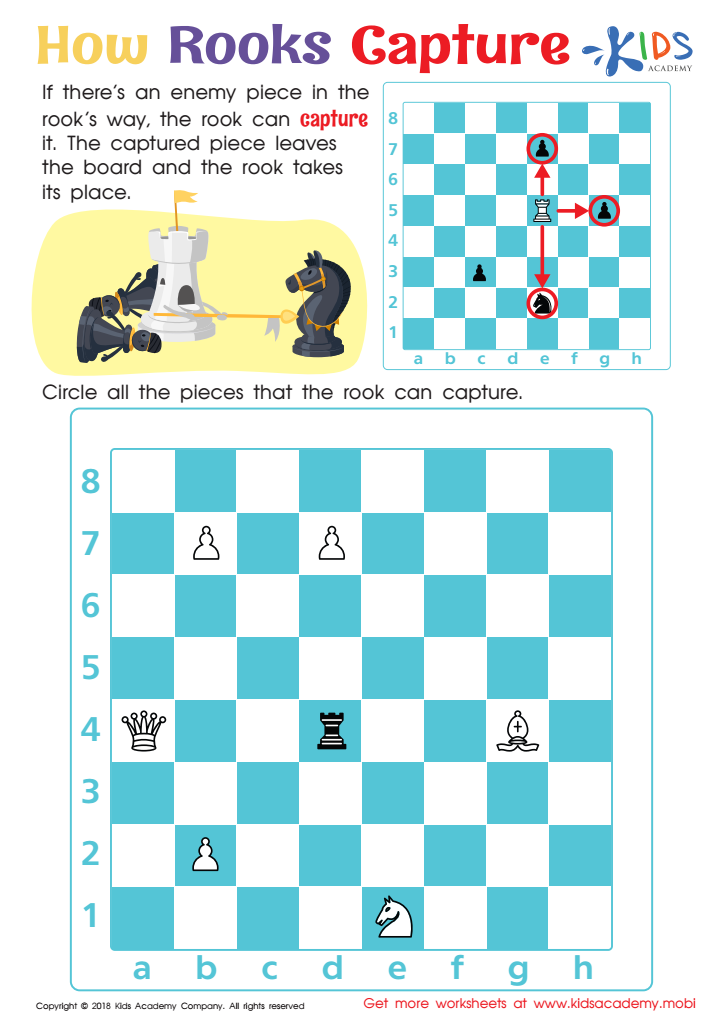
Chess is a game that requires skill, concentration and planning. Players must move their chess pieces strategically to capture pieces from their opponent. Do your kids know how to use the rook to capture pieces? Go through the worksheet with them and circle the pieces the rook can capture.
How Rooks Capture Worksheet
Worksheet
How King Moves Worksheet
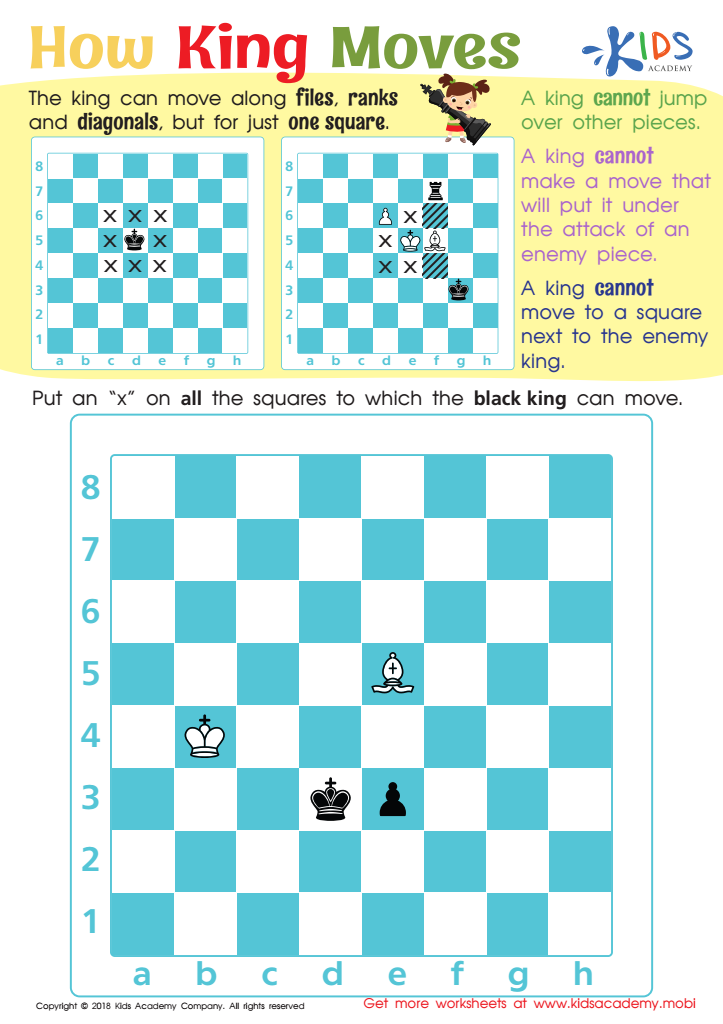
Teach your kids the fundamentals of chess with this worksheet! The goal is to checkmate the opponent's king, so it must be protected at all times. The king moves along files, ranks, and diagonals (except one square at a time), and cannot move to a square next to the enemy king. Your kids will soon master the art of checkmate!
 Assign to My Students
How King Moves Worksheet
Worksheet
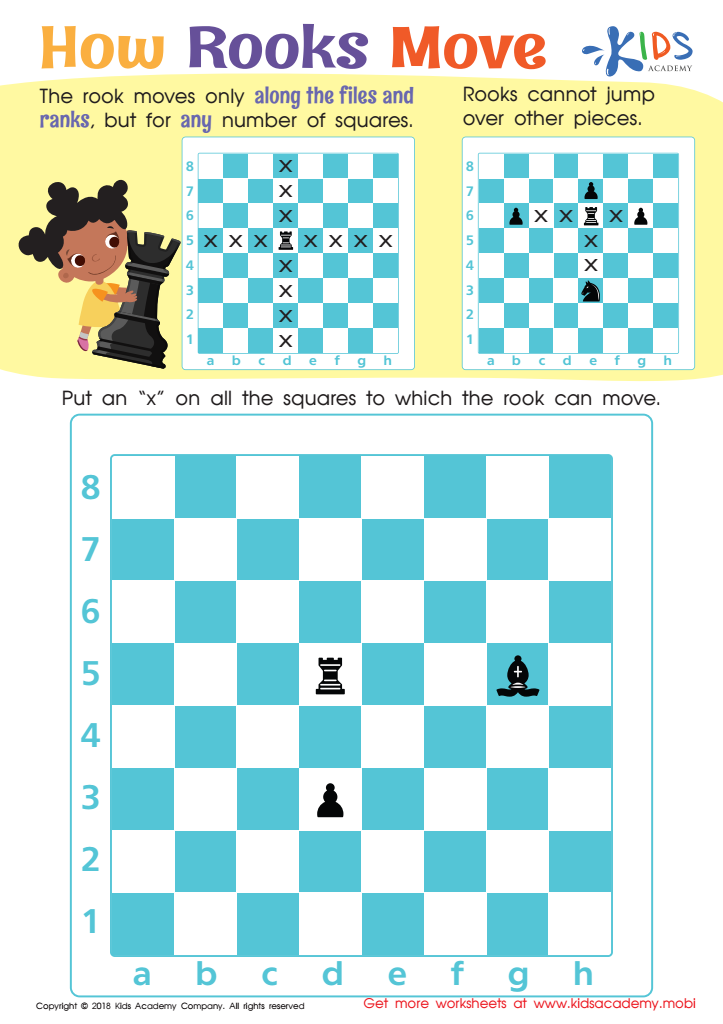
How Rooks Move Worksheet
Help your kids master chess with this worksheet! Explain how rook pieces move along ranks and files, and have them mark the squares it can move to. Note that it can't jump over other pieces. With your guidance, they'll soon understand the game they love.
How Rooks Move Worksheet
Worksheet
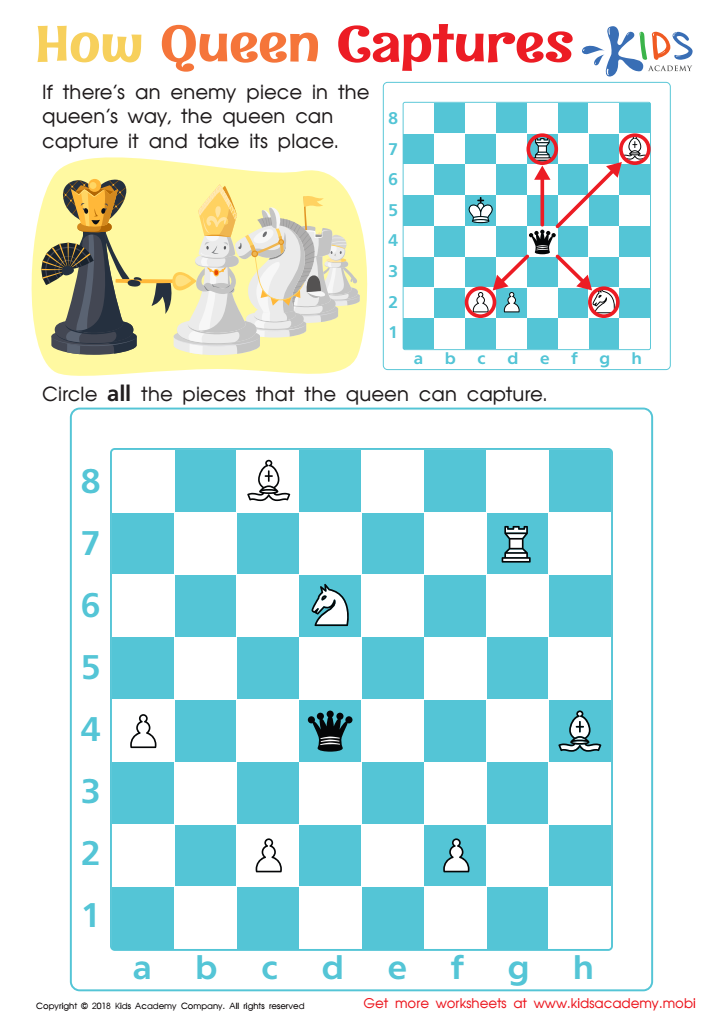
How Queen Captures Worksheet
Chess is a great game for sharpening math skills, strategic thinking, and knowledge of how each piece moves. If your child is interested, introduce them with this worksheet. It demonstrates how the queen can capture opposing pieces, such as another queen, and take their place.
How Queen Captures Worksheet
Worksheet
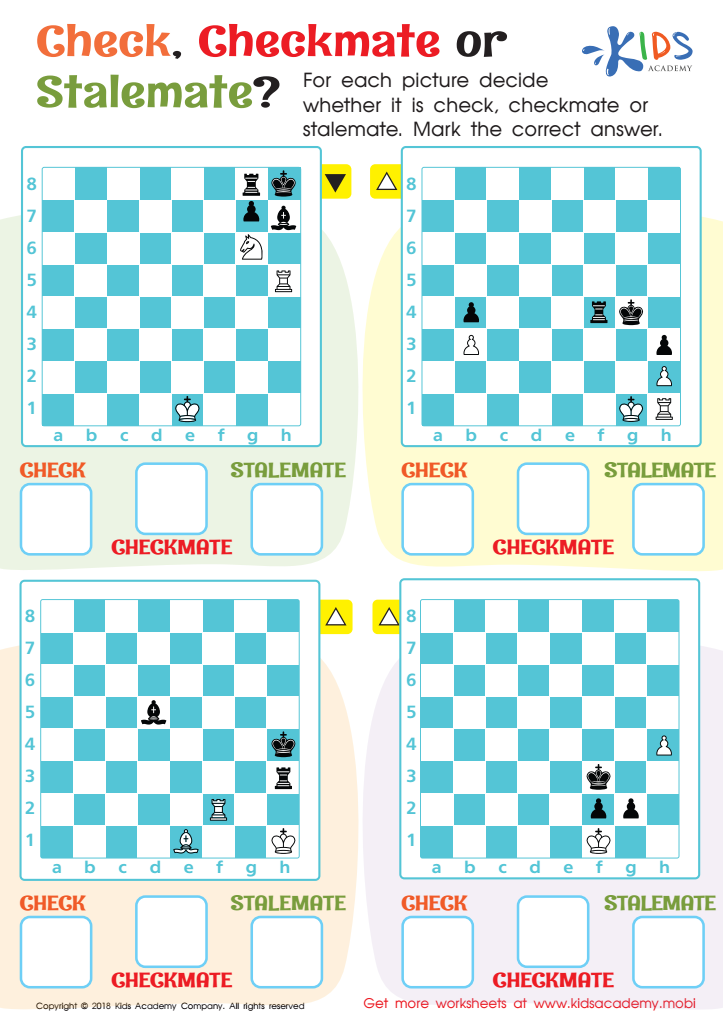
Check. Checkmate or Stalemate? Worksheet
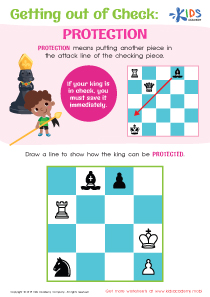
Chess teaches critical thinking, reasoning, and logic skills in a fun way. With this downloadable worksheet, kids can look at chess boards and decide if the sides are in check, checkmate, or stalemate. Win or lose, a stalemate can be a great outcome, and kids can learn and build skills with each move!
Check. Checkmate or Stalemate? Worksheet
Worksheet
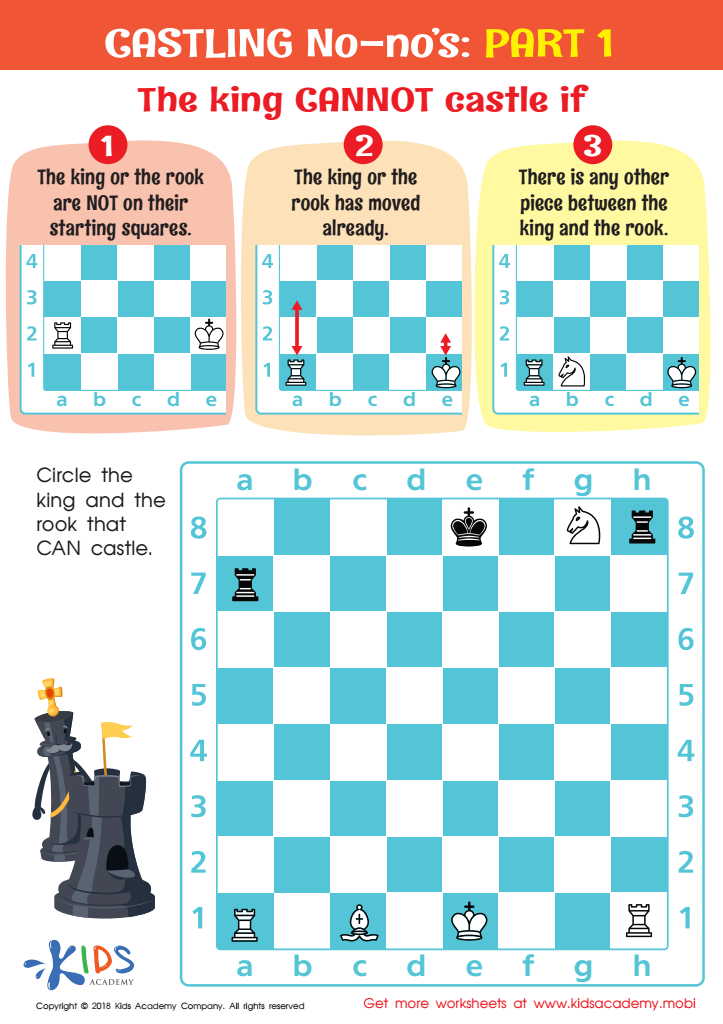
Castling No–no's: Part 1 Worksheet
Help your child learn how to play chess by using this worksheet. Ask them to circle the king and rook that can castle in the picture. Explain that a king cannot castle if the king or rook has moved, or if there is any other piece between them. Knowing these rules will make playing a lot easier!
Castling No–no's: Part 1 Worksheet
Worksheet
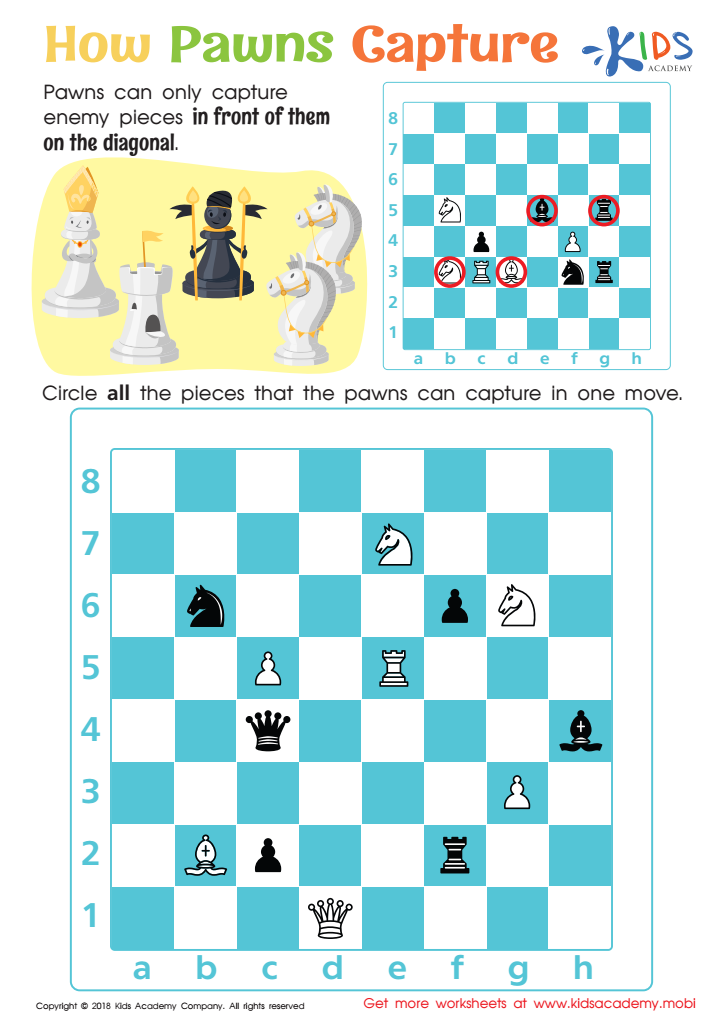
How Pawns Capture Worksheet
Ask your child to circle all the places a pawn can capture in one move on the diagonal. Pawns are limited in the moves they can make, but can still capture enemy pieces. This worksheet will help brush up on their knowledge of the rules of chess.
How Pawns Capture Worksheet
Worksheet
Join Kids Academy for Free
Who is primarily going to use this learning content?







Understanding chess rules is crucial for parents and teachers, especially for children aged 6-7, as it fosters essential cognitive, social, and emotional skills. Chess is not merely a game; it is a powerful tool for brain development. When children learn chess, they enhance their critical thinking and problem-solving abilities. They learn to analyze different scenarios, predict opponents’ moves, and develop strategic plans, skills that are applicable in various academic subjects.
Moreover, chess promotes patience and discipline. Young learners must understand that success comes with practice and perseverance. The structured nature of chess encourages children to follow rules, respect opponents, and manage wins and losses gracefully, instilling core values of sportsmanship and respect.
Engaging in chess also offers a unique opportunity for meaningful family and classroom interactions. Parents can bond with their children as they learn together, while teachers can use chess as a fun and engaging way to foster teamwork and collaboration among students. Overall, nurturing an understanding of chess rules can help develop a generation that is not only skilled in strategy but also equipped with critical life skills that benefit many aspects of their personal and academic lives.