Basic math application Worksheets for Ages 6-7
5 filtered results
-
From - To
Unlock your child's mathematical potential with our expertly designed Basic Math Application Worksheets for ages 6-7. These engaging, curriculum-aligned worksheets cover essential topics, from number recognition and counting to addition and subtraction. Packed with fun, interactive exercises and colorful visuals, our worksheets transform everyday learning into an exciting adventure. Encourage your child's critical thinking and problem-solving skills while building a strong foundation in math. Perfect for both classroom and at-home use, these resources are designed to make learning enjoyable and effective, ensuring your young mathematician confidently progresses in their early math journey.
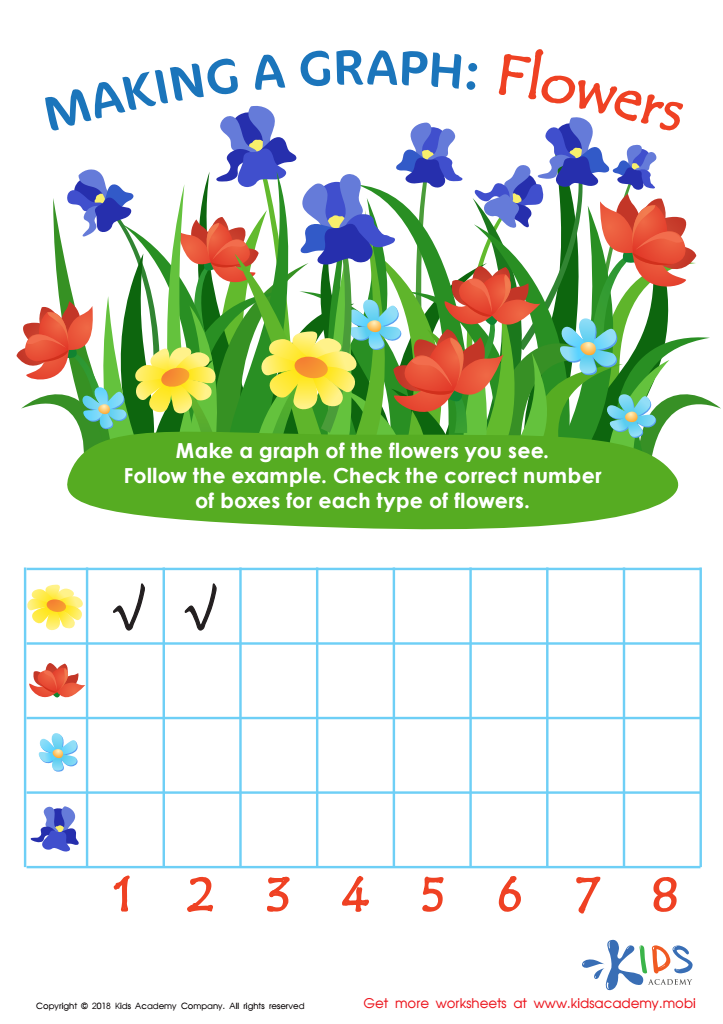
Making a Graph: Flowers Worksheet
 Assign to My Students
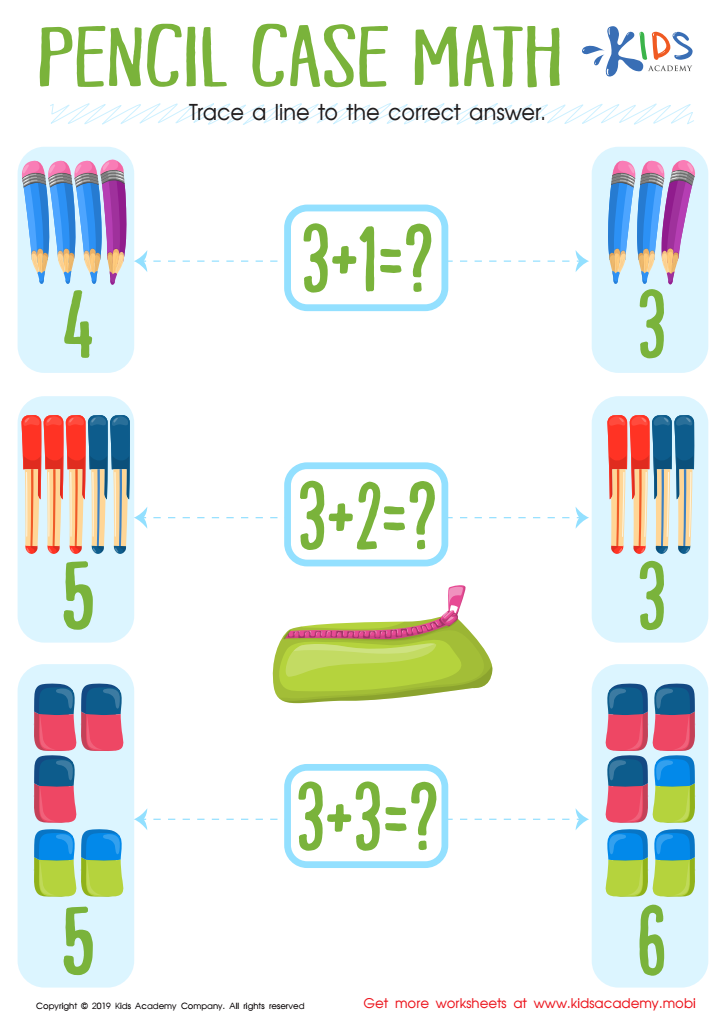
Pencil Case Math Worksheet
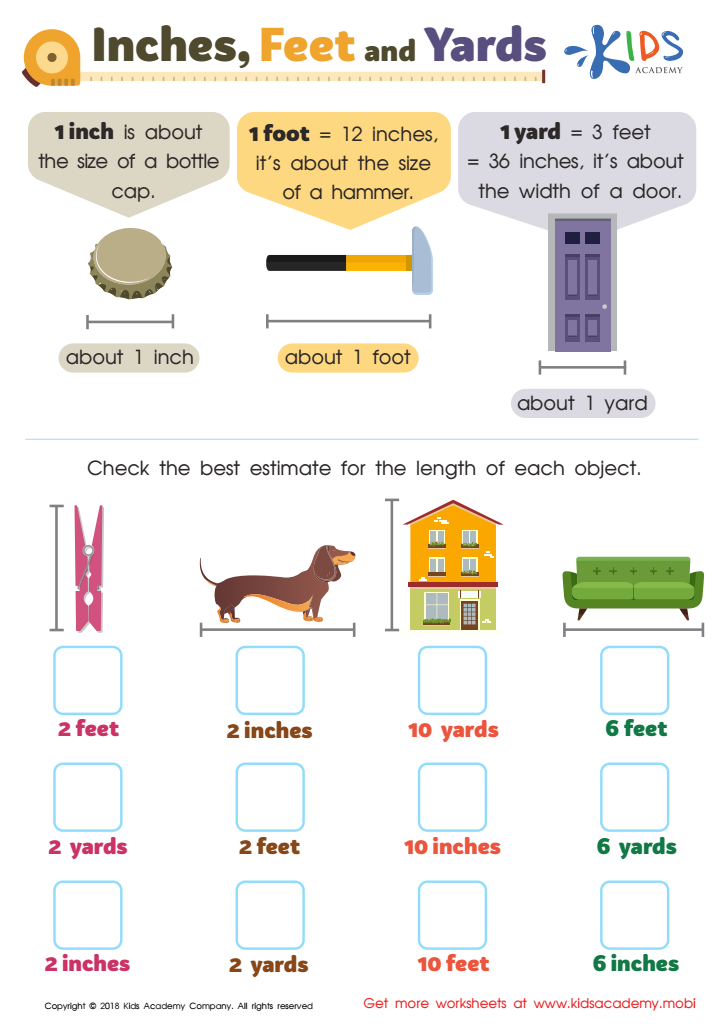
Inches, Feet and Yards Worksheet
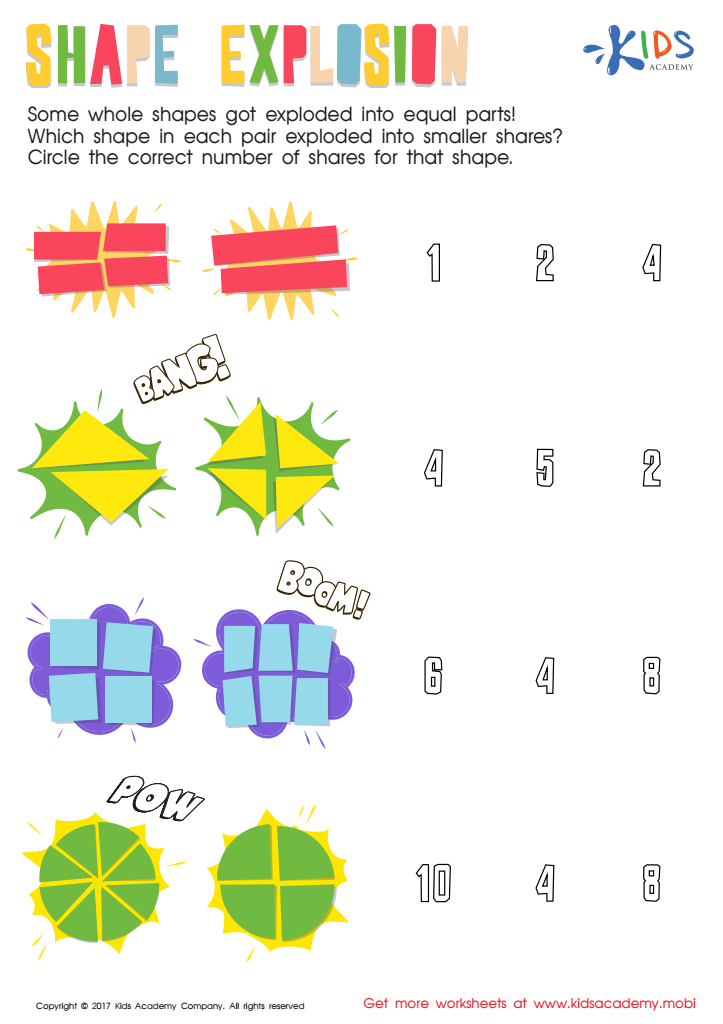
Shape Explosion Worksheet
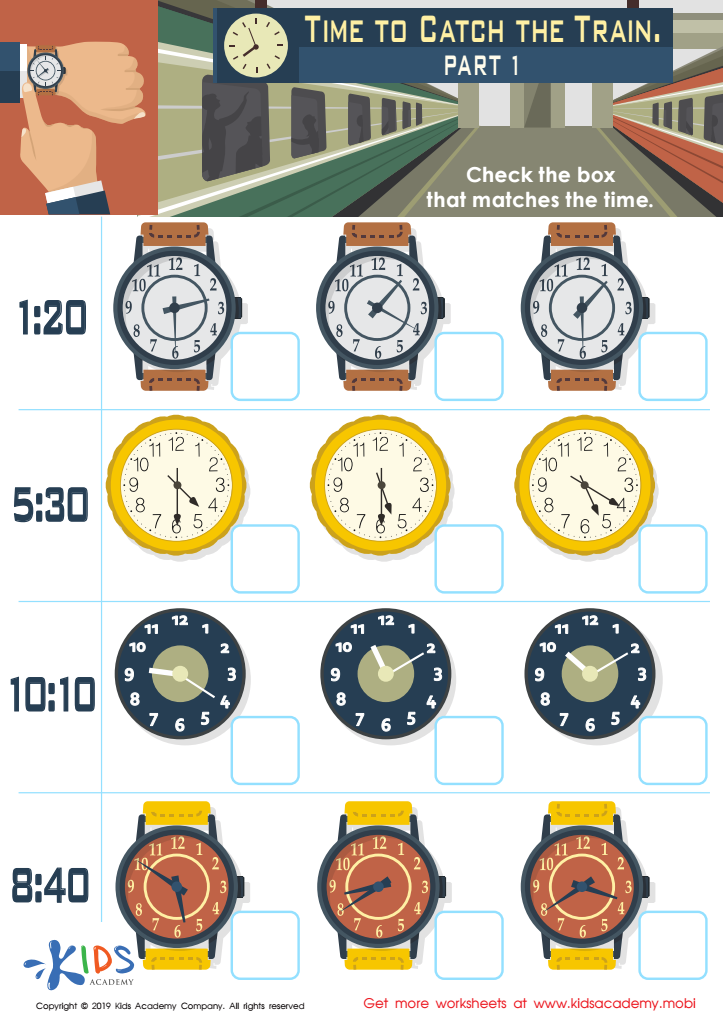
Time to Catch the Train Part 1 Worksheet







Parents and teachers should deeply care about basic math applications for children aged 6-7 because it sets the foundation for essential numerical skills that underpin everyday life and future academics. At this developmental stage, children are naturally curious and capable of grasping fundamental concepts. Introducing them to simple math applications nurtures their problem-solving abilities, enhances logical thinking, and builds confidence in their capacity to understand and interact with the world around them.
Basic math skills learned at this age, such as addition, subtraction, counting, and recognizing shapes and patterns, are crucial for everyday tasks, from handling money to telling time and following directions. Proficiency in these areas during early childhood leads to greater academic success and reduces the likelihood of struggling with math later on.
Moreover, learning math in a supportive and engaging environment encourages a positive attitude towards the subject. Parents and teachers can use play-based learning, real-world examples, and technology, like educational apps, to make math exciting and relevant.
By prioritizing basic math applications for young children, we equip them with the tools needed for critical thinking, effective decision-making, and a lifelong appreciation for learning. This early investment pays off manifold as children grow, helping them to excel academically and navigate their daily lives with ease.








