Basic physics concepts Worksheets for Ages 6-7
3 filtered results
-
From - To
Introduce your young learners to the fascinating world of physics with our "Basic Physics Concepts Worksheets for Ages 6-7." Tailored specifically for first graders, these engaging resources simplify foundational topics like motion, forces, energy, and matter. Each worksheet is designed to nurture curiosity and build critical thinking skills through fun and interactive activities. From identifying different types of forces to exploring the properties of objects, these printables make physics both enjoyable and accessible. Perfect for classroom use or at-home learning, our worksheets provide the perfect stepping stone for budding young scientists. Visit Kids Academy to spark a love for physics today!
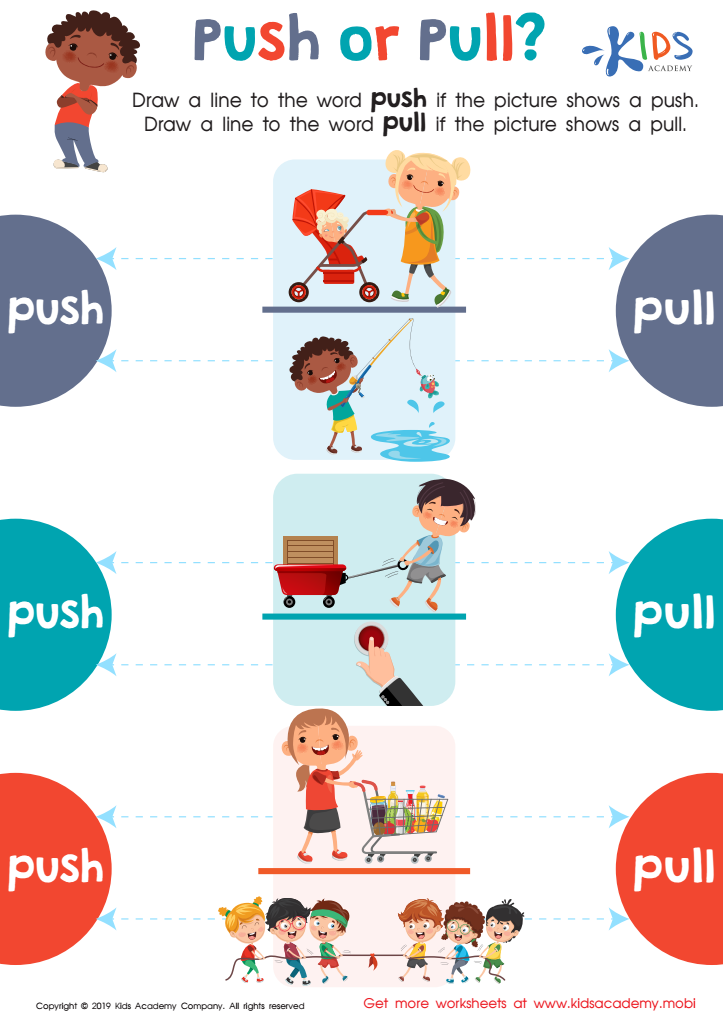
Push or Pull? Worksheet
 Assign to My Students
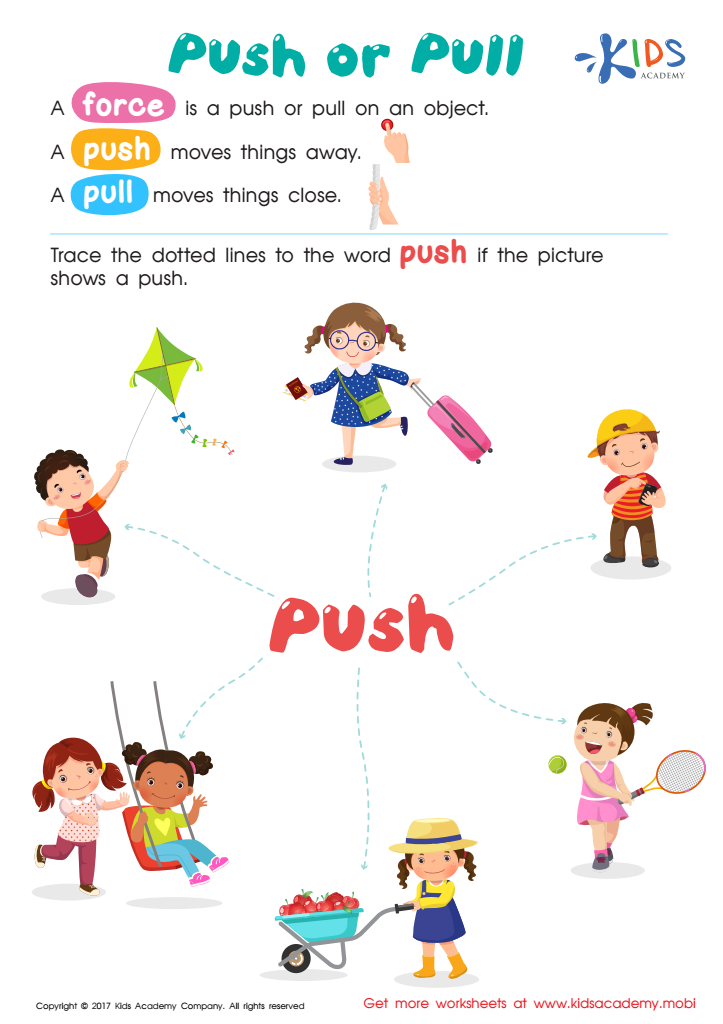
Push or Pull Worksheet
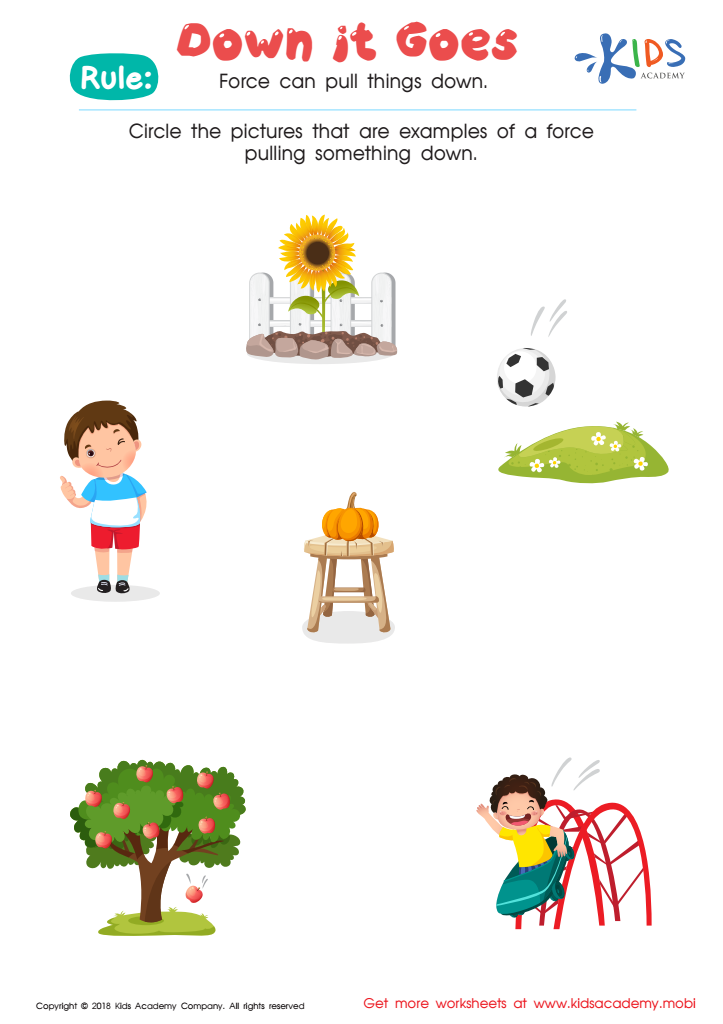
Down it Goes Worksheet








Introducing basic physics concepts to children aged 6-7 is crucial for their intellectual development. At this age, children are naturally curious and eager to explore the world around them. Teaching them basic physics principles such as motion, force, energy, and gravity taps into this innate curiosity, making learning fun and engaging.
Understanding these basic concepts provides a strong foundation for their future education. It helps children make sense of everyday phenomena, like why the ball falls to the ground when thrown up or how bicycles move. This early exposure also nurtures critical thinking and problem-solving skills as kids learn to ask questions, make predictions, and carry out simple experiments to observe outcomes.
Moreover, fostering an interest in physics at a young age can inspire a lifelong love for science and learning. Engaging educational content can prevent future anxieties or misconceptions about science subjects, often perceived as difficult. Encouragement and early involvement in physics help build confidence, setting the stage for academic success in a variety of subjects.
For parents and teachers, integrating basic physics concepts through playful and interactive activities reinforces learning in a multifaceted way, combining education, entertainment, and essential developmental skills. This creates a well-rounded, inquisitive student ready to tackle the more complex concepts they will encounter in later stages of education.








