Categorizing objects Worksheets for Ages 6-7
5 filtered results
-
From - To
Boost your child's cognitive skills with our engaging categorizing objects worksheets designed specifically for ages 6-7. These fun and age-appropriate activities will help students learn to group items based on shared characteristics, enhancing their critical thinking and organizational abilities. Each worksheet features vibrant illustrations and straightforward instructions, making learning enjoyable and accessible. Perfect for home or classroom use, these resources promote vocabulary development and strengthen reasoning skills. Help your little learners succeed in school while nurturing their creativity and curiosity. Download our worksheets today to inspire a love for learning and master the important skill of categorization!
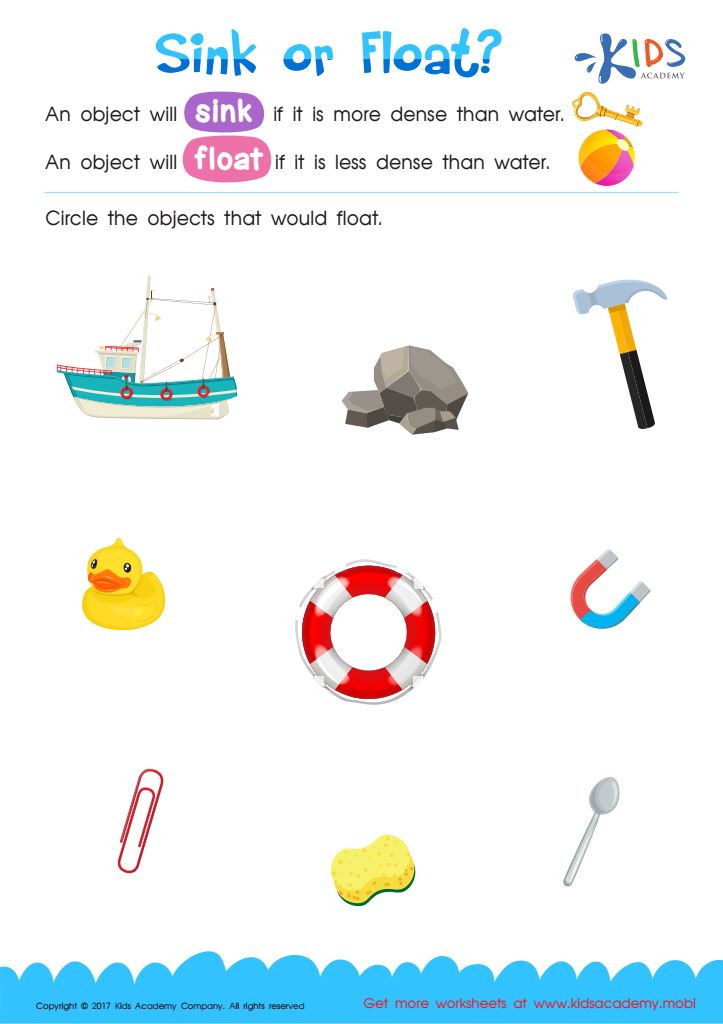
Sink or Float Printable
 Assign to My Students
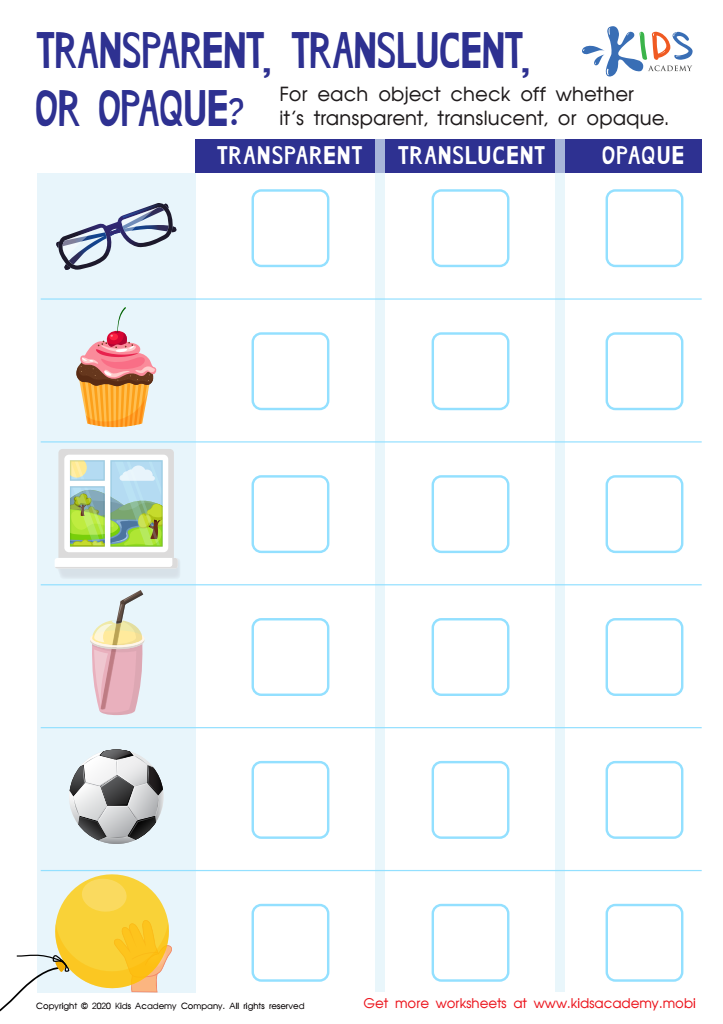
Transparent, Translucent, or Opaque Worksheet
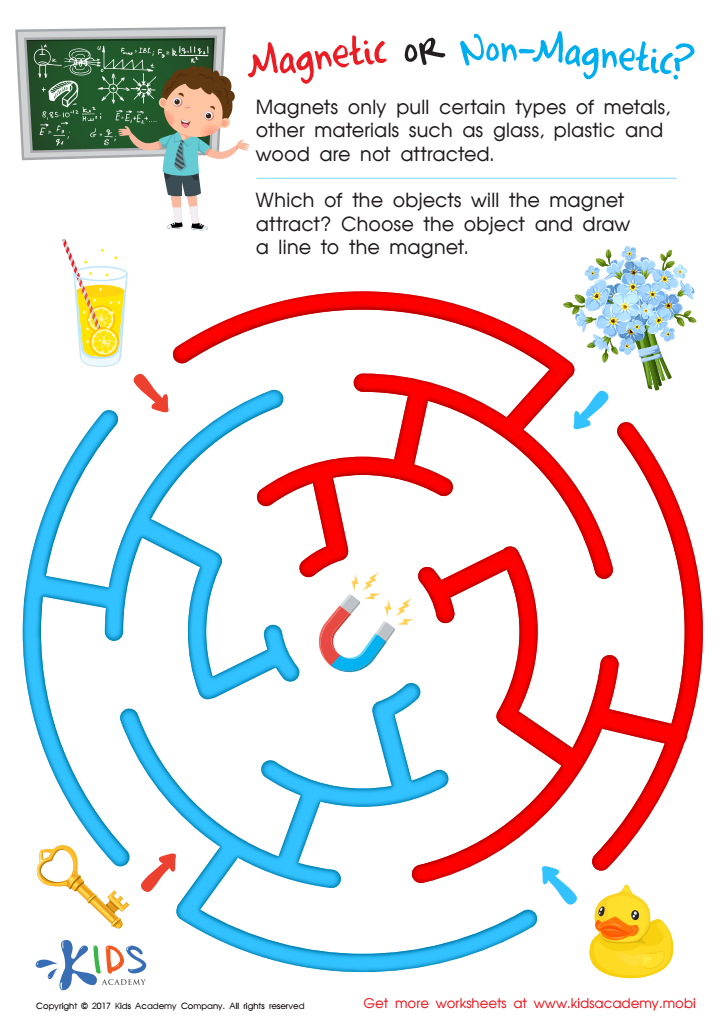
Magnetic or Non–Magnetic Worksheet
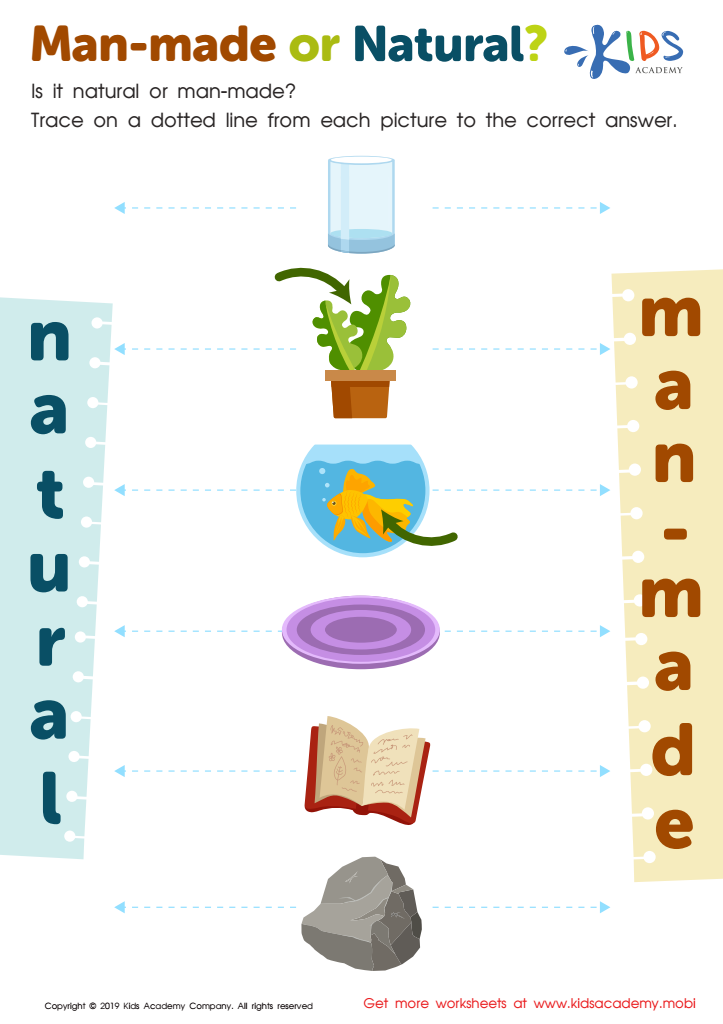
Man-Made or Natural? Worksheet


.jpg)

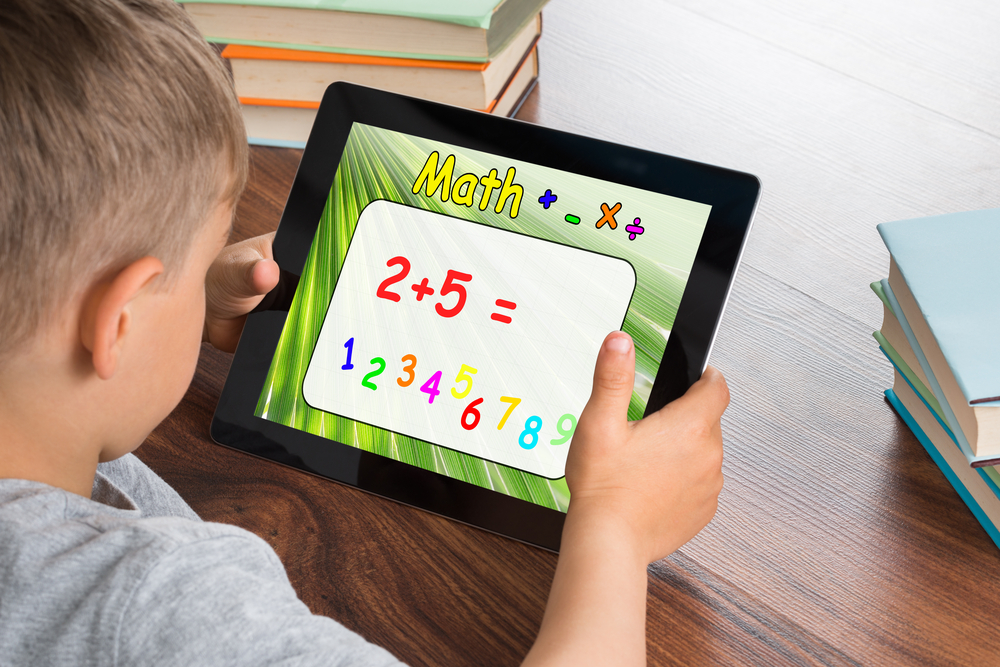


Categorizing objects is a fundamental cognitive skill that is crucial for children's development, especially for ages 6-7. At this stage, children are beginning to make sense of the world around them and develop logical thinking skills. By categorizing objects, children learn to identify similarities and differences, fostering critical thinking and problem-solving abilities.
Engaging in categorization activities enhances vocabulary and language development. When children describe categories, they learn new words and concepts, which contributes to their communication skills. For instance, grouping fruits, animals, or toys helps them understand relationships and promotes abstract thinking.
Furthermore, categorizing supports organizational skills. As children group similar items, they learn to manage information better and apply classification in real-life situations—whether organizing their room or solving math problems. Collaborative categorization activities also enhance social skills, as children learn to negotiate terms and share their thoughts with peers.
Ultimately, for parents and teachers, supporting a child's ability to categorize is vital not only for academic readiness but also for nurturing a curious and analytical mind. By fostering these skills, adults help children build a strong foundation for future learning and everyday decision-making.








