
Chess knowledge Worksheets for Ages 6-7
5 filtered results
Difficulty Level
Grade
Age
-
From - To
Subject
Activity
Standards
Discover engaging “Chess Knowledge Worksheets for Ages 6-7” on Kids Academy. Our expertly designed worksheets introduce young minds to the fundamentals of chess through fun, interactive activities. Perfect for beginners, each worksheet helps children understand basic chess strategies, piece movements, and game rules. These printable worksheets aim to develop critical thinking, problem-solving skills, and focused attention in a playful and educational manner. Help your child embark on an exciting journey of discovering chess, paving the way for a lifelong love of this classic game. Download today and make learning chess an enjoyable experience!
Favorites
With answer key
Interactive
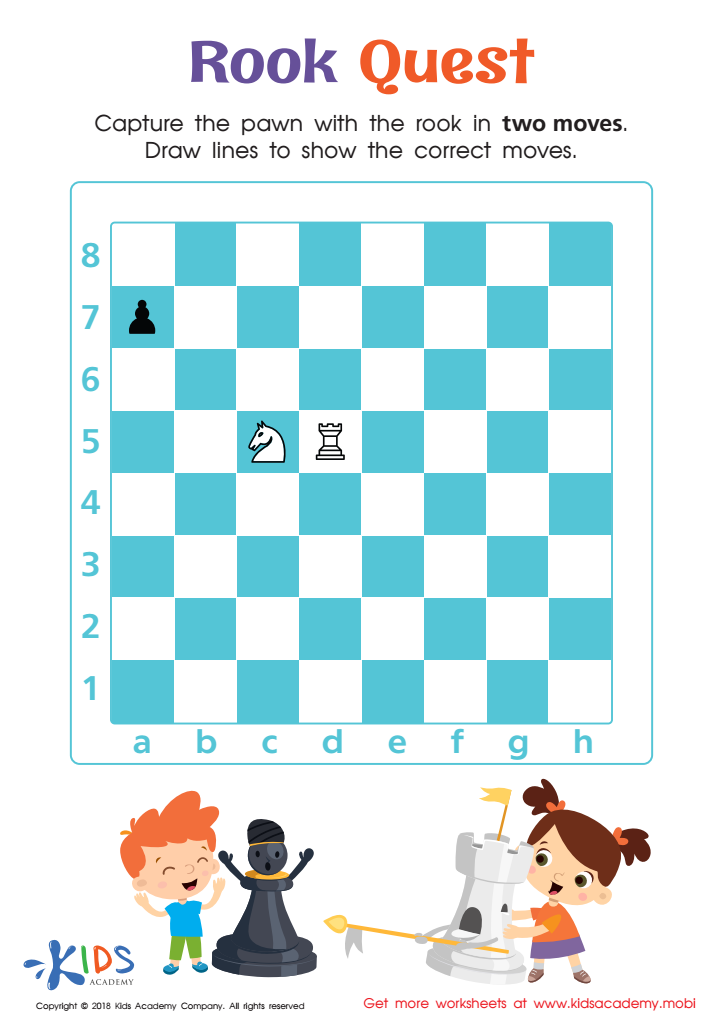
Rook Quest Worksheet
Is your child a chess whiz? Check their progress with this rook quest: get the enemy's pawn piece in just two moves. Have them draw the lines for the moves they'll make. See how quickly they master it!
 Assign to My Students
Rook Quest Worksheet
Worksheet
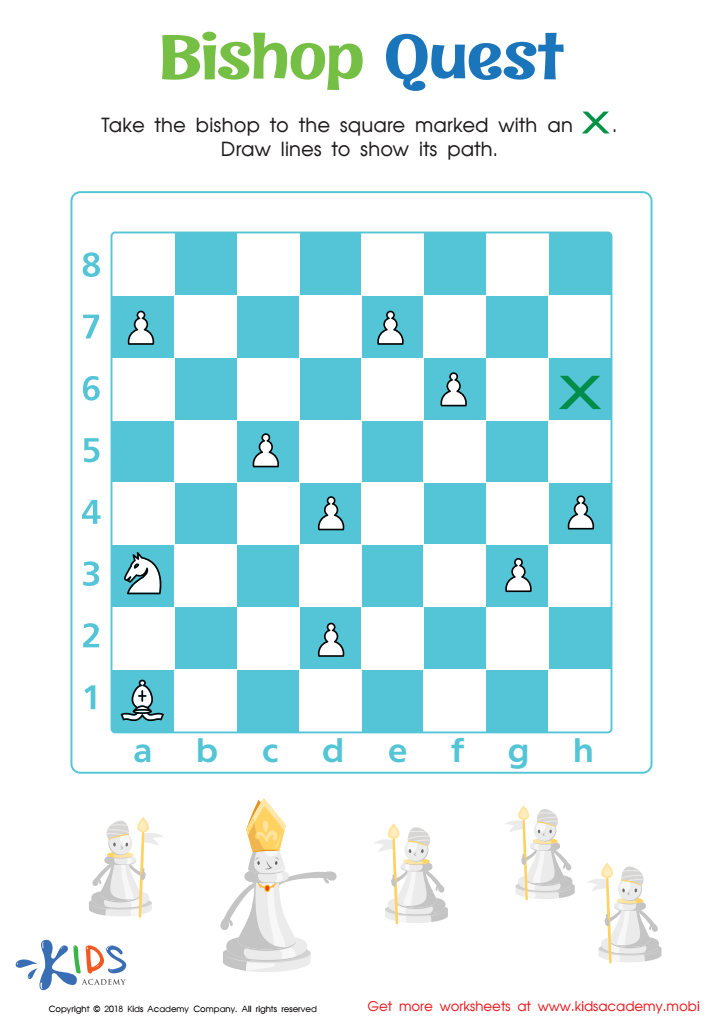
Bishop Quest Worksheet
Show kids the board and ask them to identify the bishop. Then ask them to move it to the square marked 'x', drawing lines to show its path. This worksheet helps teach kids how to move the bishop on a chessboard.
Bishop Quest Worksheet
Worksheet
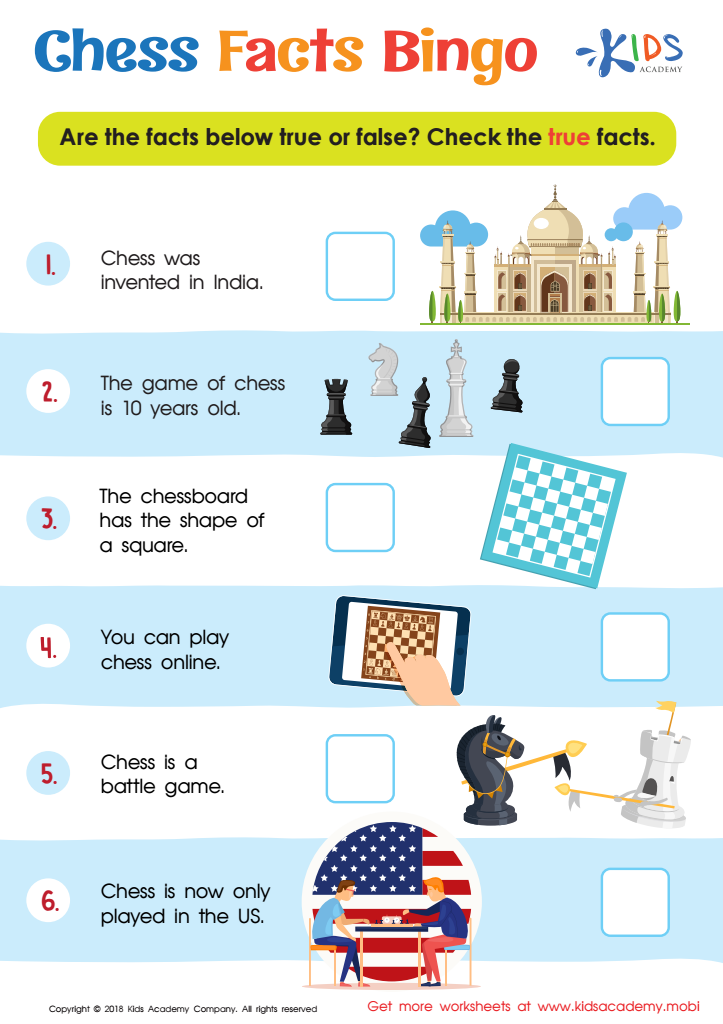
Chess Facts Bingo Worksheet
Help your child assess their knowledge of chess with our simple worksheet. It contains six questions; read them to your child and ask them if the statements are true or false. Once they check the boxes for the true statements, you'll have a better understanding of their understanding of the game.
Chess Facts Bingo Worksheet
Worksheet
Join Kids Academy for Free
Who is primarily going to use this learning content?






Introducing chess to children aged 6-7 offers numerous cognitive, social, and emotional benefits, making it a highly worthwhile activity for parents and teachers to consider. Firstly, chess enhances critical thinking and problem-solving skills. Each game requires players to think ahead, evaluate options, and anticipate consequences, fostering a mindset that benefits academic performance, particularly in maths and science.
Secondly, chess promotes concentration and patience. Unlike many fast-paced games, chess involves careful planning and sustained focus, skills that are valuable in a learning environment. Children learn to sit still, pay attention, and think deeply, skills that are transferrable to the classroom.
Furthermore, chess builds confidence and resilience. Winning a game provides a sense of achievement, while losing teaches valuable lessons about patience, persistence, and learning from mistakes. These emotional skills are crucial for personal development.
Moreover, chess encourages social interaction. Playing with friends or in clubs develops communication skills, sportsmanship, and the ability to work collaboratively towards a goal.
Lastly, chess is an inclusive game that can be played by children of all abilities and backgrounds, fostering a sense of community and equality. By incorporating chess into their routines, teachers and parents can significantly enrich children's developmental experiences.








