Comparative skills Worksheets for Ages 6-7
3 filtered results
-
From - To
Enhance your child's understanding of comparative skills with our engaging worksheets designed specifically for ages 6-7. These interactive activities help young learners grasp concepts such as greater than, less than, and equal to through fun exercises and colorful illustrations. By comparing numbers, objects, and quantities, children develop critical thinking and math skills while enjoying the learning process. Our worksheets are perfect for reinforcing classroom teachings or as supplemental home activities, ensuring your little one gains confidence in their abilities. Explore our comprehensive resource collection and watch your child excel in their comparative reasoning skills today!
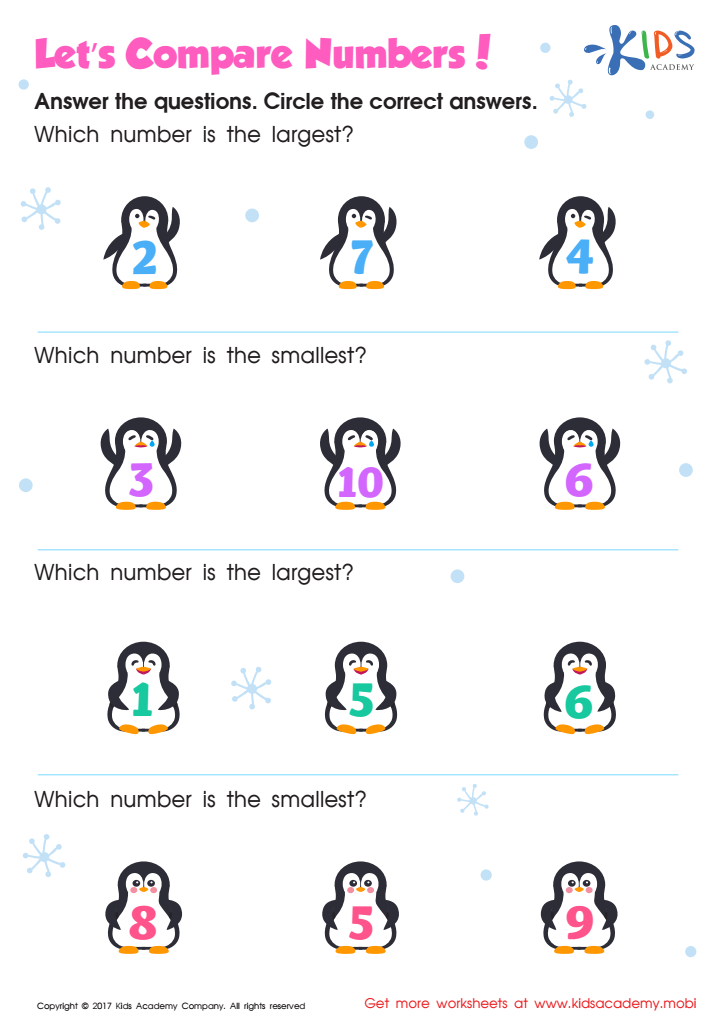
Comparing Numbers 1–10 Worksheet Kindergarten
 Assign to My Students
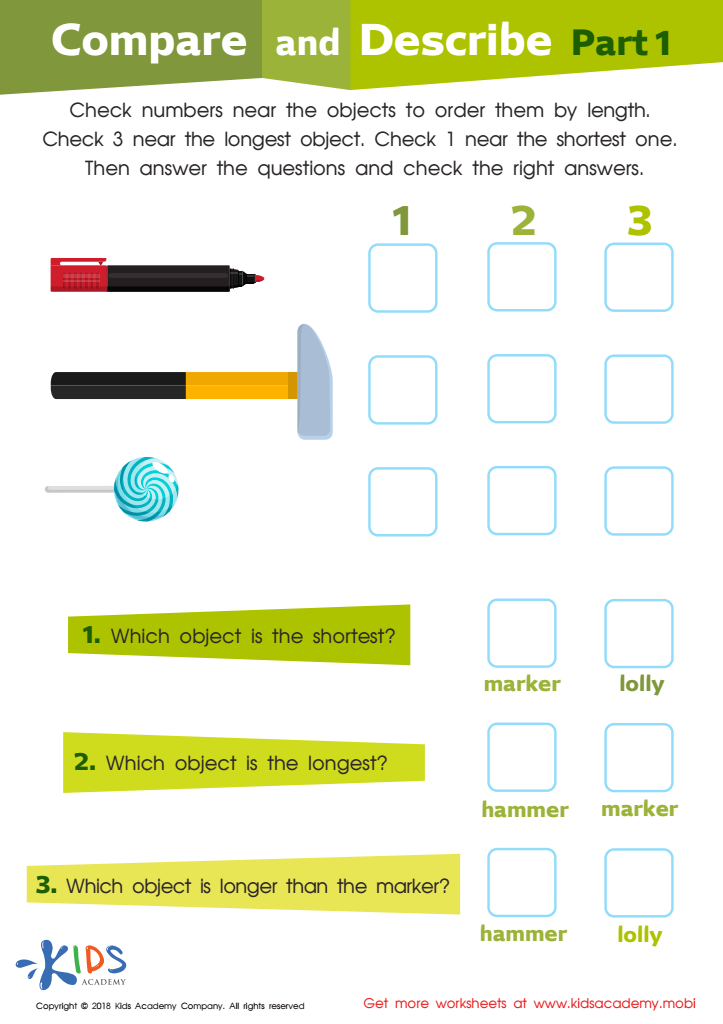
Compare and Describe: Part 1 Worksheet
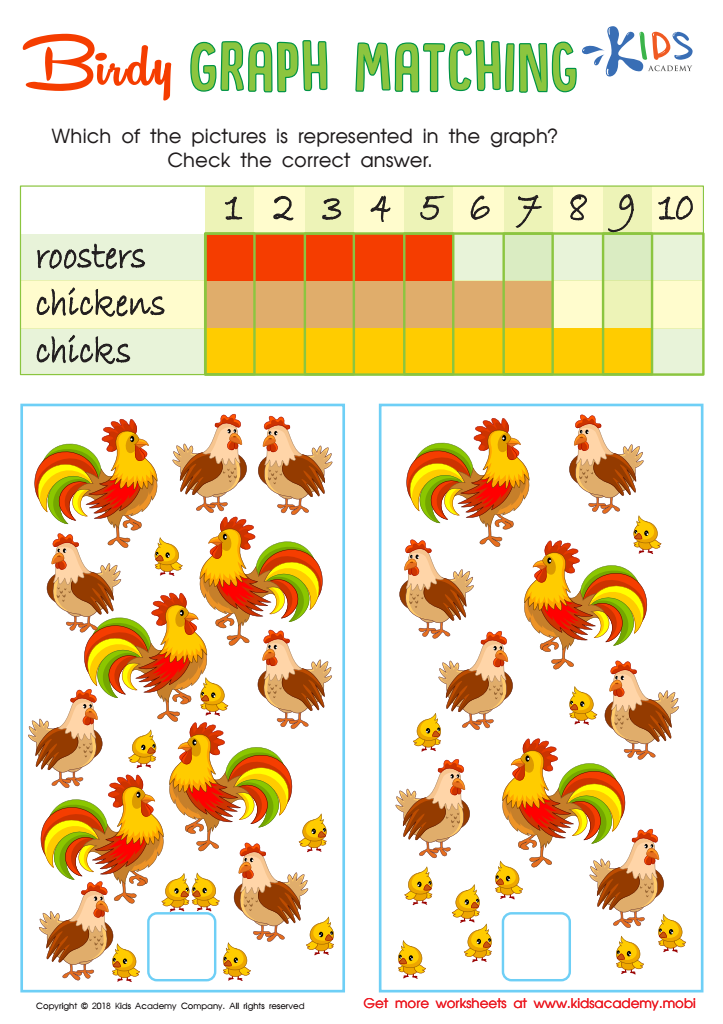
Birdy Graph Matching Worksheet







Comparative skills are essential for children aged 6-7 as they form the foundation for critical thinking and problem-solving. At this age, children begin to grasp the concept of size, quantity, and quality, which are fundamental in their daily experiences and academic learning. By developing comparative skills, kids can better understand relationships – such as more than, less than, or equal to – and learn to make decisions based on their observations.
For parents and teachers, nurturing these skills can significantly enhance a child's ability to analyze information, think critically, and make informed judgments. Comparative thinking also supports mathematical development, as children learn to compare numbers, measurements, and shapes, thereby laying the groundwork for more advanced concepts in later grades.
Moreover, these skills promote social-adjustment by teaching children to recognize differences and similarities among peers, fostering empathy and collaboration. Engaging children in activities that reinforce comparative skills also encourages language development, enabling them to articulate their thoughts clearly.
In conclusion, parents and teachers should prioritize comparative skills as they are crucial not only for academic success but also for holistic personal development, empowering children with the tools to navigate their world confidently and effectively.








