
Comparison Skills Worksheets for Ages 6-7
8 filtered results
Difficulty Level
Grade
Age
-
From - To
Subject
Activity
Standards
Enhance your child’s critical thinking with our Comparison Skills Worksheets designed for ages 6-7! These engaging activities teach young learners to identify similarities and differences between objects, pictures, and more. Perfect for developing essential skills in observation, analysis, and vocabulary building, our comprehensive worksheets are a fun and interactive way to support your child's learning journey. From comparing animals to identifying attributes of everyday items, these exercises help sharpen logical thinking and promote better understanding of the world. Give your child the tools they need for academic success with Kids Academy's expertly crafted comparison worksheets!
Favorites
With answer key
Interactive
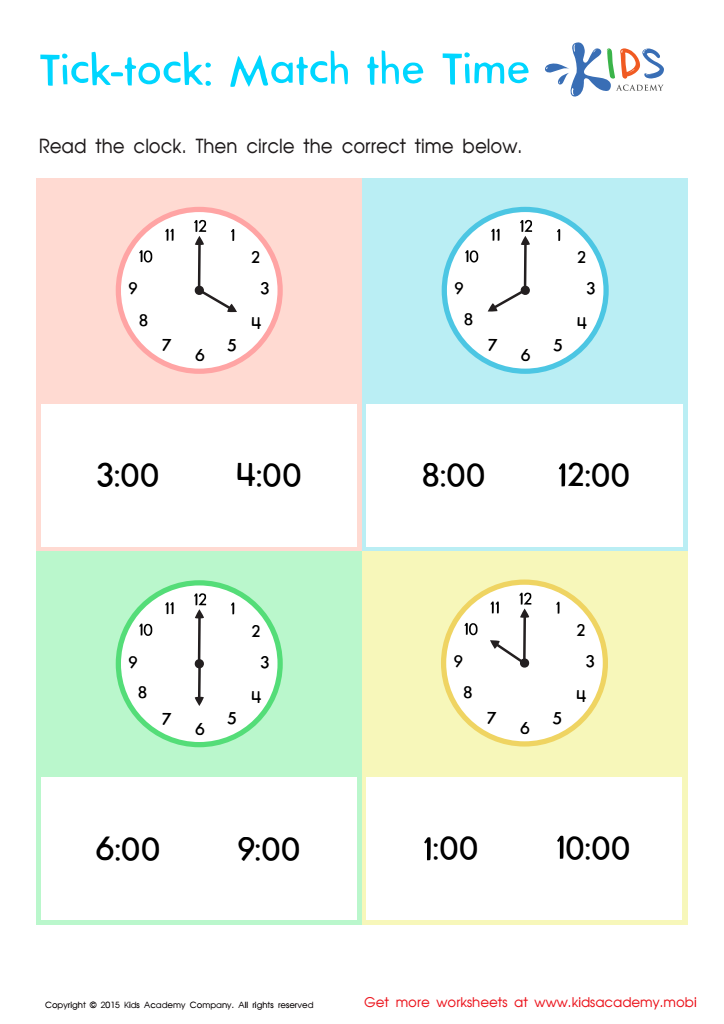
Telling The Time Worksheet: Part 4
Test your skills in telling the time! Circle the right time on 4 analog clock faces.
 Assign to My Students
Telling The Time Worksheet: Part 4
Worksheet
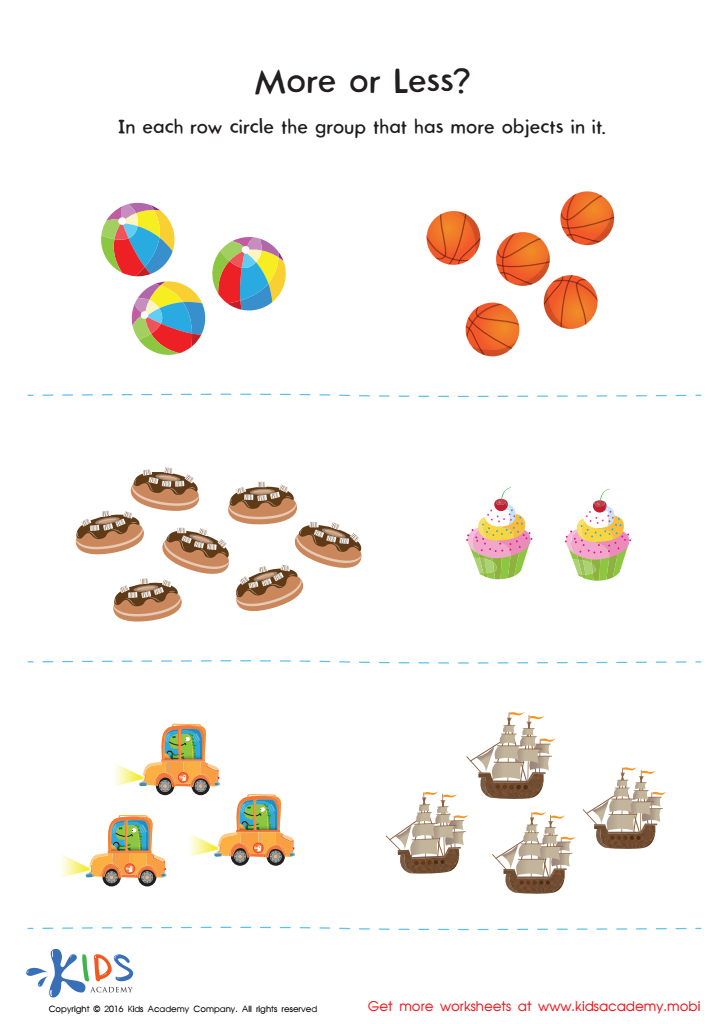
More or Less Size Worksheet
Worksheet
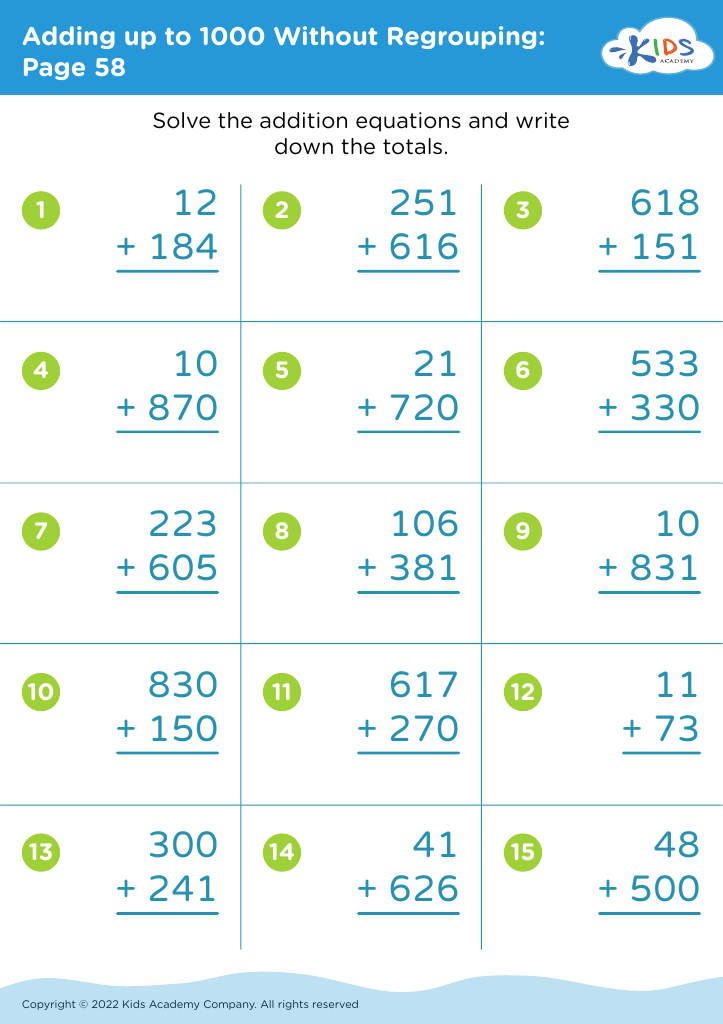
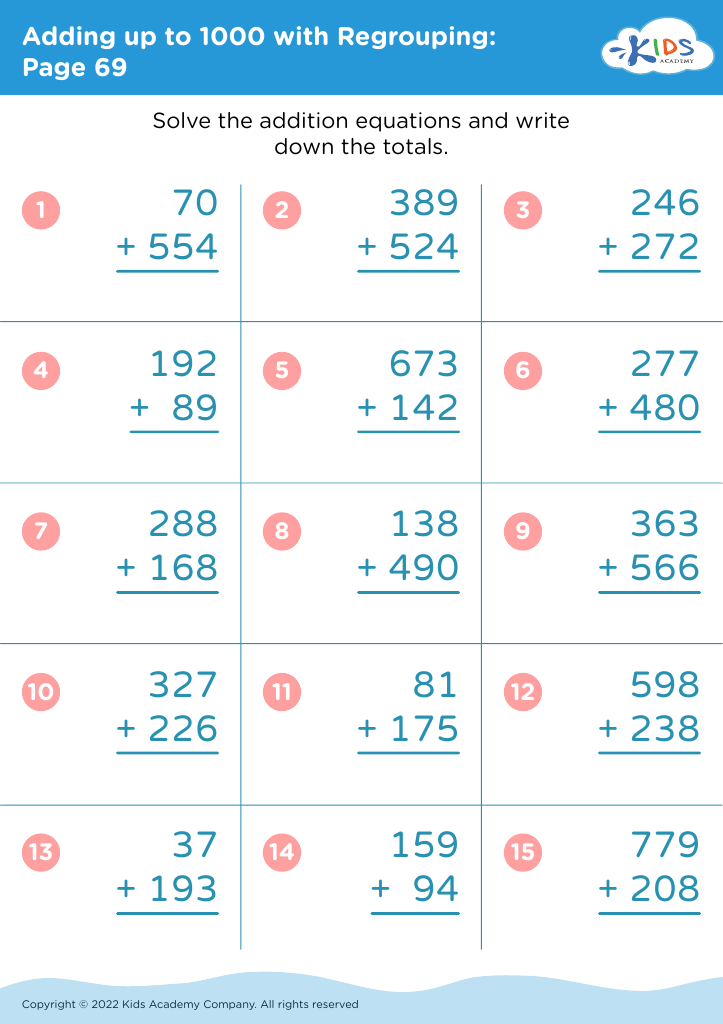
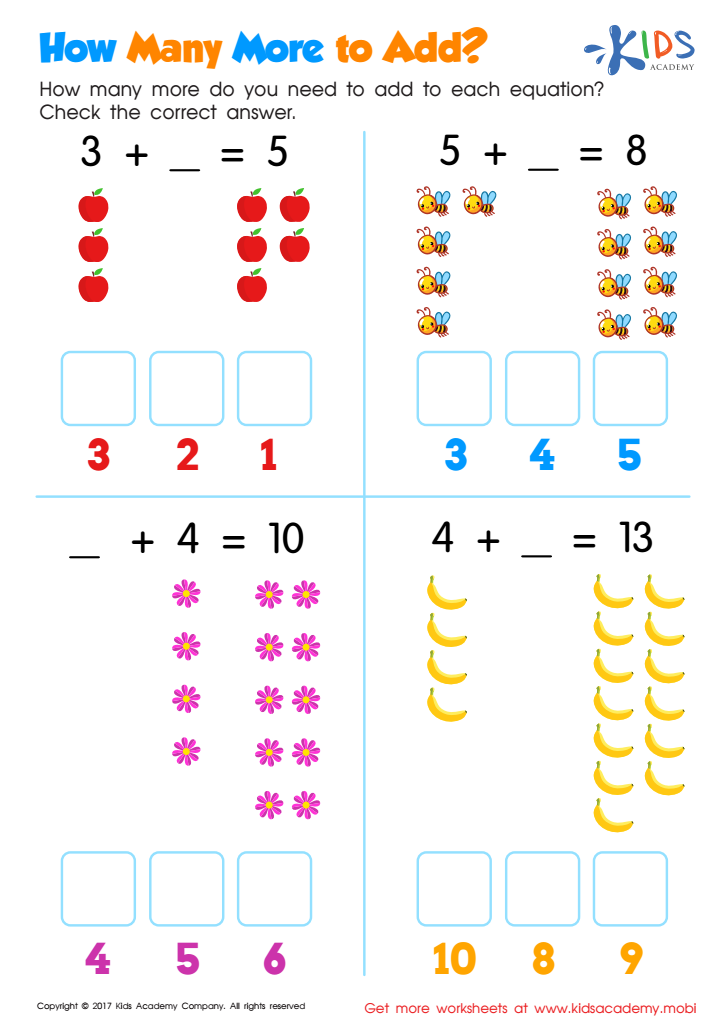
How Many More to Add Worksheet
Sharpen your child's math skills with this pdf worksheet. Help them figure out how many apples, bees, flowers and bananas are needed to reach the answer given. The possible answers are provided at the bottom of the boxes. Have some fun doing some addition and subtraction magic together and get those math skills sharpened!
How Many More to Add Worksheet
Worksheet
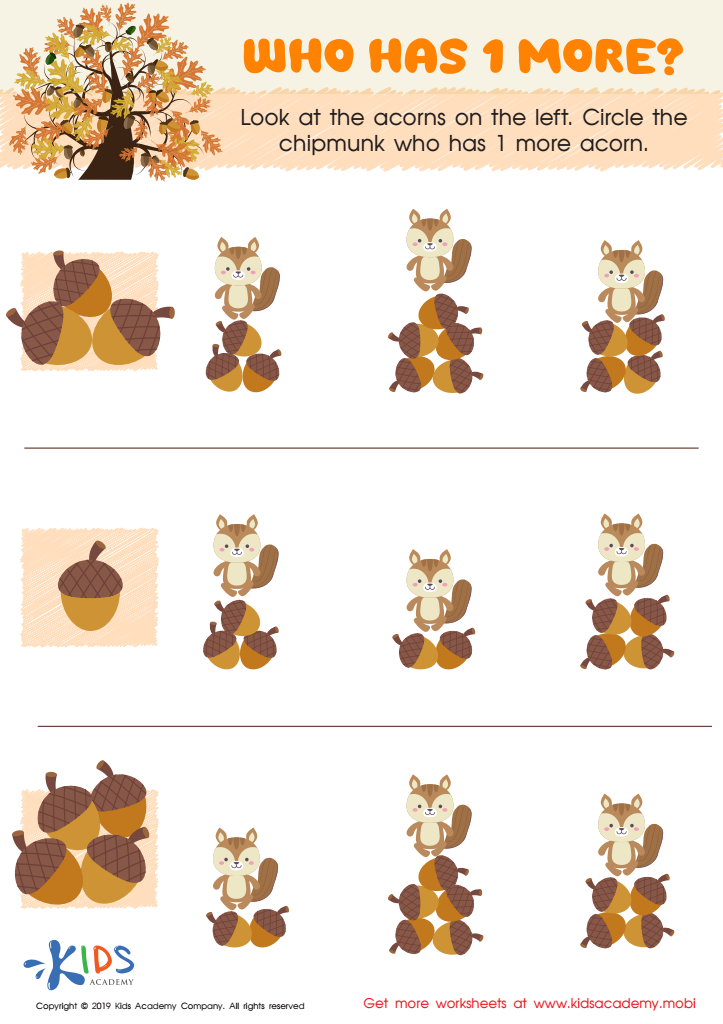
Who Has 1 More? Worksheet
Do your kids know what chipmunks are? They eat acorns, store them for bad weather, and live in trees or on the ground. Count and circle the chipmunk with one more acorn than the others on the printout.
Who Has 1 More? Worksheet
Worksheet
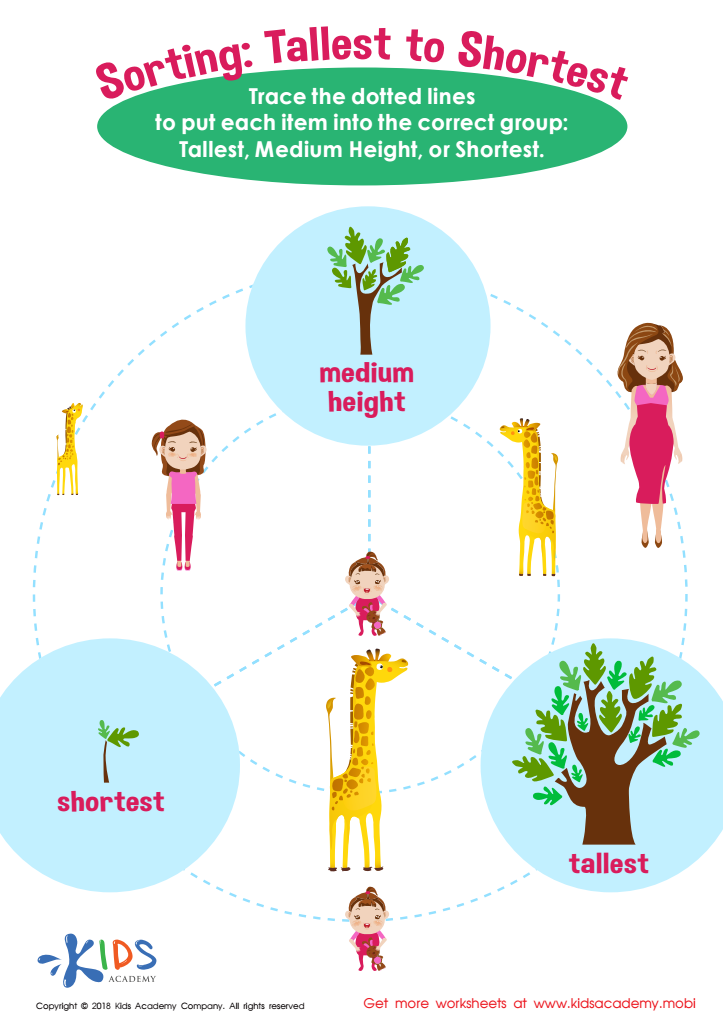
Sorting: Tallest to Shortest Worksheet
This worksheet is great for preschoolers to practice foundational measurement skills. Traceable lines help them sort pictures into Tallest, Shortest and Medium categories, giving them concrete examples to compare. Fine motor skills and understanding of relationships between sizes are also developed - perfect for preparing them for larger measurement concepts.
Sorting: Tallest to Shortest Worksheet
Worksheet
Join Kids Academy for Free
Who is primarily going to use this learning content?






Comparison skills are vitally important for children aged 6-7 as they form the foundation for more complex mathematical and critical thinking abilities. At this age, children begin to understand how to assess similarities and differences, a process that enhances their cognitive development. Engaging children in comparison activities helps solidify basic concepts of numbers, size, weight, and volume, fostering an early appreciation for math and science.
For academic growth, comparison skills aid in grasping concepts such as greater than, less than, and equal to, which are fundamental in early math education. These skills also play a crucial role in reading comprehension as children learn to compare characters, settings, and events in stories, thereby improving their understanding and analytical abilities.
Additionally, comparison tasks encourage observational skills and attention to detail, which are important in everyday decision-making. For example, choosing the biggest apple, the heaviest book, or the longest pencil actively engages children in thinking critically about the world around them.
Socially, these skills promote empathy and understanding when children compare different perspectives or experiences among peers. By nurturing comparison skills, parents and teachers not only support academic achievement but also cultivate thoughtful, perceptive, and well-rounded individuals. Therefore, caring about comparison skills means investing in a child's holistic development, setting a strong foundation for future learning and personal growth.








