
Constellation identification Worksheets for Ages 6-7
3 filtered results
Difficulty Level
Grade
Age
-
From - To
Subject
Activity
Standards
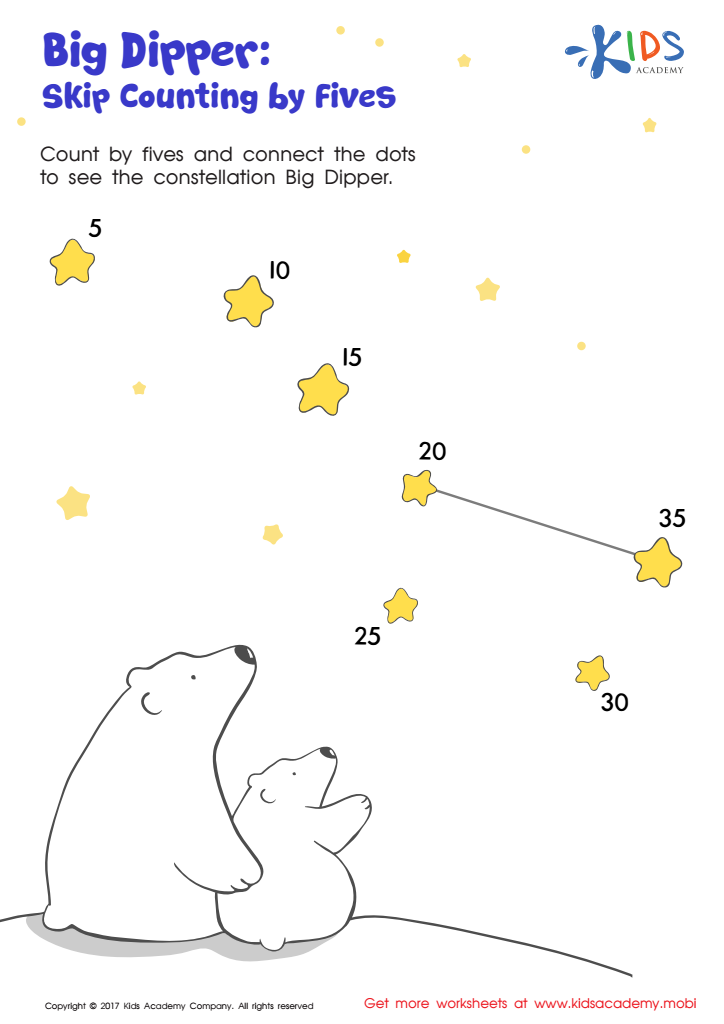
Introduce young learners to the wonders of the night sky with our engaging Constellation Identification Worksheets for ages 6-7! Perfect for early grade students, these printable worksheets develop observational skills and spark curiosity about astronomy. Children will have fun connecting the dots to reveal star patterns and learn to identify some of the most famous constellations. Each worksheet combines visual learning with interesting facts, making it an ideal tool for teachers and parents to enhance science lessons at home or in the classroom. Download now to inspire a love of stargazing and discovery in your little astronomers!
Favorites
With answer key
Interactive
 Assign to My Students
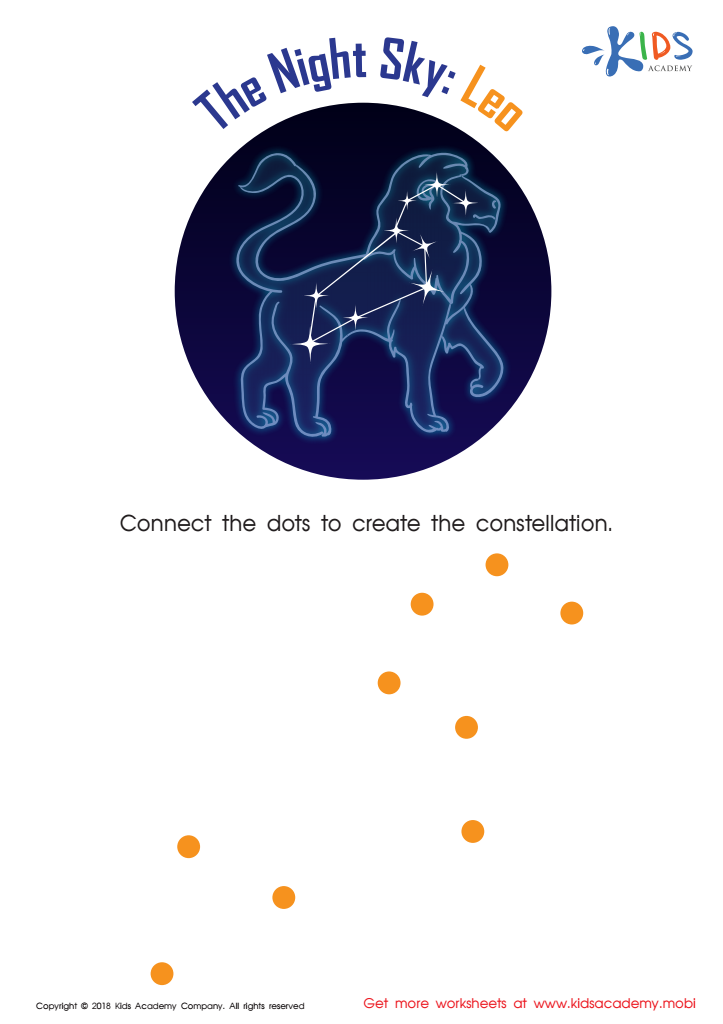
The Night Sky: Leo Worksheet
Let your kids explore the wonders of the stars with this fun worksheet! They'll connect the dots to create the constellation Leo. Night gazing instruments, a telescope or this printout can help your kids learn about constellations and horoscopes. Download the worksheet and let the star watching begin!
The Night Sky: Leo Worksheet
Worksheet
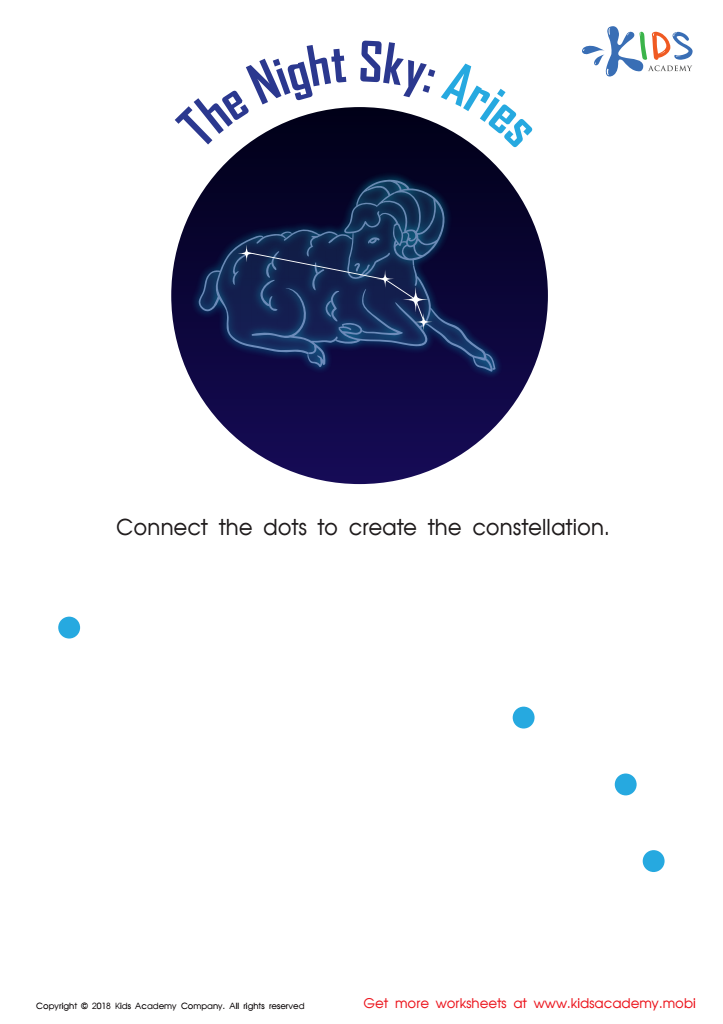
The Night Sky: Aries Worksheet
Does your child know constellations and horoscope? If you've got them interested in horoscope readings and star gazing, the Aries constellation in the pdf should be familiar. Have them look at the picture and identify it. If they can't, tell them it's Aries. Then, help them connect the dots to form the constellation.
The Night Sky: Aries Worksheet
Worksheet
Join Kids Academy for Free
Who is primarily going to use this learning content?








Understanding and identifying constellations can be a delightful and educational experience for children ages 6-7, offering numerous benefits that parents and teachers should care about. Firstly, learning about constellations nurtures a love for astronomy and science, sparking innate curiosity about the universe and fostering a sense of wonder. This curiosity can enhance a child's engagement with STEM (science, technology, engineering, mathematics).
Moreover, studying constellations helps kids develop observational skills. As they learn to spot patterns in the night sky, they also practice focusing their attention, enhancing both concentration and patience. Constellation identification can be linked to storytelling, making lessons more engaging and memorable. Many constellations have rich mythological backgrounds, which can improve a child's understanding of history and different cultures.
Participating in night sky observation encourages outdoor activity and a break from screen time, promoting physical well-being. Additionally, this activity provides an opportunity for family bonding and teacher-student interaction, as adults and children explore the stars together.
Lastly, recognizing constellations can boost spatial awareness and critical thinking, as kids learn to align star maps with actual celestial arrangements. Overall, constellation identification is a fun, educational pursuit that supports multiple aspects of young children’s development.








