Data interpretation Worksheets for Ages 6-7
18 filtered results
-
From - To
Welcome to our "Data Interpretation Worksheets for Ages 6-7!" Designed for young learners, these engaging worksheets help children develop essential skills in data interpretation. Through fun activities like reading charts, analyzing graphs, and solving word problems, students will enhance their ability to understand and evaluate information. Our resources encourage critical thinking and foster a love for mathematics by making learning interactive and enjoyable. Perfect for classroom use or homework assignments, these worksheets promote confidence in learners as they explore concepts like sorting, comparing, and drawing conclusions. Start your child's journey towards becoming a data-savvy thinker today!
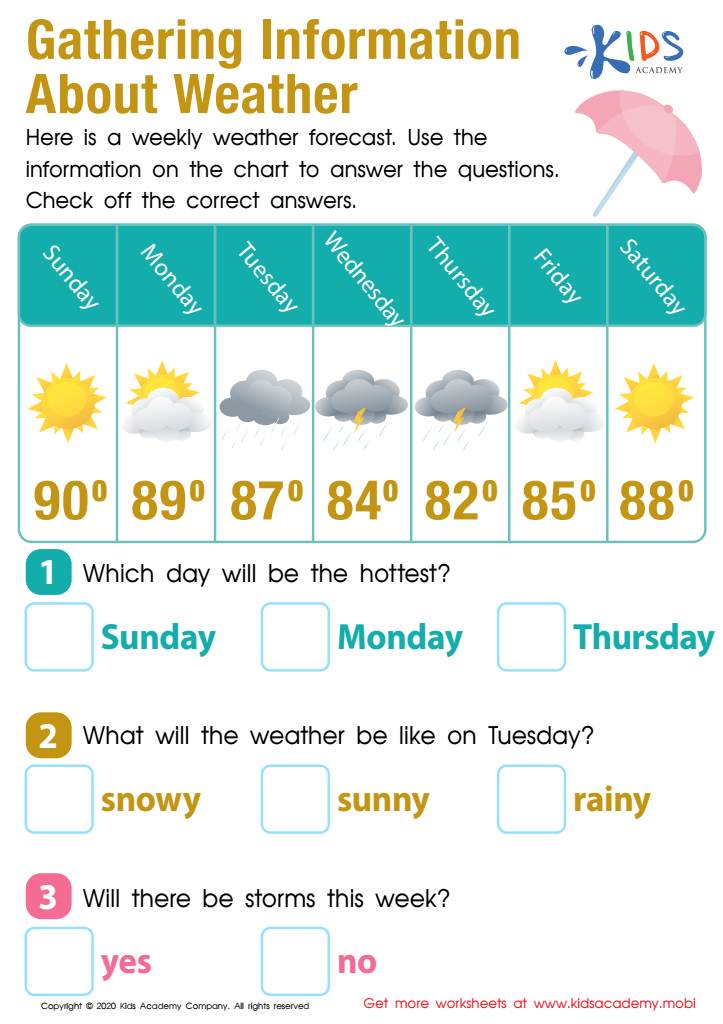
Gathering Information About the Weather Worksheet
 Assign to My Students
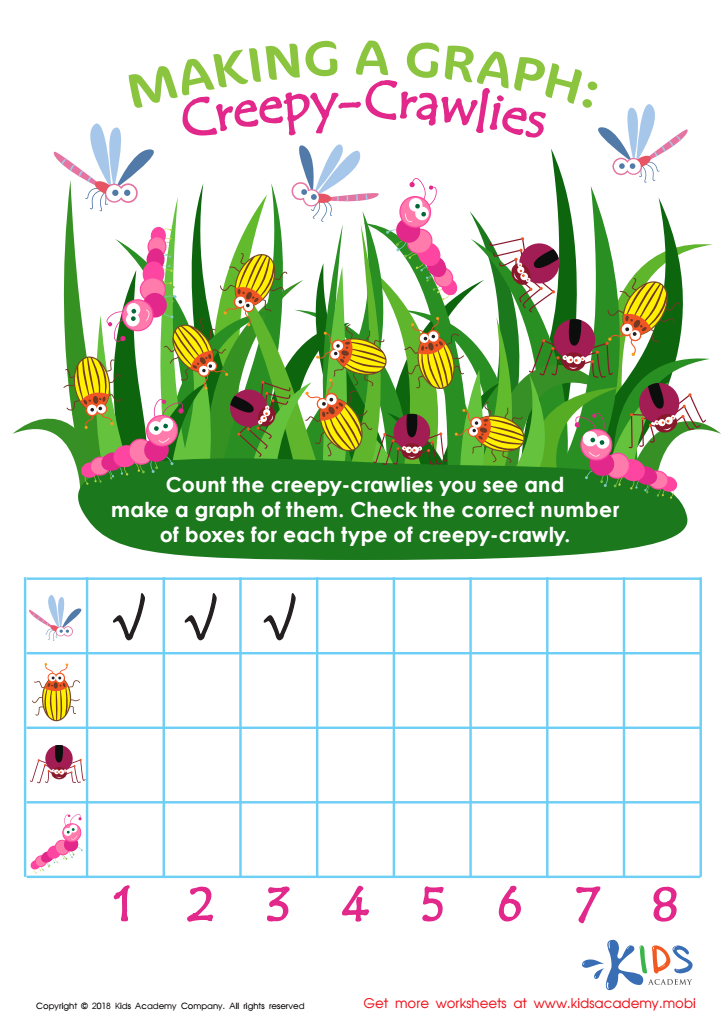
Making a Graph: Creepy Crawlies Worksheet
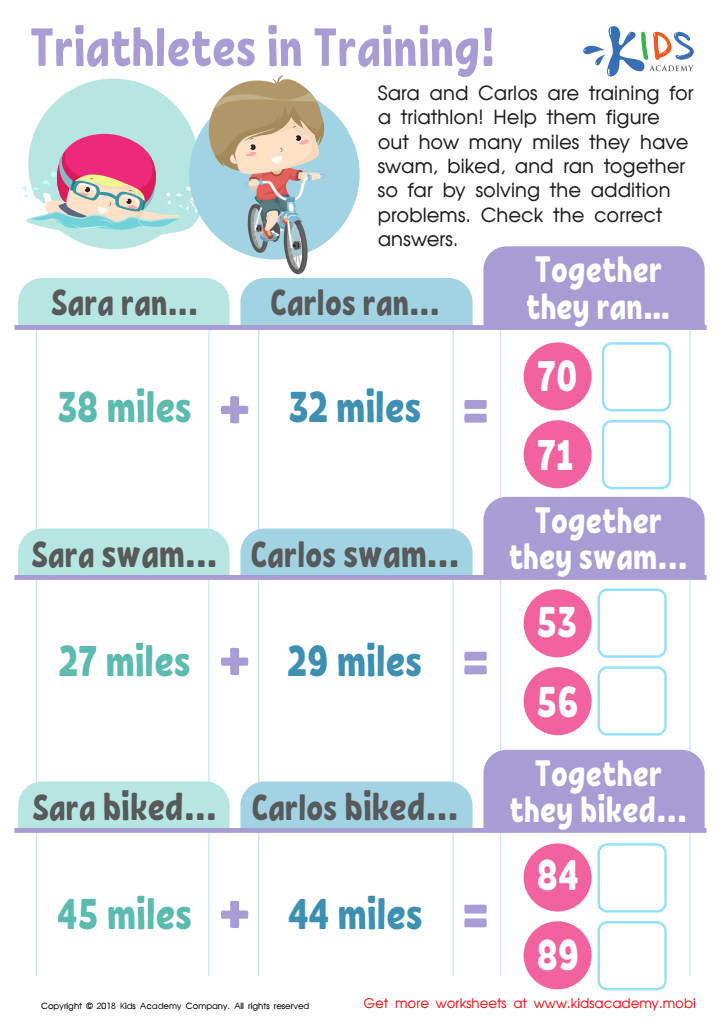
Triathletes in Training Worksheet
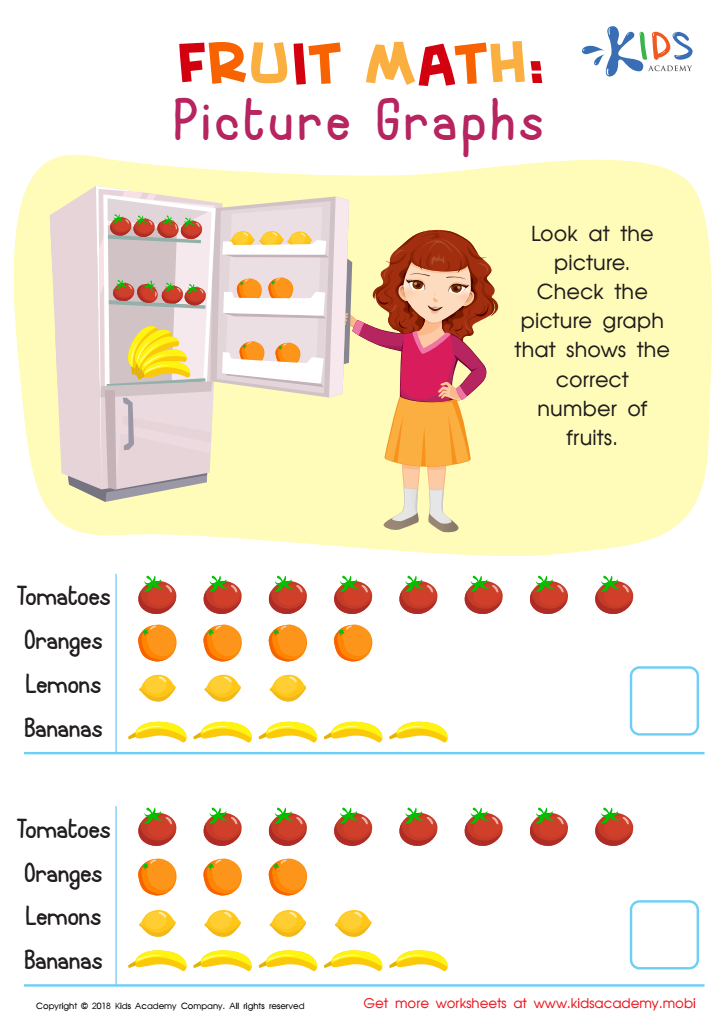
Fruit Math: Picture Graphs Worksheet
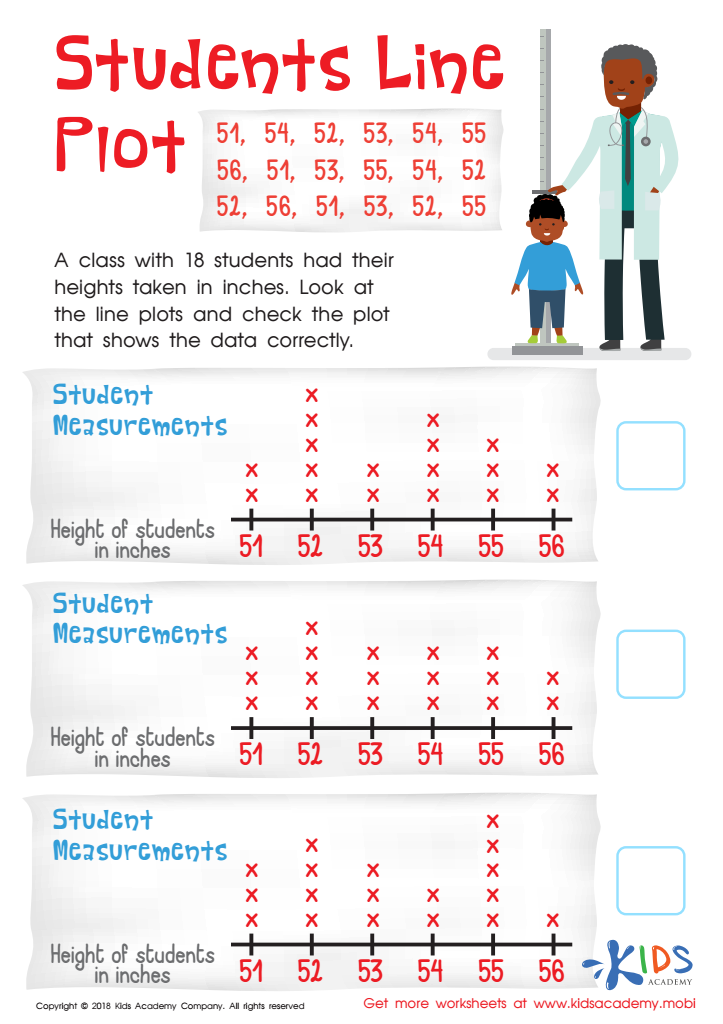
Students Line Plot Worksheet
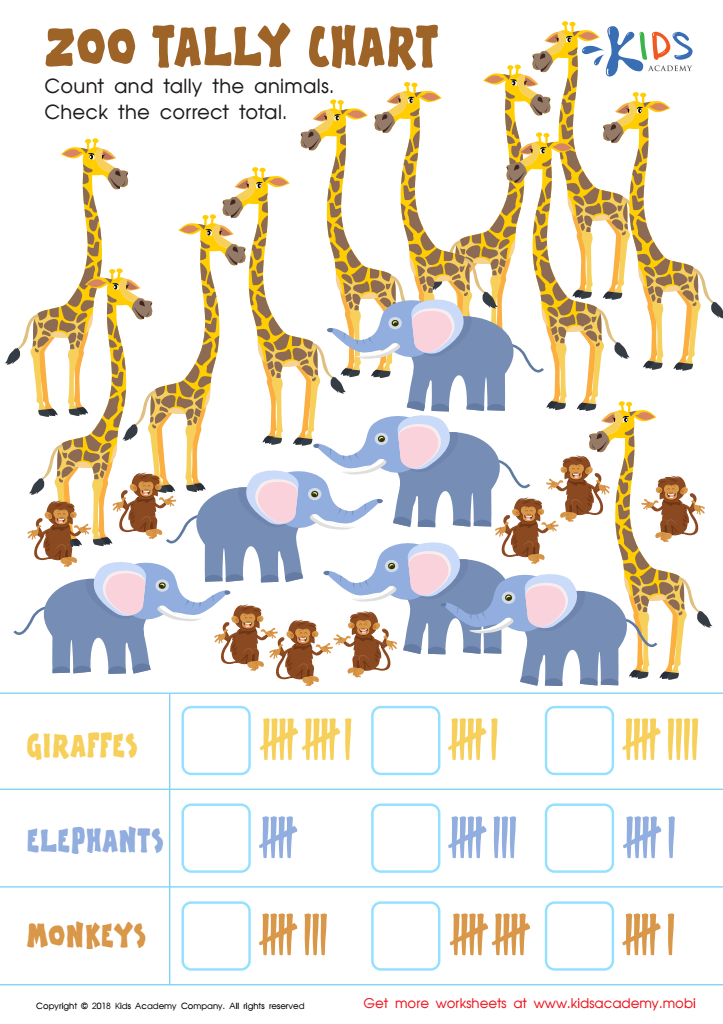
Zoo Tally Chart Worksheet
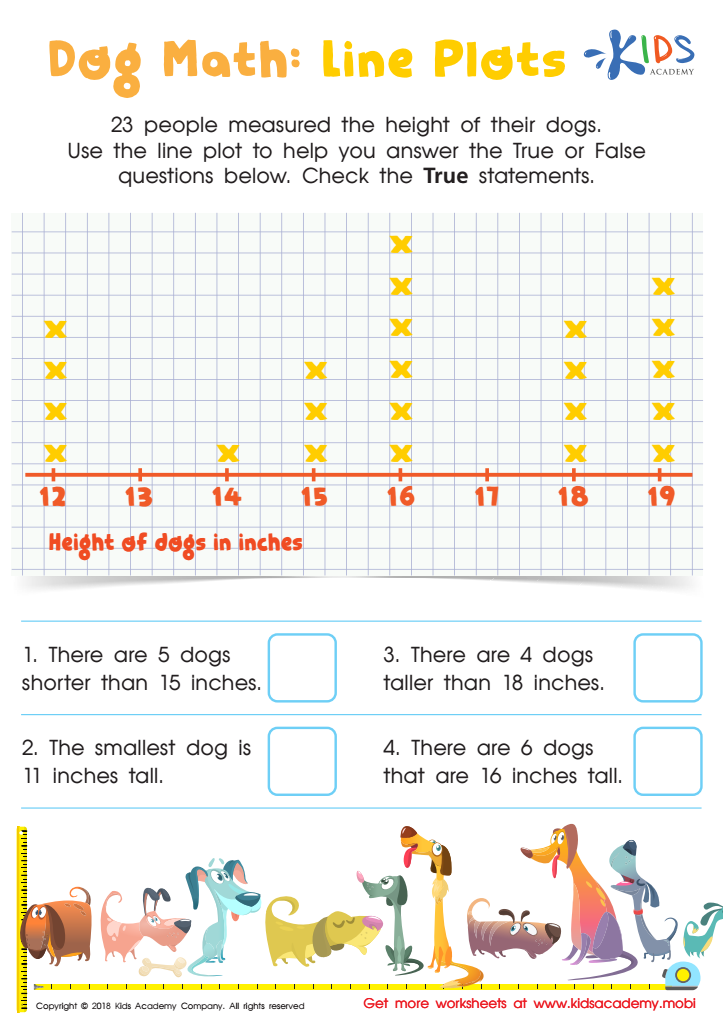
Dog Math: Line Plots Worksheet
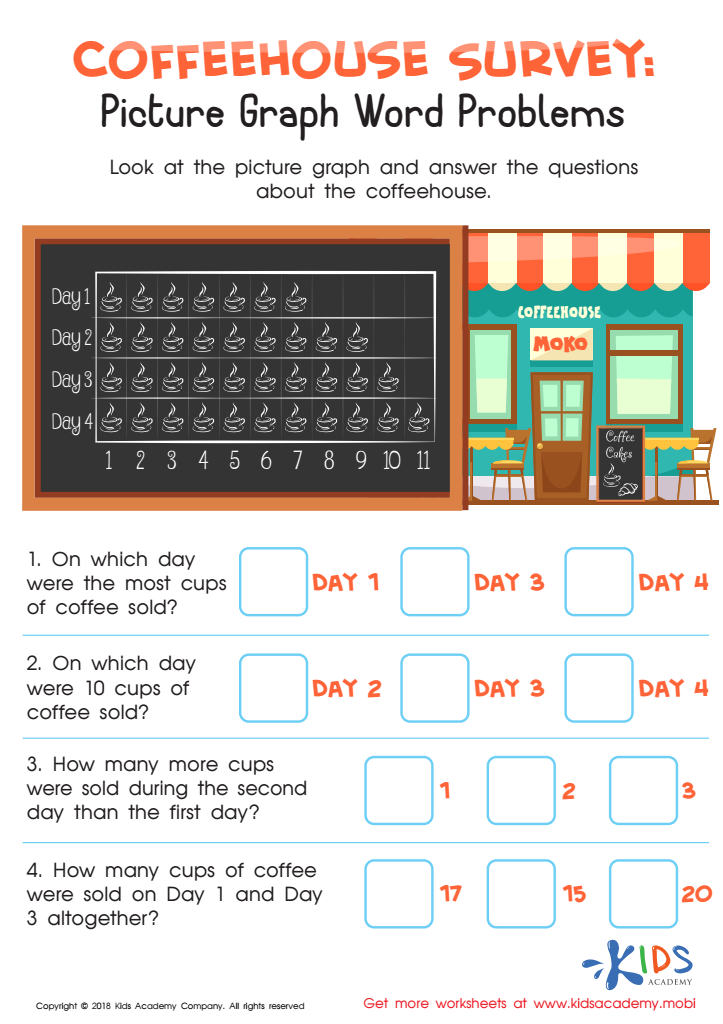
Coffeehouse Survey: Picture Graph Word Problems Worksheet
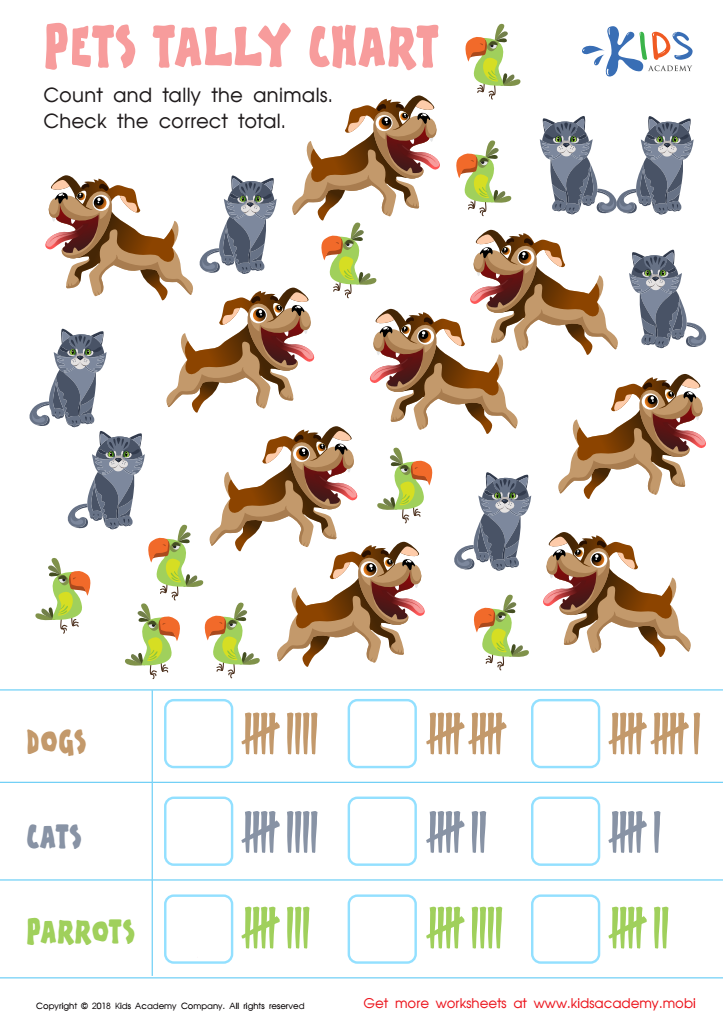
Pets Tally Chart Worksheet
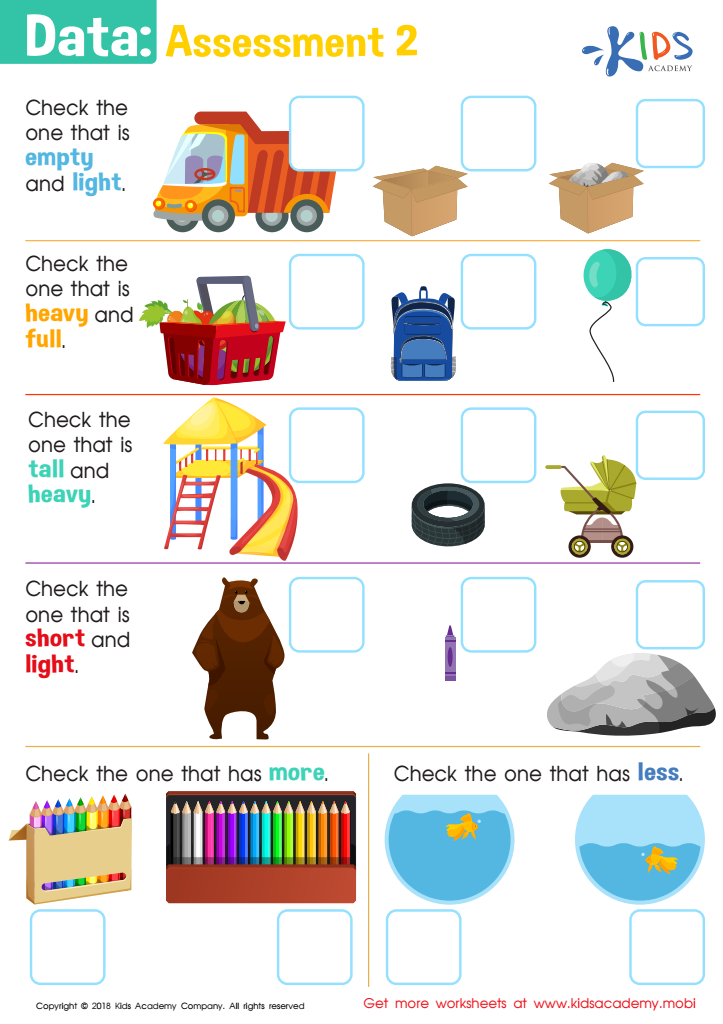
Data: Assessment 2 Worksheet
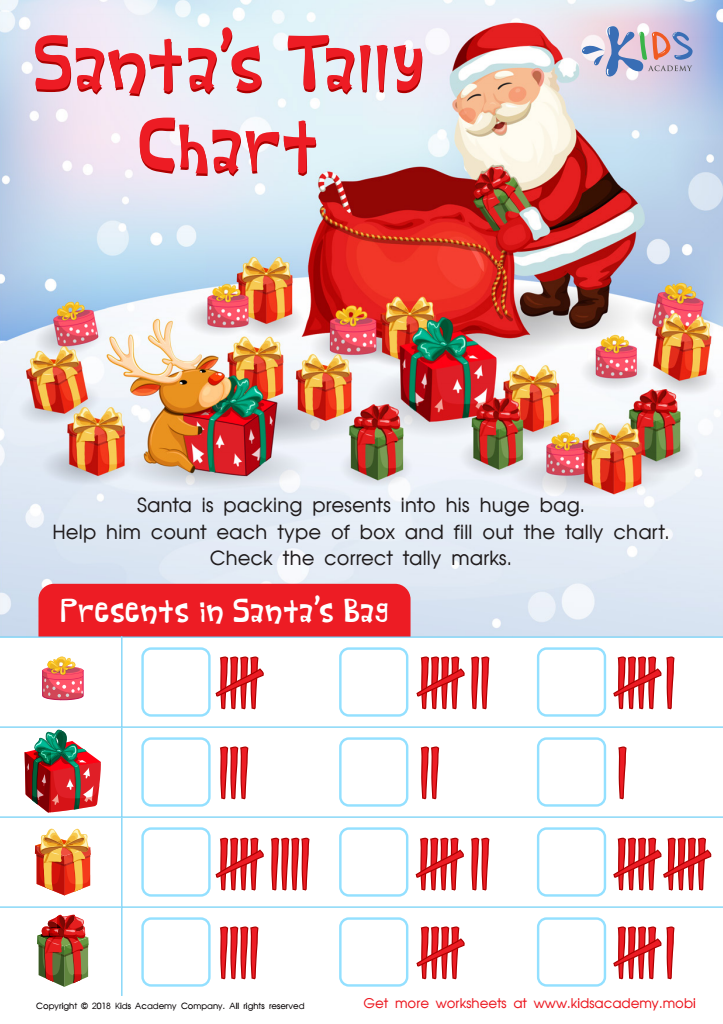
Santa Tally Chart Worksheet
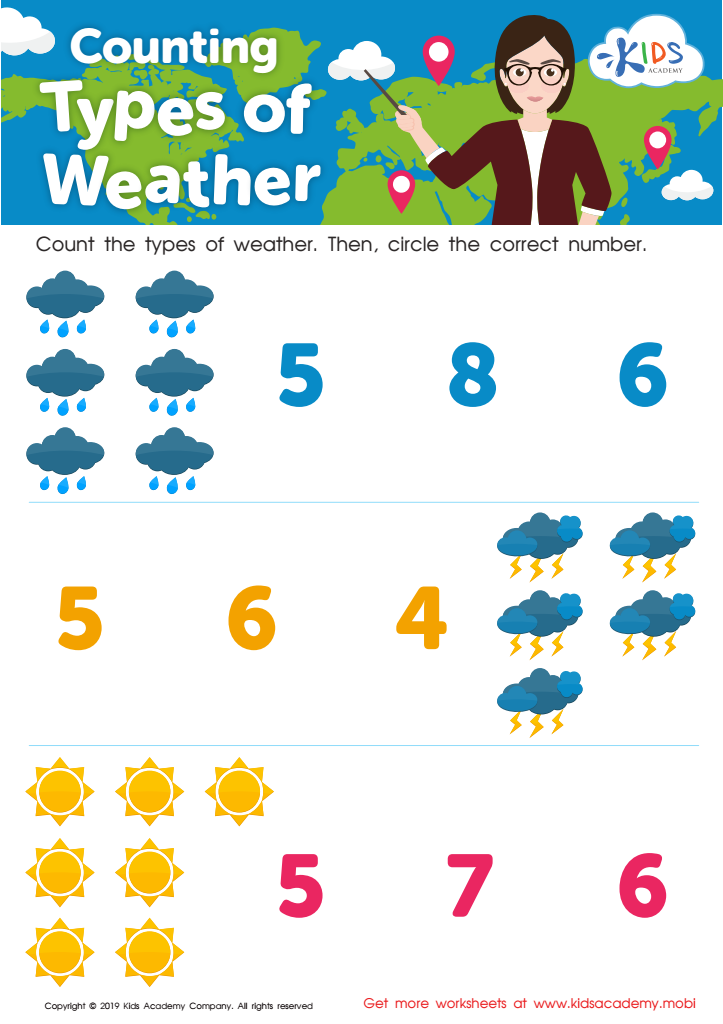
Counting Types of Weather Worksheet
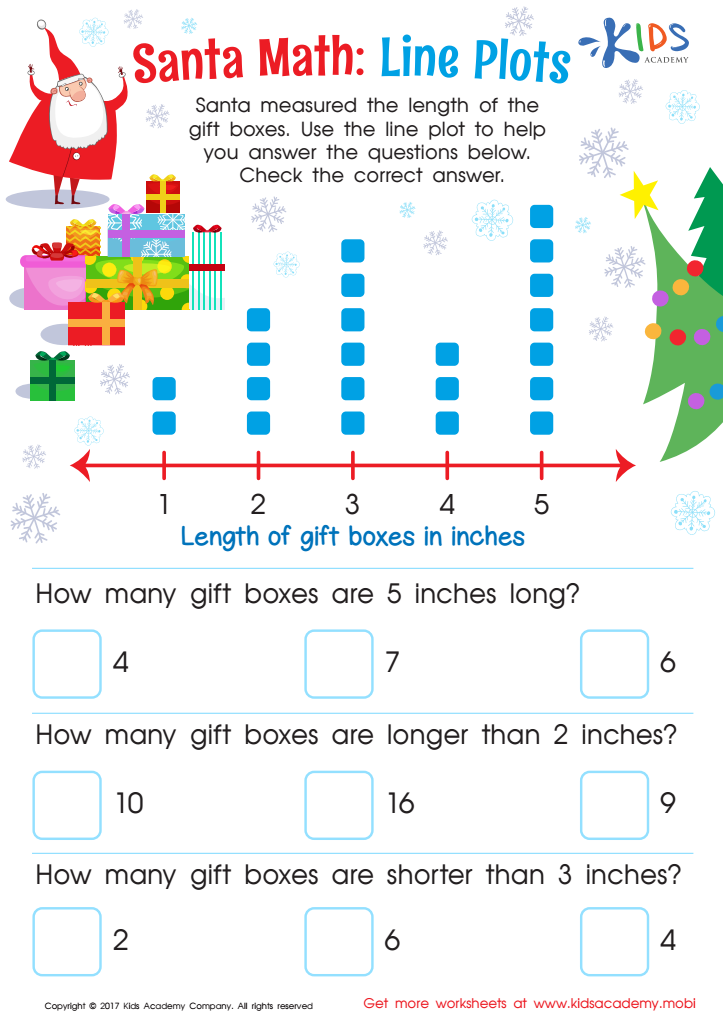
Line Plot Worksheet
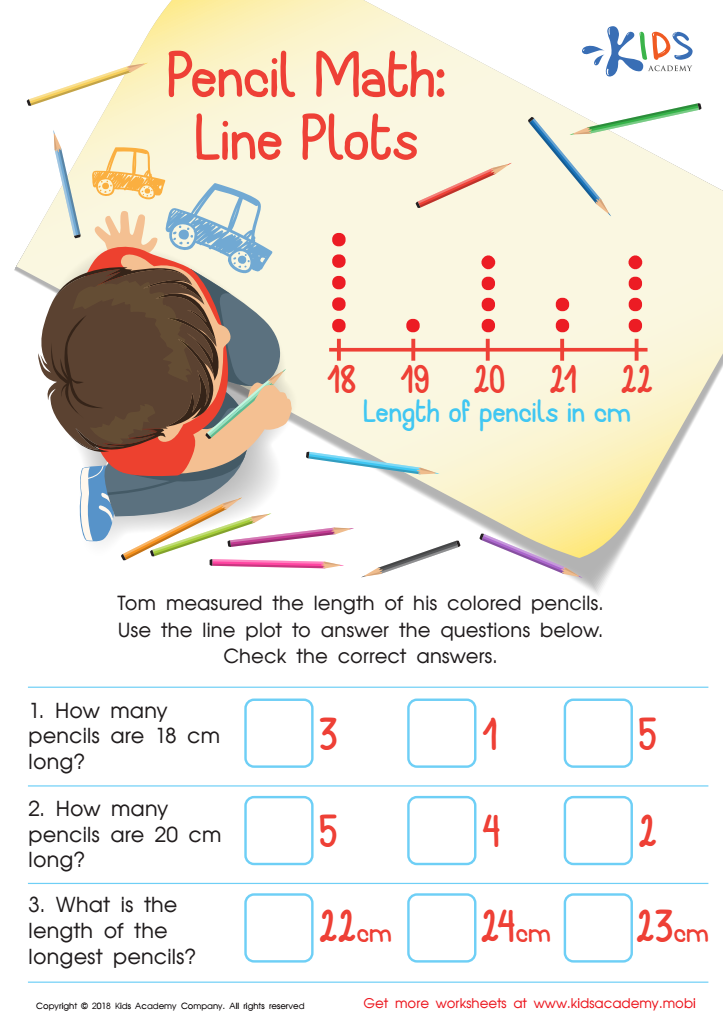
Pencil Math: Line Plots Worksheet
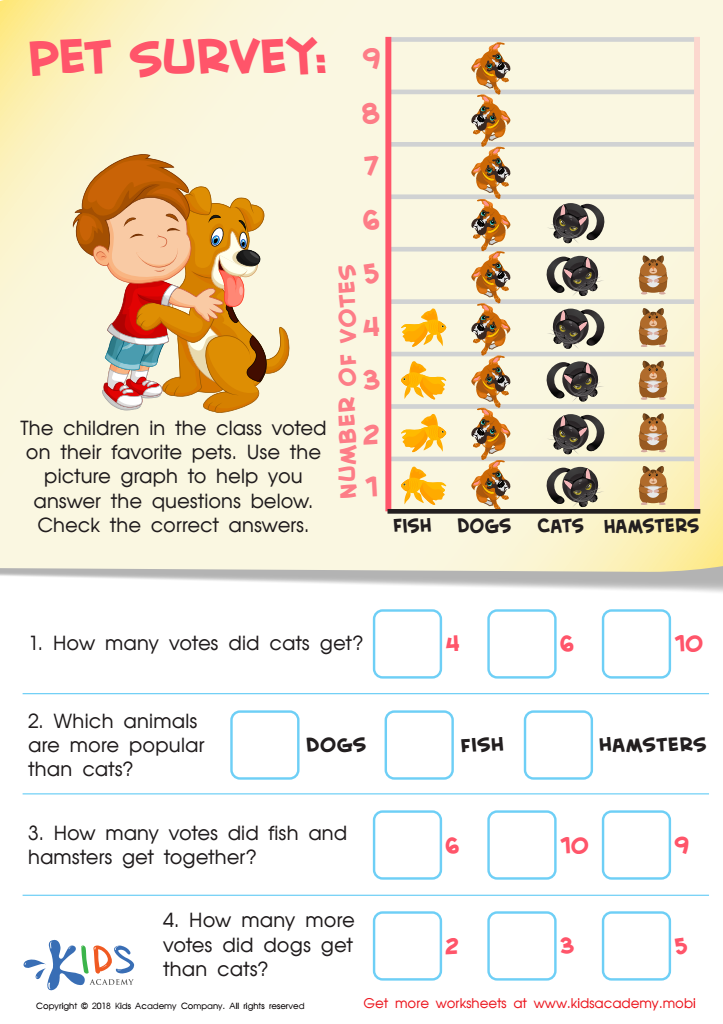
Pet Survey Worksheet
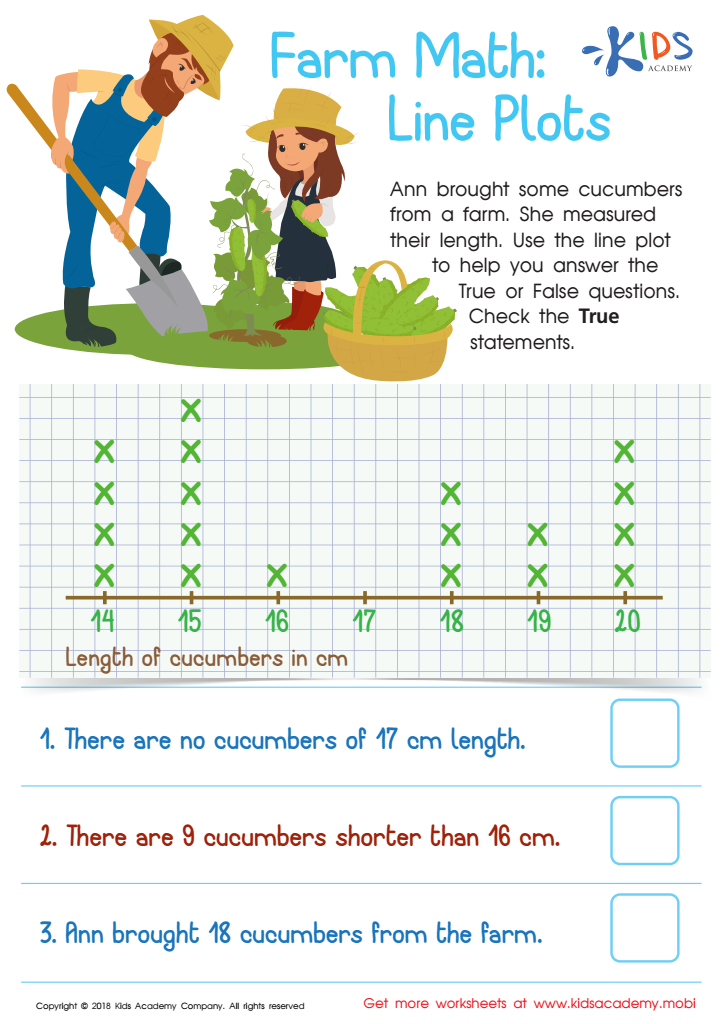
Farm Math: Line Plots Worksheet






.jpg)
Data interpretation is crucial for children aged 6-7 as it lays the foundation for critical thinking and analytical skills. At this young age, children are naturally curious, making it an ideal time to introduce them to the concept of collecting, organizing, and interpreting information. Engaging with data helps them make sense of the world around them.
When parents or teachers focus on data interpretation, children learn how to ask questions and seek answers through observation and evidence. Activities might involve sorting objects, creating simple graphs, or analyzing class surveys about favorite foods, which not only enhances math skills but also improves their ability to draw conclusions and make decisions based on facts.
Additionally, data literacy promotes effective communication skills. Children learn to present their findings clearly, fostering confidence in sharing ideas. This understanding transcends the classroom and is valuable for everyday life—whether making decisions based on patterns or understanding relative issues in their community.
Ultimately, by prioritizing data interpretation, parents and teachers not only support children's academic growth but also equip them with lifelong skills necessary for navigating an increasingly data-driven world. Knowledge of data can spark curiosity, encourage problem-solving, and promote informed decision-making.








