Event ordering Worksheets for Ages 6-7
3 filtered results
-
From - To
Enhance your child's sequencing skills with our engaging Event Ordering Worksheets designed for ages 6-7. Our carefully curated sheets help young learners practice arranging events in logical order, a key component of early learning. These activities foster critical thinking and comprehension, while also making learning fun and interactive. With beautifully illustrated scenes and relatable scenarios, kids can easily grasp concepts and improve their storytelling abilities. Ideal for both classroom and at-home learning, our worksheets provide a solid foundation for reading fluency and narrative skills. Help your child master event sequencing with Kids Academy!
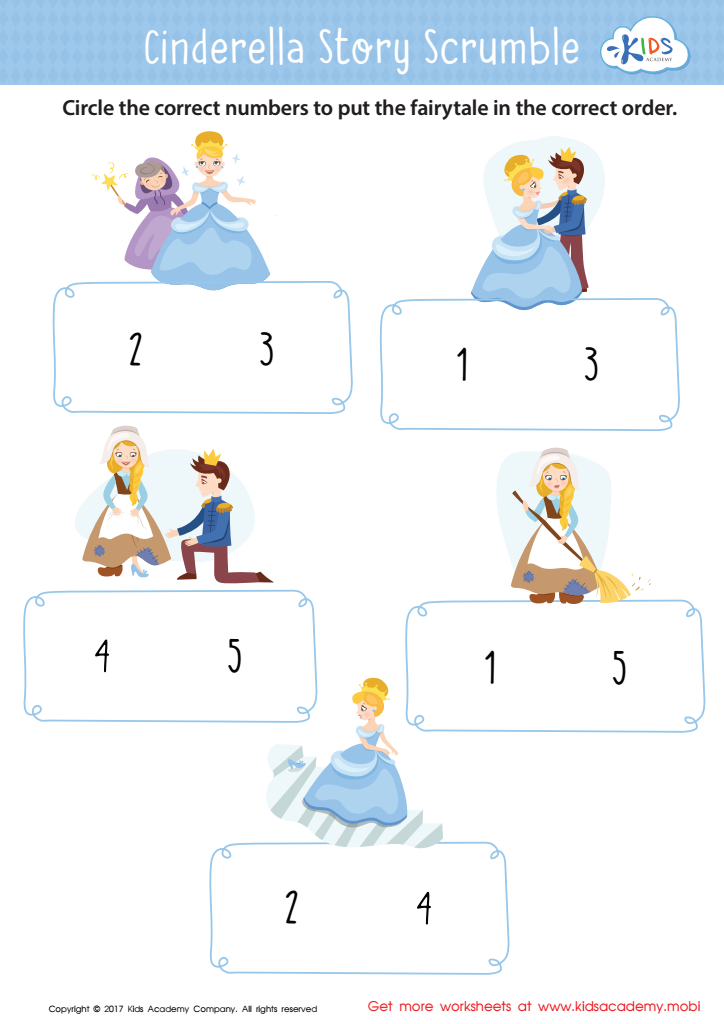
Cinderella Story Sequencing Worksheet
 Assign to My Students
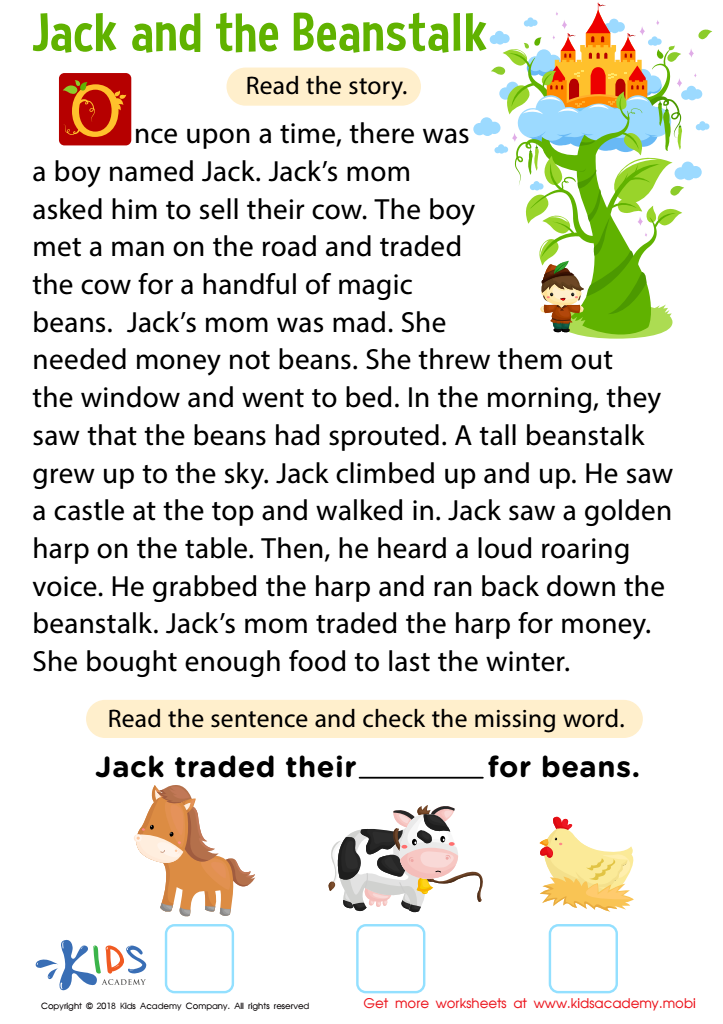
Jack and Beanstalk Worksheet
The Three Little Pigs Worksheet








Event ordering, or understanding the sequence in which events occur, is a critical cognitive skill for children aged 6-7. At this developmental stage, mastering event ordering helps kids comprehend and navigate the world around them. For parents and teachers, fostering this ability is crucial because it underpins other foundational skills like reading comprehension, mathematical reasoning, and daily task execution.
First, in reading, children encounter narratives that unfold in a specific order. Grasping event sequencing allows them to follow plots, understand cause and effect, and predict outcomes, enhancing both their engagement and comprehension. Everything from simple stories to more complex texts requires this skill for full understanding and enjoyment.
In math, understanding sequences and patterns forms the basis for more advanced concepts. Simple activities like following steps to solve a problem, recognizing number patterns, or handling time-related tasks (like days of the week) rely on a strong grasp of order.
Furthermore, daily routines and multi-step instructions become more manageable for children who can effectively sequence events. This skill promotes independence, as kids learn to dress themselves, follow morning routines, or execute school assignments methodically.
Therefore, parents and teachers should care about nurturing event ordering abilities, as it significantly contributes to the overall cognitive development and everyday proficiency of children aged 6-7.








