Improving subtraction skills Worksheets for Ages 6-7
3 filtered results
-
From - To
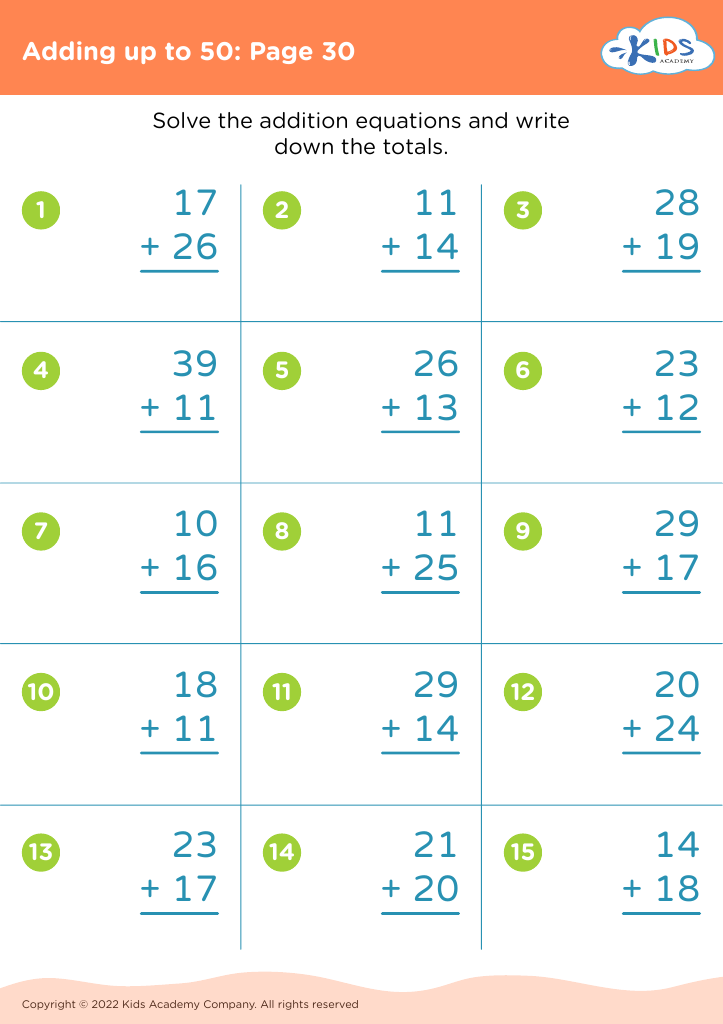
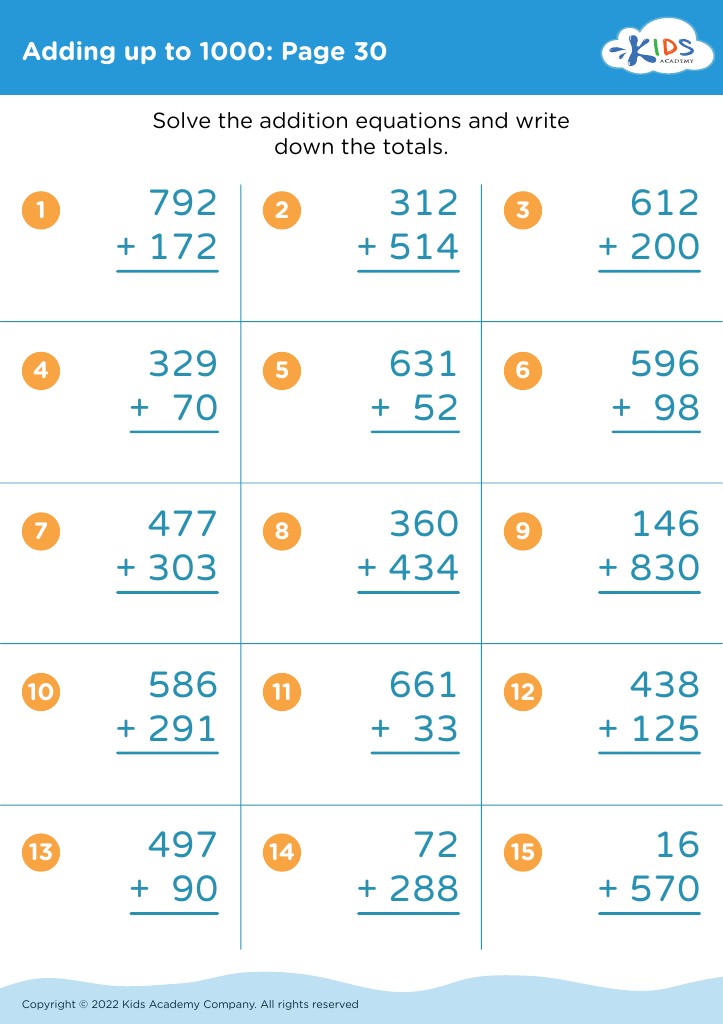
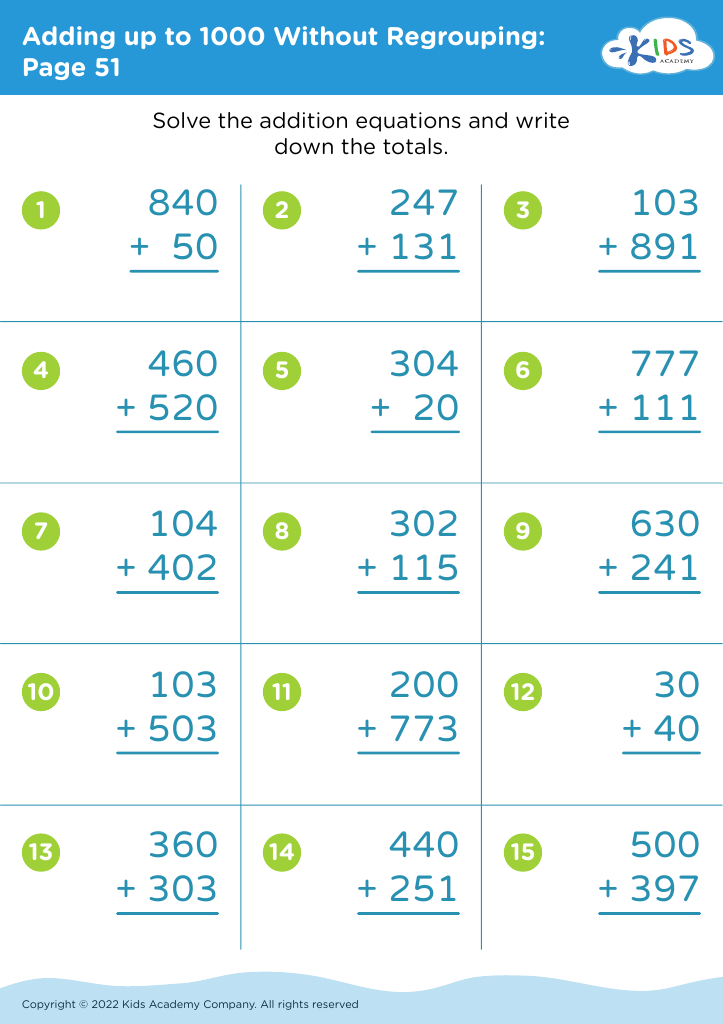
Boost your child’s math abilities with our "Improving Subtraction Skills Worksheets" designed specifically for ages 6-7. These engaging and interactive worksheets are perfect for young learners who are mastering the fundamentals of subtraction. This resource incorporates a variety of exercises, from basic subtraction problems to more challenging scenarios that encourage critical thinking. Each worksheet aims to build confidence and fluency in subtraction, preparing them for future math concepts. Easy to print and suitable for home or classroom use, these worksheets provide a fun way for children to practice smoothly, while reinforcing their learning. Start your child's math journey today!








Improving subtraction skills for children aged 6-7 is crucial for several reasons. At this age, children are transitioning from mastering basic arithmetic concepts to developing stronger mathematical reasoning. Effective subtraction skills lay the foundation for more complex math operations later on, including addition, multiplication, and division.
Furthermore, subtraction is not only about numbers but also enhances problem-solving and critical thinking abilities. A strong grasp of subtraction fosters confidence in math, significantly reducing anxiety and building a positive attitude toward learning. Mastering fundamentals encourages children to engage with math in meaningful ways, using it in everyday situations such as budgeting, measuring, or understanding time.
Additionally, improved subtraction skills help in identifying patterns and relationships between numbers, which are essential for later success in advanced math topics. It also equips children to tackle word problems, enhancing their comprehension skills and ability to translate real-world scenarios into mathematical operations.
Parents and teachers play a vital role in this developmental stage. By supporting subtraction mastery through engaging activities and practices, they can nurture a child's mathematical literacy, ultimately contributing to their overall academic success and a lifelong appreciation for learning. Investing in these foundational skills now reaps great benefits for future learning endeavors.








