Problem-solving ability Worksheets for Ages 6-7
5 filtered results
-
From - To
Unlock your child's potential with our Problem-Solving Ability Worksheets for Ages 6-7. Designed to cultivate critical thinking and analytical skills, these worksheets feature engaging activities and fun challenges. They'll navigate through math puzzles, word problems, and logic games, all tailored to stimulate young minds. Perfect for both homeschooling and classroom use, our worksheets help build a strong foundation for academic success. Step-by-step solutions are included to support guided learning, ensuring your child gains confidence while mastering essential problem-solving abilities. Foster a love of learning today with our expertly crafted worksheets that make solving problems fun and rewarding!
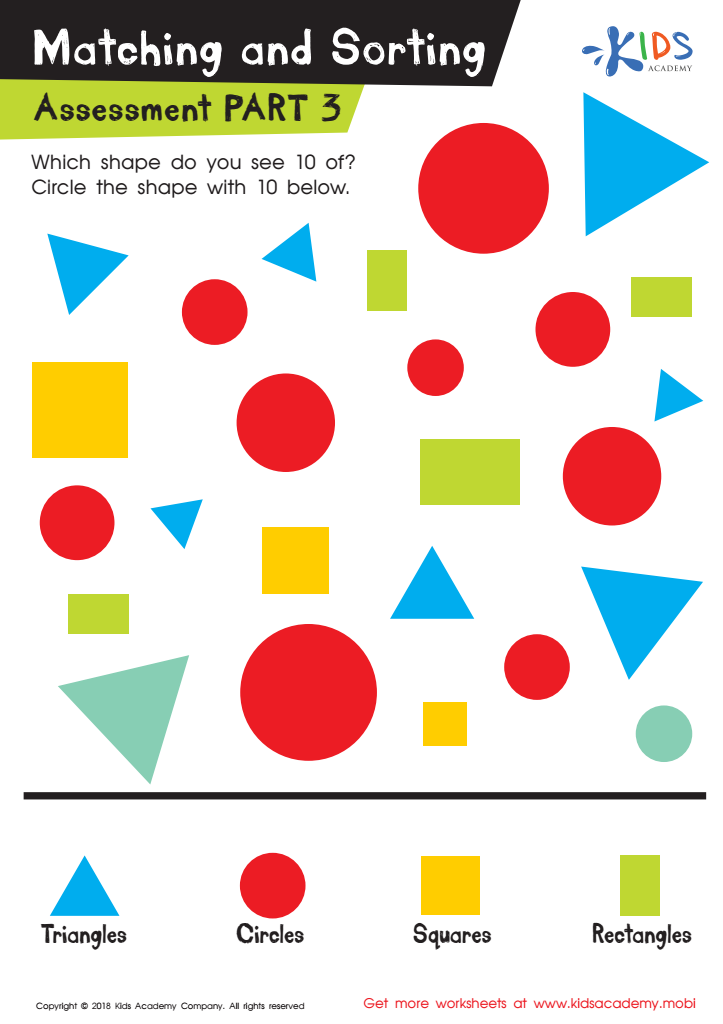
Matching and Sorting for Kindergarten: Assessment 3 Worksheet
 Assign to My Students
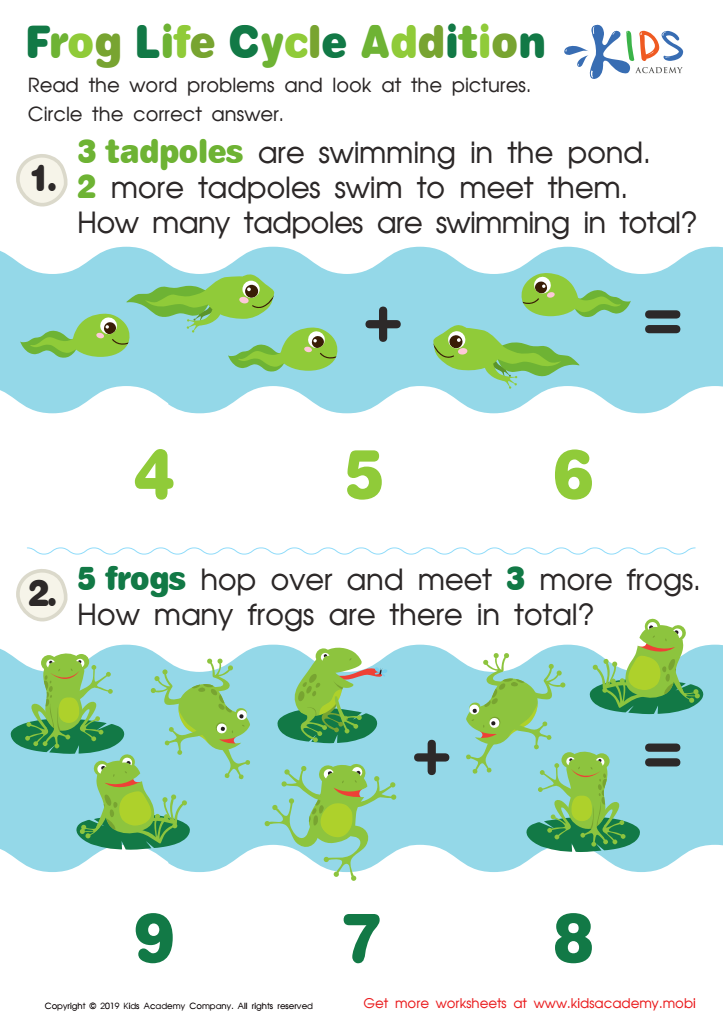
Frog Life Cycle Addition Worksheet
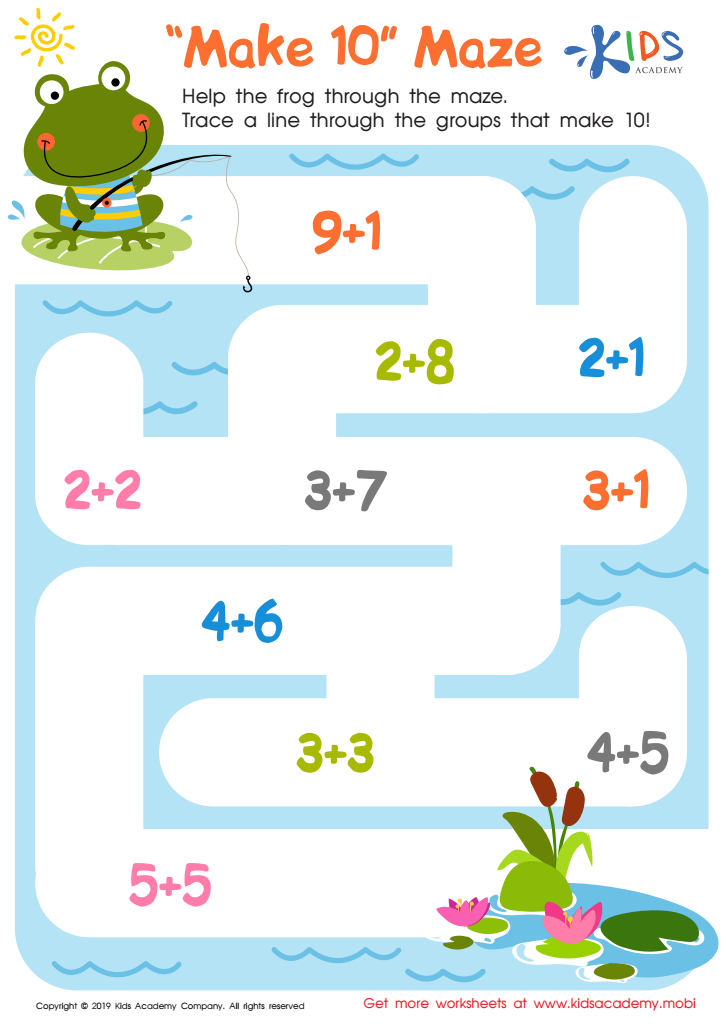
Make 10 Maze Worksheet

Animal Hide and Seek Worksheet








Problem-solving ability is a crucial skill for children aged 6-7 because it significantly impacts their cognitive development, emotional resilience, and future success. At this age, children are developing their reasoning, memory, and logical thinking skills. By encouraging problem-solving, parents and teachers help children learn to think critically and independently. This sets a strong foundation for academic success as problem-solving is integral to subjects like math, science, and reading comprehension.
Emotionally, problem-solving teaches children how to manage frustration and develop perseverance. When faced with a challenge, children learn that persistence and creative thinking can lead to a solution, fostering a growth mindset. This emotional resilience can help them navigate future challenges both in and out of the classroom.
Moreover, developing problem-solving skills enhances social interactions. Children learn to negotiate, share, and resolve conflicts with peers, leading to healthier relationships. They become better communicators as they explain their thinking and reasoning to others.
Incorporating problem-solving into daily activities, whether through puzzles, games, or real-life scenarios, equips children with essential life skills. Parents and teachers play a vital role in creating an environment that encourages exploration, curiosity, and safe trial and error, all of which are building blocks for confident and capable problem-solvers.








