Reading analog clocks Worksheets for Ages 6-7
9 filtered results
-
From - To
Enhance your child’s time-telling skills with our engaging Reading Analog Clocks Worksheets designed for ages 6-7. These printable resources provide an interactive way for young learners to master the fundamentals of reading analog clocks. With a variety of exercises, including matching times, drawing hands on clocks, and answering clock-related questions, kids will build confidence in telling time. Our worksheets are colorful, age-appropriate, and align with educational standards, making learning both fun and effective. Encourage your child's independence and critical thinking while they explore the world of time-telling—download our worksheets today to get started!
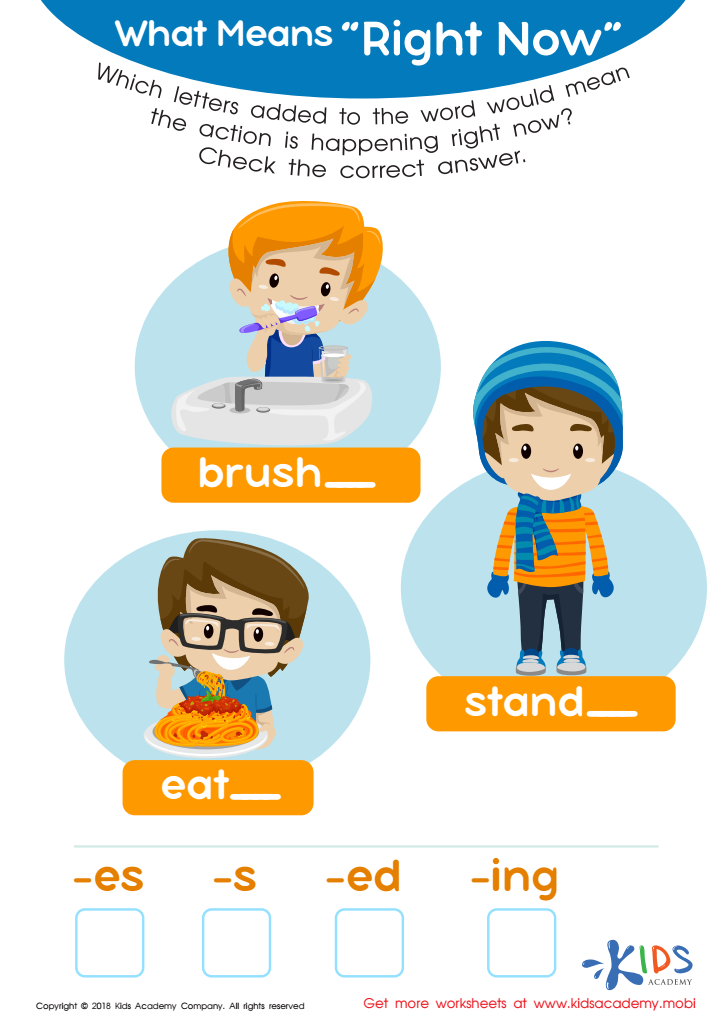
What Means "Right Now" Worksheet
 Assign to My Students
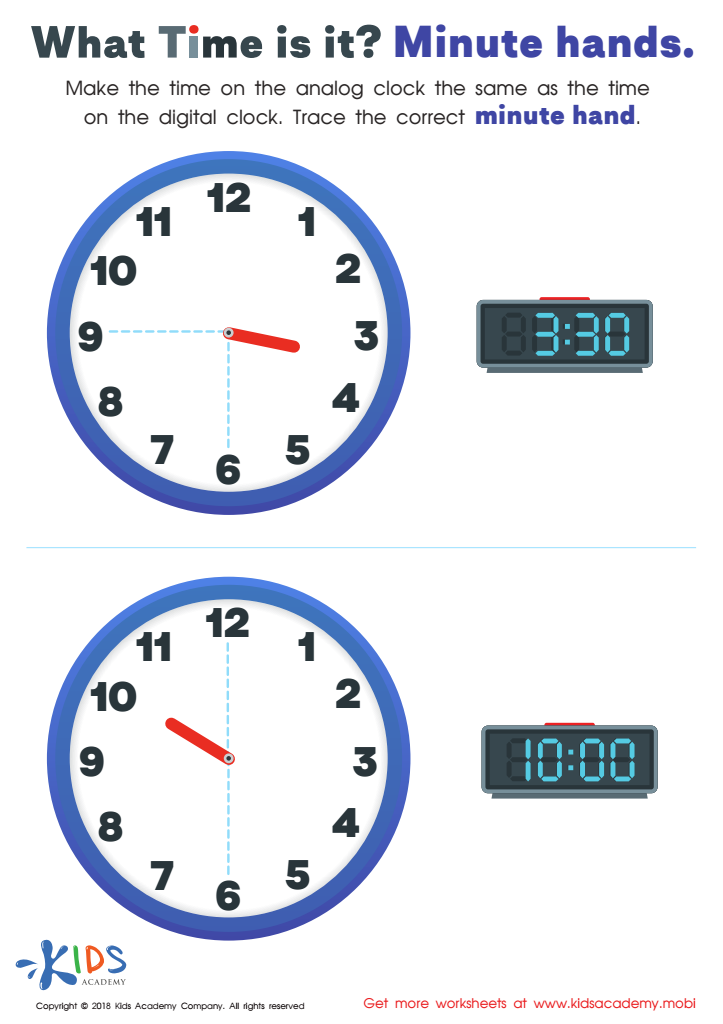
What Time Is it? Minute Hands Worksheet
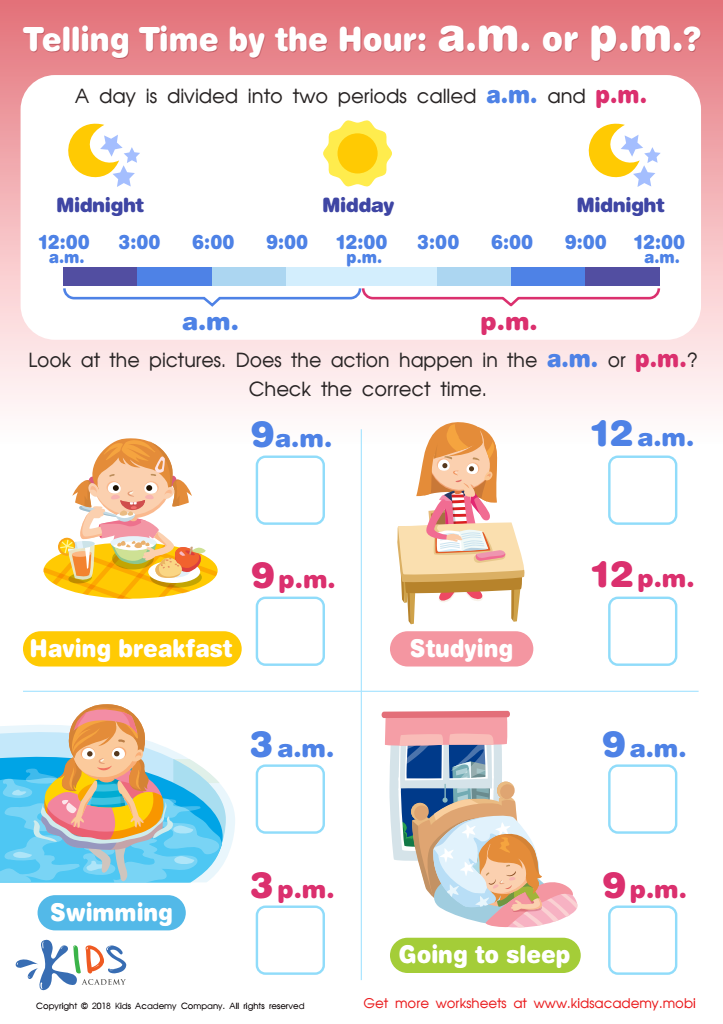
Tilling Time by the Hour: a.m. or p.m.? Worksheet
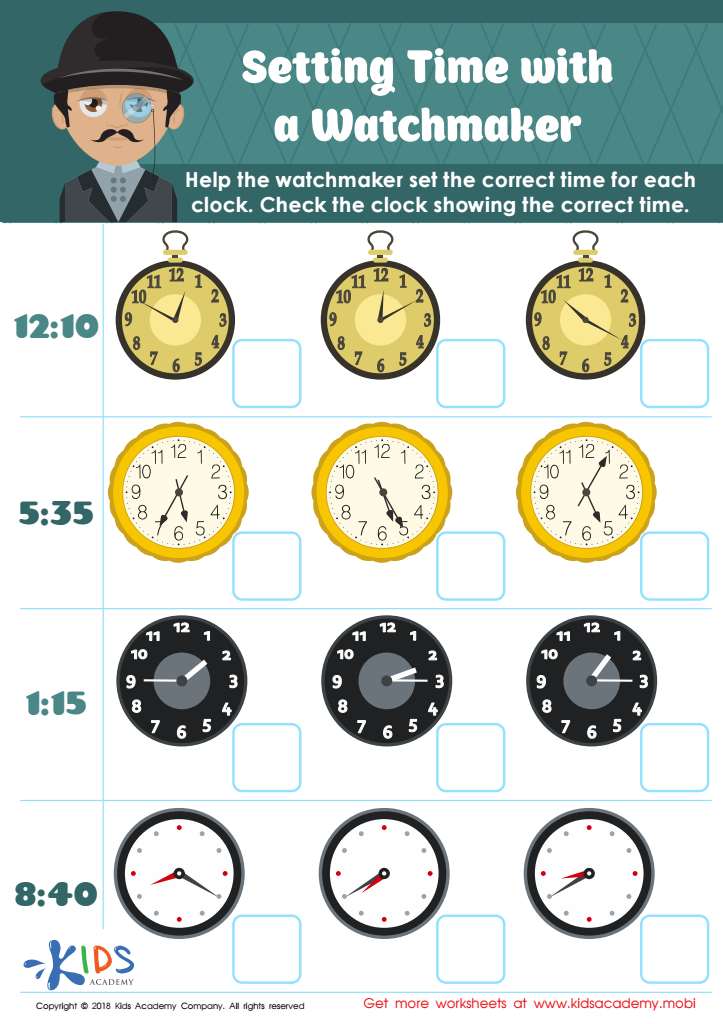
Setting Time with Watchmaker Worksheet
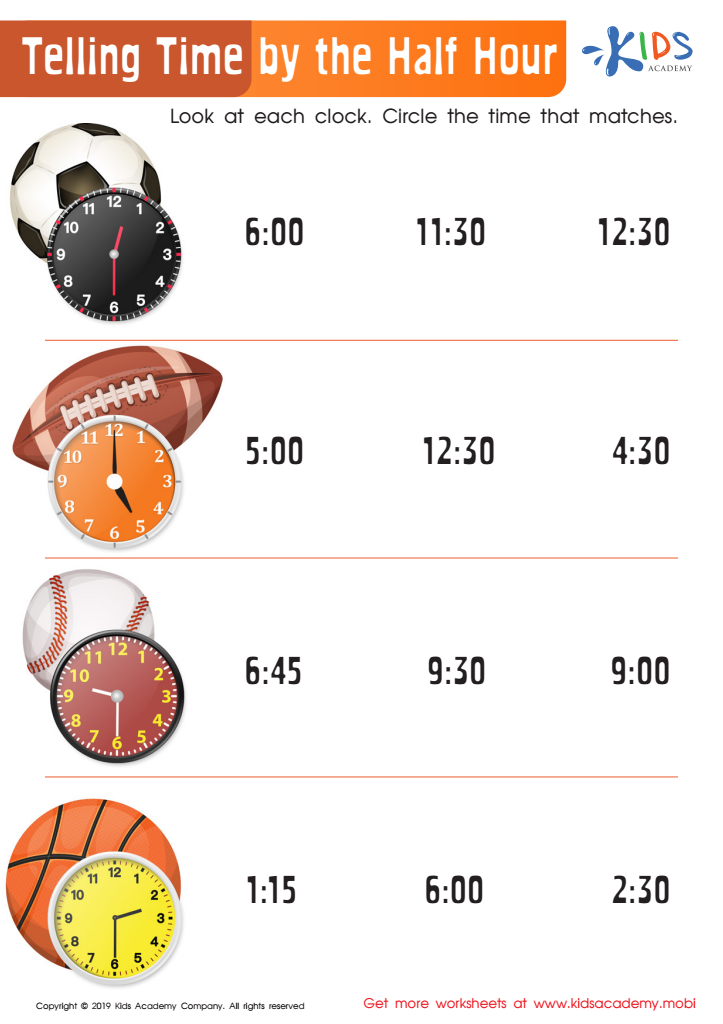
Telling Time by the Half Hour Worksheet






Teaching children to read analog clocks is an essential skill that benefits their cognitive development and daily functioning. For parents and teachers of 6 to 7-year-olds, understanding how to read an analog clock fosters critical thinking and enhances numeracy skills. Recognizing the relationship between numbers and time improves children's ability to engage with not just math but also real-world problems, enhancing their analytical skills as they learn to interpret intervals and patterns.
Additionally, learning to read analog clocks cultivates patience and greater concentration. Children must focus on differentiating between hours and minutes, which encourages attention to detail and reinforces the importance of punctuality. Furthermore, an understanding of analog time fosters independence as children learn to manage their own schedules, allowing them to track their daily routines, from school start times to extracurricular activities.
Parents and teachers also provide a strong foundation for cultural literacy. Analog clocks remain prevalent in society, from school clocks to decorative pieces, and familiarizing children with this mode helps bridge connections between the classroom and the world around them. Overall, teaching kids about analog clocks is not merely an academic exercise but a holistic approach to building life skills that they will carry into adulthood.








