Enhance your child's cognitive skills with our expertly crafted Sequence Understanding Worksheets for ages 6-7. Designed to improve critical thinking and logical reasoning, these worksheets guide young learners through fun, engaging, and age-appropriate activities. Each exercise helps children grasp the concept of sequencing events and ideas, a fundamental skill for academic success. Perfect for classrooms or at-home learning, our worksheets come with clear instructions and colorful illustrations to keep children engaged. Help your child build a strong foundation in sequence understanding with Kids Academy's educational resources. Start making learning fun today!

Check out this FREE "Sequence Understanding" Trial Lesson for age 6-7!

Relationship Between Illustrations and the Story

Favorites
With answer key
Interactive
  • 6-7
  • Sequence Understanding
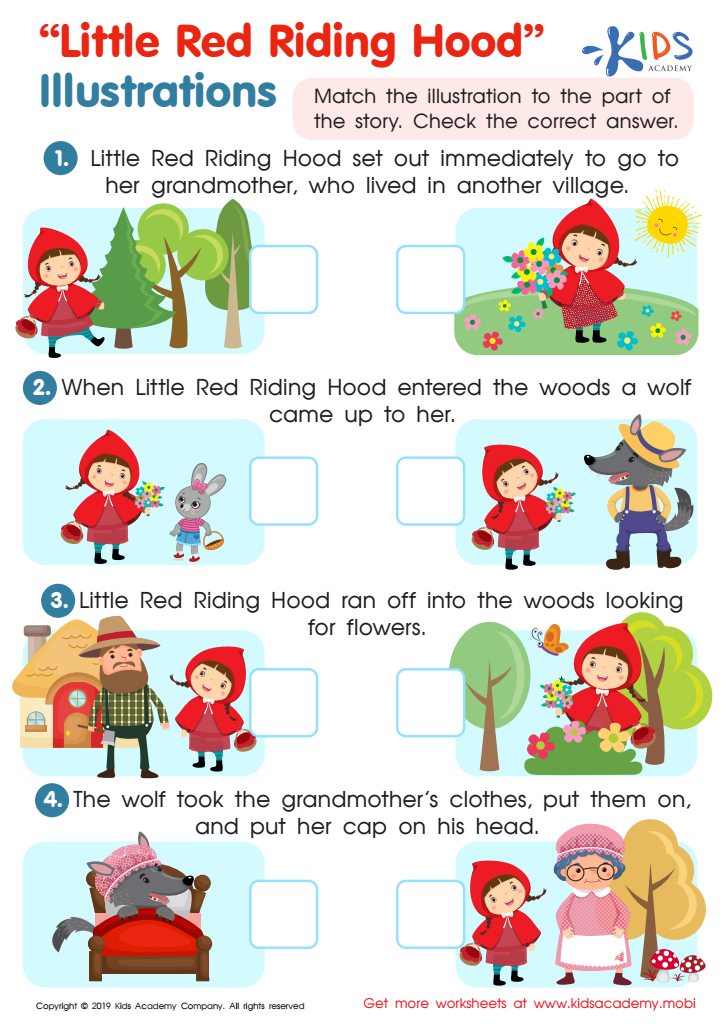
Little Red Riding Hood: Illustrations Worksheet

Little Red Riding Hood: Illustrations Worksheet

Comprehension is improved by having young readers recall and retell stories. This worksheet uses colorful illustrations of the fairytale Little Red Riding Hood. Children use their comprehension skills and strategy to match illustrations to the story parts, check off the appropriate boxes and use the pictures as clues.
Little Red Riding Hood: Illustrations Worksheet
Worksheet
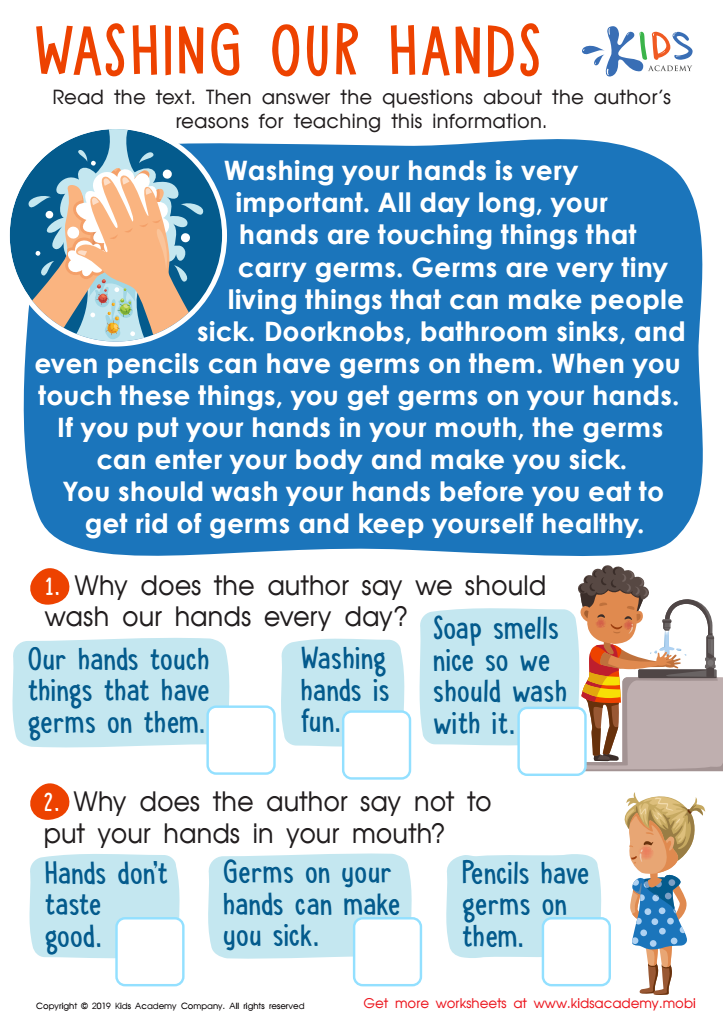
Washing Our Hands Worksheet

Washing Our Hands Worksheet

Reading allows us to gain knowledge. Informational texts provide essential facts which we need to be able to interpret and use. This PDF worksheet helps kids understand the importance of handwashing. It informs them of the germs they may come into contact with, before asking them to answer related comprehension questions.
Washing Our Hands Worksheet
Worksheet
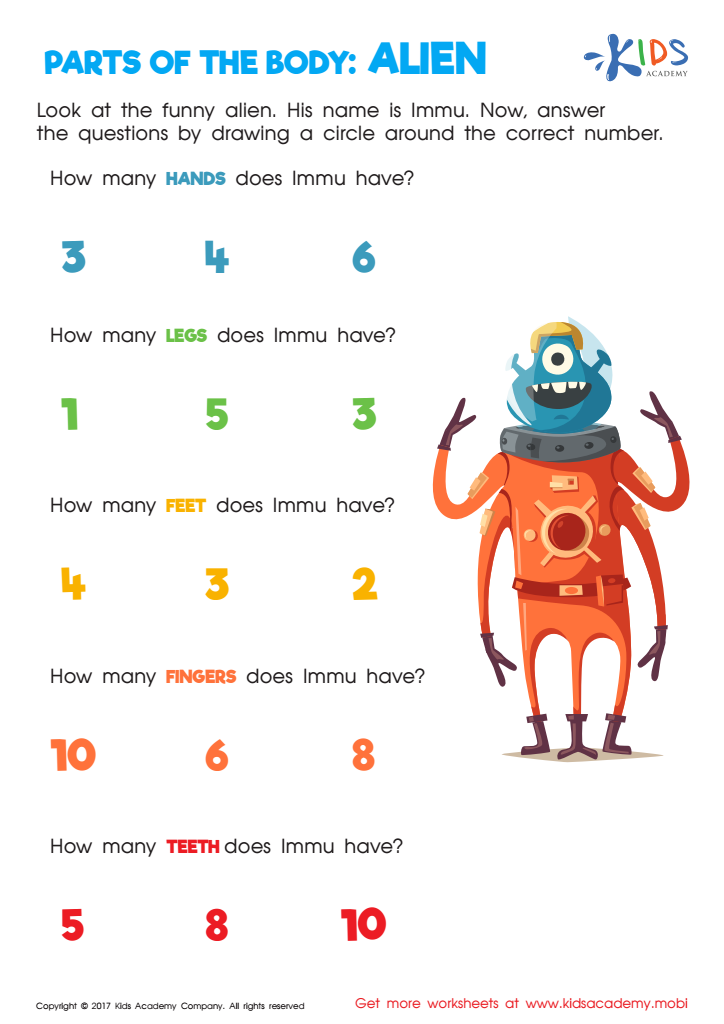
Body Parts Worksheet

Alien Worksheet

Take your child on an out-of-this-world learning adventure with Immu, our friendly alien! This worksheet helps your child practice counting, recognize body parts and sharpen problem solving skills. Get started with this fun, educational activity today and watch as they learn and grow. Print it now and blast off to outer space!
Alien Worksheet
Worksheet
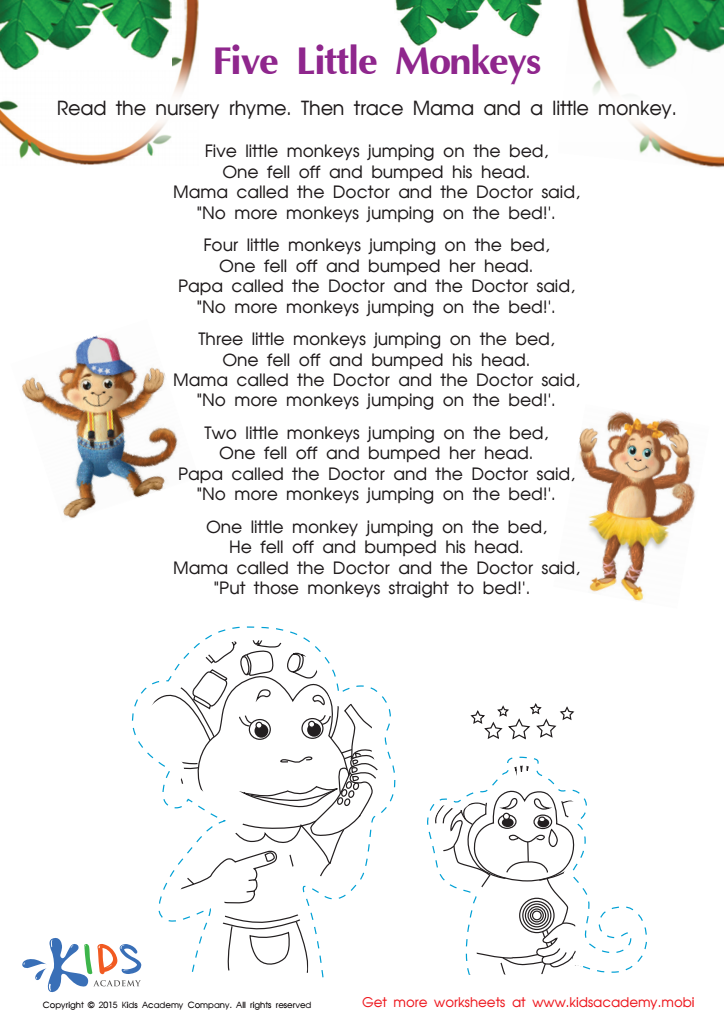
The Five Little Monkeys Nursery Rhyme Worksheet

The Five Little Monkeys Nursery Rhyme Worksheet

Sing the beloved nursery rhyme "Five Little Monkeys" with your child, and add a finger play for extra fun! After a few times, encourage them to join in and fill the songs with laughter. Also, have fun coloring the worksheet featuring the monkeys and their Mama.
The Five Little Monkeys Nursery Rhyme Worksheet
Worksheet
Number maze for kindergarten

Number Maze For Kindergarten Printable
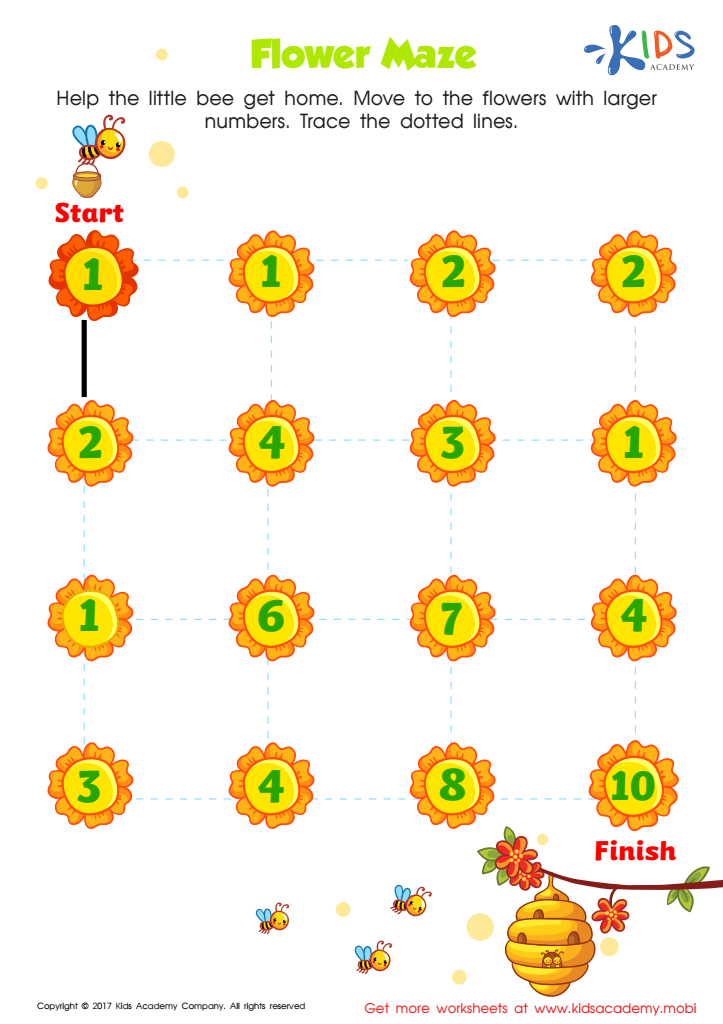
Help the bee get home to his hive by moving through a fun-filled, tricky maze! Compare numbers as you go and select the flower with the larger number. Great for motivating kindergarteners to develop their number sense - a bright number maze!
Number Maze For Kindergarten Printable
Worksheet
Books For Kids PDF Worksheets: The Three Little Pigs

The Three Little Pigs Worksheet

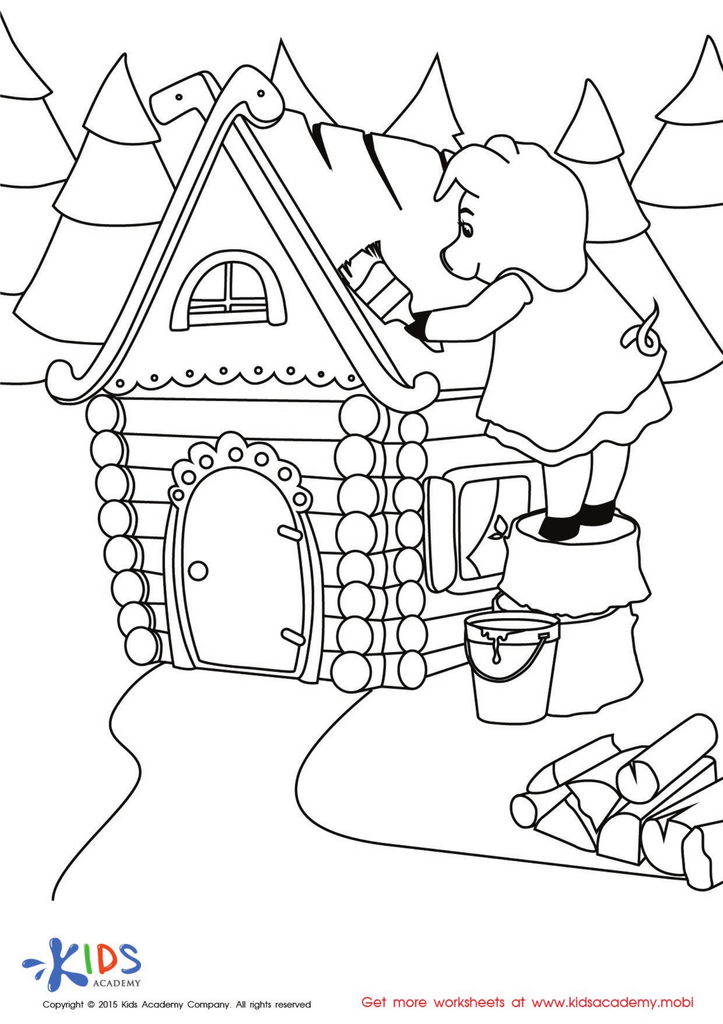
Print out this fun coloring page and unleash your creativity! It features a cute little pig painting her new sticks house. What color will you choose? Work those fine motor muscles and enjoy the picture come to life! See what happens next to the three little pigs.
The Three Little Pigs Worksheet

Worksheet


Understanding sequence is crucial for children aged 6-7 as it forms the bedrock of their cognitive and academic development. When kids grasp sequencing, they learn to arrange actions, narratives, or ideas in a logical order, enhancing their reading comprehension by recognizing the beginning, middle, and end of stories. This skill is also fundamental in mathematics, where understanding the sequence of numbers and steps in problem-solving becomes essential.

Moreover, sequencing plays a pivotal role in daily life activities and fosters organizational skills. For example, dressing up, brushing teeth, or following a recipe requires the ability to follow a set of ordered steps. This ability contributes to greater independence and competence in completing tasks.

On a broader level, sequence understanding enhances students' critical thinking. They learn to predict outcomes and understand cause and effect, thereby developing better problem-solving abilities. Furthermore, as children communicate their ideas or recount experiences, sequencing improves their expressive language skills, helping them to convey thoughts clearly and effectively.

Ultimately, fostering sequence understanding in early education sets the stage for more complex academic skills and life tasks, while also supporting social and emotional development by enhancing self-confidence and preparedness for everyday challenges. Thus, parents and teachers should place significant emphasis on nurturing this essential skill.