Time calculation skills Worksheets for Ages 6-7
3 filtered results
-
From - To
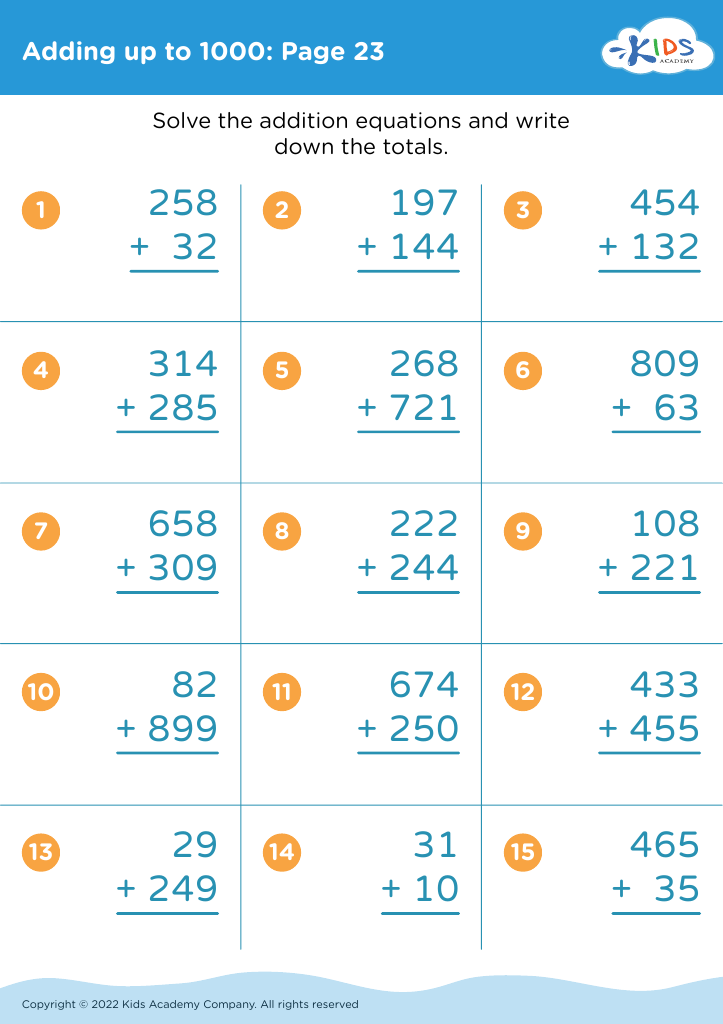
Enhance your child's understanding of time with our engaging Time Calculation Skills Worksheets designed specifically for ages 6-7. These worksheets help young learners grasp essential time concepts by practicing basic time-telling skills and simple calculations. Through a variety of fun exercises, children will learn to read clocks, differentiate between AM and PM, and perform introductory time-related math problems. Perfect for home or school use, our worksheets are designed to support your child's developing math abilities while fostering a love for learning. Download now to help your child build confidence in their time calculation skills!
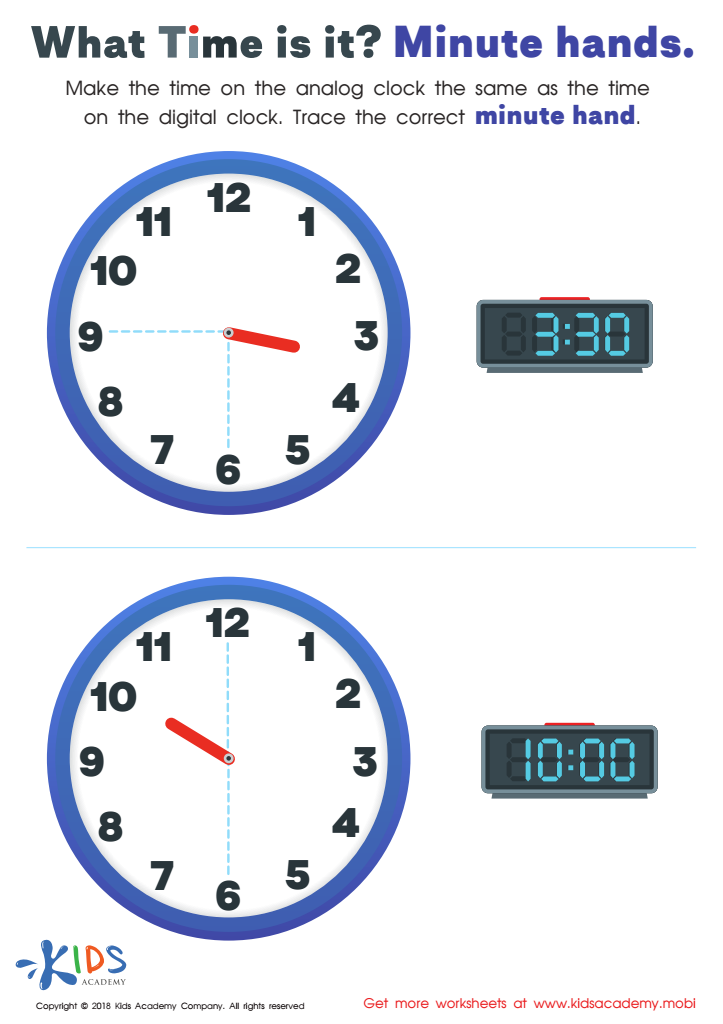
What Time Is it? Minute Hands Worksheet
 Assign to My Students
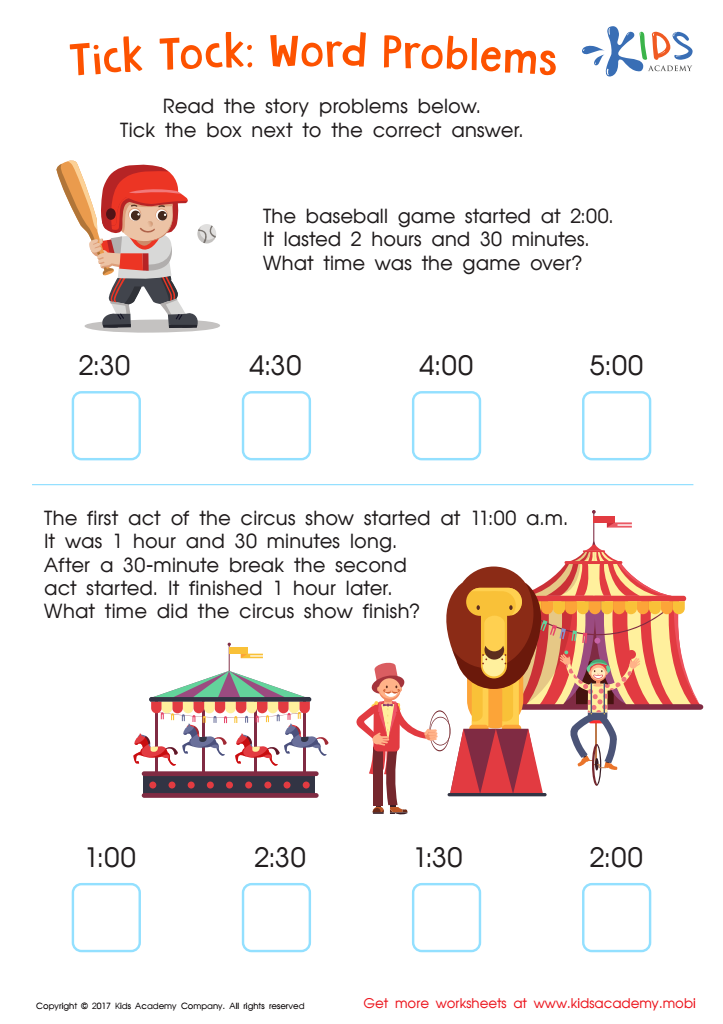
Tick Tock Word Problems Time Worksheet





Time calculation skills are essential for children aged 6-7 as they form a foundational aspect of daily life and future learning. Understanding time helps children develop a sense of routine and structure; it teaches them to manage their time effectively, which is crucial as they navigate school schedules, extracurricular activities, and eventually adulthood.
At this age, children start to grasp the concept of hours and minutes, linking them to real-life activities, such as when it's time for meals, play, or bedtime. This knowledge cultivates self-regulation and responsibility. Additionally, time-related skills enhance cognitive abilities, as they involve problem-solving, counting, and understanding the relationship between numbers.
Parents and teachers can encourage these skills through interactive learning. For instance, using clocks, timers, or games can make the concept of time engaging. These activities not only reinforce mathematical skills but also promote communication and social interaction as children discuss time-related scenarios with peers and adults.
Ultimately, instilling a solid understanding of time calculation in children significantly impacts their independence and confidence, essential traits for navigating both their academic journey and daily life. By prioritizing time skills, parents and teachers help children lay the groundwork for future success.








