Understanding grouping Worksheets for Ages 6-7
3 filtered results
-
From - To
Explore our engaging "Understanding Grouping Worksheets" designed for ages 6-7. Perfectly tailored to build essential math skills, these worksheets help young learners grasp the concept of grouping and classifying items by similarities and differences. Through colorful illustrations and creative activities, children will enjoy practicing counting, sorting, and organizing objects. This hands-on approach not only reinforces foundational math concepts but also enhances critical thinking and problem-solving abilities. Ideal for both classroom and home use, these worksheets ensure a smooth and enjoyable learning experience for your child. Give your little one a head start in math with our fun and educational resources!
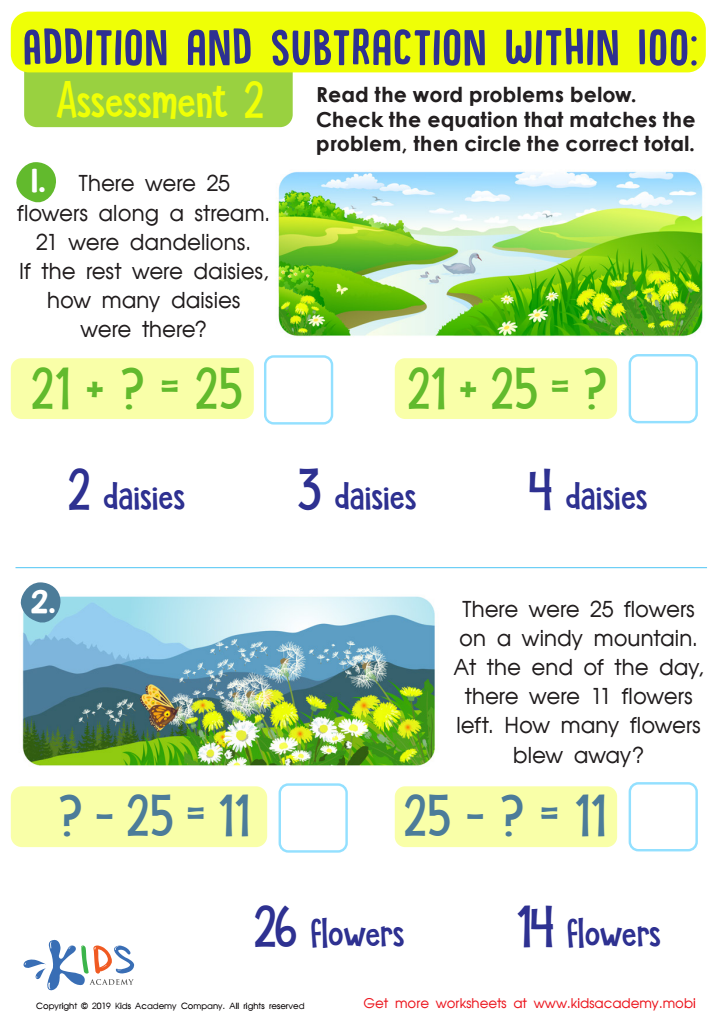
Assessment 2 Math Worksheet
 Assign to My Students
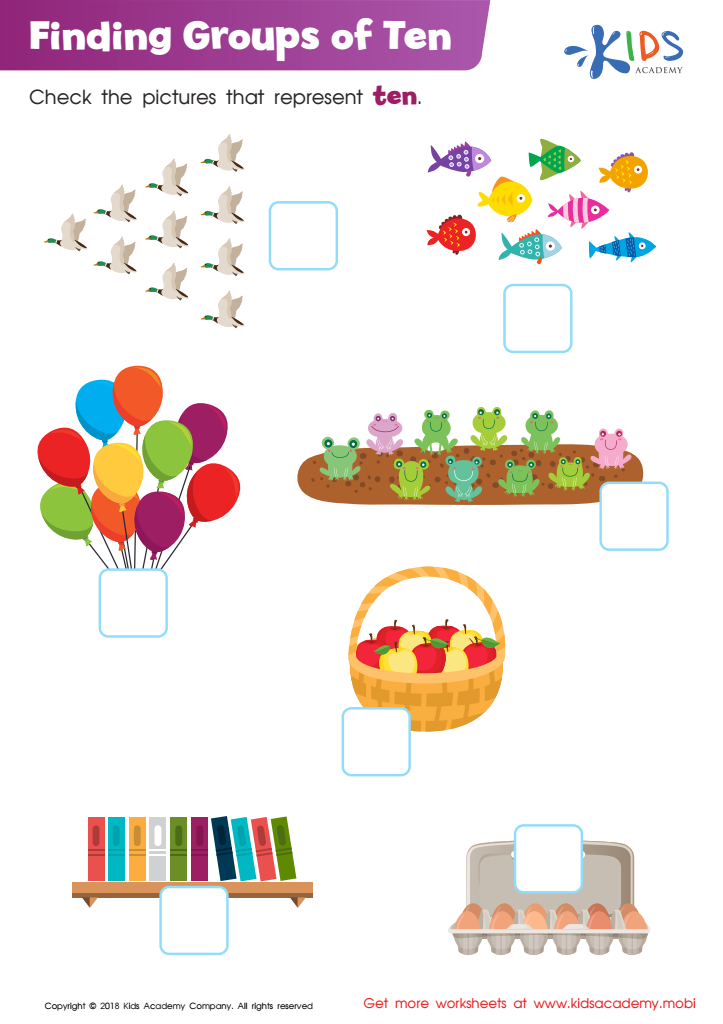
Finding Groups of Ten Worksheet
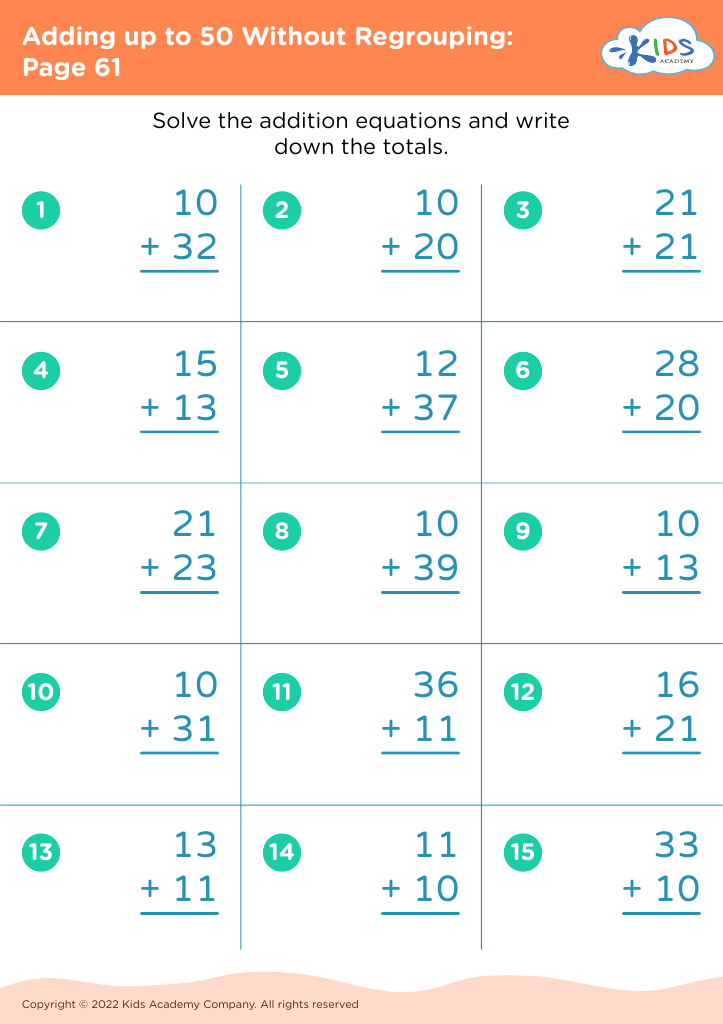


.jpg)





Understanding grouping is foundational for young learners around the ages of 6-7, playing a critical role in their cognitive and mathematical development. Grouping helps children grasp the principles of organization, categorization, and comparison, which are essential skills for higher-level mathematical operations such as addition, subtraction, multiplication, and division.
When children understand grouping, they learn to see numbers and objects as part of larger wholes, enhancing their ability to perform tasks like counting by twos, fives, and tens. This skill is instrumental in developing their sense of number relationships and in making abstract mathematical concepts more concrete and understandable. For instance, a child who can group objects efficiently can better comprehend a math problem involving "how many groups of four make twelve?"
Moreover, grouping activities can improve critical thinking and problem-solving skills. These activities encourage children to observe patterns, make predictions, and devise strategies—abilities that are transferable to various learning contexts.
For teachers and parents, investing time in teaching grouping not only prepares children for future academic success but also bolsters their confidence and enjoyment in learning. By nurturing this understanding, adults can help solidify a child’s numerical foundation, making math less intimidating and laying the groundwork for strong analytical abilities in other subjects as they grow.








