Understanding instructions Worksheets for Ages 6-7
3 filtered results
-
From - To
"Understanding Instructions Worksheets for Ages 6-7" feature engaging activities to enhance children's comprehension and follow-through abilities. These worksheets from Kids Academy are thoughtfully designed for first graders, providing a variety of exercises that teach kids how to read, process, and follow directions accurately. Kids will sharpen their listening skills, enhance their cognitive development, and improve their academic performance through fun, vibrant, and age-appropriate tasks. Ideal for school and home use, these worksheets build a strong foundation for success in multiple subject areas, facilitating confident and independent learners. Start exploring today to nurture your child's essential life skills!
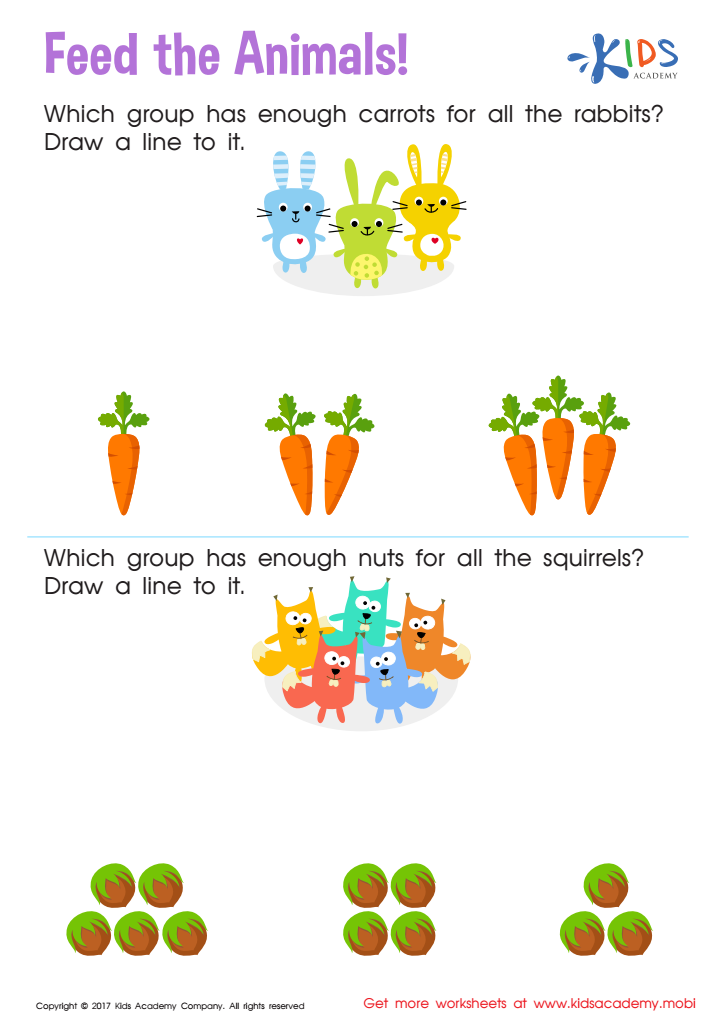
Count and Match: Feed the Animals Worksheet
 Assign to My Students







Parents and teachers play a pivotal role in the developmental stages of children ages 6-7, and understanding instructions is crucial at this stage for several reasons. Firstly, following instructions is a foundational skill that supports learning and everyday activities. By understanding instructions, children can complete tasks more independently, boosting their confidence and self-esteem. This sense of achievement fosters a positive attitude towards learning and schoolwork.
Secondly, good comprehension of instructions ensures that children can safely navigate their environment. Whether it's understanding rules in the classroom or directions for crossing the street, clear instructions help keep them safe. Effective listening and interpretation skills also enhance their ability to follow multi-step tasks, which is essential as academic demands increase.
Moreover, children who can understand instructions are better collaborators. This skill improves their ability to participate in group activities, follow game rules, and contribute in class discussions. This collaborative aspect lays the groundwork for critical social skills like cooperation, empathy, and effective communication.
Lastly, the ability to understand instructions correlates with better academic performance. It ensures that children correctly follow homework guidelines, participate in classroom activities, and grasp new concepts more efficiently. Hence, investing time to ensure children understand instructions provides them a head start in their educational journey and personal development.








