Filters

19 filtered results

Clear all filters
Favorites
With answer key
Interactive

19 filtered results

Difficulty Level

Grade


Enhance your child's counting skills with our engaging "Adding Up to 100 Worksheets" designed specifically for ages 6-7. These interactive worksheets encourage children to practice basic addition while building confidence in their mathematical abilities. Through a variety of fun exercises, kids will learn to recognize numbers, perform addition tasks, and develop a strong foundation in counting up to 100. Tailored to meet the developmental needs of young learners, these worksheets are perfect for both classroom and home use. Start your child’s journey toward math mastery with our excellent resources that make learning enjoyable and effective!
Check out this FREE Trial Lesson on Adding up to 100 for age 6-7!

Match Exactly the Same

Favorites
With answer key
Interactive
  • 6-7
  • Improve counting skills
  • Adding up to 100
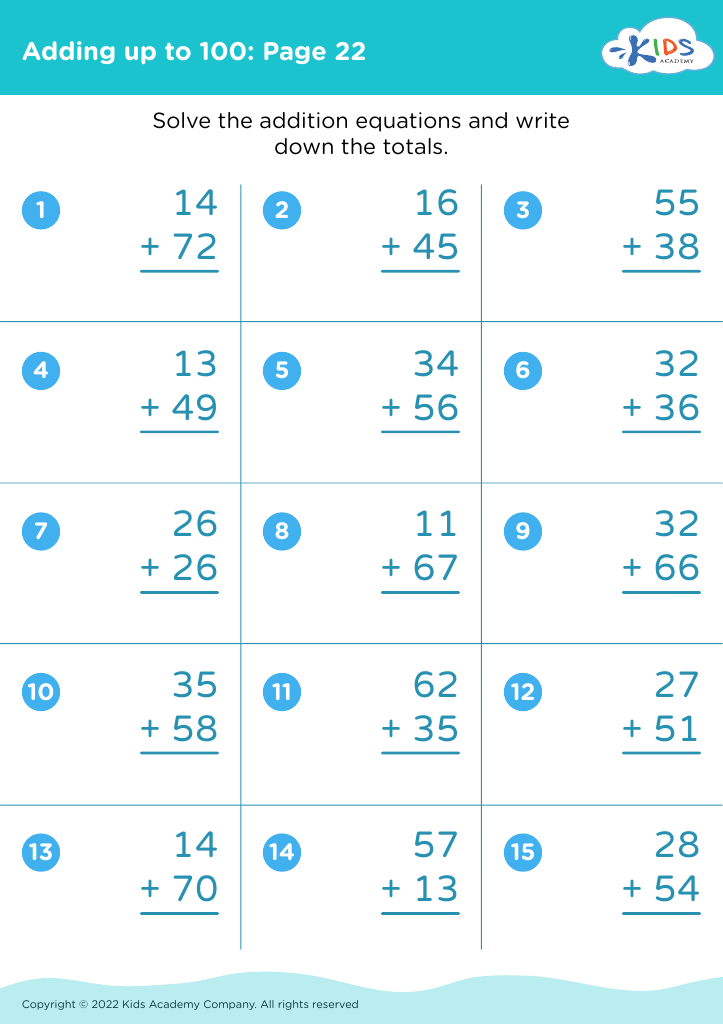
Adding up to 100: Page 22

Adding up to 100: Page 22

Adding up to 100: Page 22
Worksheet
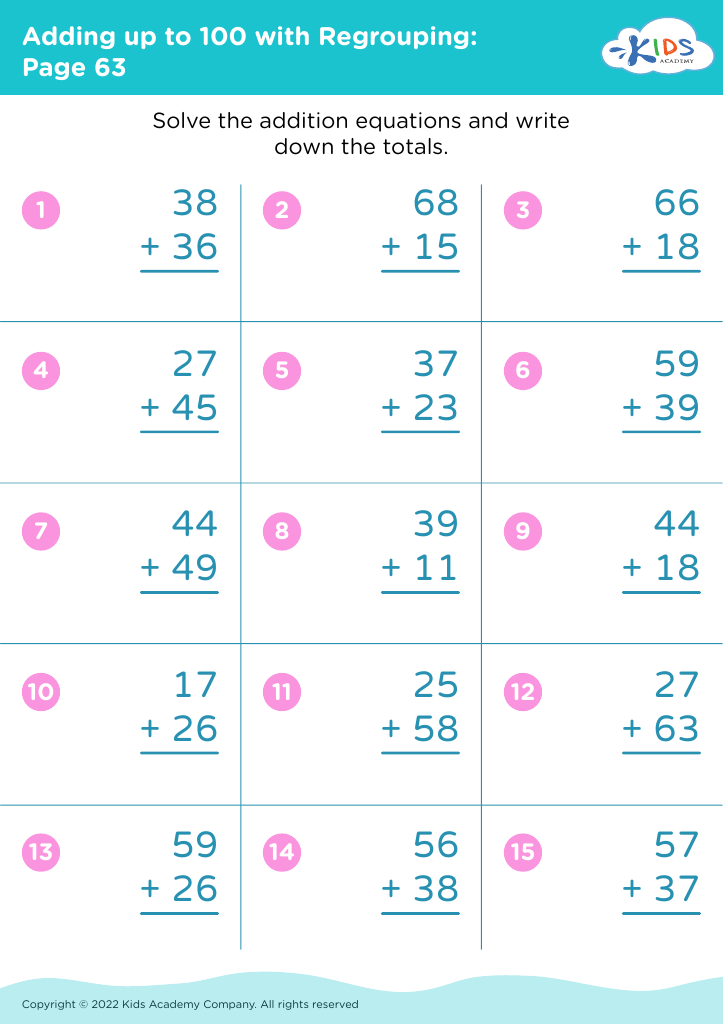
Adding up to 100 with Regrouping: Page 63
Worksheet
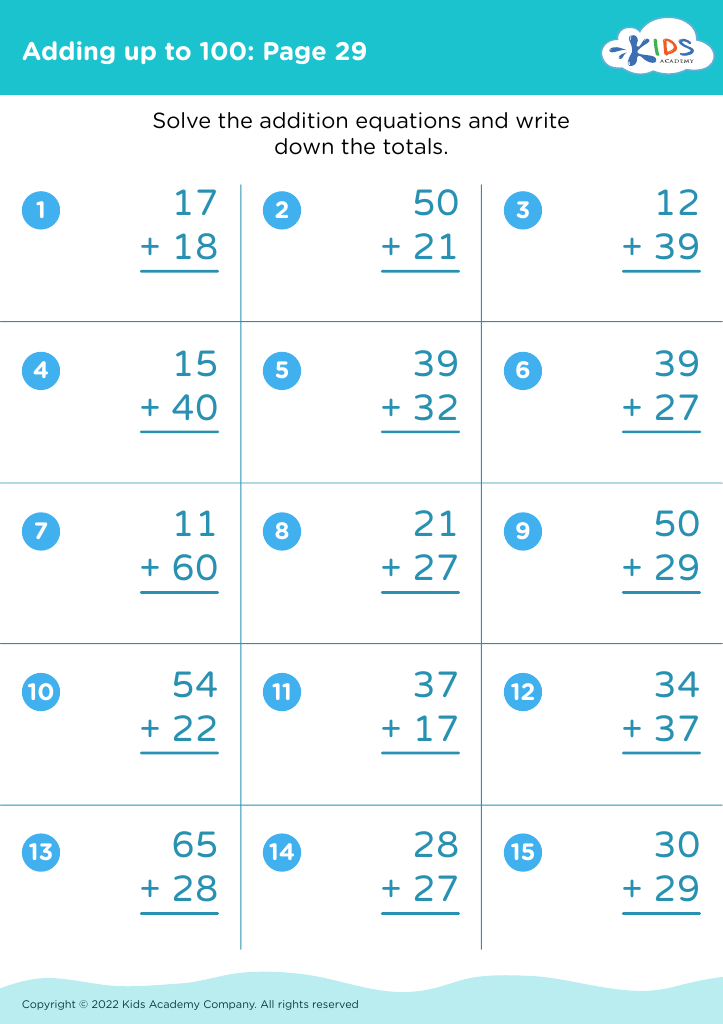
Adding up to 100: Page 29

Adding up to 100: Page 29

Adding up to 100: Page 29
Worksheet
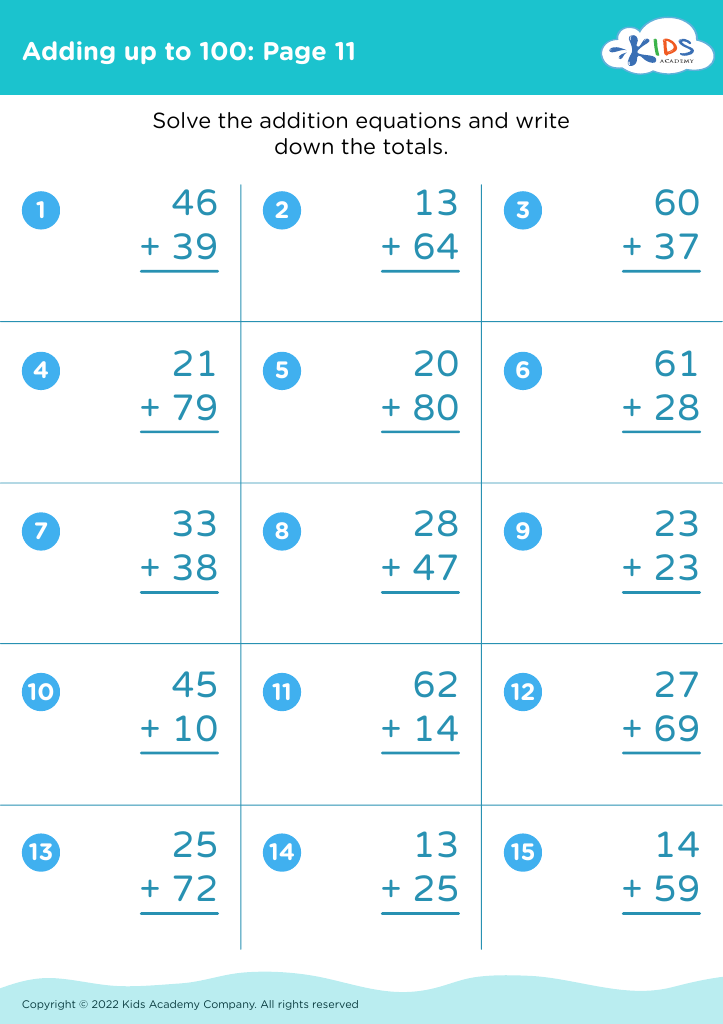
Adding up to 100: Page 11

Adding up to 100: Page 11

Adding up to 100: Page 11
Worksheet
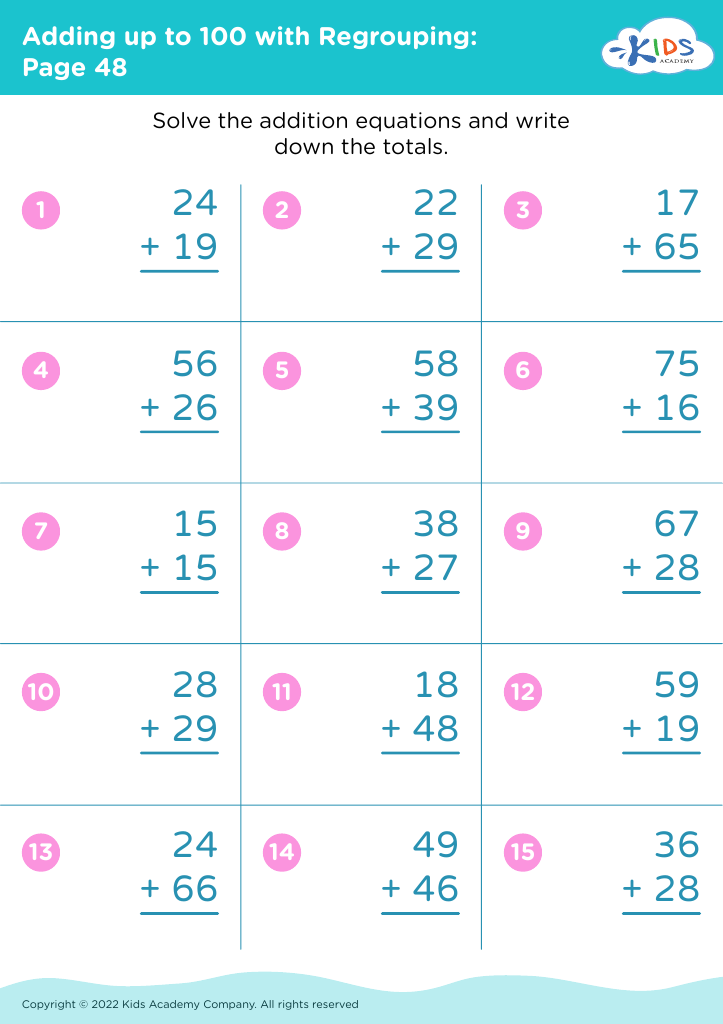
Adding up to 100 with Regrouping: Page 48
Worksheet
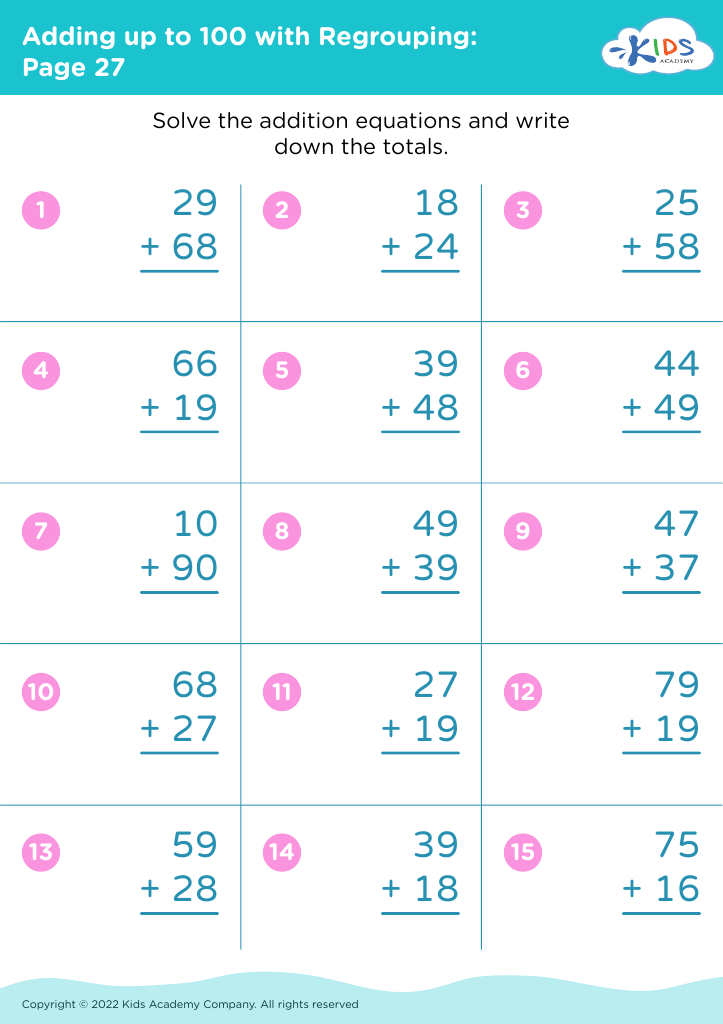
Adding up to 100 with Regrouping: Page 27
Worksheet
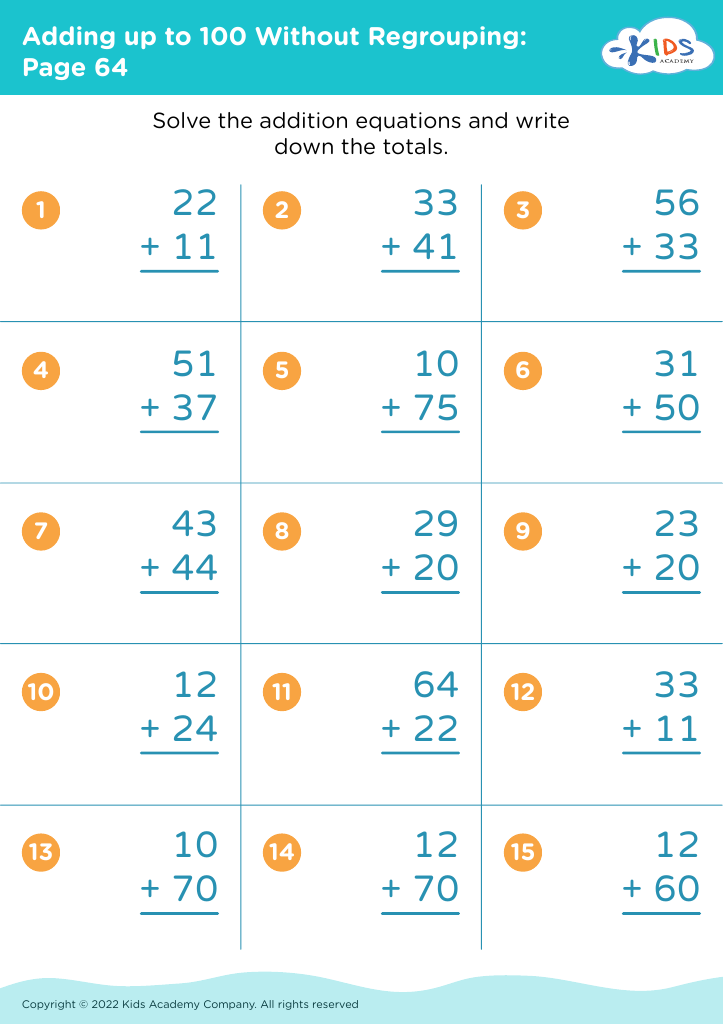
Adding up to 100 Without Regrouping: Page 64
Worksheet
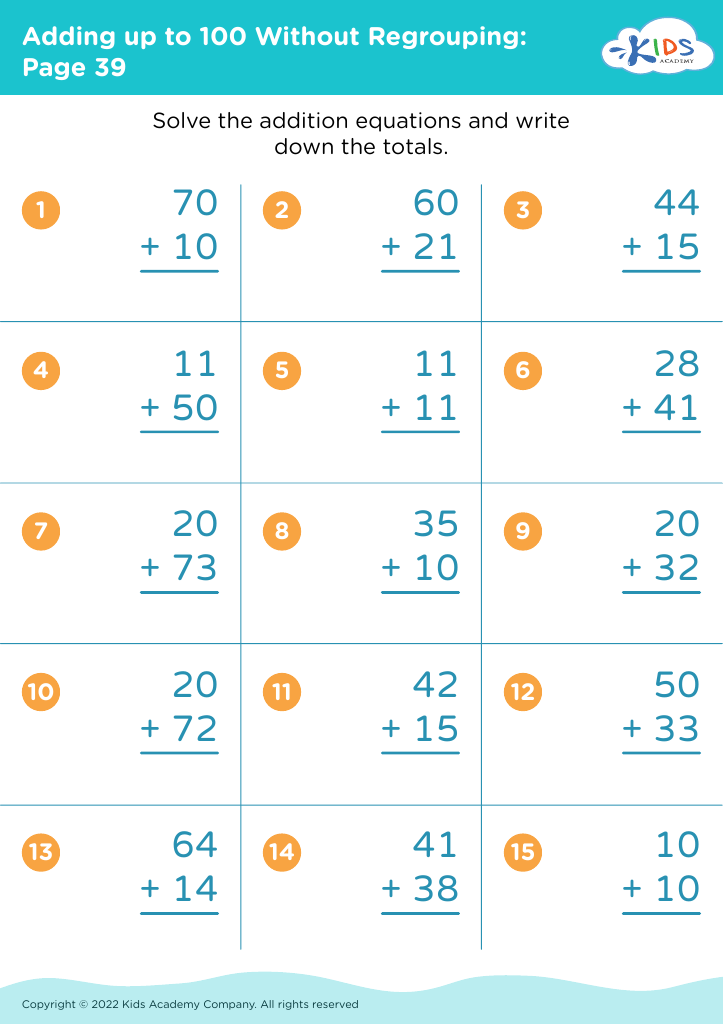
Adding up to 100 Without Regrouping: Page 39
Worksheet
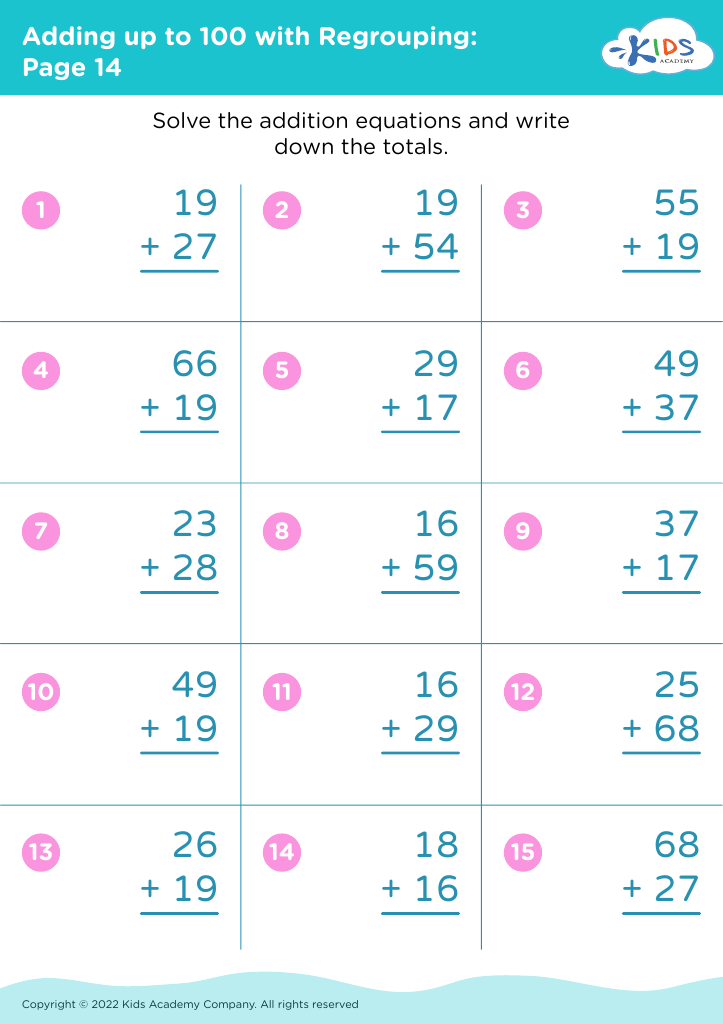
Adding up to 100 with Regrouping: Page 14
Worksheet
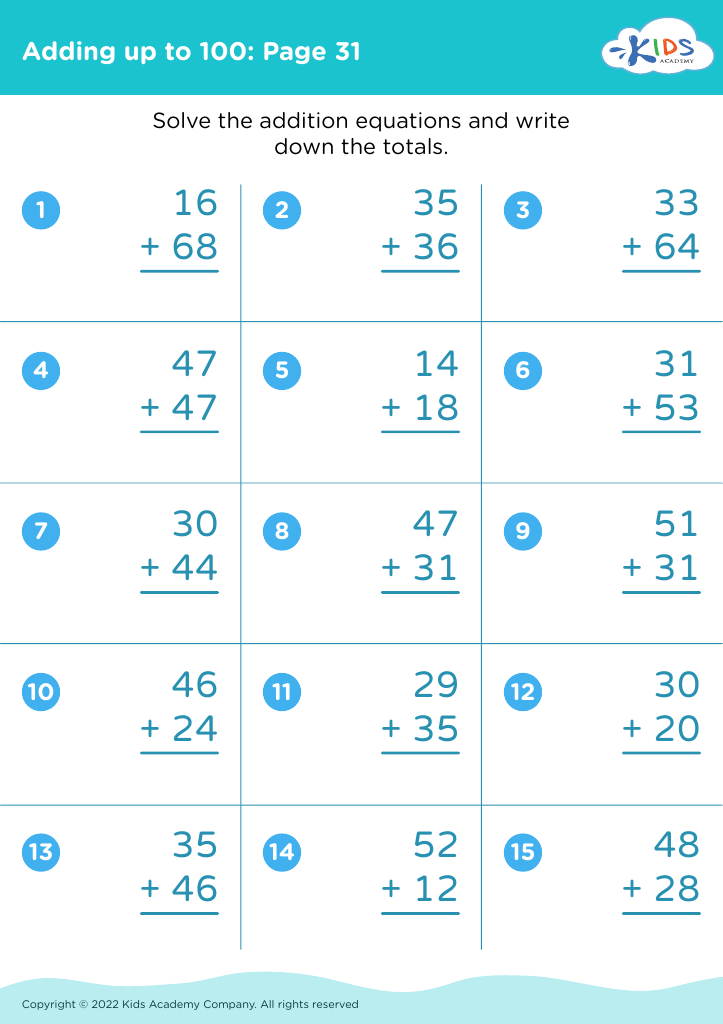
Adding up to 100: Page 31

Adding up to 100: Page 31

Adding up to 100: Page 31
Worksheet
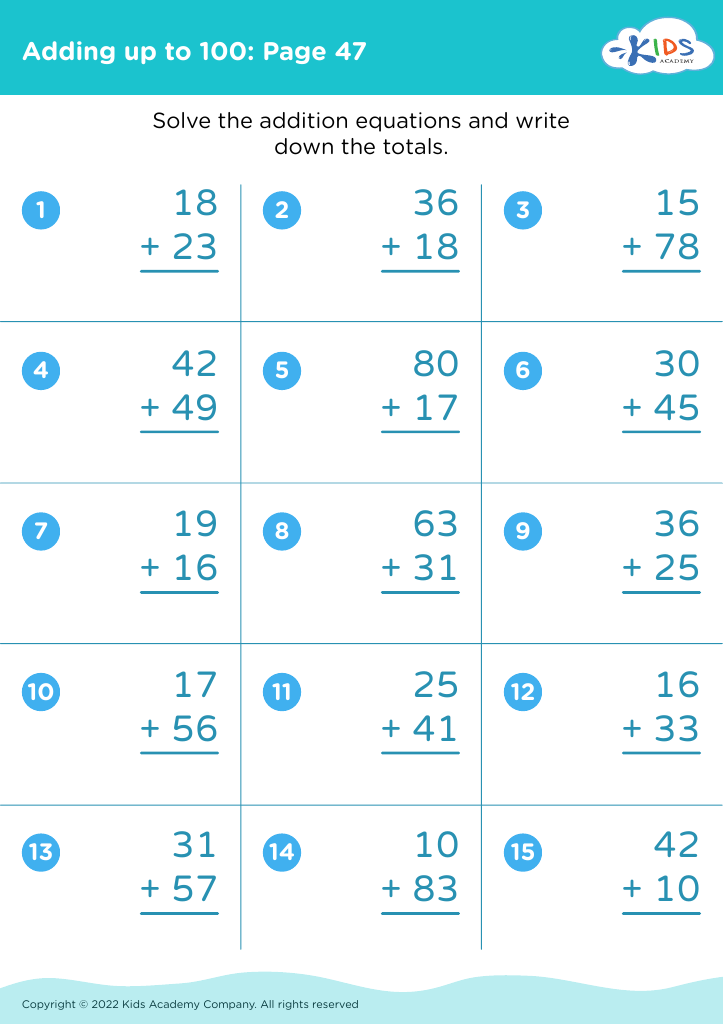
Adding up to 100: Page 47

Adding up to 100: Page 47

Adding up to 100: Page 47
Worksheet
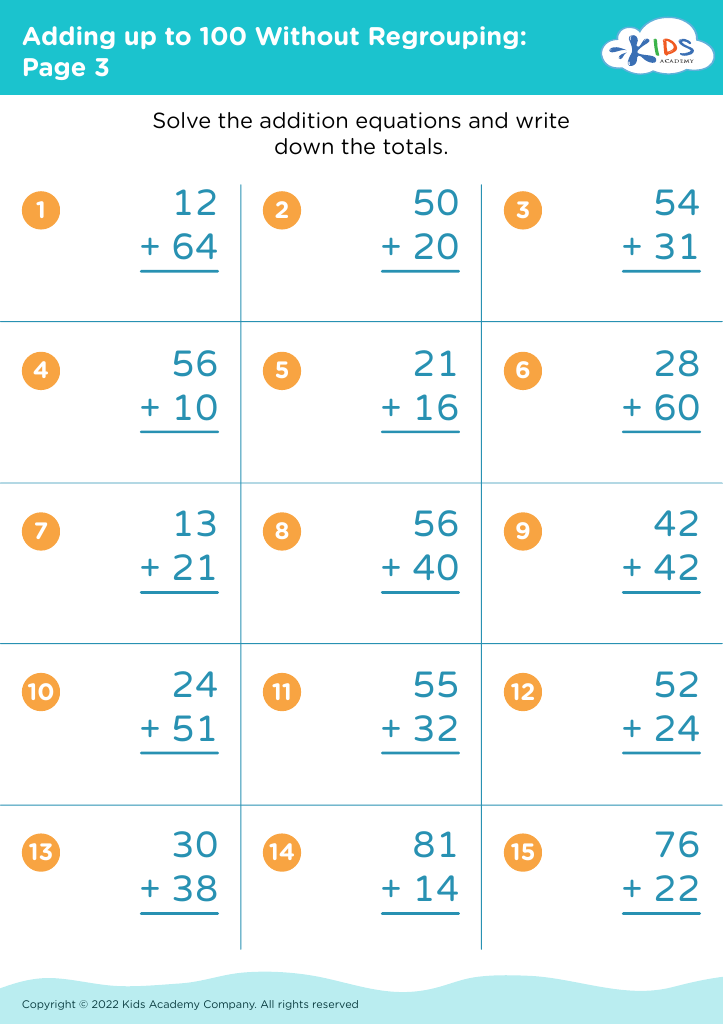
Adding up to 100 Without Regrouping: Page 3
Worksheet
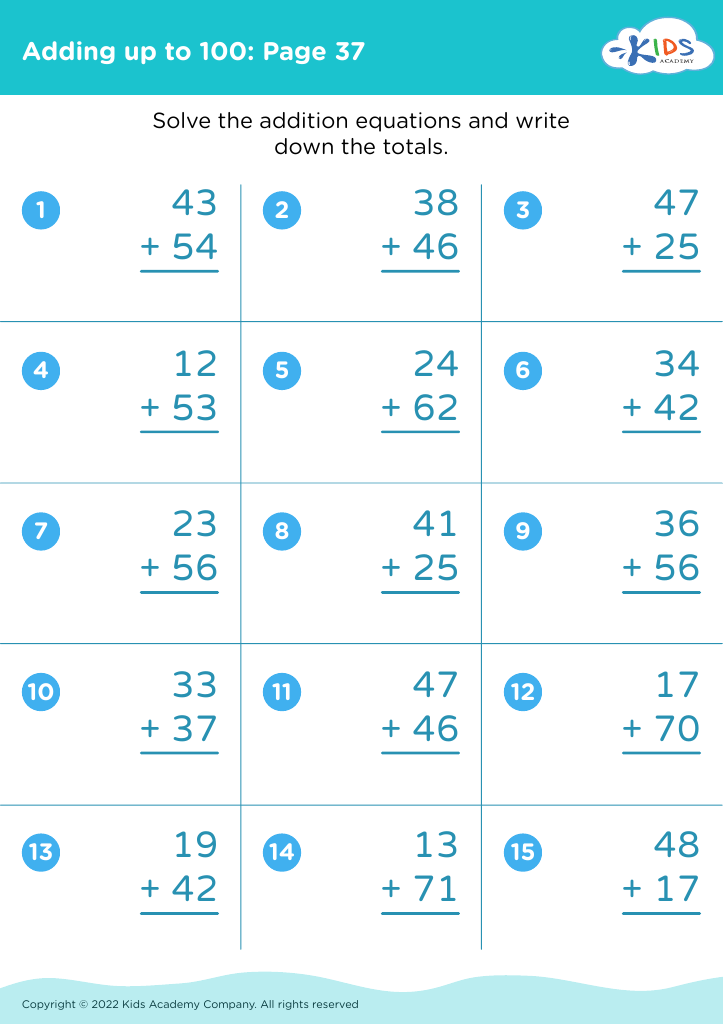
Adding up to 100: Page 37

Adding up to 100: Page 37

Adding up to 100: Page 37
Worksheet
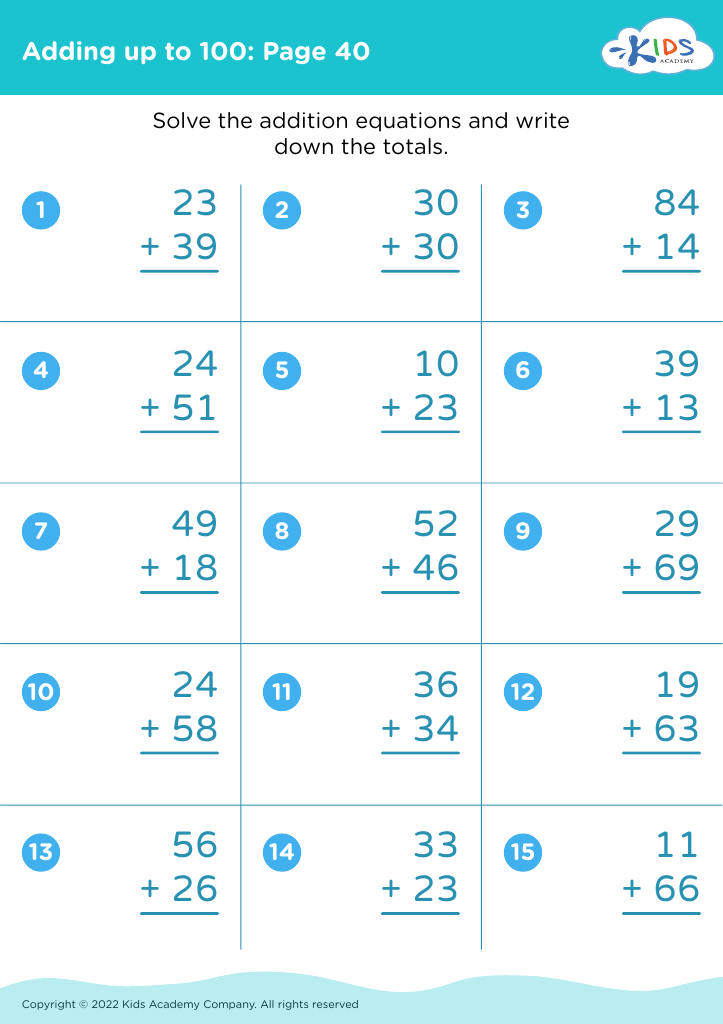
Adding up to 100: Page 40

Adding up to 100: Page 40

Adding up to 100: Page 40
Worksheet
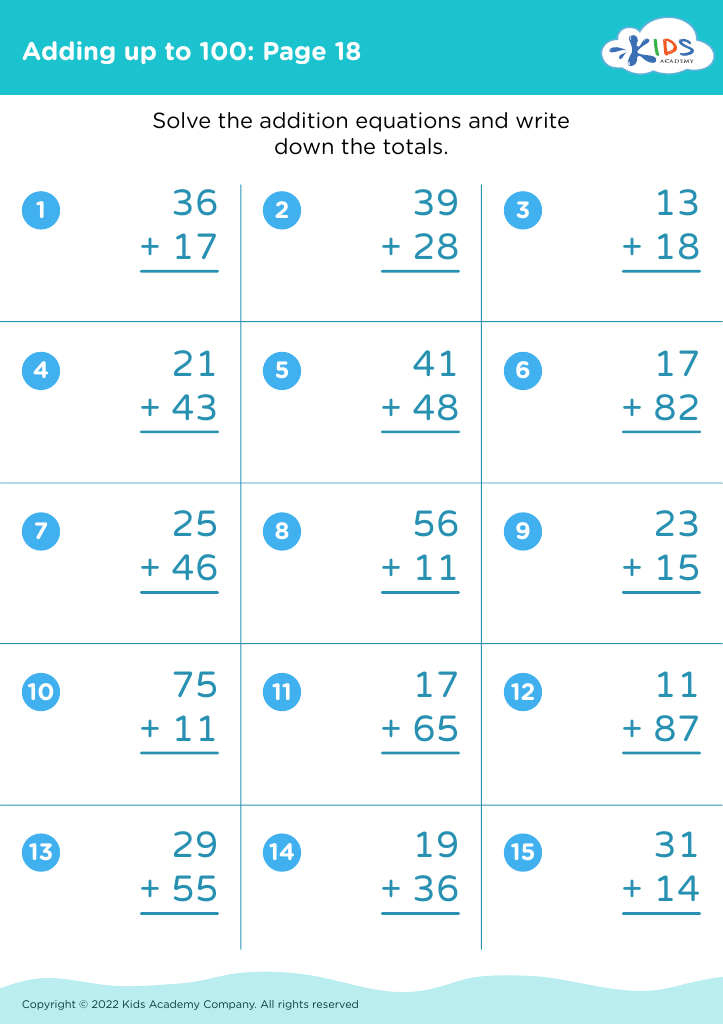
Adding up to 100: Page 18

Adding up to 100: Page 18

Adding up to 100: Page 18
Worksheet
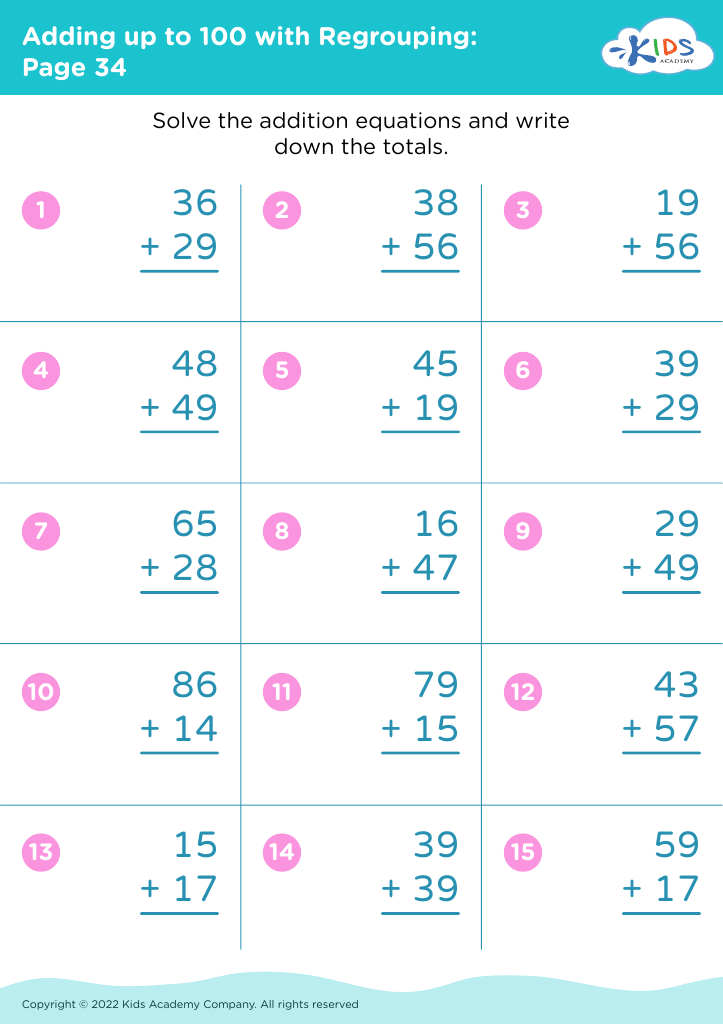
Adding up to 100 with Regrouping: Page 34
Worksheet
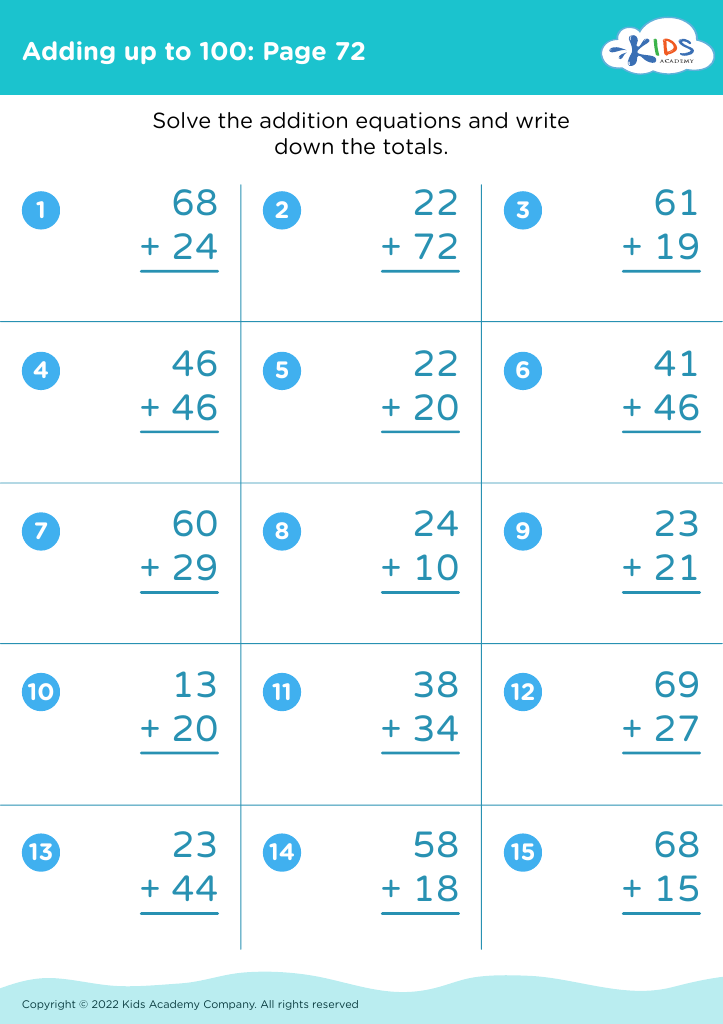
Adding up to 100: Page 72

Adding up to 100: Page 72

Adding up to 100: Page 72
Worksheet
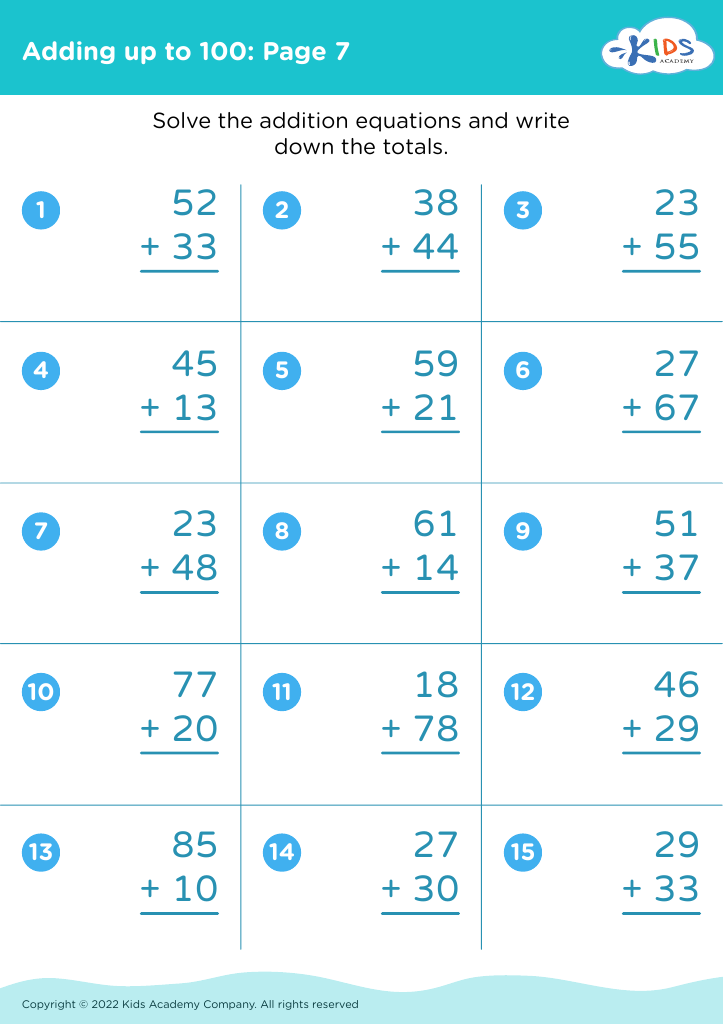
Adding up to 100: Page 7

Adding up to 100: Page 7

Adding up to 100: Page 7
Worksheet
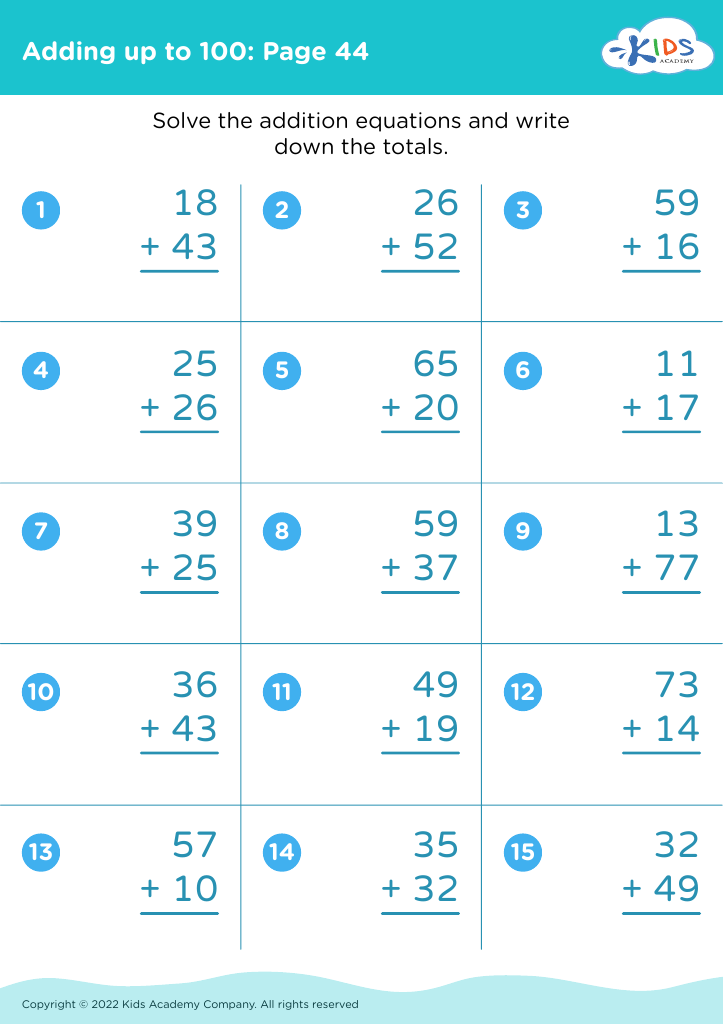
Adding up to 100: Page 44

Adding up to 100: Page 44

Adding up to 100: Page 44
Worksheet


Improving counting skills, particularly adding up to 100, is crucial for children aged 6-7 as it lays a strong foundation for their future mathematical understanding. At this age, children are at a pivotal stage of cognitive development, where they transition from concrete to more abstract thinking. Proficient counting abilities help children develop number sense, which is essential not just for mathematics, but for everyday problem-solving and critical thinking.

Moreover, strong counting skills enhance a child’s confidence in their abilities. When children can add and count accurately, they are more likely to participate actively in class discussions, tackle more complex mathematical concepts later, and view math as an enjoyable subject rather than a daunting challenge.

Teachers and parents play a vital role in this development. Engaging in hands-on activities that promote counting—like using everyday objects, playing counting games, or incorporating math into daily routines—makes learning fun and meaningful.

Investing time and resources in improving counting skills can have lifelong benefits for a child, influencing not only their academic success but also their problem-solving capabilities and self-esteem. Creating a supportive atmosphere around math encourages a positive attitude towards learning, fostering curiosity and a love for knowledge.