Counting skills Adding up to 50 Worksheets for Ages 6-7 - Page 2
34 filtered results
-
From - To
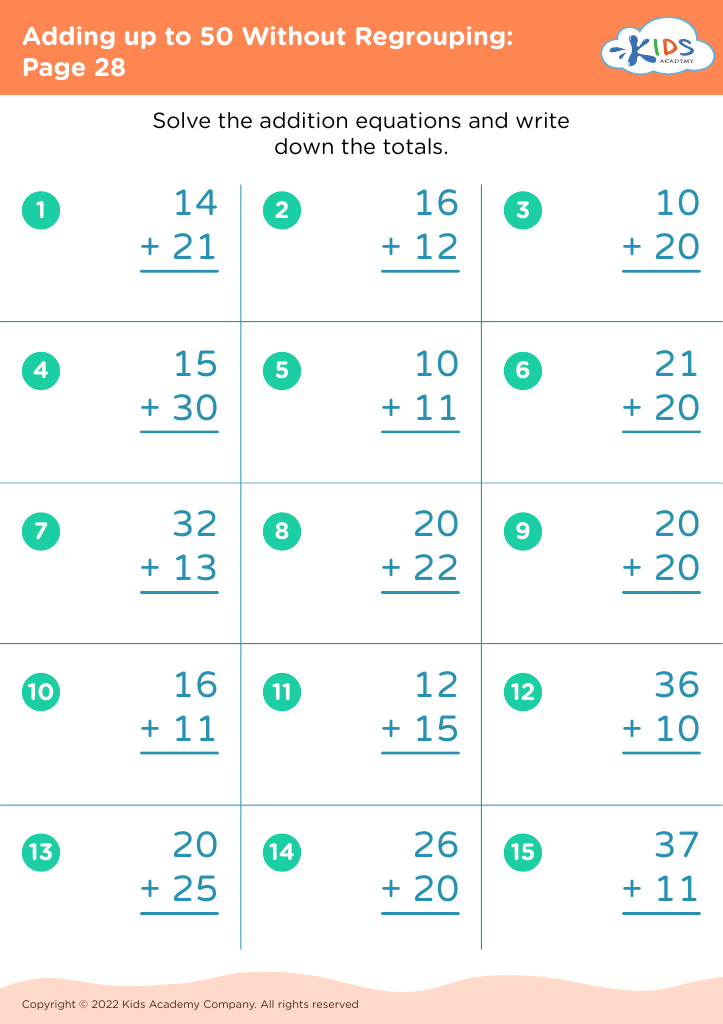
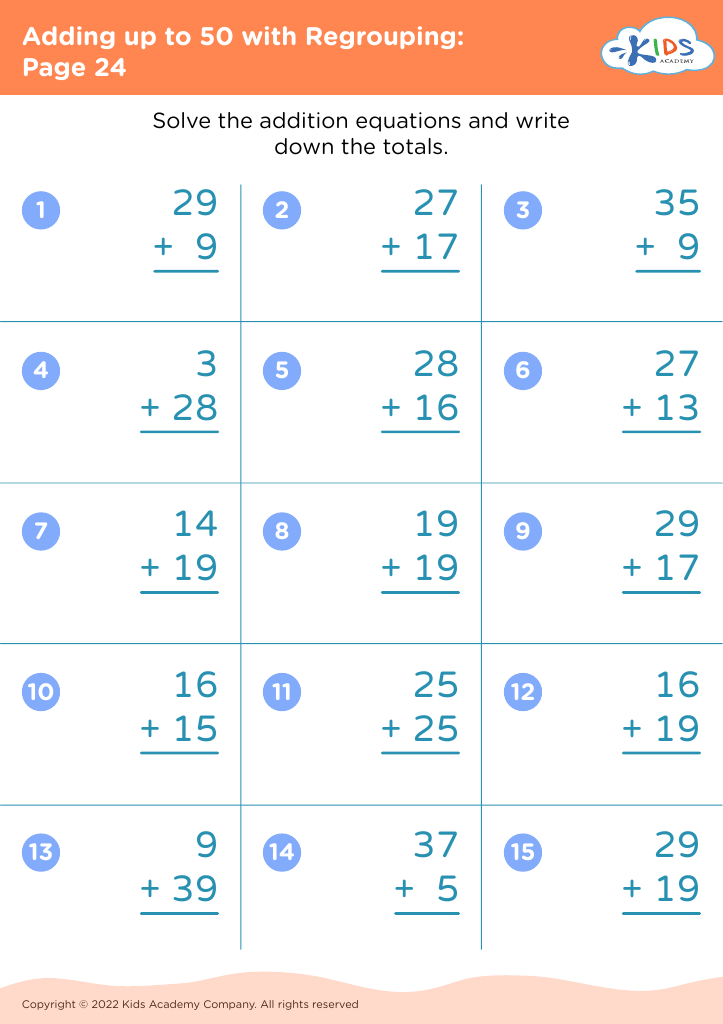
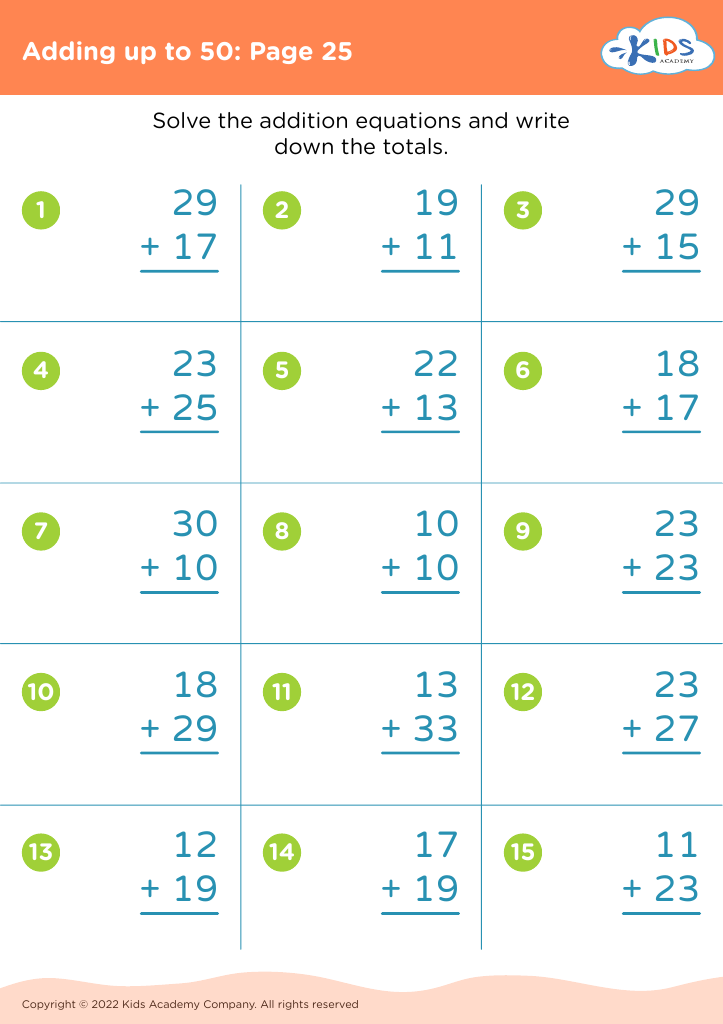
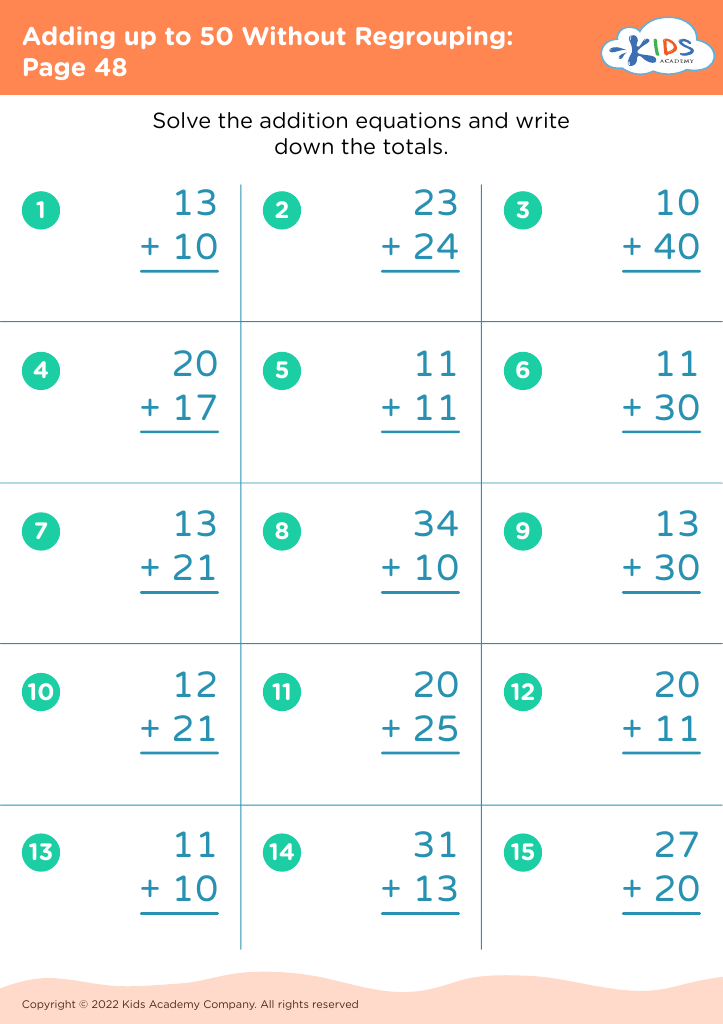
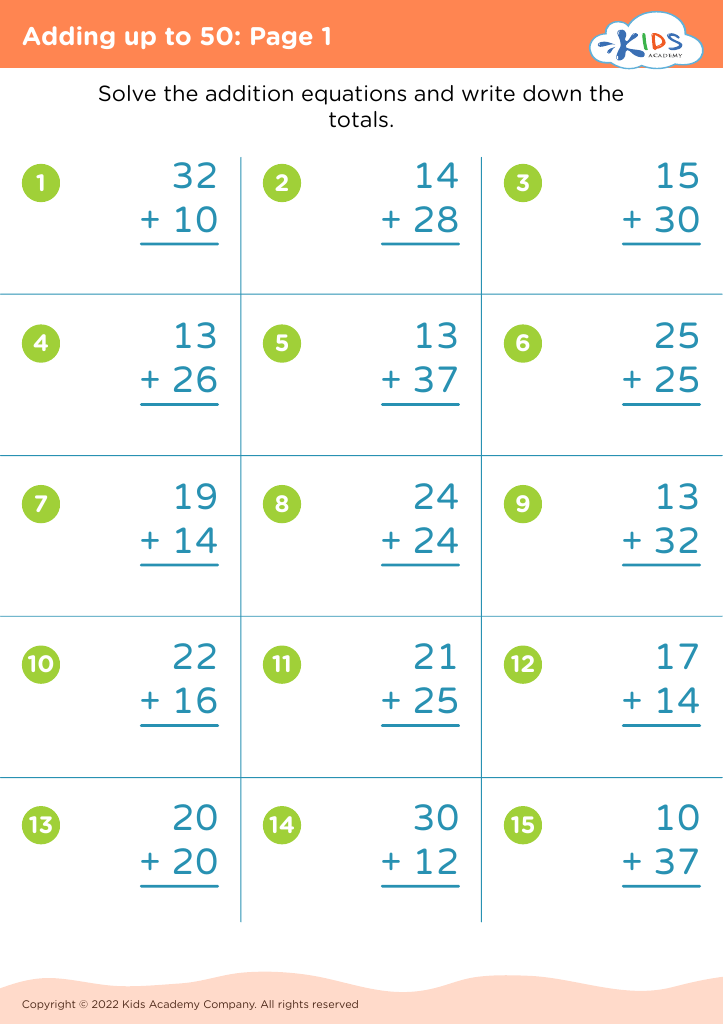
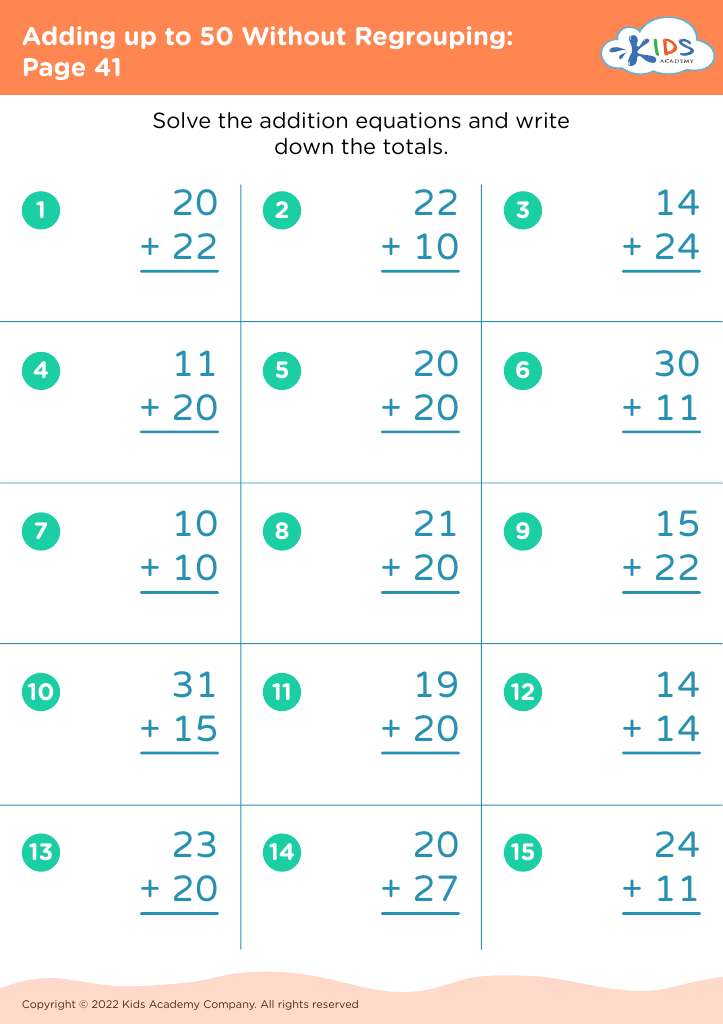
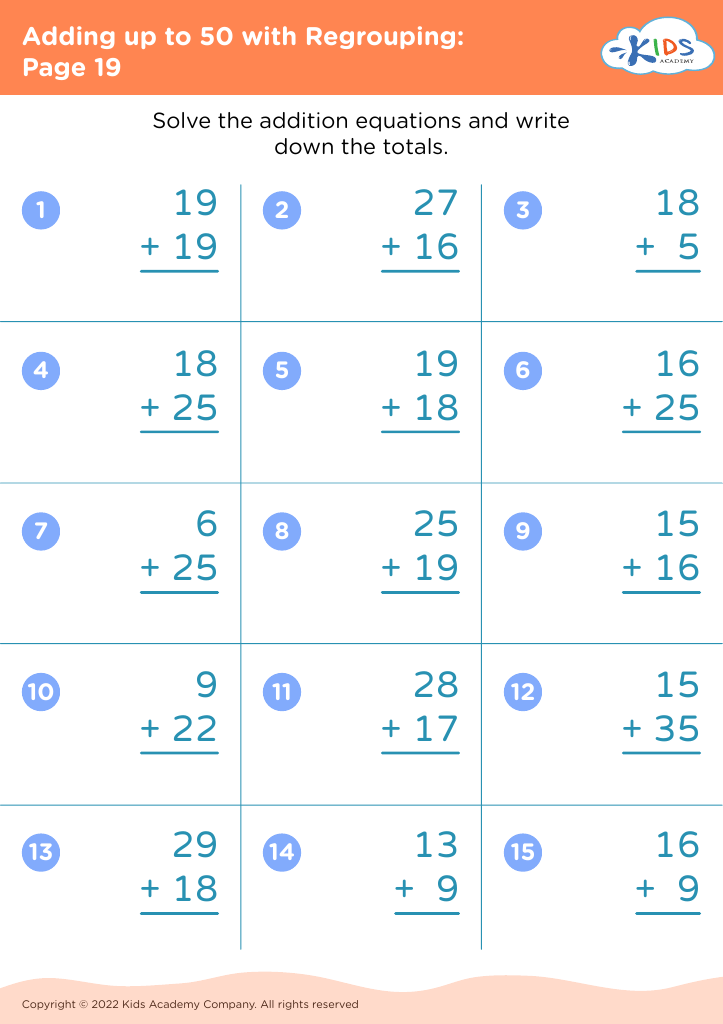
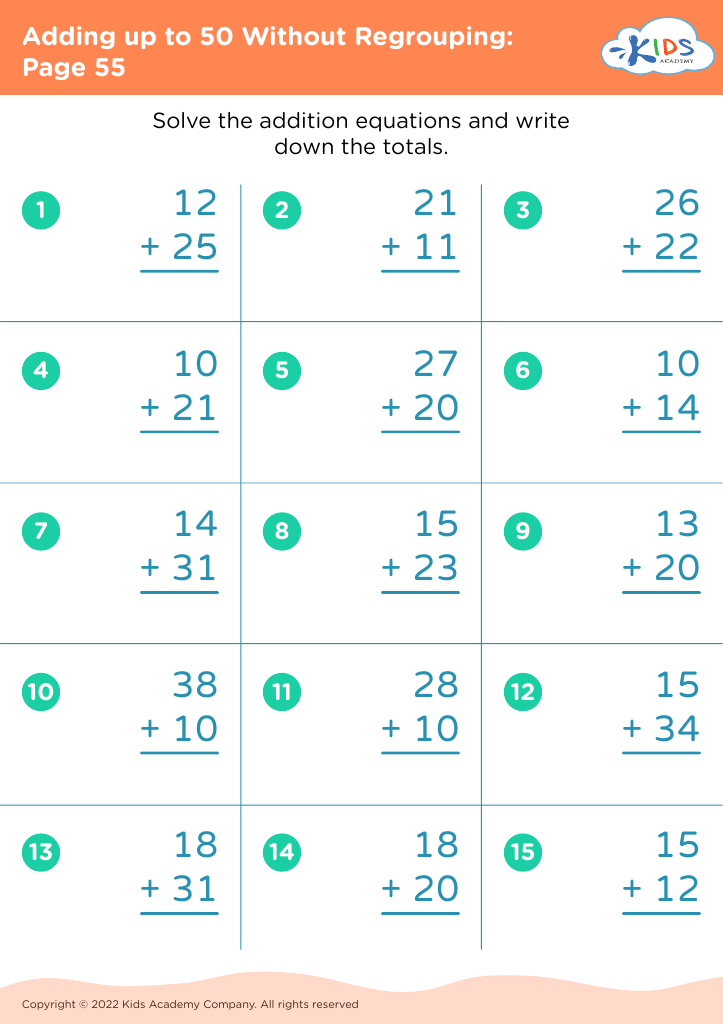
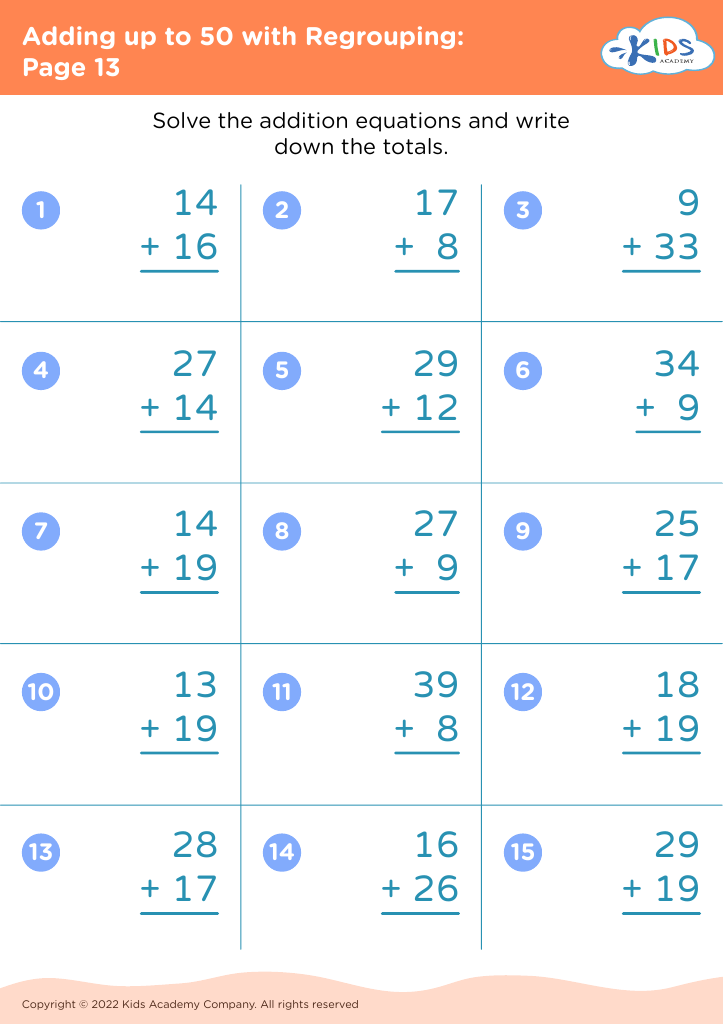
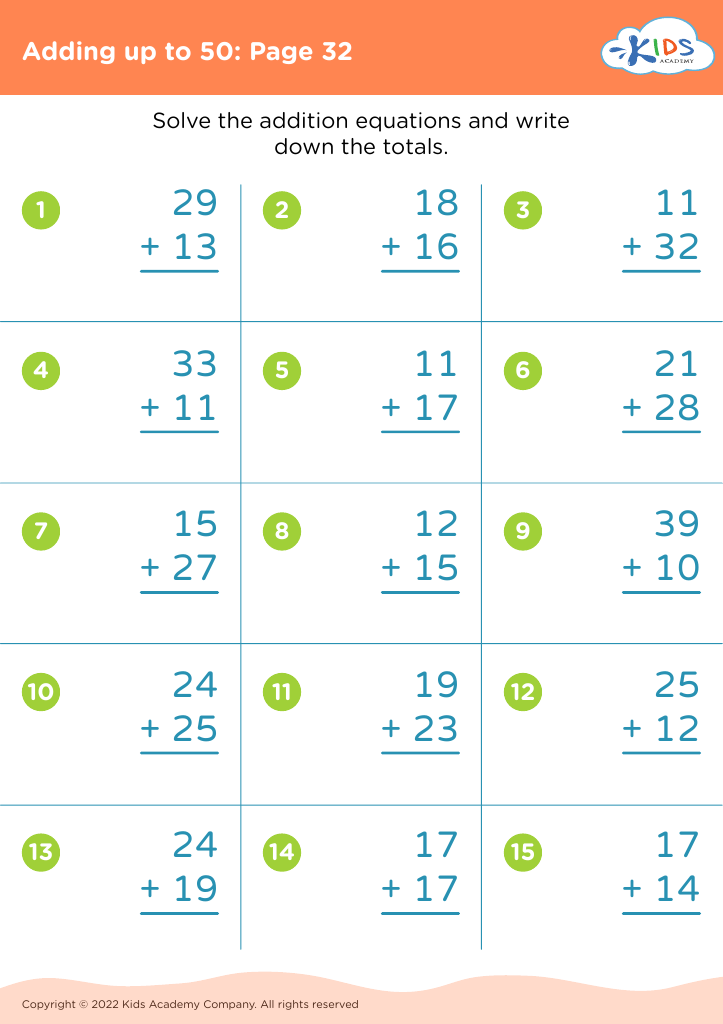




Counting skills, especially the ability to add up to 50, are crucial for children ages 6-7, as they form the foundation for all future mathematics. Understanding number sequences and basic addition fosters essential cognitive development, enhancing critical thinking and problem-solving abilities. Mastery of counting and simple addition equips children to tackle more complex mathematical concepts later on, such as subtraction, multiplication, and division.
For parents and teachers, promoting counting skills can significantly improve a child's confidence and enthusiasm towards math. Children who are confident in their counting abilities are more likely to engage willingly with math-related activities, which can lead to a positive attitude towards learning in general. Moreover, these skills encourage logical reasoning; as children learn to recognize patterns and relationships among numbers, they develop a sense of organizational thinking.
Additionally, strong counting skills contribute to daily life competencies, helping kids understand concepts of time, money, and measurements. By focusing on counting up to 50, educators and parents set a clear milestone that can signify a child's readiness for more advanced math skills. Overall, investing time in nurturing these skills contributes to a well-rounded education and lays the groundwork for academic success.








