
Develop addition skills Addition & Subtraction Worksheets for Ages 6-7
4 filtered results
Difficulty Level
Grade
Age
-
From - To
Subject
Activity
Standards
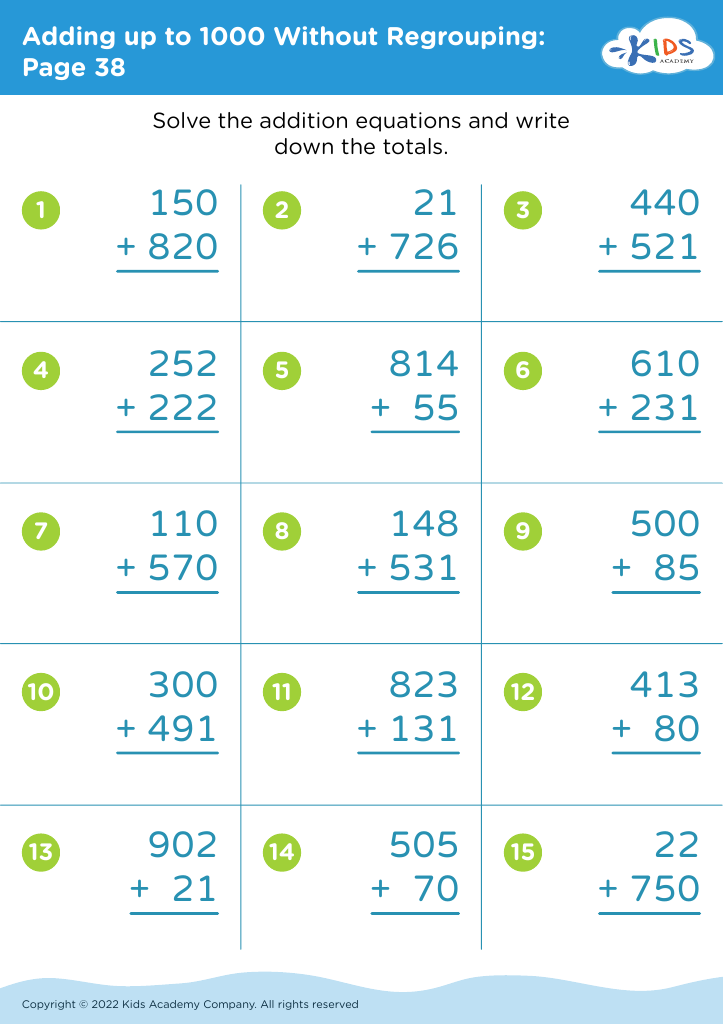
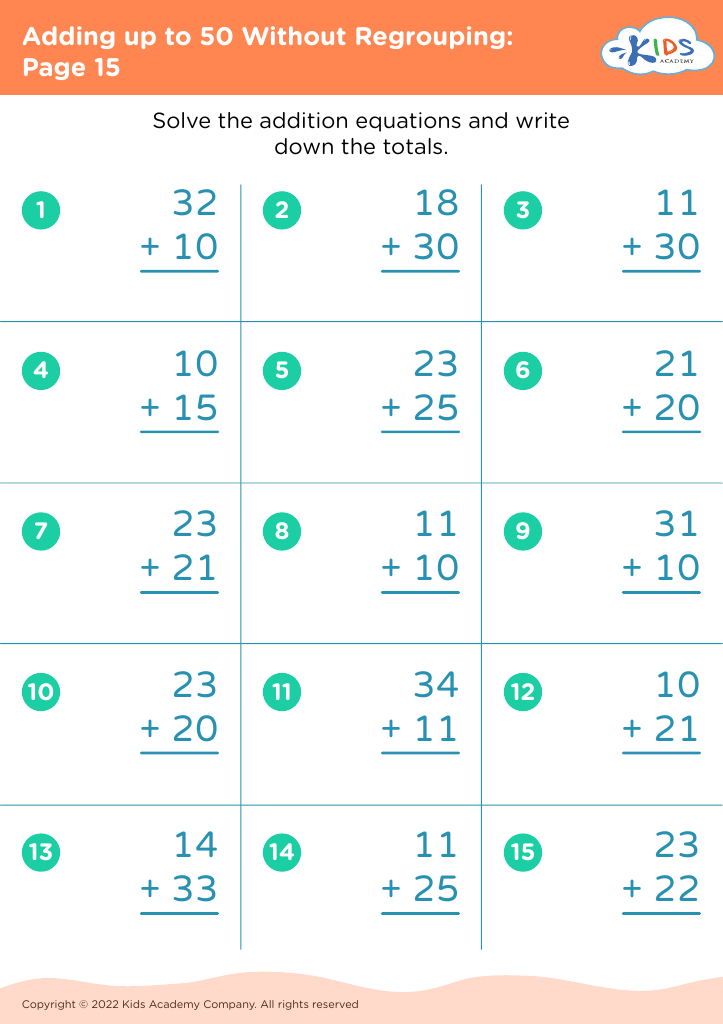
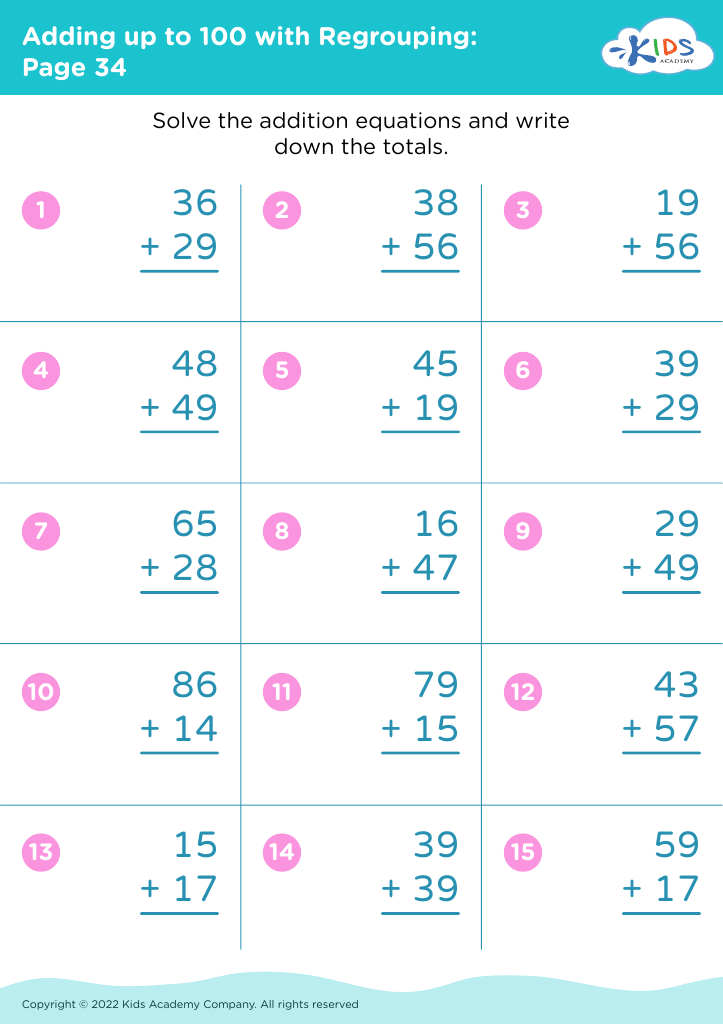
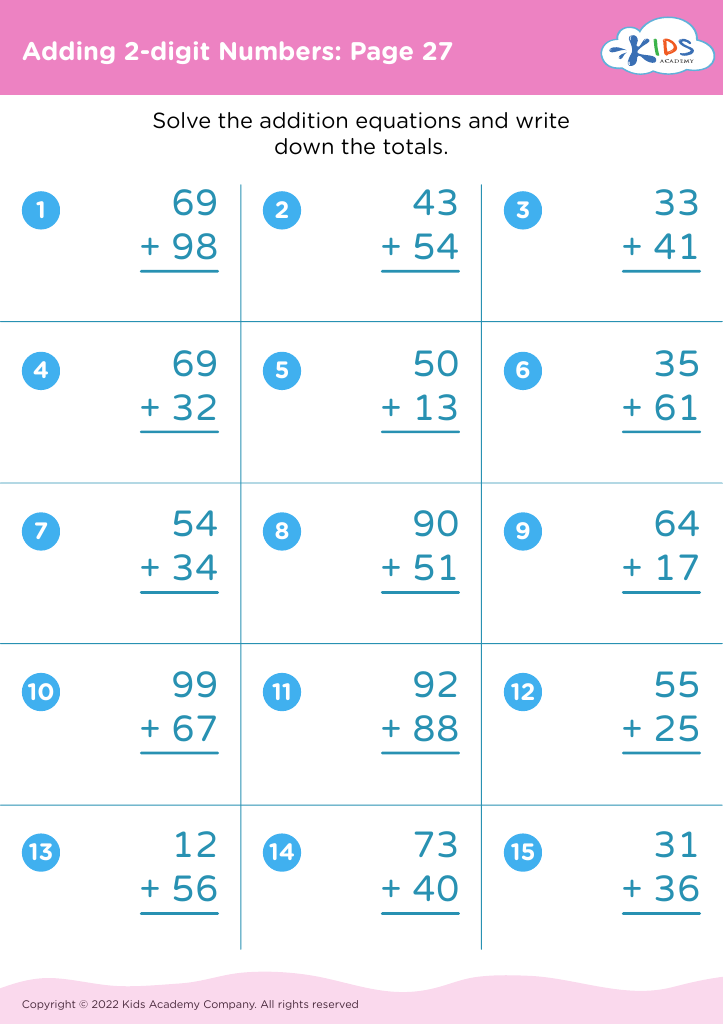
Enhance your child's math abilities with our engaging Addition & Subtraction Worksheets designed for ages 6-7! These resources provide fun and interactive activities that make learning foundational math concepts enjoyable. Our comprehensive worksheets focus on developing essential addition skills, helping young learners master single-digit and two-digit addition through various exercises and visual aids. With an emphasis on practice and comprehension, children will gain confidence in their math abilities. Perfect for classrooms or homeschool settings, our printable worksheets are accessible and easy to use. Set your child on a successful math journey today and make learning a delightful experience!
Favorites
With answer key
Interactive
Learning Skills
Join Kids Academy for Free
Who is primarily going to use this learning content?








Parents and teachers should prioritize developing addition and subtraction skills in children aged 6-7 due to the foundational role these concepts play in a child's overall mathematical understanding and academic success. At this age, children are not only learning to manipulate numbers but are also beginning to understand mathematical problem-solving in a more abstract way. Mastering these basic operations is crucial for building confidence in young learners, setting the stage for more complex math concepts in the future.
Additionally, acquiring strong addition and subtraction skills enhances critical thinking and logical reasoning abilities. Children learn to recognize patterns, develop strategies, and approach problems systematically, which can benefit them in various subject areas beyond mathematics. This numerical literacy is essential not just for academic achievement but also for everyday life skills, such as managing money, measuring, and making informed decisions.
Moreover, early proficiency in these skills can mitigate math anxiety and build a positive attitude towards learning, creating lifelong learners who embrace challenges with a growth mindset. For parents and teachers, nurturing these abilities means providing a solid foundation for children, enabling them to thrive academically and fostering a love for mathematics that can last a lifetime.








