Enhance your child's math skills with our engaging "Problem-Solving Practice: Addition & Subtraction Worksheets" designed specifically for ages 6-7. These worksheets provide a fun and interactive approach to mastering fundamental math concepts, allowing children to apply their addition and subtraction knowledge in real-world scenarios. Each worksheet is crafted to promote critical thinking, encouraging kids to analyze and solve various problems confidently. Perfect for home or classroom use, our printable resources help build strong foundational skills while keeping learning enjoyable. Start your child’s journey into math mastery today with our expertly designed worksheets that support their educational growth!
Check out this FREE Trial Lesson on Addition & Subtraction for age 6-7!

Relate Place Value (base 10 block) addition to standard algorithm addition

Favorites
With answer key
Interactive
  • 6-7
  • Problem-solving practice
  • Addition & Subtraction
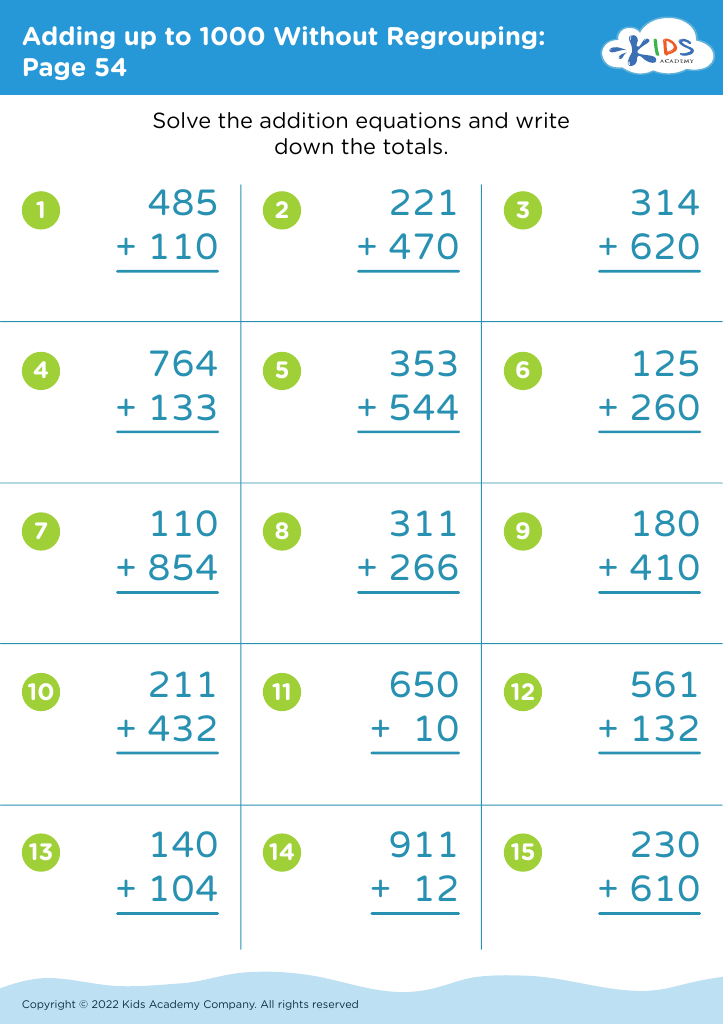
Adding up to 1000 Without Regrouping: Page 54
Worksheet
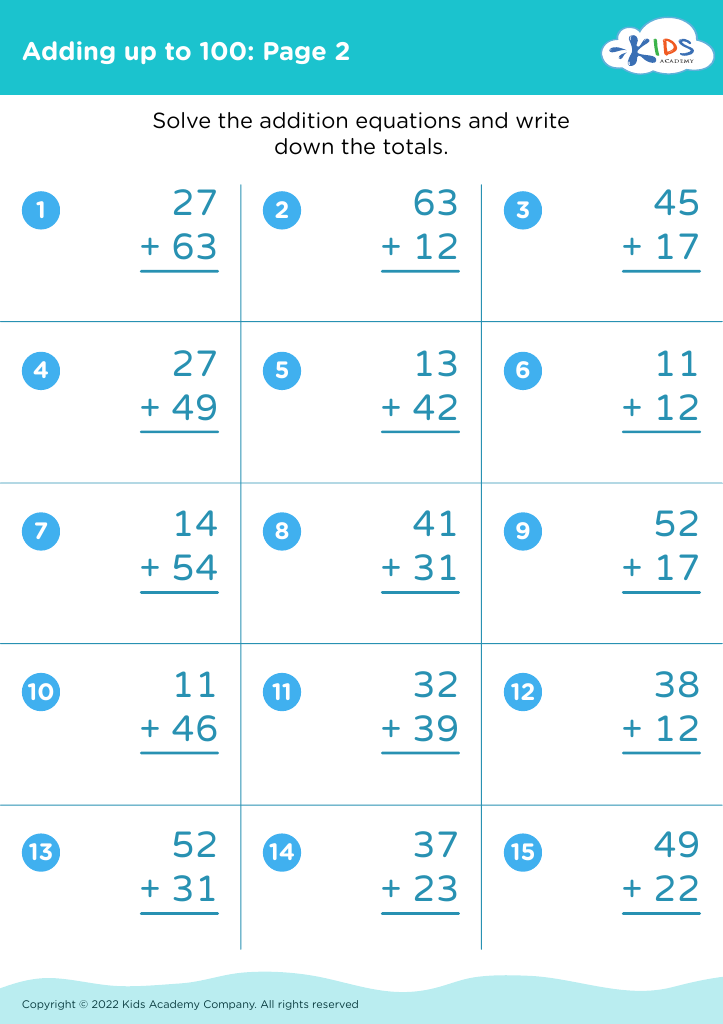
Adding up to 100: Page 2

Adding up to 100: Page 2

Adding up to 100: Page 2
Worksheet
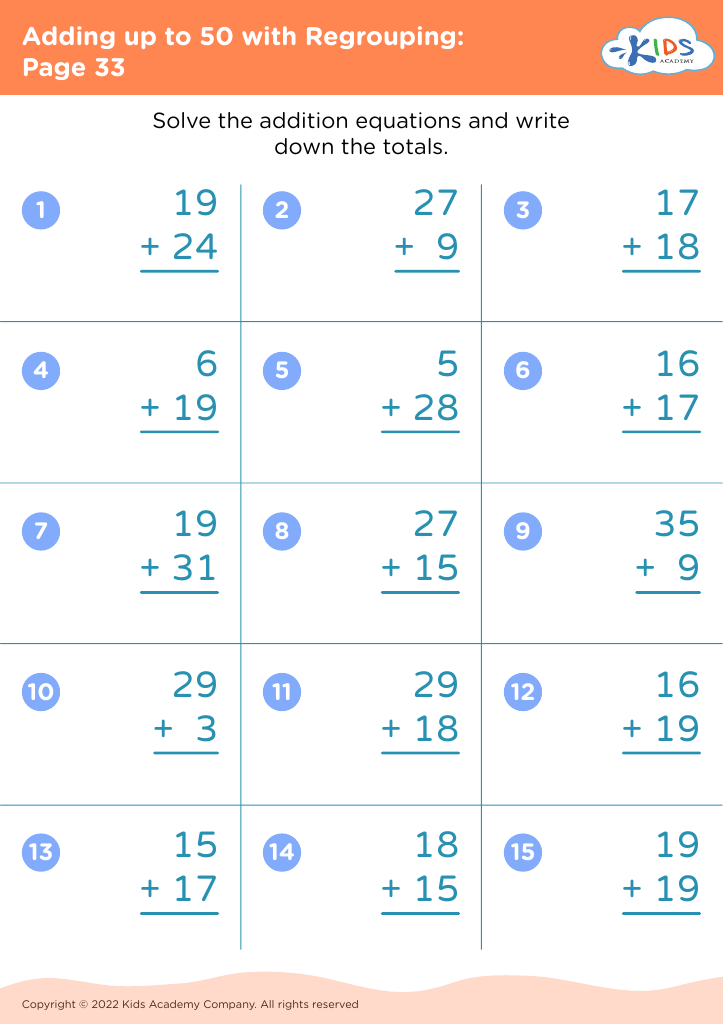
Adding up to 50 with Regrouping: Page 33
Worksheet
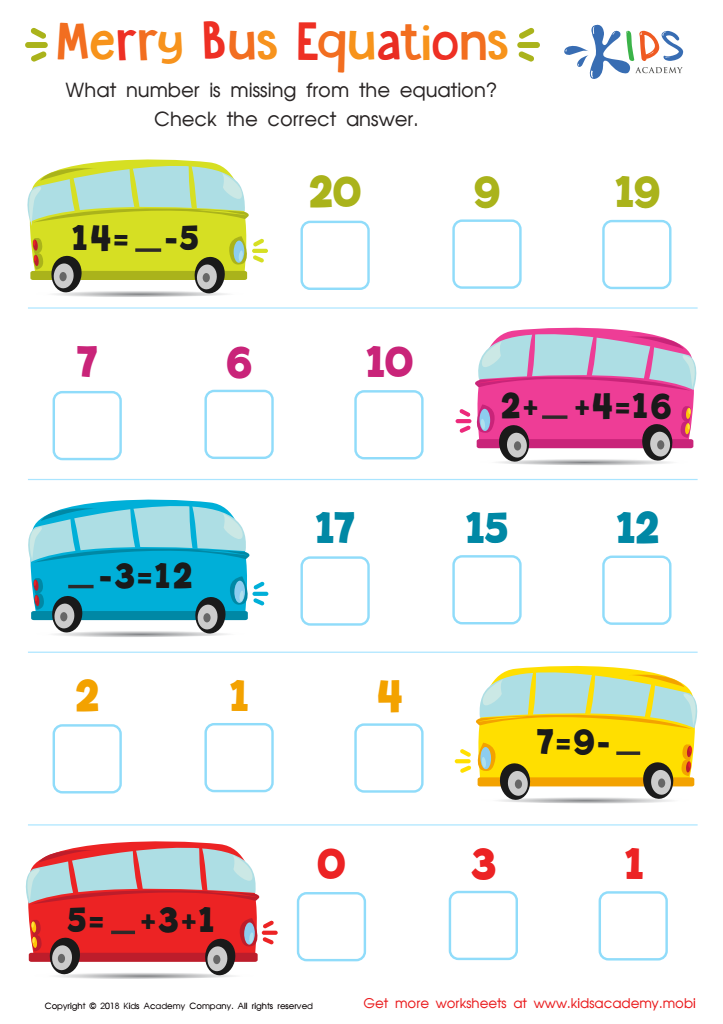
Merry Bus Equations Worksheet

Merry Bus Equations Worksheet

Help your child master elementary math with this fun worksheet! Featuring colorful buses and a variety of addition and subtraction equations, some with 3-digit numbers, it encourages kids to find the missing number and choose the correct answer. Give them the practice they need for success!
Merry Bus Equations Worksheet
Worksheet
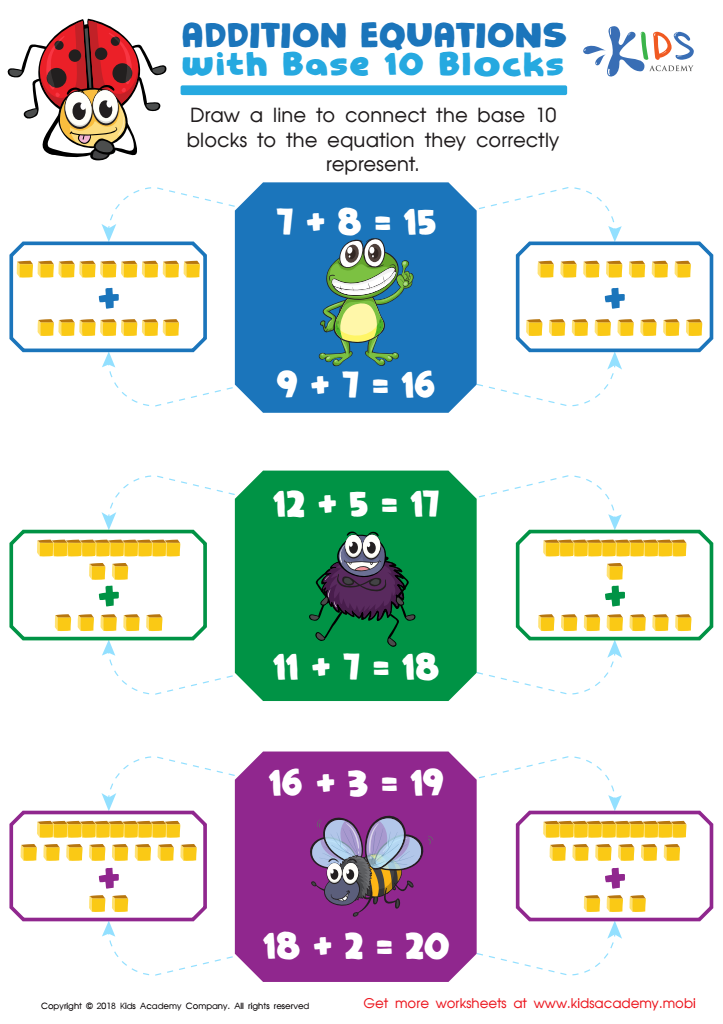
Addition Equations With Base 10 Blocks Worksheet
Addition Equations With Base 10 Blocks Worksheet

If your students are struggling with base 10 addition, this worksheet is here to help. Guide them with connecting the blocks to the equation with a line. It's a fun and colourful way to encourage learning.
Addition Equations With Base 10 Blocks Worksheet
Worksheet
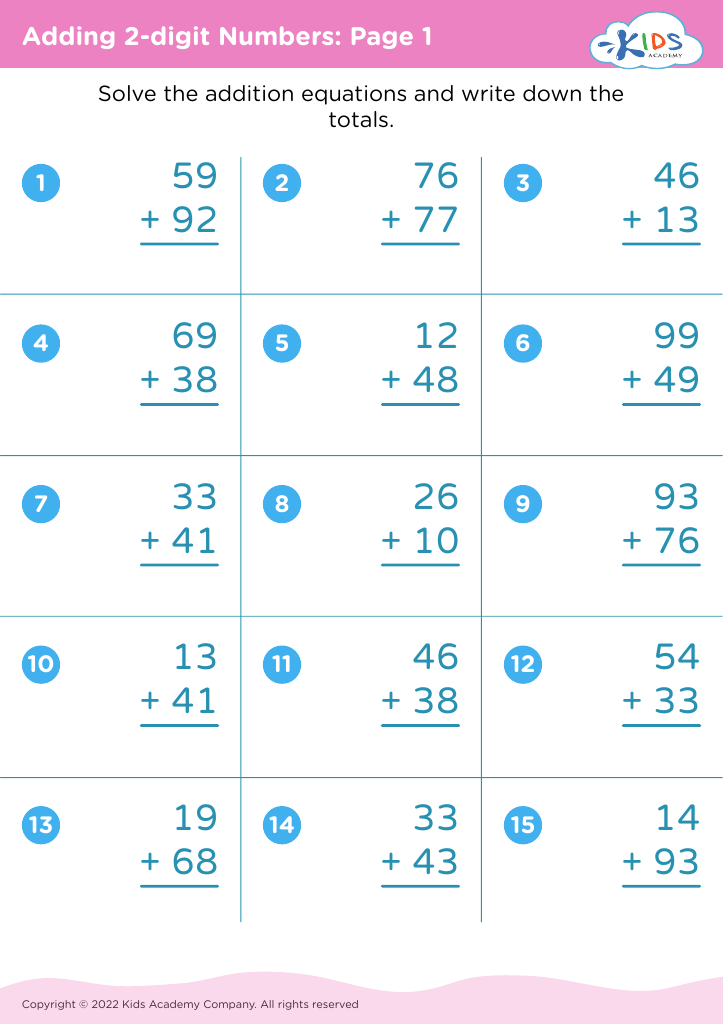
Adding 2-digit Numbers: Page 1

Adding 2-digit Numbers: Page 1

Adding 2-digit Numbers: Page 1
Worksheet
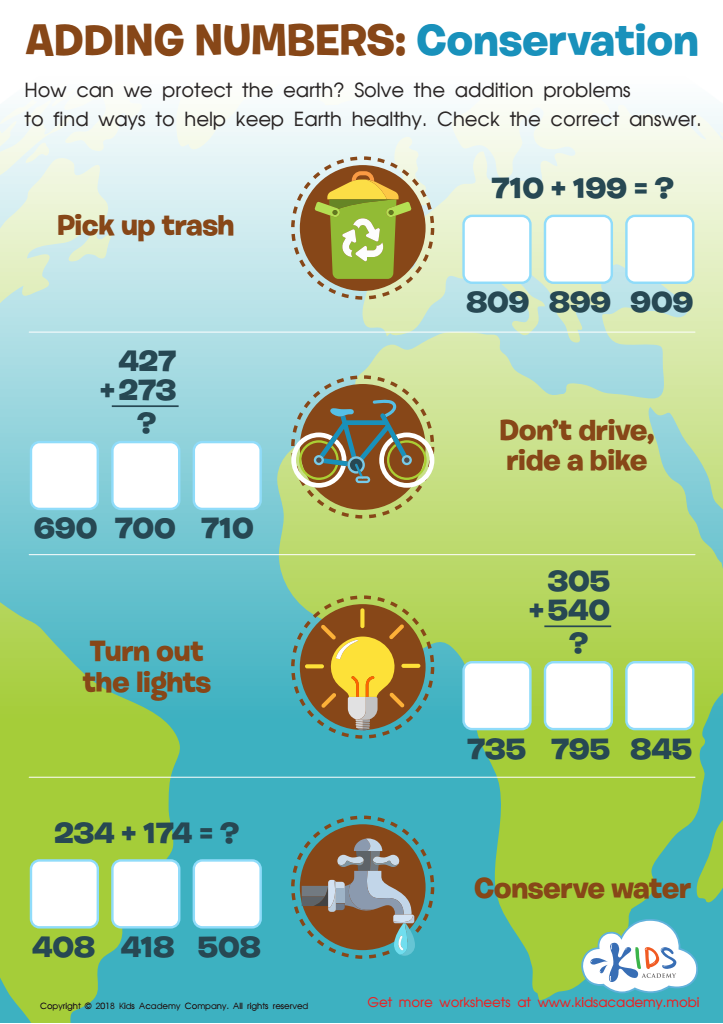
Adding Numbers: Conservation Worksheet
Adding Numbers: Conservation Worksheet

We all live on the Earth, which provides us with the vital necessities for survival. Unfortunately, we too often take advantage of this, causing pollution, water wastage and global warming. Help teach your kids how we can protect our planet - ask them to come up with good ideas and work together to find solutions. Challenge them to solve the subtraction problems to see what they can do to help keep the Earth healthy.
Adding Numbers: Conservation Worksheet
Worksheet
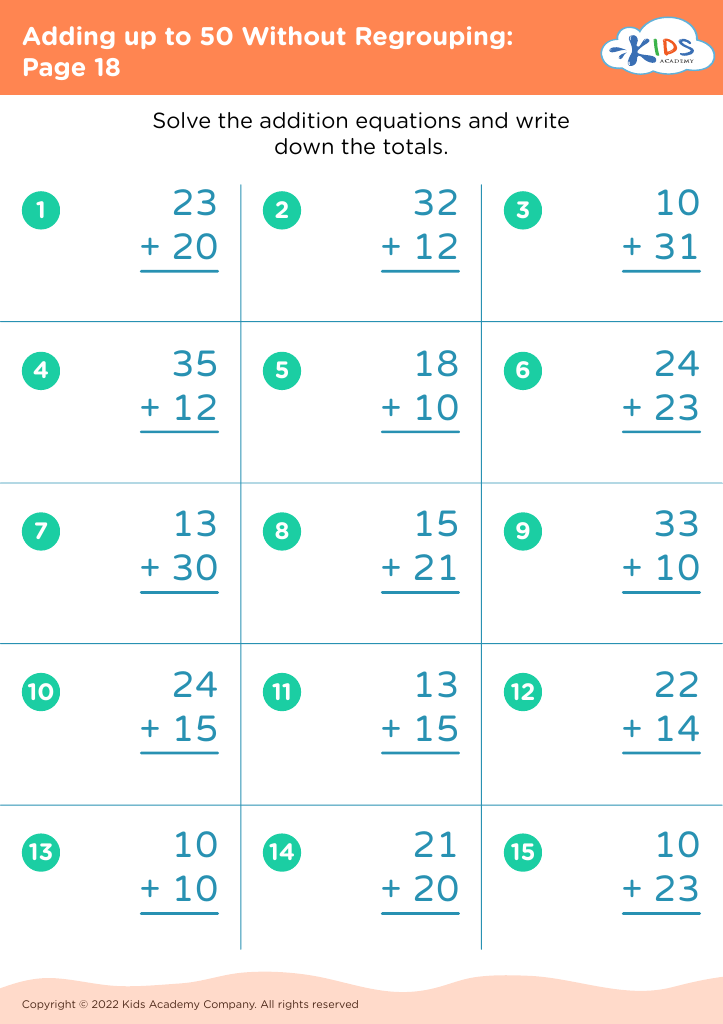
Adding up to 50 Without Regrouping: Page 18
Worksheet
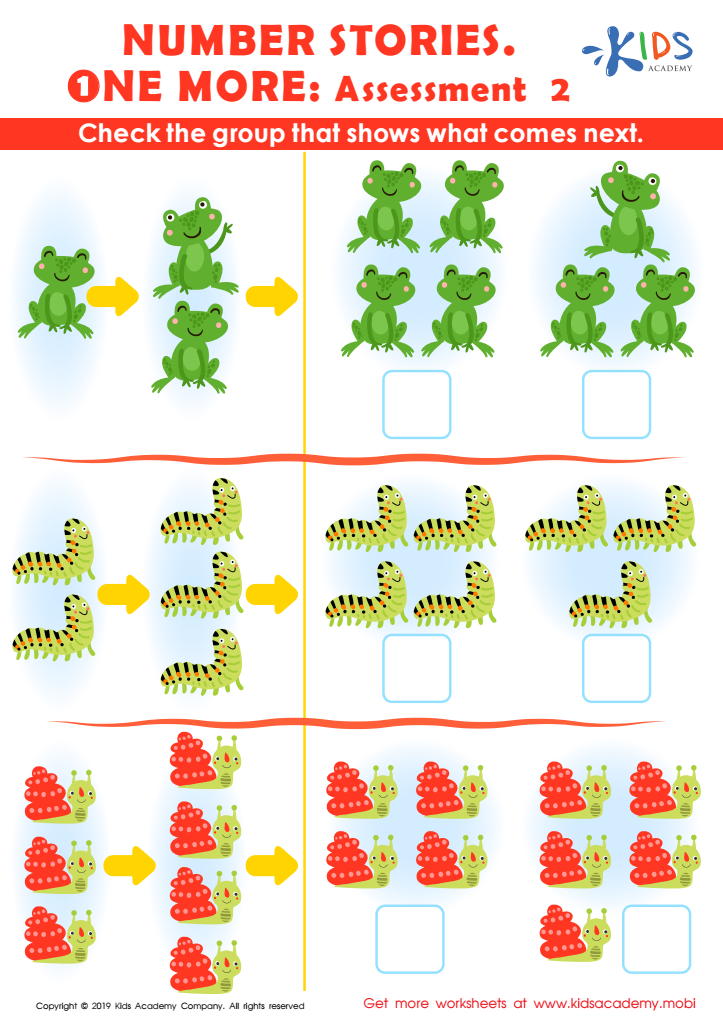
Number Stories One More - Assessment 2 Worksheet Preview

Number Stories One More – Assessment 2 Worksheet
Tracing is a great activity for kids. They can count and trace numbers, recognize animals, and practice drawing on dotted lines. It's entertaining and educational, helping children learn valuable counting skills.
Number Stories One More – Assessment 2 Worksheet
Worksheet
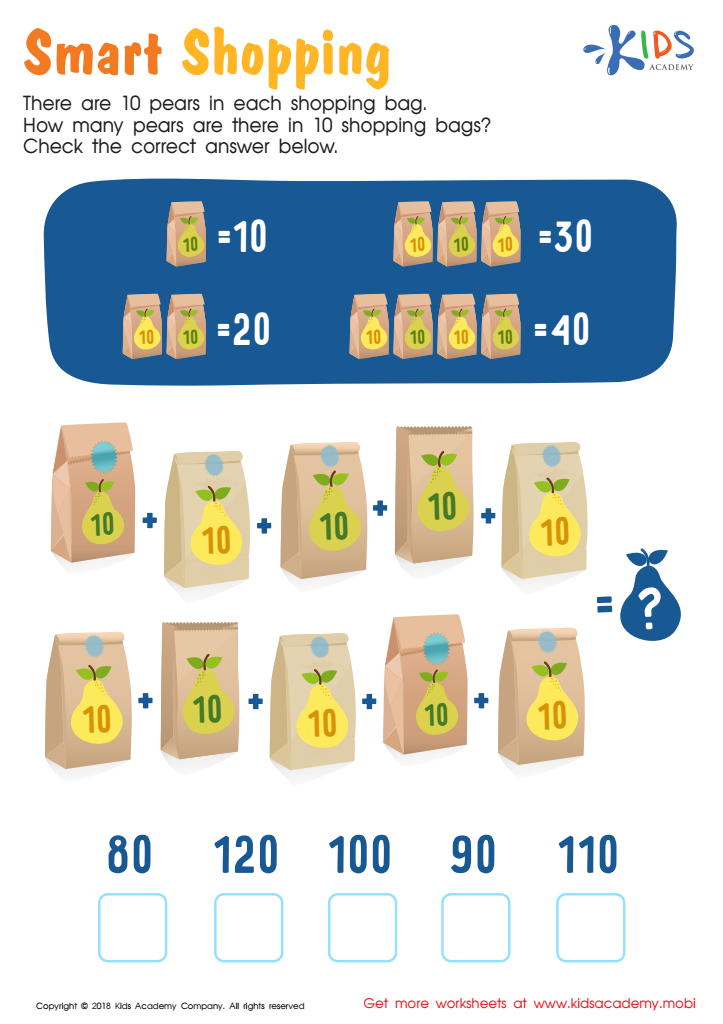
Smart Shopping: Trade Tens for a Hundred Worksheet
Smart Shopping: Trade Tens for a Hundred Worksheet

Use this worksheet to test counting skills: each bag has 10 pears. Ask your child how many pears are in 10 bags. Guide them as they count through the printout and check the answer below. See if they got it right!
Smart Shopping: Trade Tens for a Hundred Worksheet
Worksheet
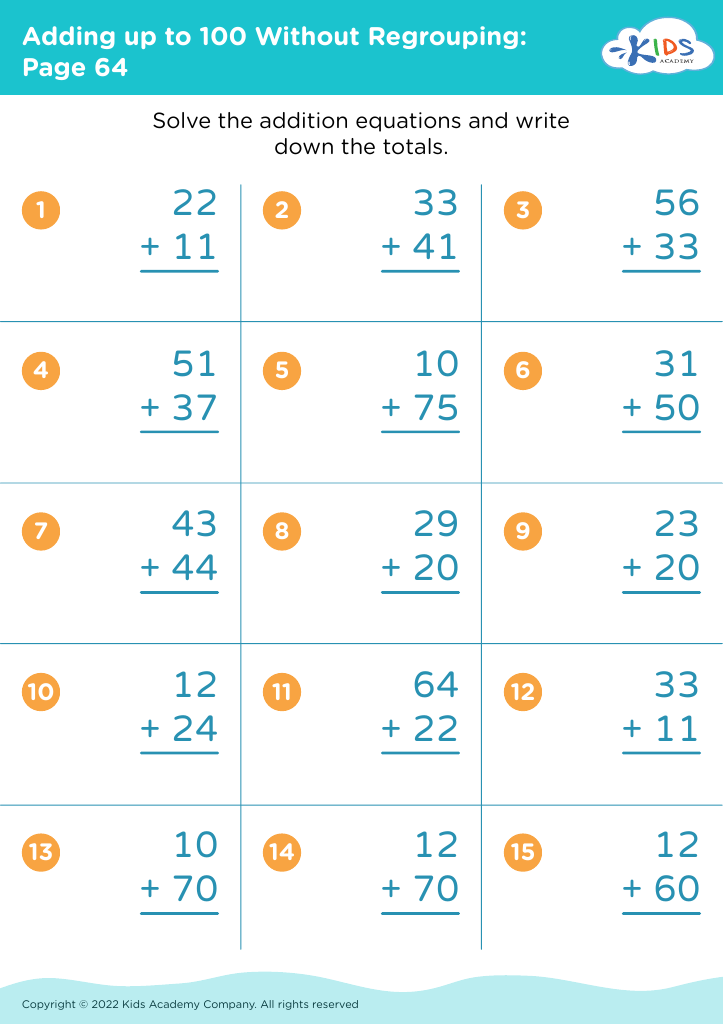
Adding up to 100 Without Regrouping: Page 64
Worksheet
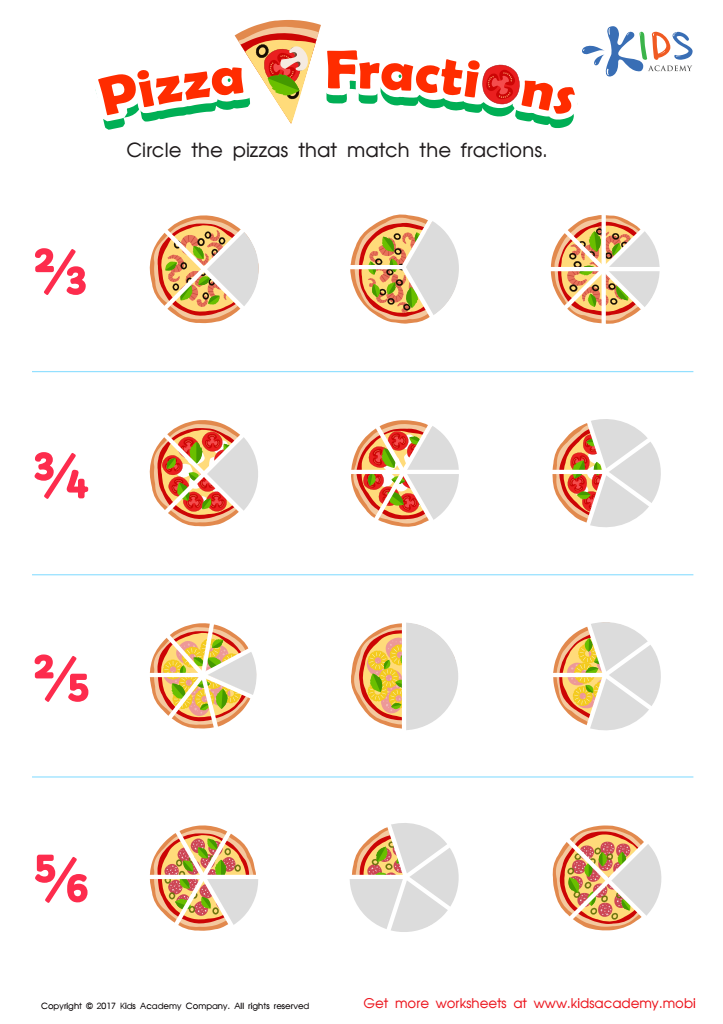
Pizza Fraction Printable

Fractions: Pizza Printable

Fractions can be tricky for kids, but this pizza fractions printable can help! Kids can understand fractions by seeing them, as they use one of their favorite foods. It helps them grasp the concept and gain a deeper understanding of what fractions represent. Extend their learning by quizzing them when you order pizza next time.
Fractions: Pizza Printable

Worksheet
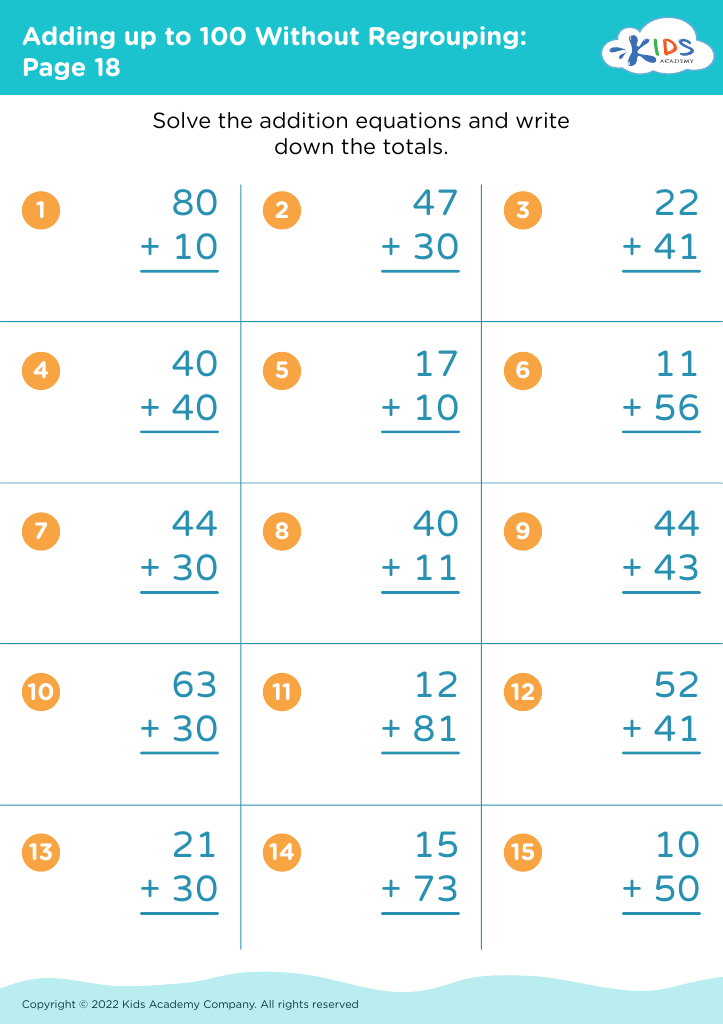
Adding up to 100 Without Regrouping: Page 18
Worksheet
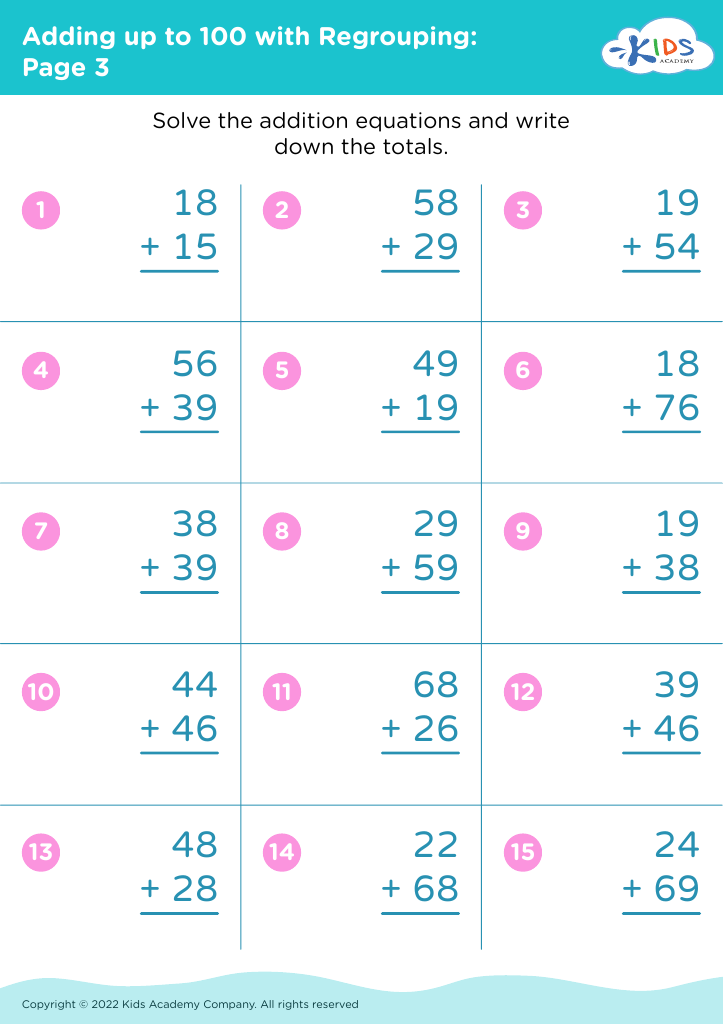
Adding up to 100 with Regrouping: Page 3
Worksheet
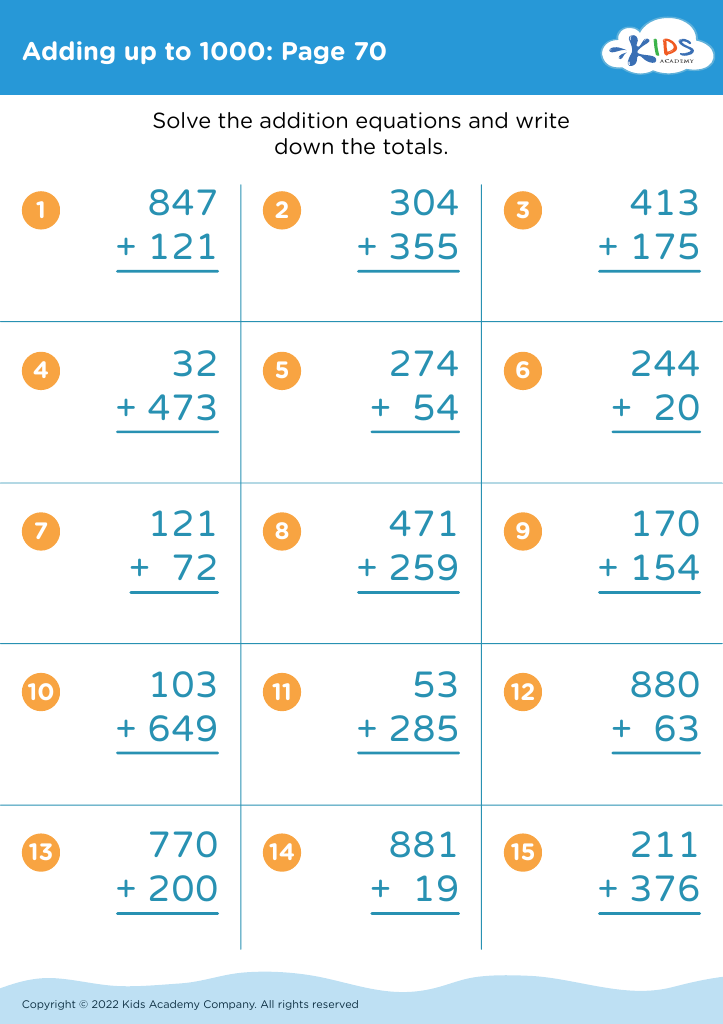
Adding up to 1000: Page 70

Adding up to 1000: Page 70

Adding up to 1000: Page 70
Worksheet
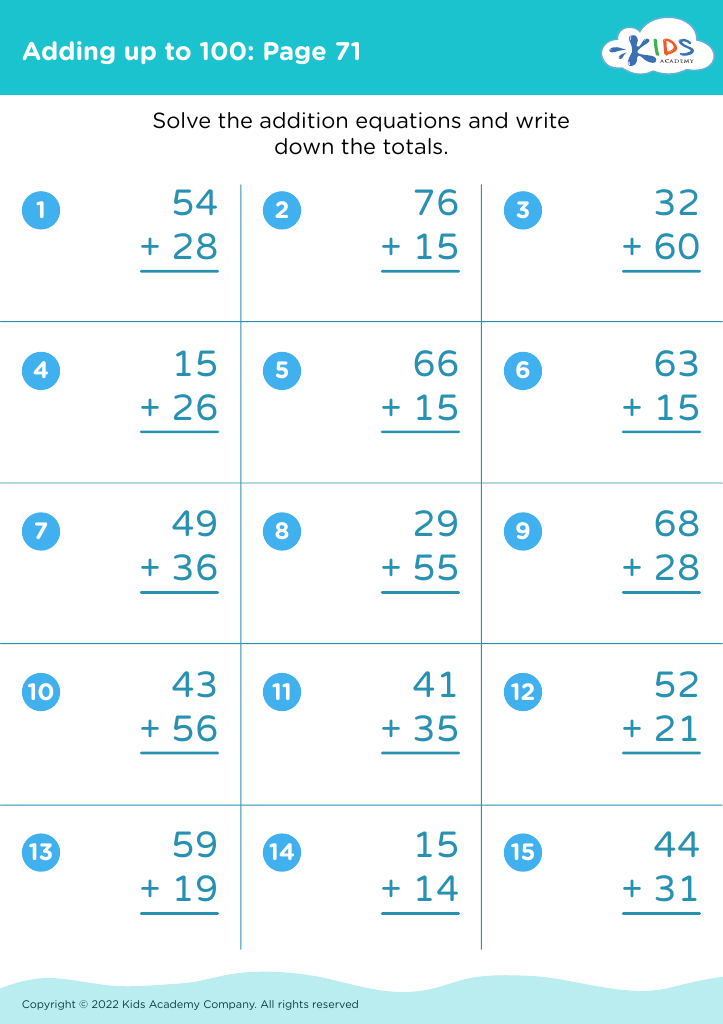
Adding up to 100: Page 71

Adding up to 100: Page 71

Adding up to 100: Page 71
Worksheet
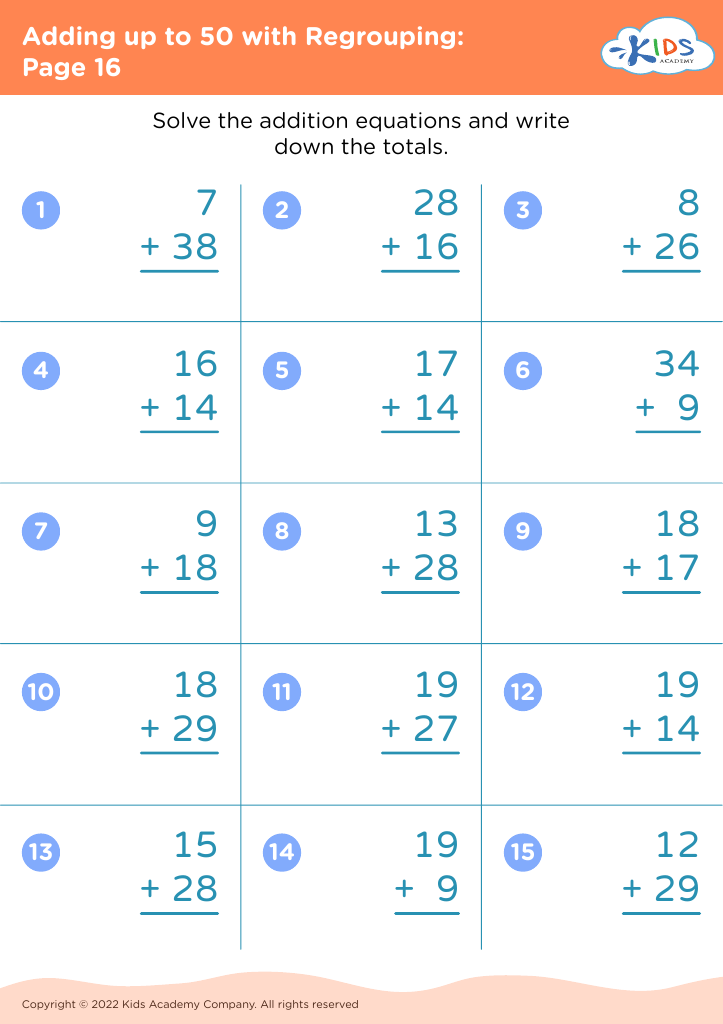
Adding up to 50 with Regrouping: Page 16
Worksheet
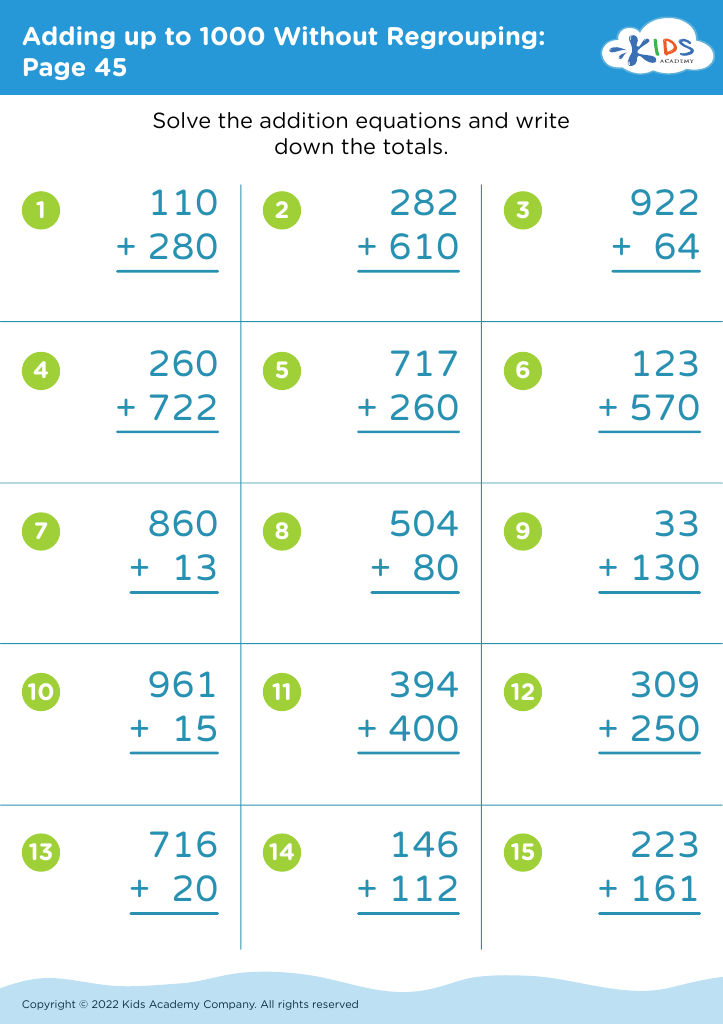
Adding up to 1000 Without Regrouping: Page 45
Worksheet


Parents and teachers should prioritize problem-solving practice in addition and subtraction for children ages 6-7 because it lays a vital foundation for future mathematical understanding. At this stage, children are not only learning to perform basic calculations but also to apply these skills to real-world problems, which enhances their critical thinking and analytical abilities.

Engaging in problem-solving helps to develop a child’s cognitive skills, fostering persistence and encouraging them to explore different strategies. By tackling various problems, children learn to think creatively and gain confidence in their mathematical capabilities, which is imperative for their overall academic success. Additionally, meaningful practice in addition and subtraction assists in building a strong number sense, helping children understand relationships between numbers and laying the groundwork for more complex mathematical concepts in the future.

Moreover, problem-solving in these foundational areas promotes a positive attitude towards math, making it relatable and enjoyable. Educators and parents can also engage in shared problem-solving activities, which strengthen their roles as facilitators of learning and offer opportunities for meaningful engagement. In essence, nurturing these skills during the ages of 6-7 sets children on a path towards becoming competent problem solvers capable of tackling challenges throughout their educational journey.