Reading clocks Addition & Subtraction Worksheets for Ages 6-7
3 filtered results
-
From - To
Enhance your child's math skills with our engaging addition and subtraction worksheets focused on reading clocks! Designed for ages 6-7, these resources help young learners grasp essential time-telling concepts while practicing basic arithmetic. Our worksheets feature colorful illustrations and interactive problems that make learning enjoyable and effective. Students will build confidence as they solve addition and subtraction problems involving time, mastering the art of clock reading. Perfect for both classroom and home use, these worksheets align with early educational standards and are tailored to spark curiosity and foster a love for learning. Dive into fun math practice with our reading clocks worksheets today!
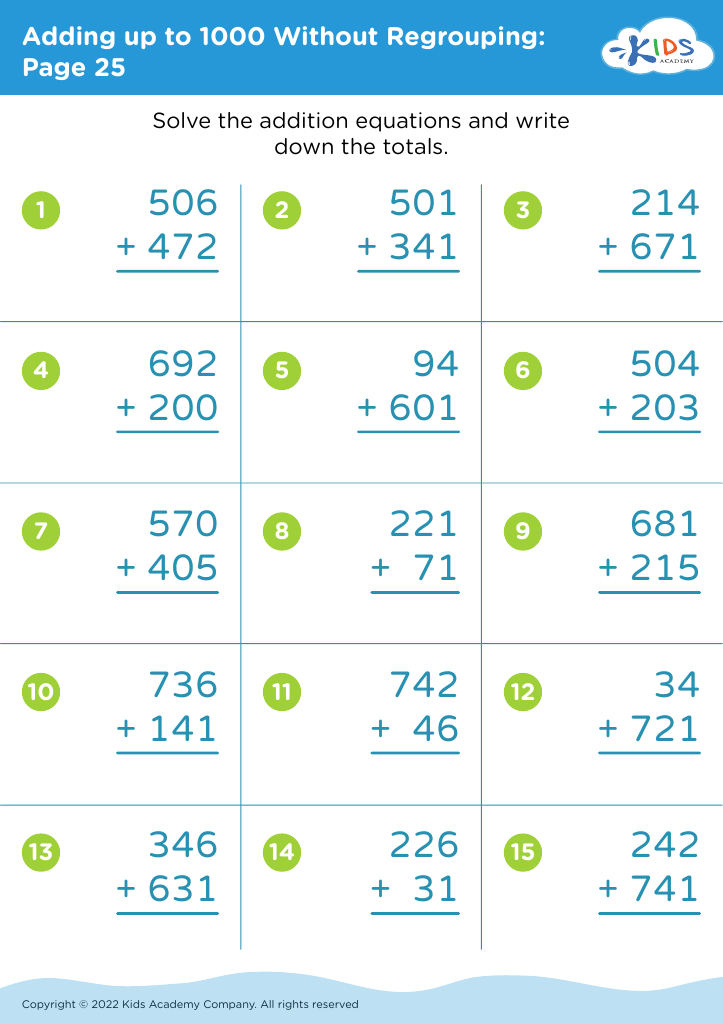
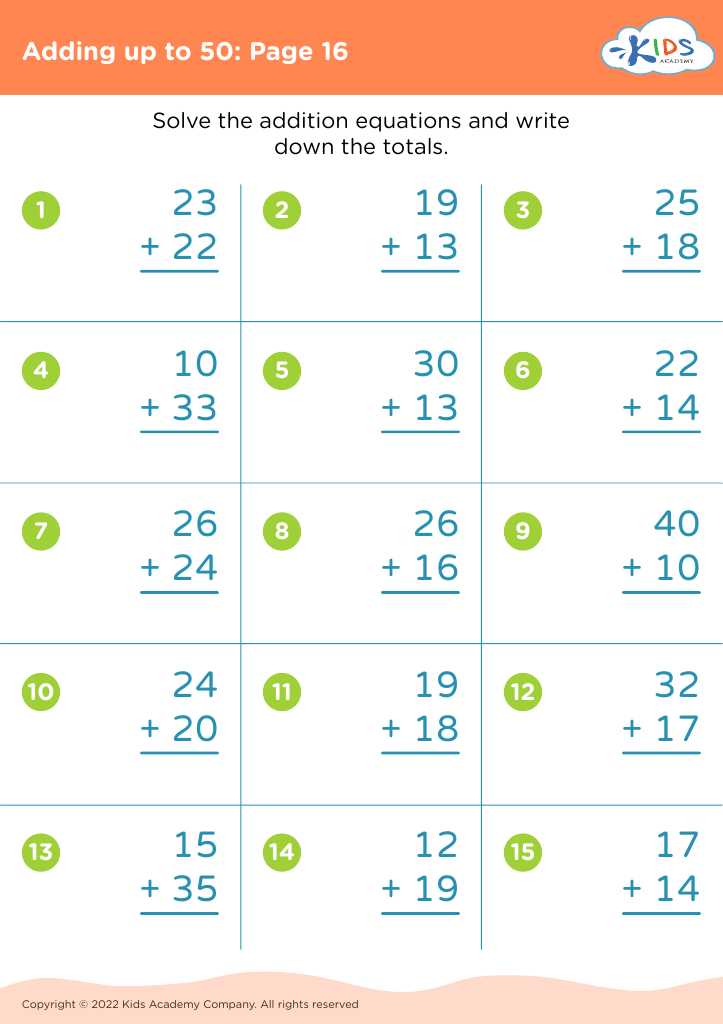
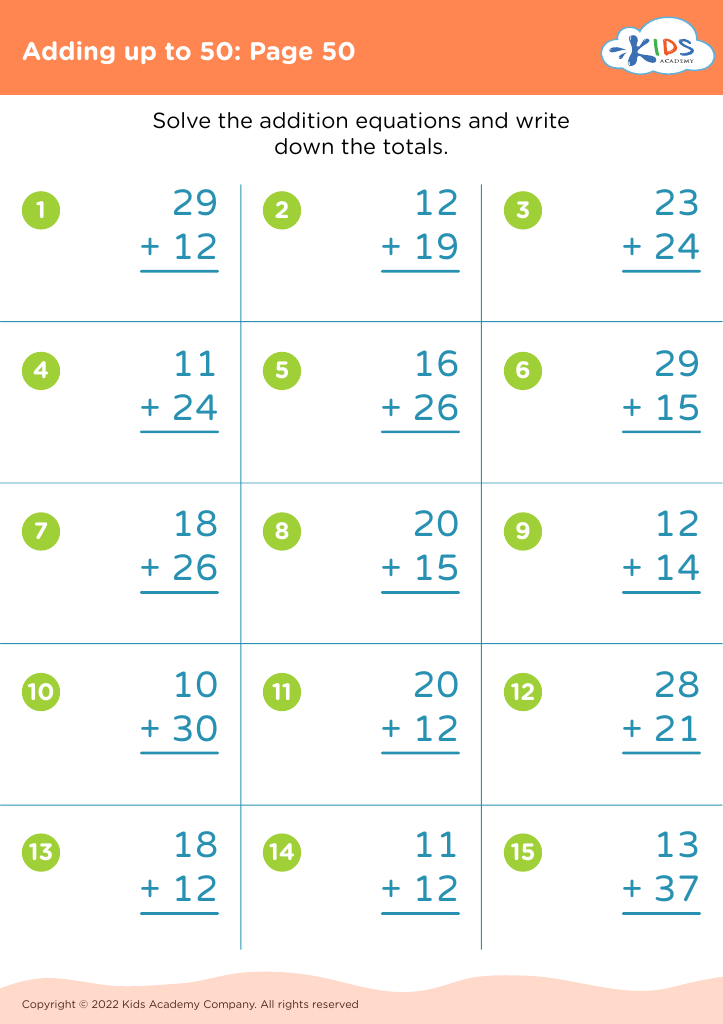








Parents and teachers should care about teaching Reading Clocks, along with Addition and Subtraction, for children aged 6-7 because these foundational skills are essential for academic and everyday success. At this age, children are like sponges, absorbing important concepts that form the bedrock for future learning. Understanding how to read clocks promotes a sense of time management and responsibility in young learners, helping them develop organizational skills early on.
Moreover, mastering addition and subtraction enhances critical thinking and problem-solving skills. These mathematical operations underpin more complex concepts they'll encounter in later grades, such as multiplication, division, and eventually, algebra. By connecting time-telling with arithmetic—like calculating time intervals or determining duration—students cultivate computational fluency in practical situations, making math more relatable and engaging.
Additionally, improving these skills fosters independence. Children will learn how to manage their own schedules and measure time effectively in various contexts, from school projects to playdates. Engaging parents in this process encourages a supportive learning environment that reinforces these skills at home. Ultimately, prioritizing Reading Clocks and basic math equips children with vital tools not just for their education, but for their personal development and future adult lives.








