Discover a fun and educational way to help young learners master fraction operations with our "Simplifying Fractions Addition & Subtraction Worksheets for Ages 6-7." Designed to engage and challenge, these printable worksheets offer a variety of exercises that simplify the process of adding and subtracting fractions. Each activity aims to build a solid foundation in fraction skills while making learning enjoyable. Perfect for classroom use or at-home practice, these worksheets ensure that children develop confidence and proficiency with fractions. Grab your copy today and watch your students excel in their early math journey!
Check out this FREE Trial Lesson on Addition & Subtraction for age 6-7!

Match Objects that Fit Together

Favorites
With answer key
Interactive
  • 6-7
  • Simplifying Fractions
  • Addition & Subtraction
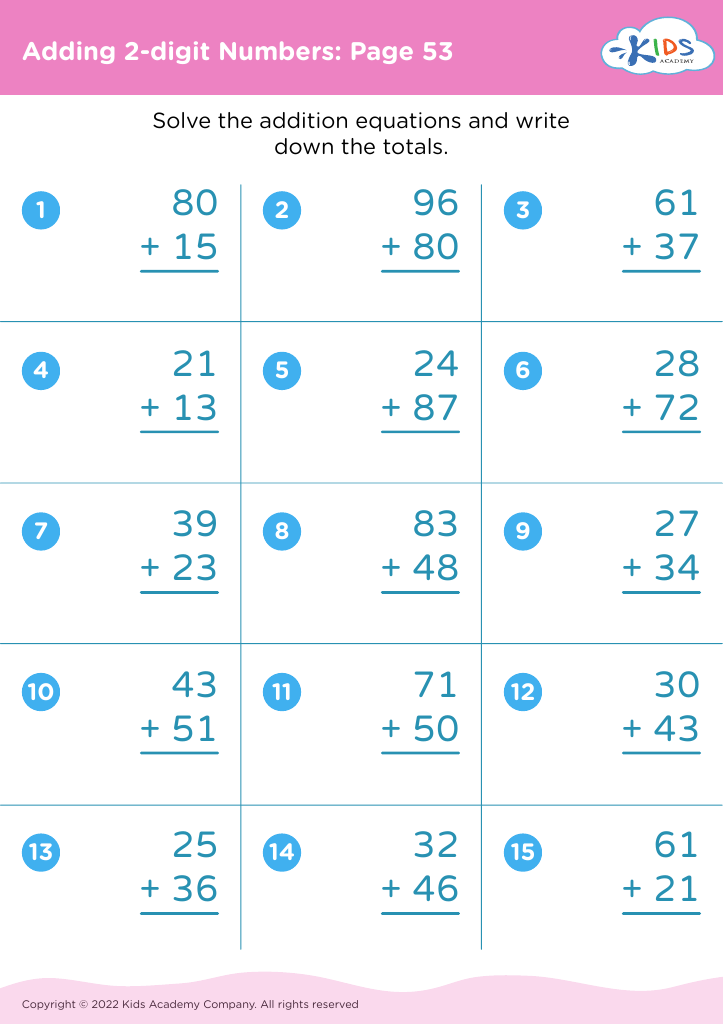
Adding 2-digit Numbers: Page 53

Adding 2-digit Numbers: Page 53

Adding 2-digit Numbers: Page 53
Worksheet
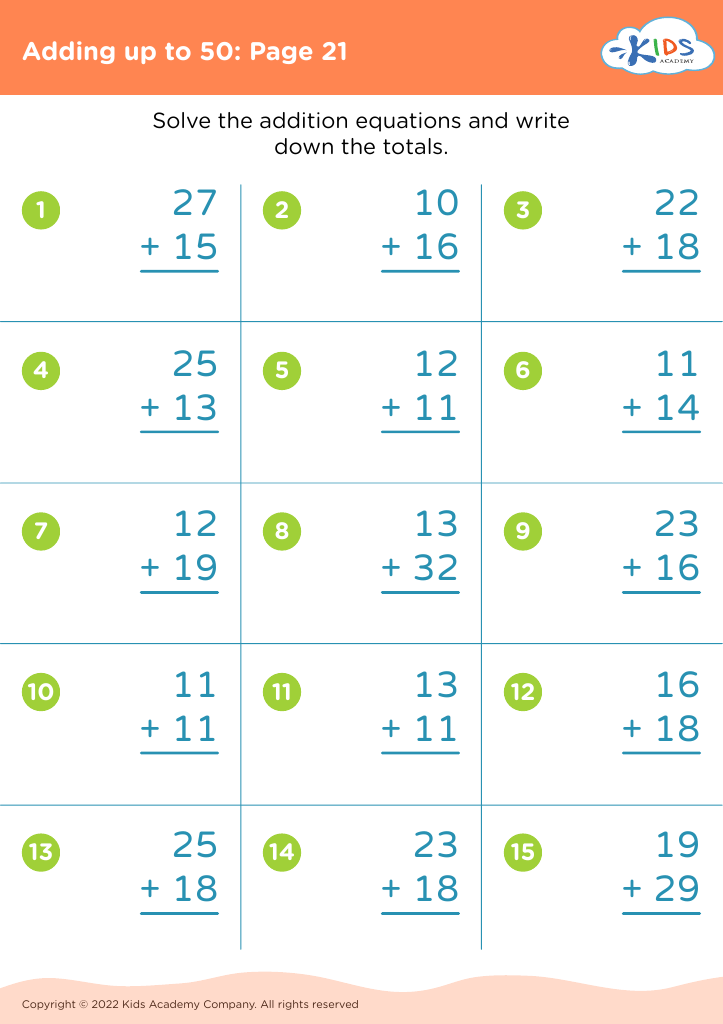
Adding up to 50: Page 21

Adding up to 50: Page 21

Adding up to 50: Page 21
Worksheet
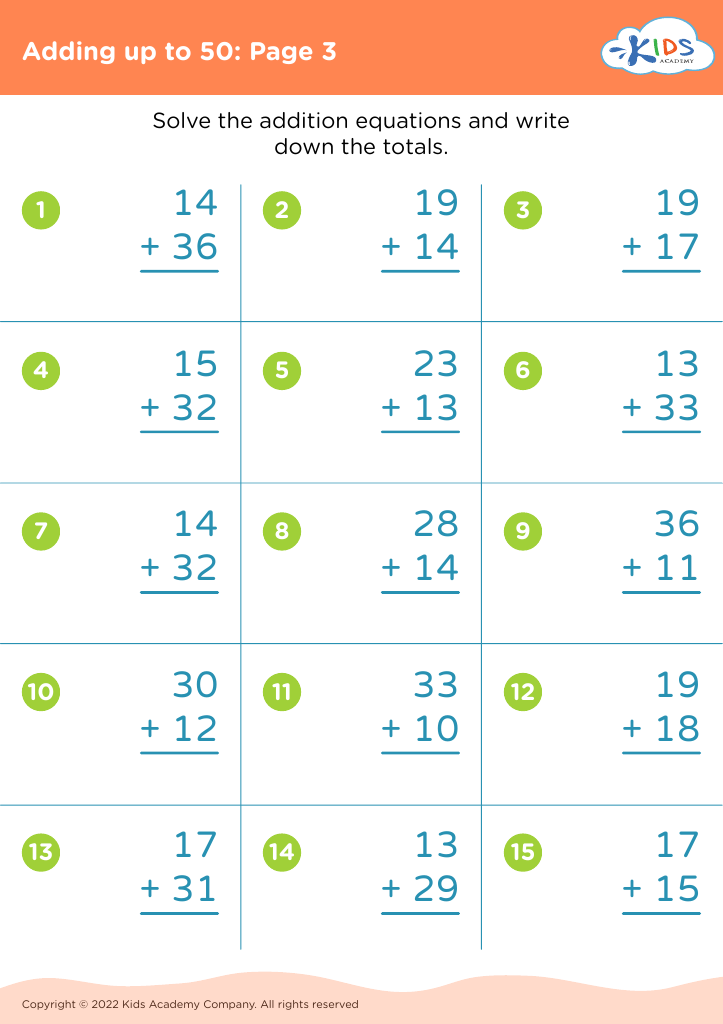
Adding up to 50: Page 3

Adding up to 50: Page 3

Adding up to 50: Page 3
Worksheet
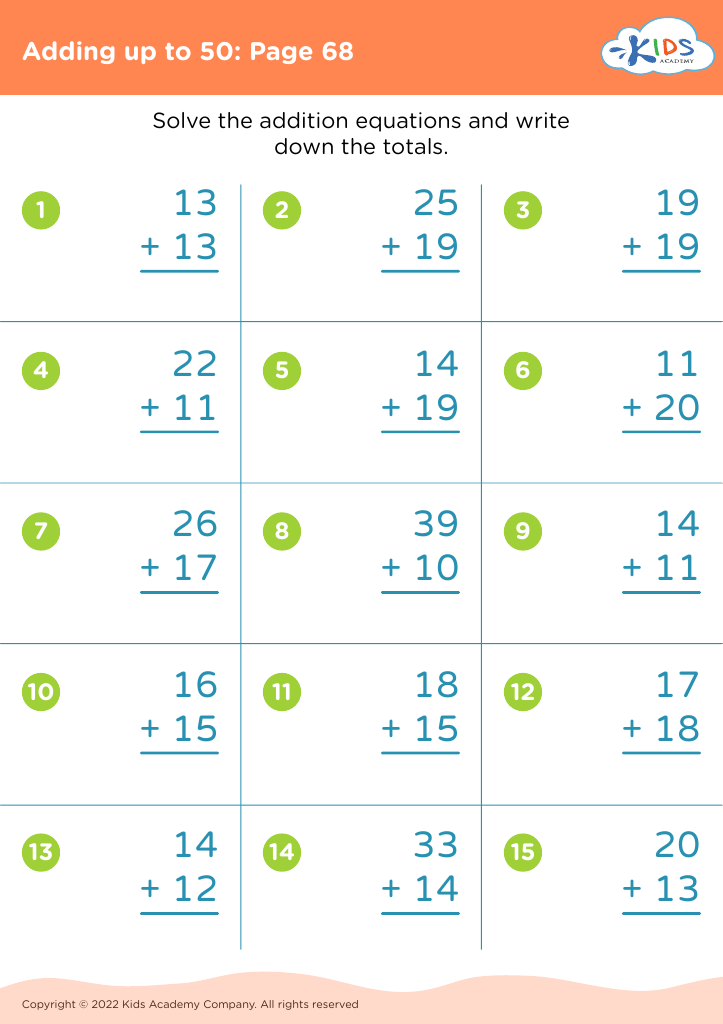
Adding up to 50: Page 68

Adding up to 50: Page 68

Adding up to 50: Page 68
Worksheet
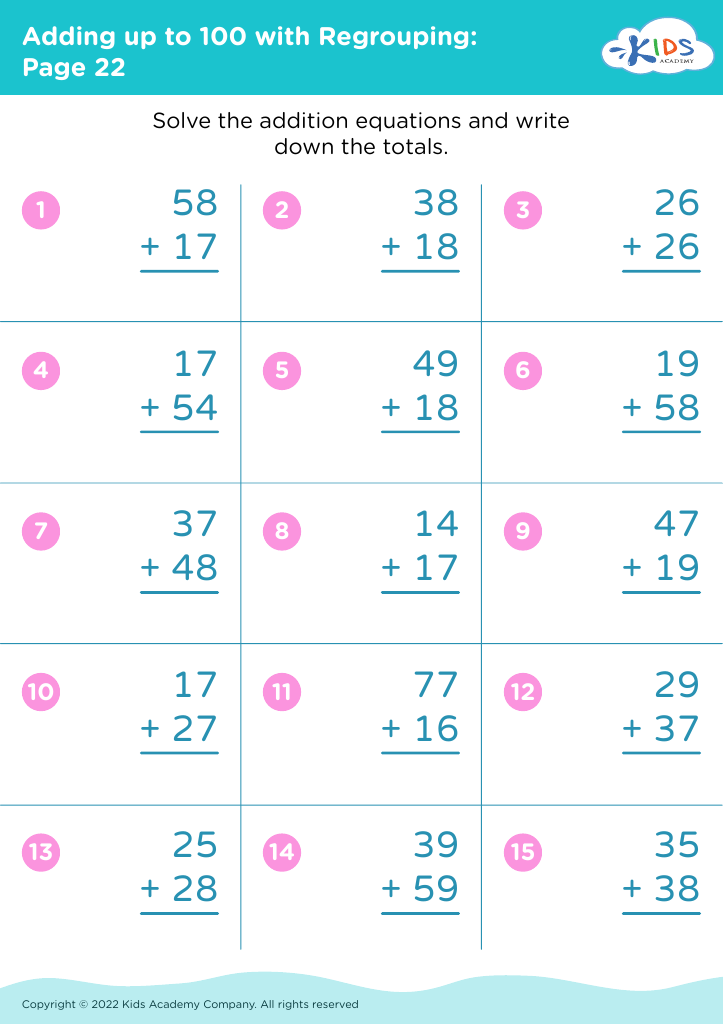
Adding up to 100 with Regrouping: Page 22
Worksheet
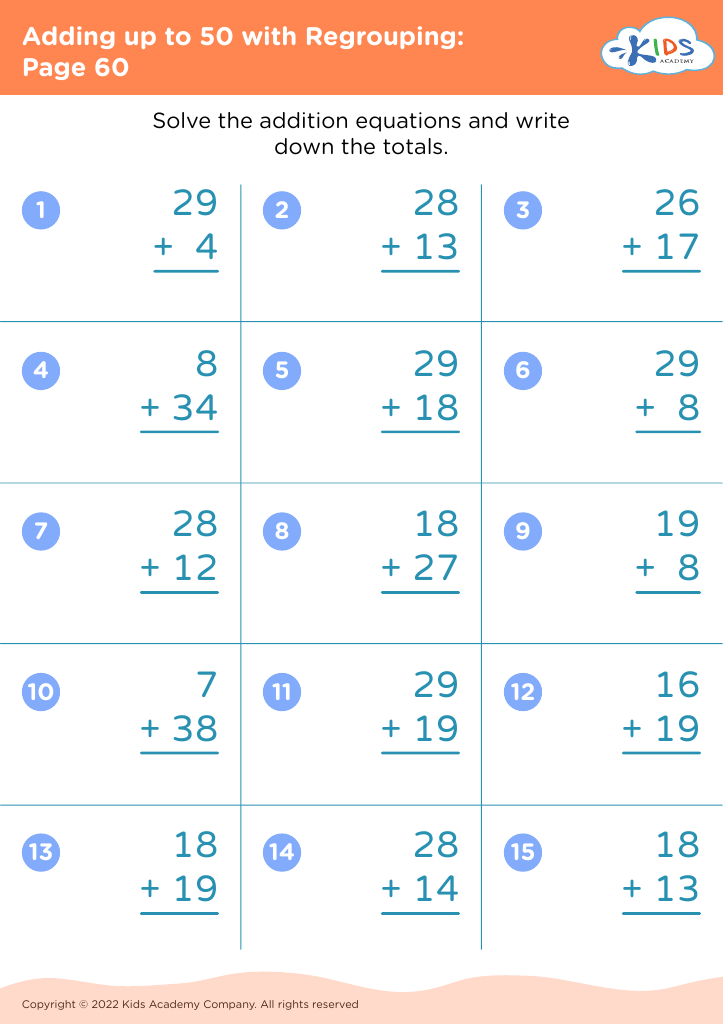
Adding up to 50 with Regrouping: Page 60
Worksheet
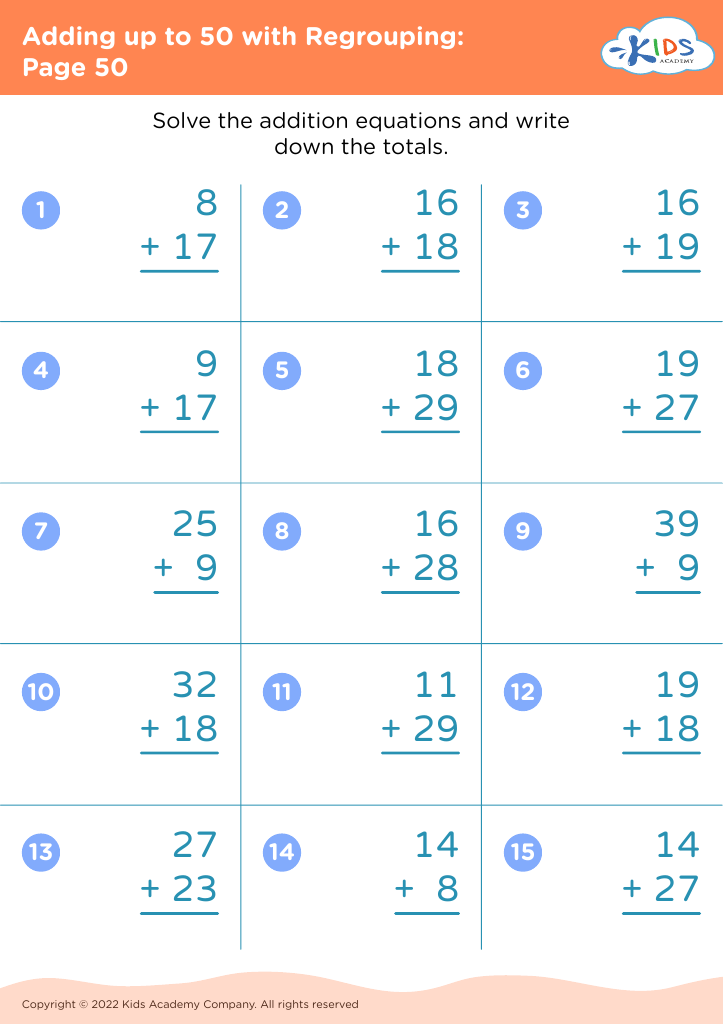
Adding up to 50 with Regrouping: Page 50
Worksheet
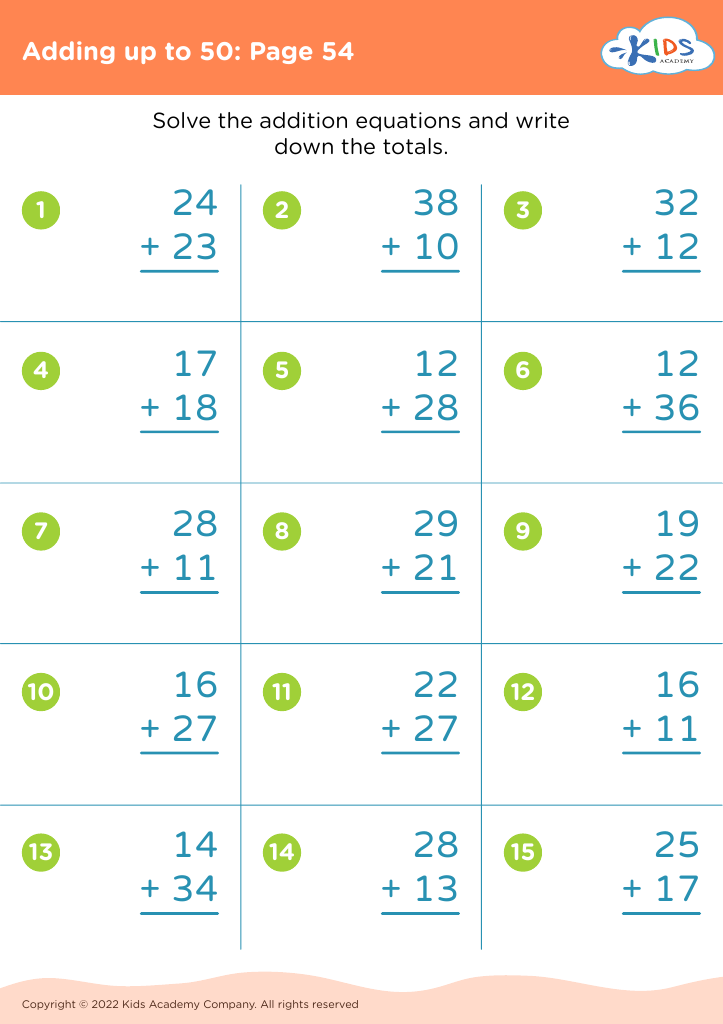
Adding up to 50: Page 54

Adding up to 50: Page 54

Adding up to 50: Page 54
Worksheet
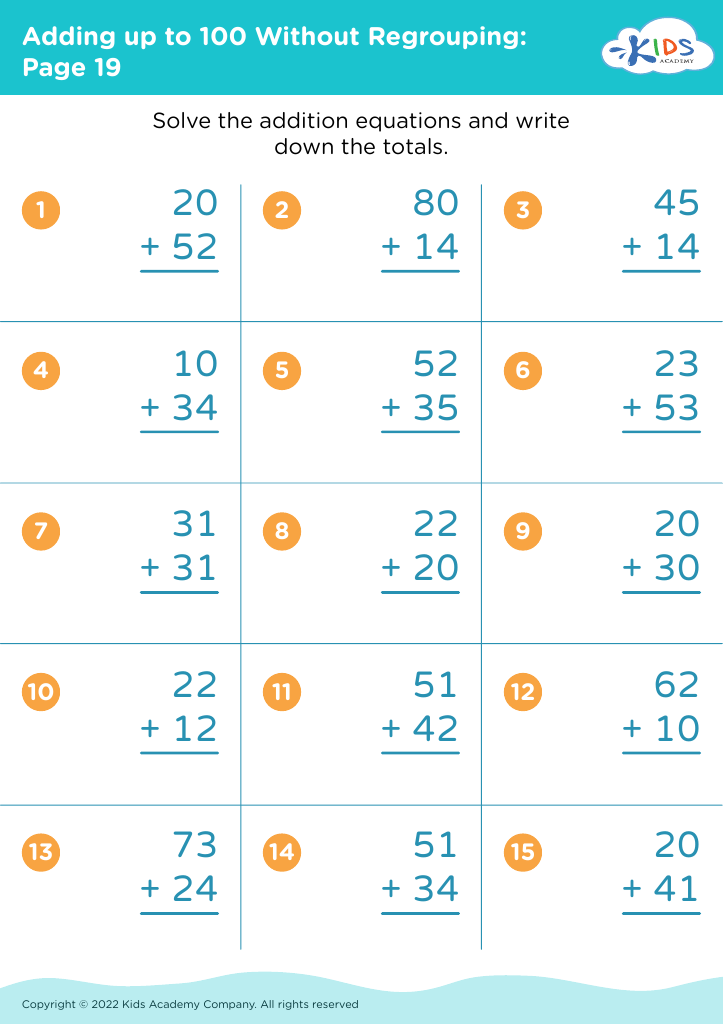
Adding up to 100 Without Regrouping: Page 19
Worksheet
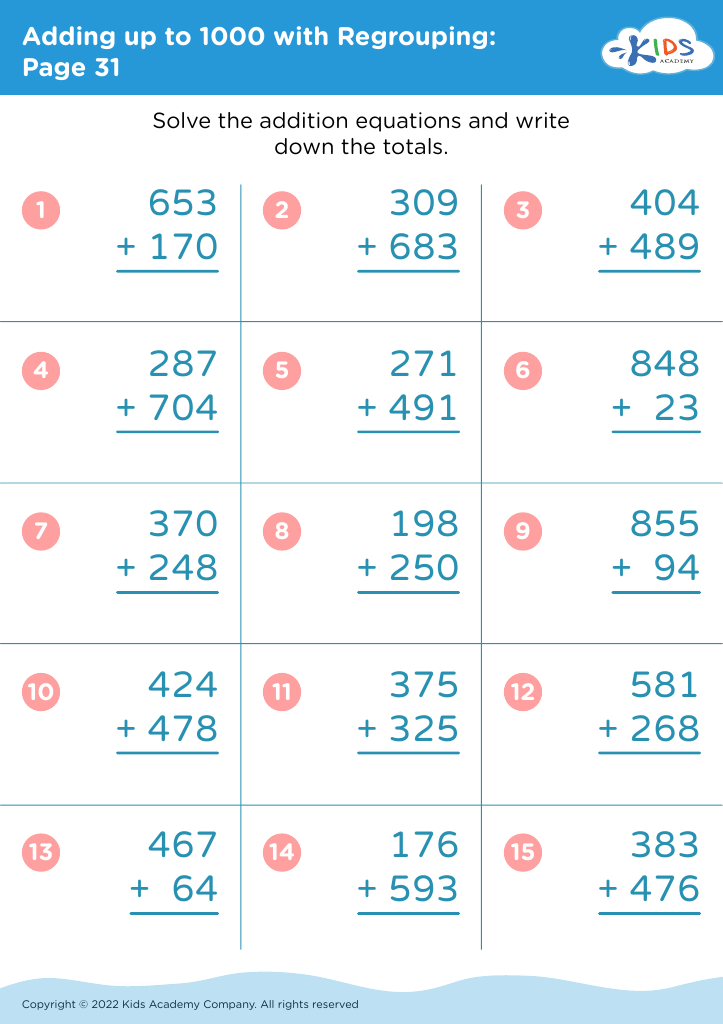
Adding up to 1000 with Regrouping: Page 31
Worksheet
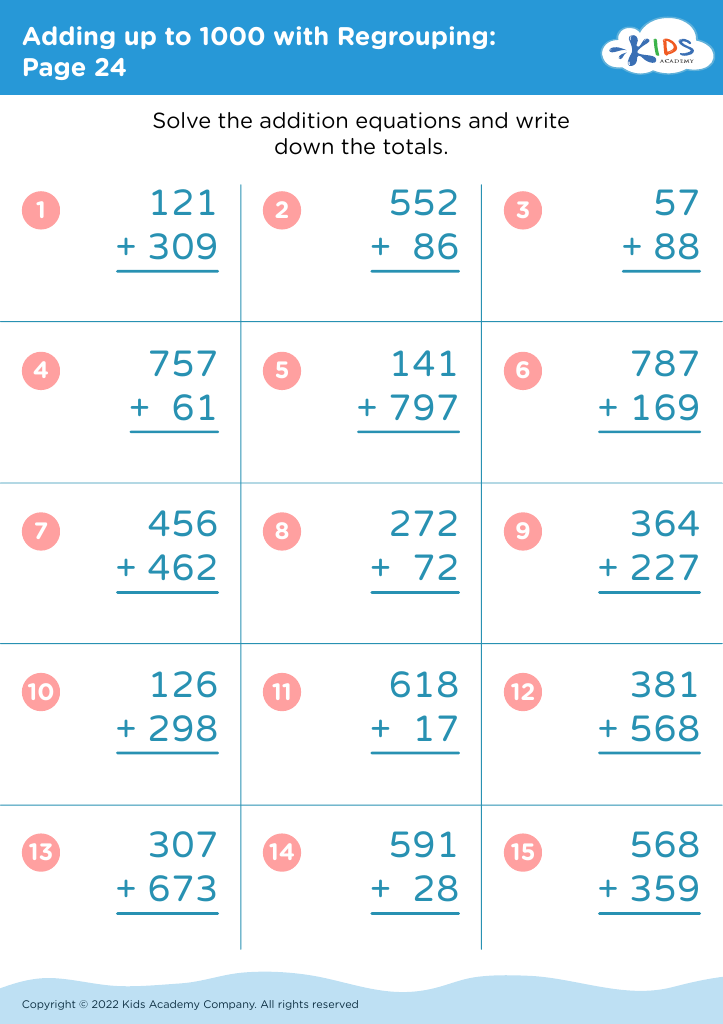
Adding up to 1000 with Regrouping: Page 24
Worksheet
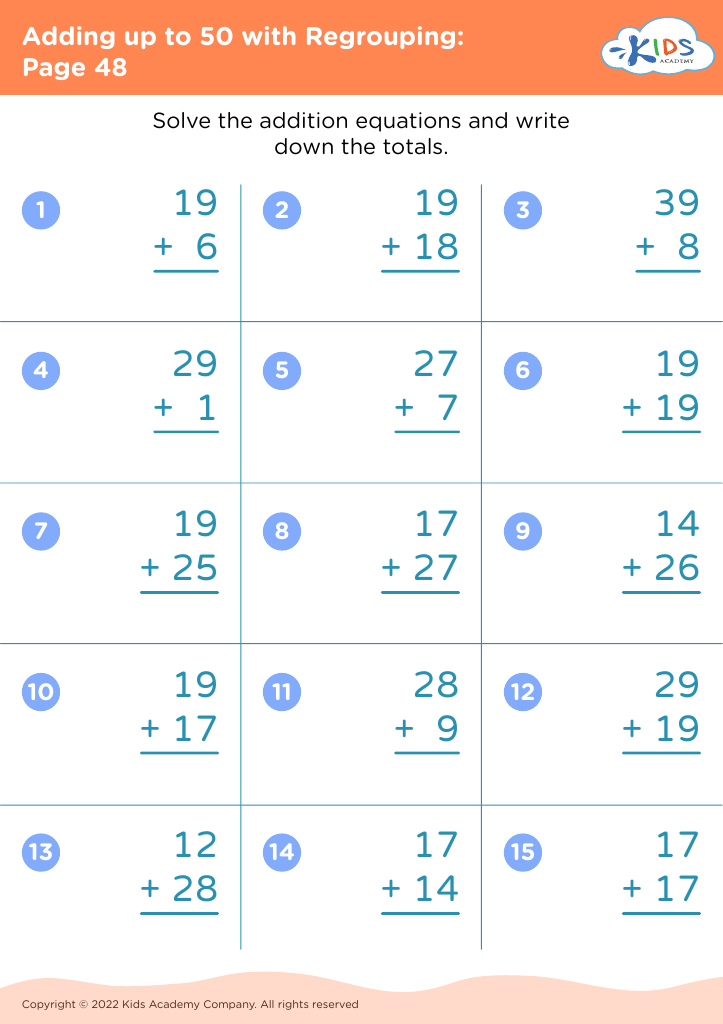
Adding up to 50 with Regrouping: Page 48
Worksheet
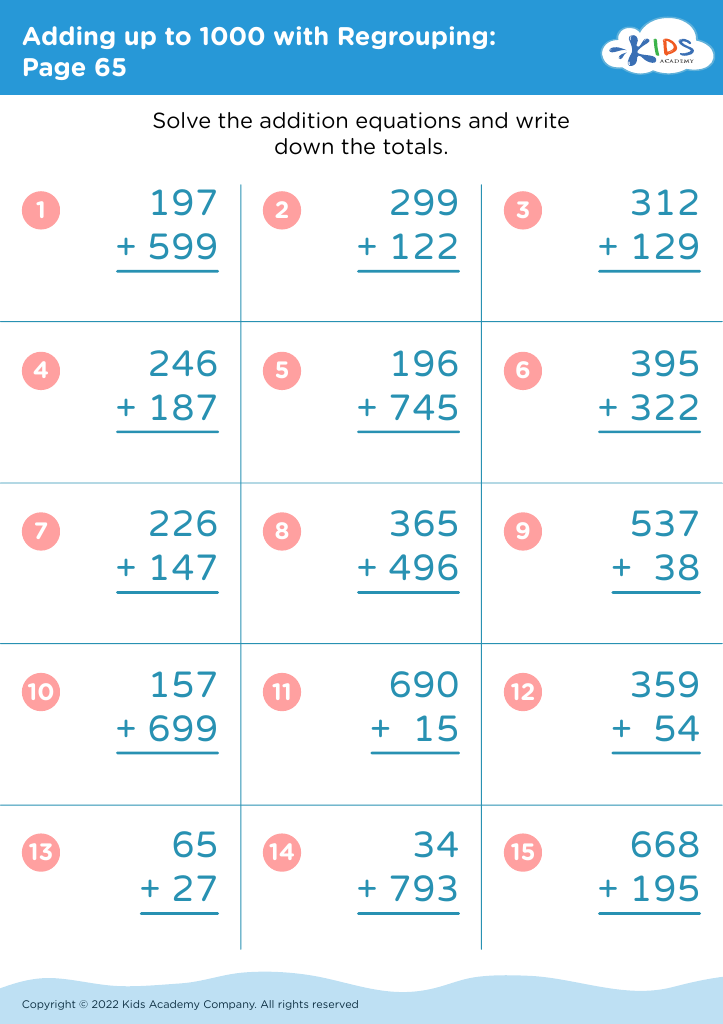
Adding up to 1000 with Regrouping: Page 65
Worksheet
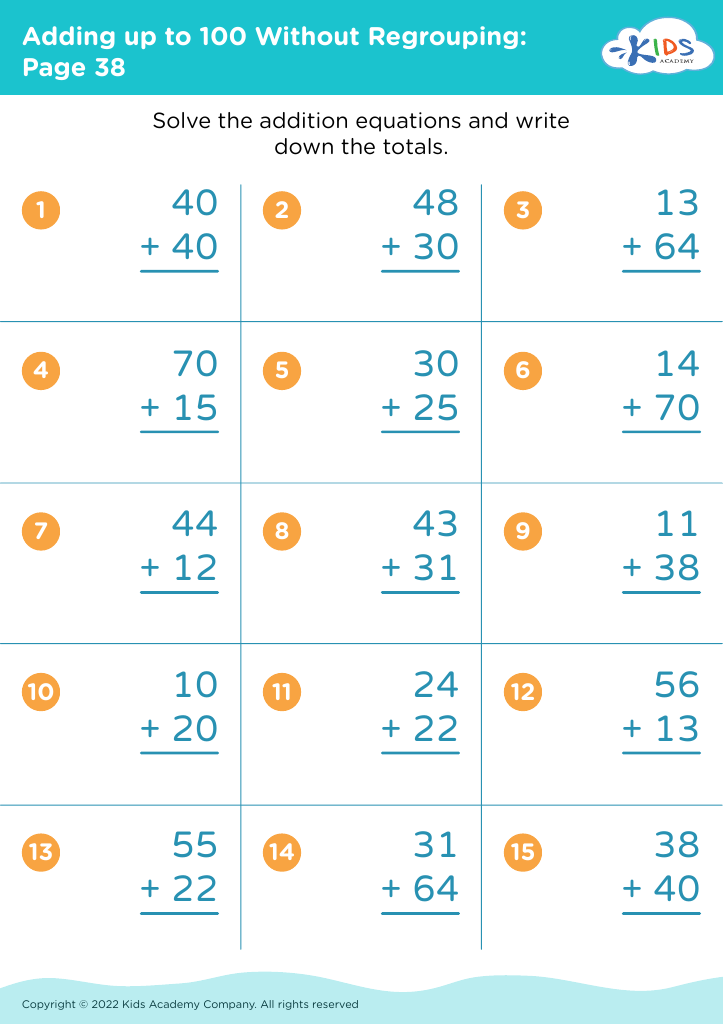
Adding up to 100 Without Regrouping: Page 38
Worksheet
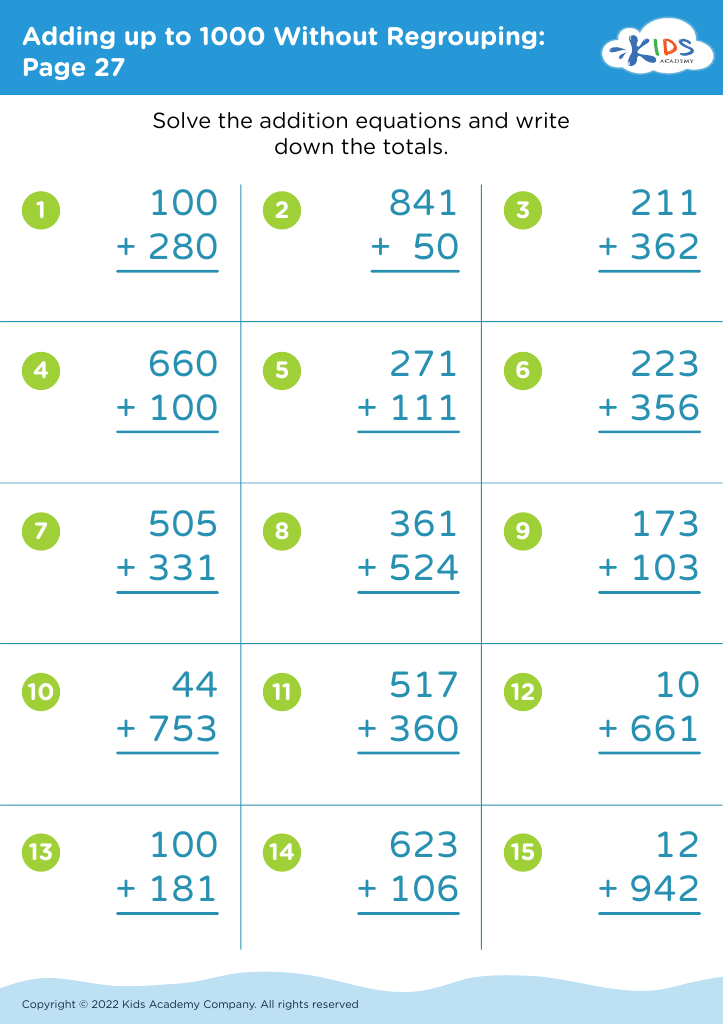
Adding up to 1000 Without Regrouping: Page 27
Worksheet
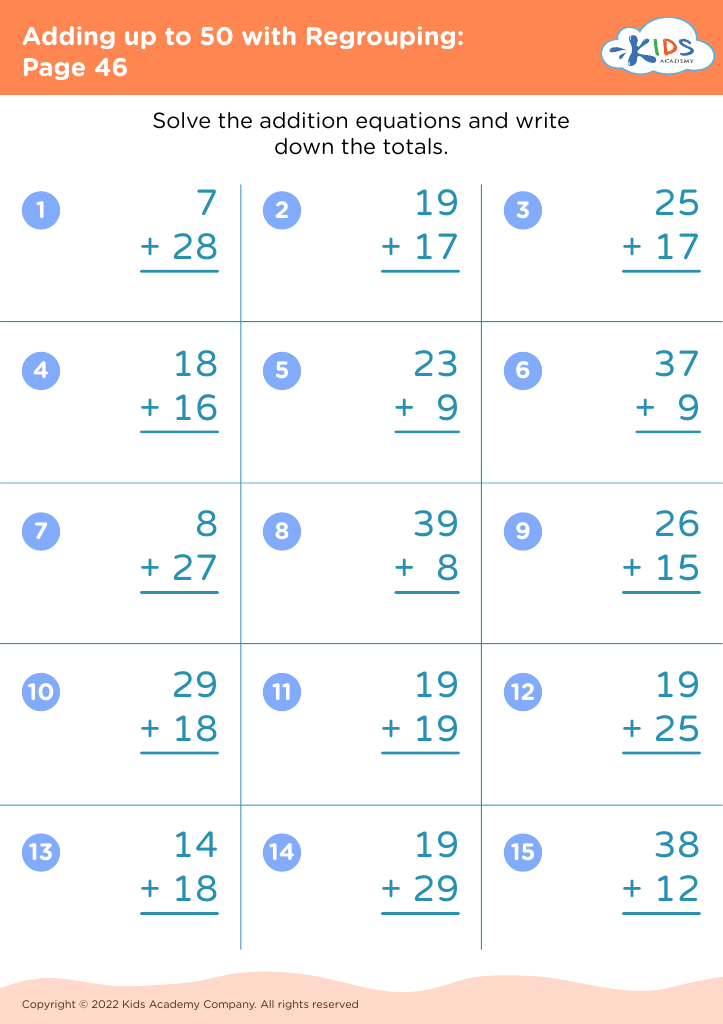
Adding up to 50 with Regrouping: Page 46
Worksheet
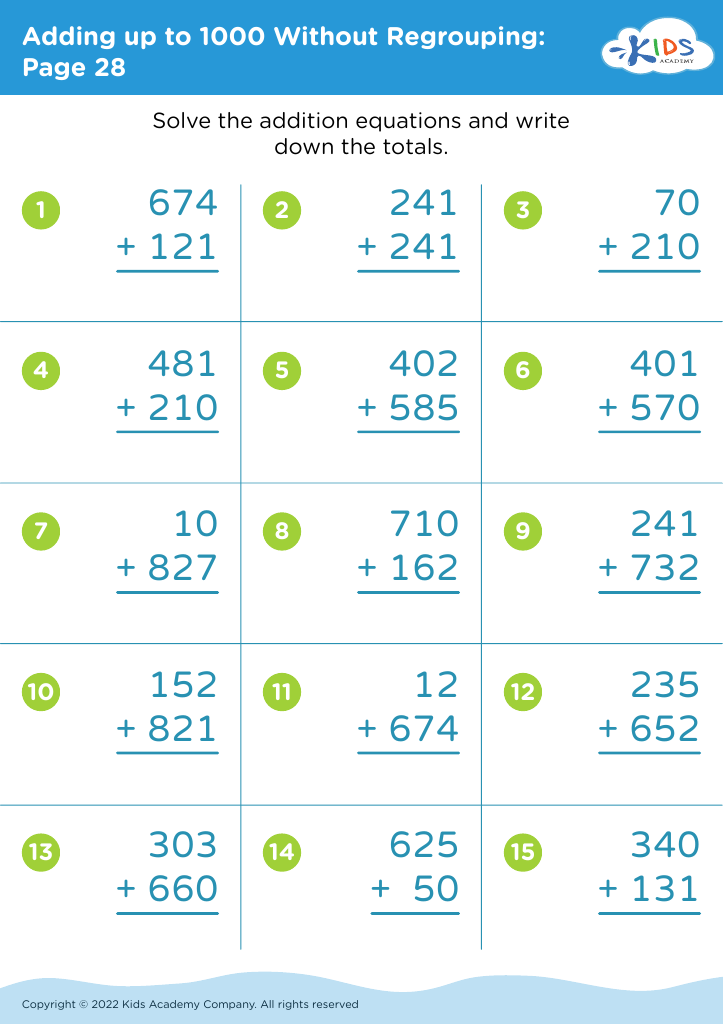
Adding up to 1000 Without Regrouping: Page 28
Worksheet
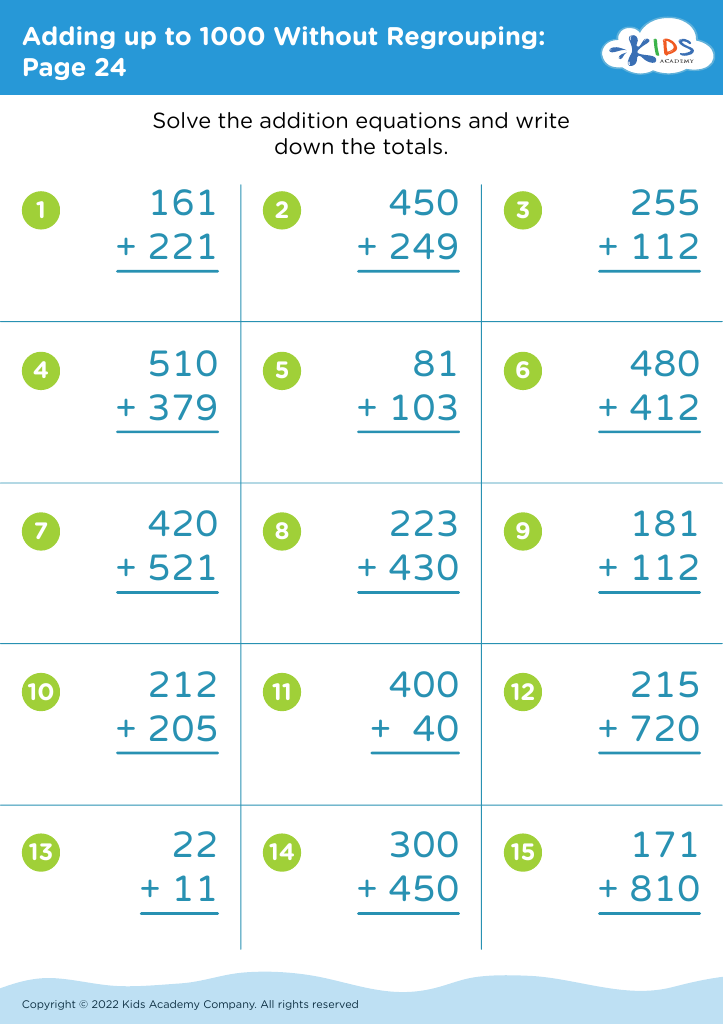
Adding up to 1000 Without Regrouping: Page 24
Worksheet


Simplifying fractions addition and subtraction for ages 6-7 is crucial for several foundational reasons. Firstly, understanding fractions at an early age helps children develop strong mathematical skills, which are essential for higher-level math concepts encountered later in their education. Simplifying the process ensures that young learners do not become overwhelmed but instead build confidence in their abilities.

Additionally, fractions are ubiquitous in daily life, from cooking measurements to time management, and having a clear grasp early on aids children in practical, everyday tasks. By starting early, we can demystify fractions, making them less intimidating and more approachable as children grow older.

Cognitively, children aged 6-7 are in a critical stage for grasping fundamental math concepts, and simplifying the complex ideas of fractions, addition, and subtraction helps cater to their developmental stage. It ensures that they are not only memorizing the steps but understanding the underlying concepts, which fosters better long-term retention and applicability.

From a pedagogical perspective, simplified learning strategies for fractions addition and subtraction incorporate hands-on activities and visual aids which are effective for this age group. Such methods promote engagement, enhance comprehension, and develop problem-solving skills. Caring about this foundational understanding instills a positive math experience and sets the stage for future academic success.