Understanding patterns Addition & Subtraction Worksheets for Ages 6-7 - Page 2
34 filtered results
-
From - To
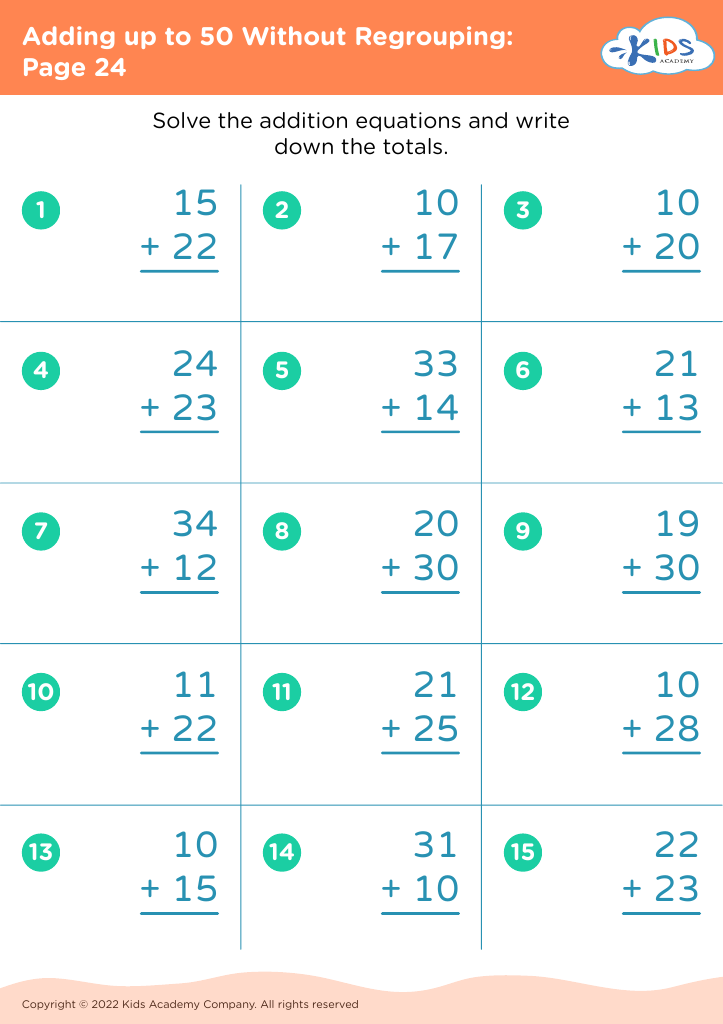
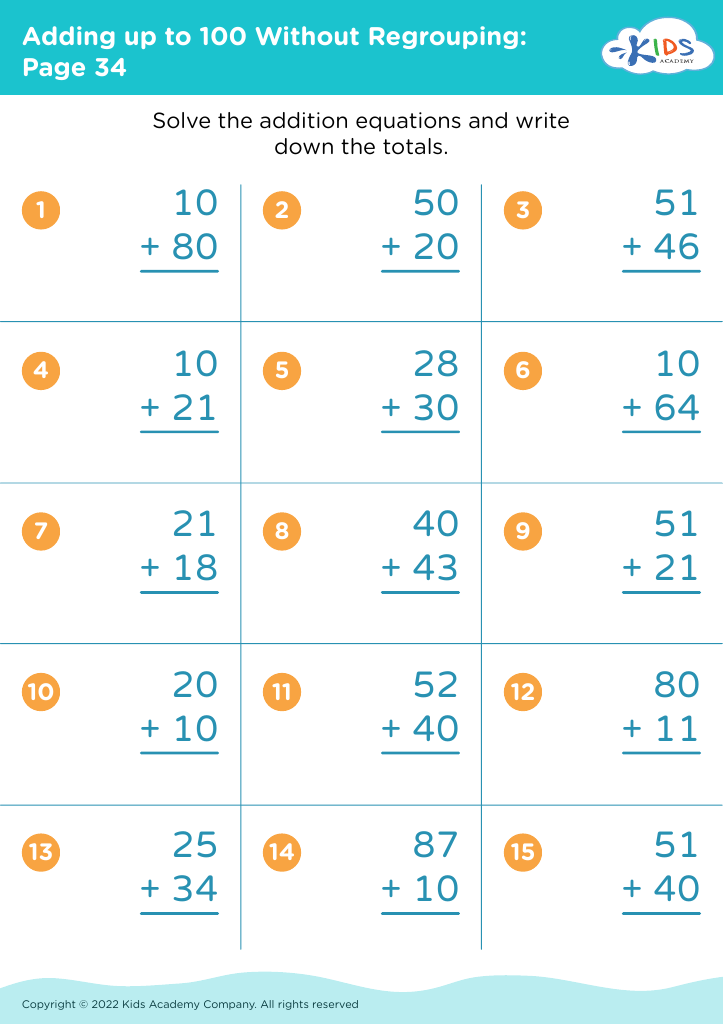
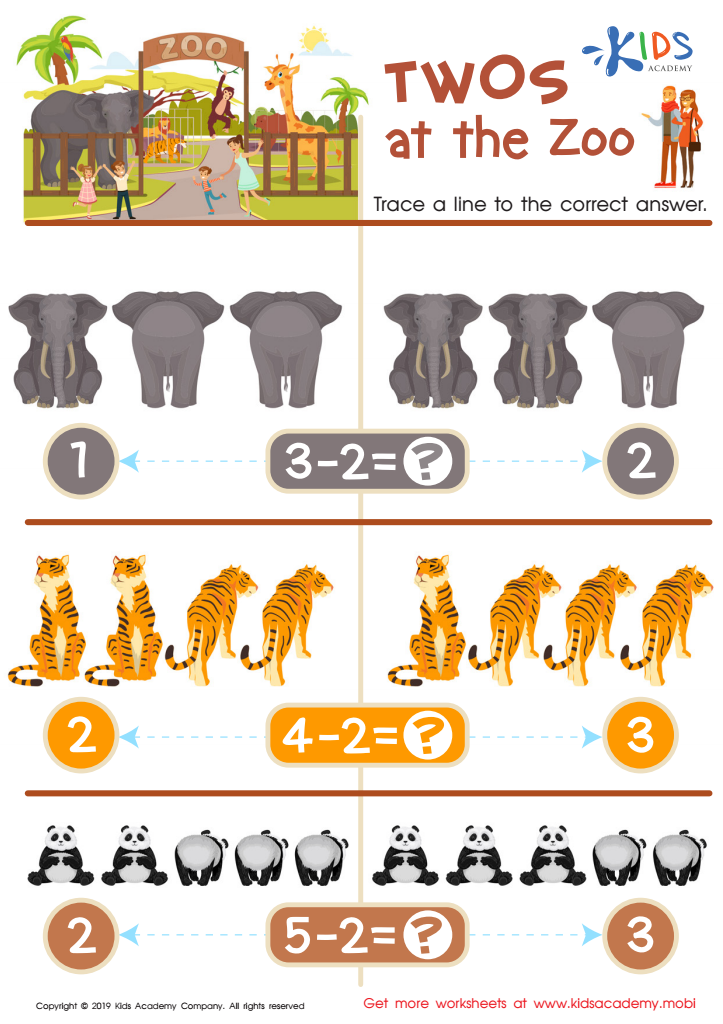
Twos at the Zoo Worksheet
 Assign to My Students
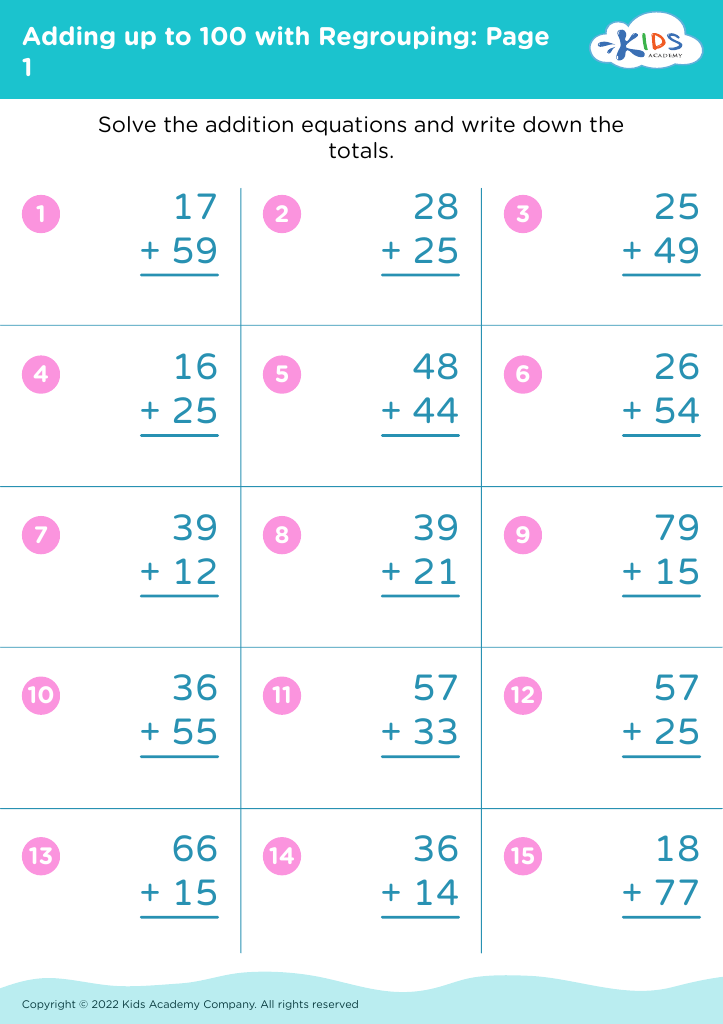







Understanding patterns in addition and subtraction is vital for children aged 6-7, as it forms the foundation for their mathematical reasoning and problem-solving skills. At this developmental stage, children are learning to recognize relationships between numbers, which enhances their ability to predict outcomes and solve mathematical problems efficiently. When children understand patterns, they see how numbers are interconnected and can apply this knowledge to various scenarios, making them more adept at handling math in everyday life.
For parents and teachers, fostering an environment where children explore these patterns can lead to a deeper comprehension of concepts like place value and numerical operations. It promotes critical thinking and nurtures creativity in approaching math problems. Additionally, understanding patterns can boost children's confidence as they begin to see that math is not just about memorizing rules but also about discovering and applying concepts, which keeps them engaged and motivated to learn.
By encouraging children to recognize patterns, educators and caregivers help cultivate essential skills that will benefit them in higher mathematics and other academic areas, ultimately contributing to their overall success in school and life. Hence, understanding patterns in addition and subtraction is essential for nurturing a strong mathematical foundation during these formative years.








