Filters

120 filtered results

Clear all filters
Favorites
With answer key
Interactive

120 filtered results

Difficulty Level

Grade


Check out this FREE Trial Lesson on Addition for age 6-7!

Writing Number Sentences for Addition Story Problems

Favorites
With answer key
Interactive
  • 6-7
  • Counting skills
  • Addition
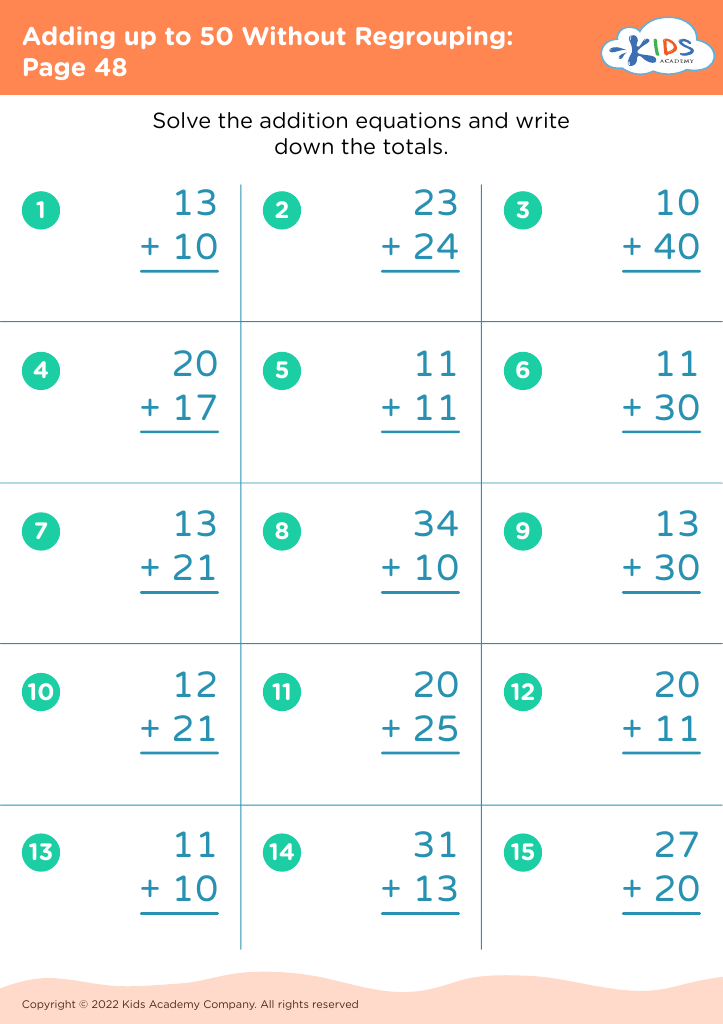
Adding up to 50 Without Regrouping: Page 48
Worksheet
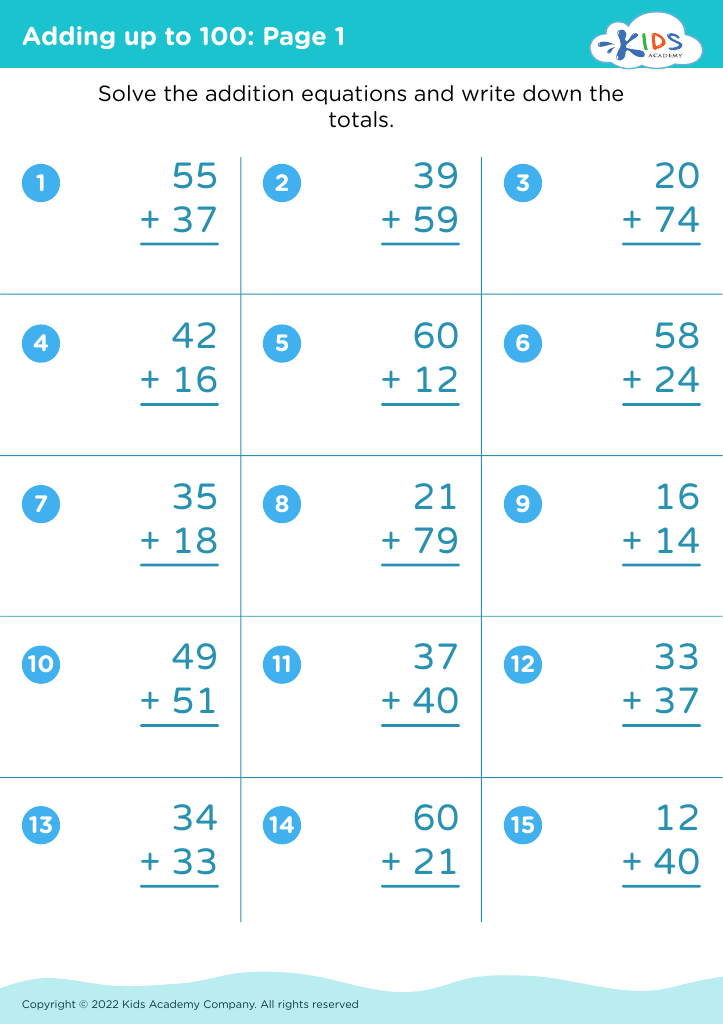
Adding up to 100: Page 1

Adding up to 100: Page 1

Adding up to 100: Page 1
Worksheet
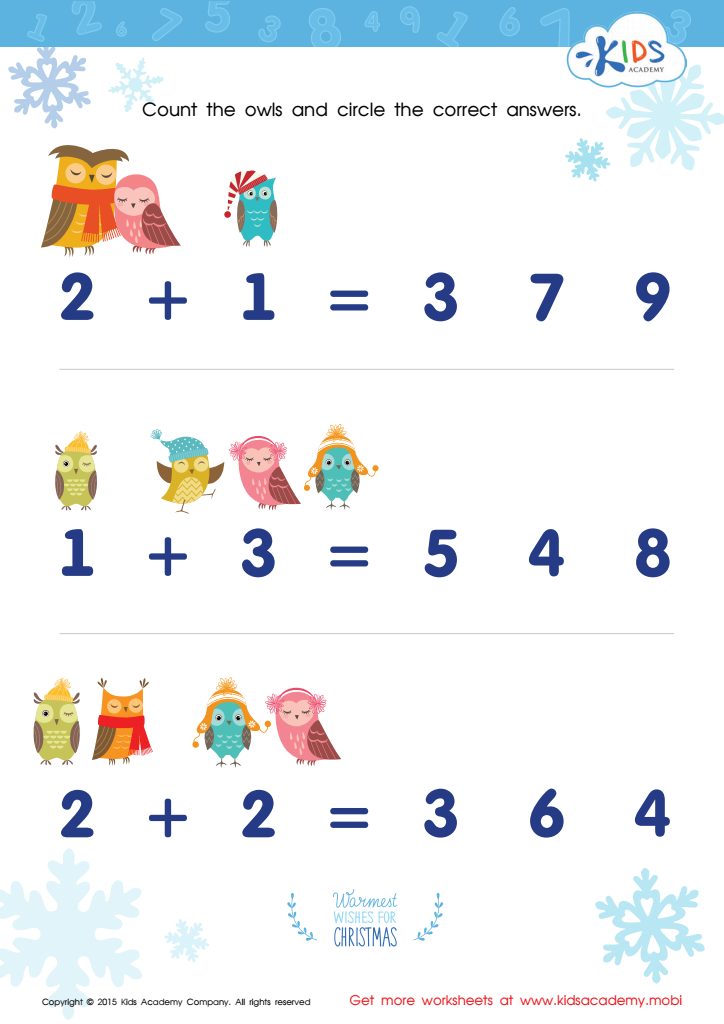
Math PDF Worksheet: Count Little Owls

Count Little Owls Worksheet

Math fun awaits! Count the cute little owls and practice adding single digits up to three indoors. Bright pictures help kids solve these simple problems. Get the free worksheets and enjoy the holiday season with Kids Academy!
Count Little Owls Worksheet
Worksheet
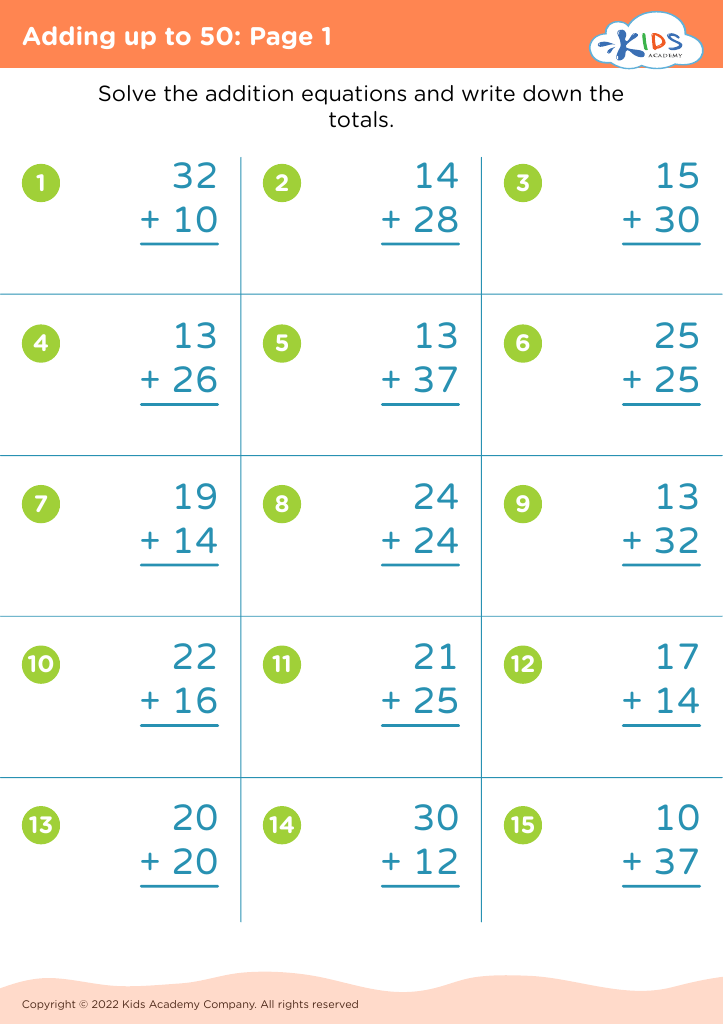
Adding up to 50: Page 1

Adding up to 50: Page 1

Adding up to 50: Page 1
Worksheet
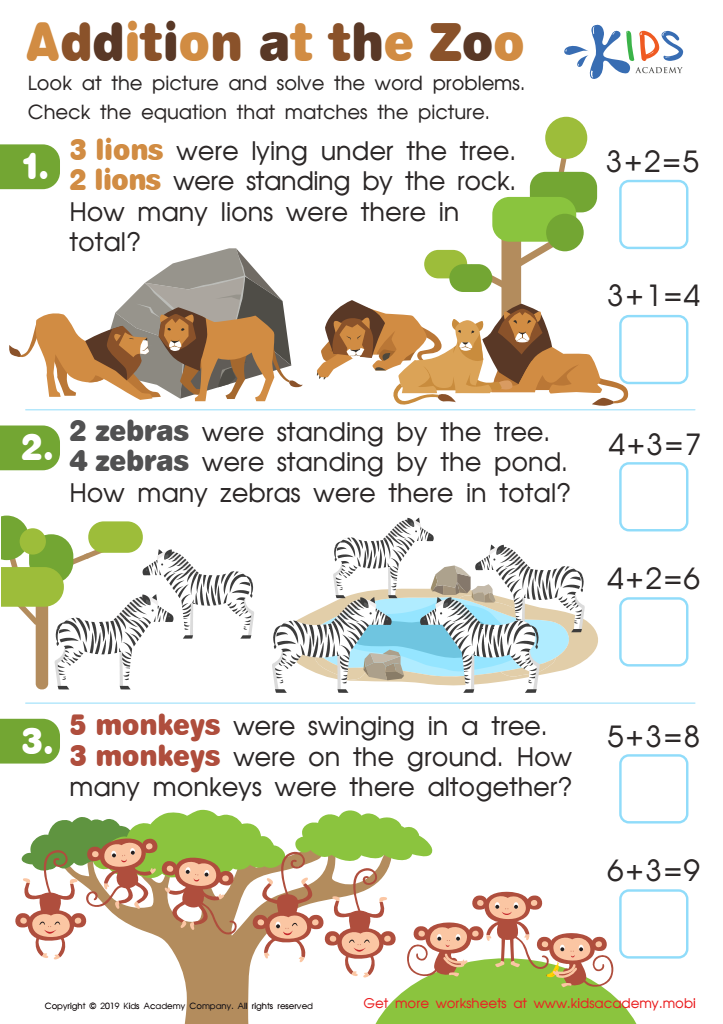
Addition at the Zoo Worksheet

Addition at the Zoo Worksheet

Visit the zoo with your kids and point out all the different animals. Ask them to name their favorites and identify animals on a worksheet. Challenge them to solve word problems related to the pictures. Ask them for the equation that fits the picture and check the answer.
Addition at the Zoo Worksheet
Worksheet
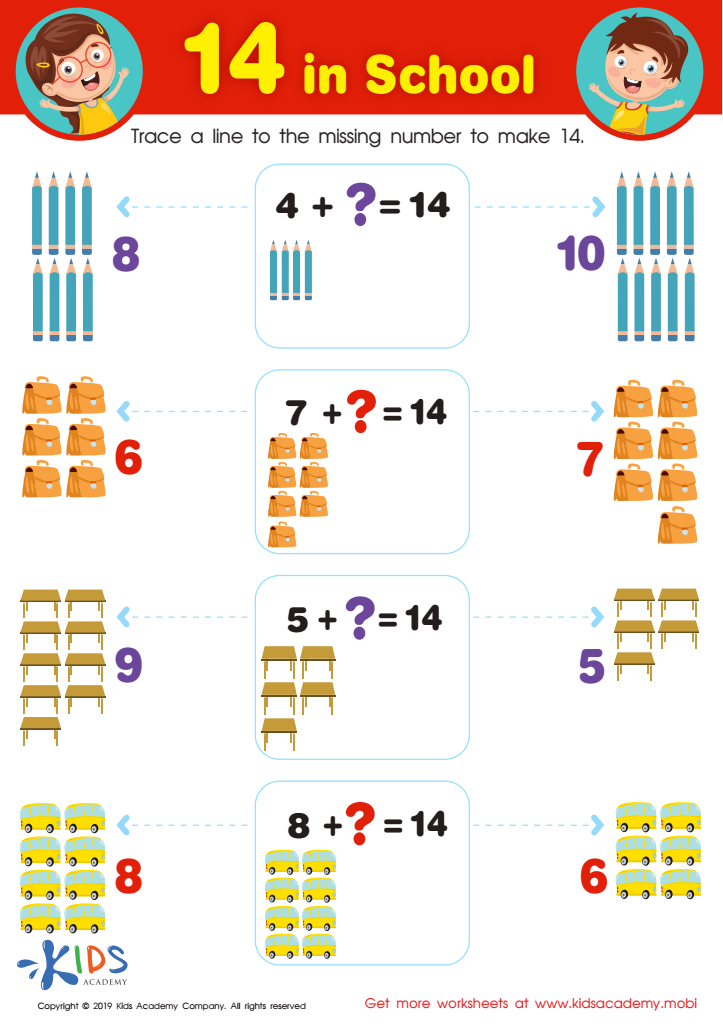
14 in School Worksheet
14 in School Worksheet
Remind your kids that adding different sets of numbers can give the same total (e.g. 2+3=5, 4+1=5). Ask them for more examples. Afterwards, work through the exercise. Help them count the objects and trace a line to the missing number that makes the total 14.
14 in School Worksheet
Worksheet
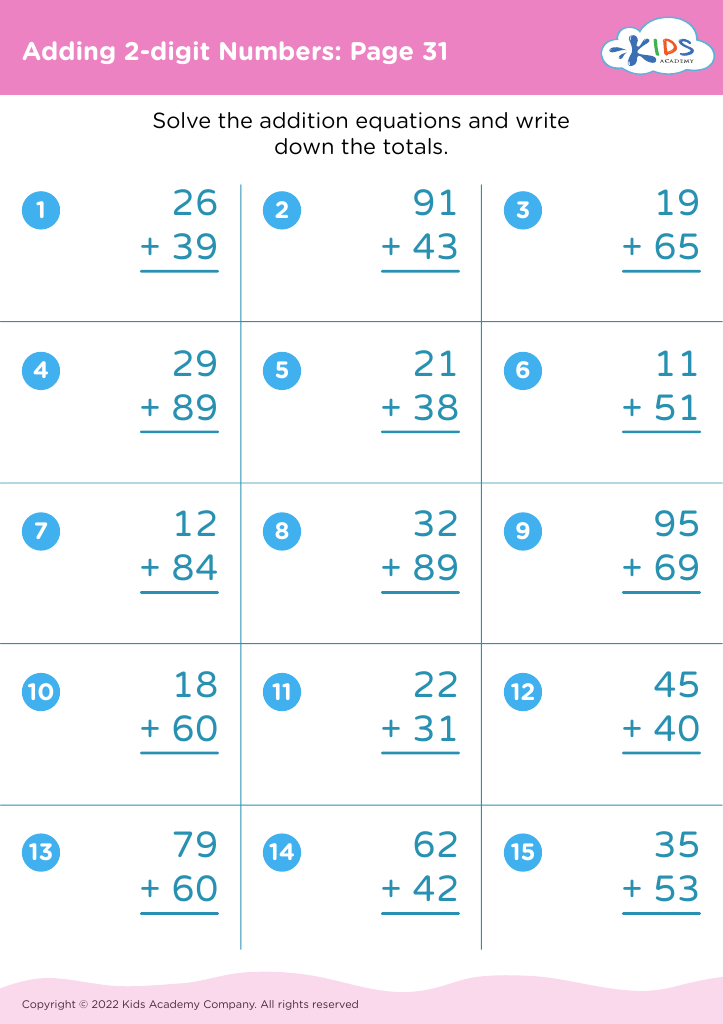
Adding 2-digit Numbers: Page 31

Adding 2-digit Numbers: Page 31

Adding 2-digit Numbers: Page 31
Worksheet
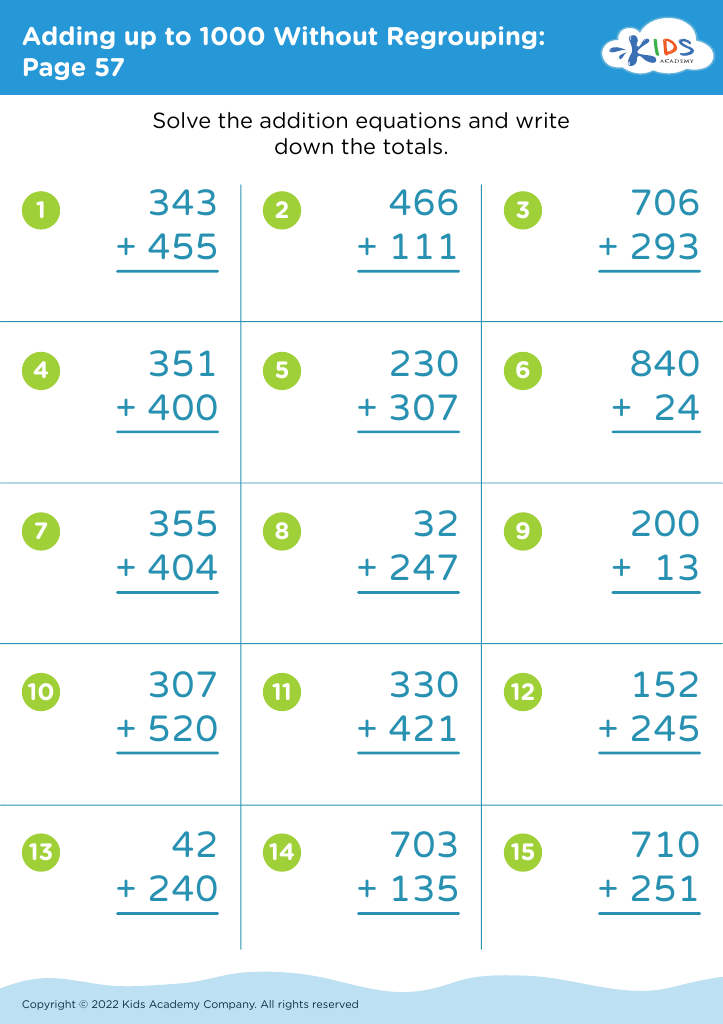
Adding up to 1000 Without Regrouping: Page 57
Worksheet
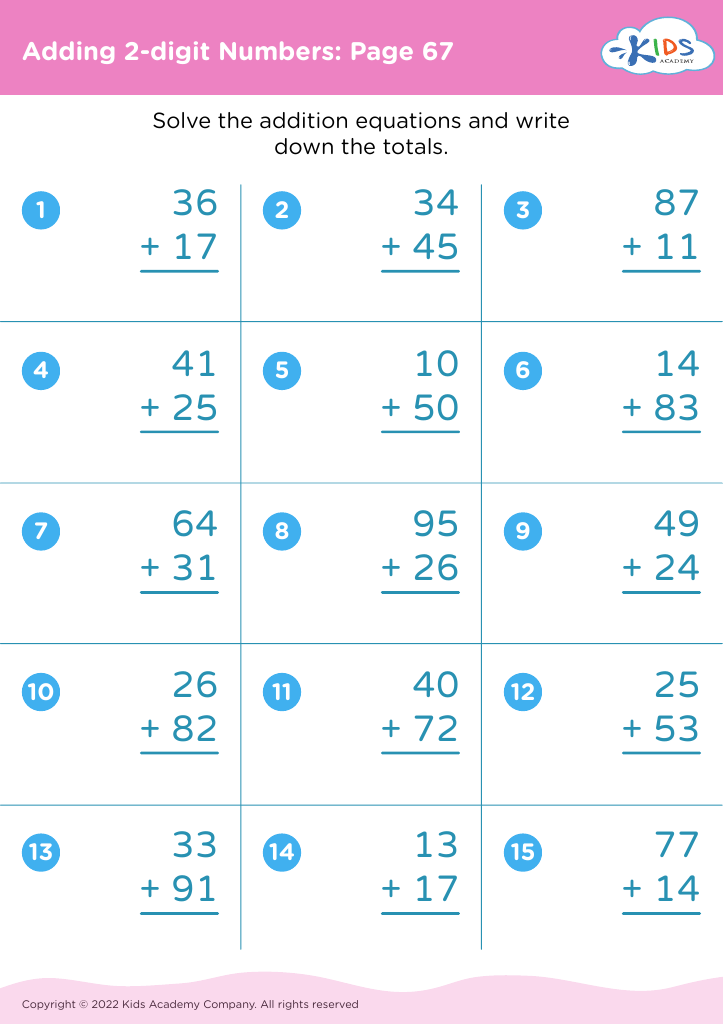
Adding 2-digit Numbers: Page 67

Adding 2-digit Numbers: Page 67

Adding 2-digit Numbers: Page 67
Worksheet
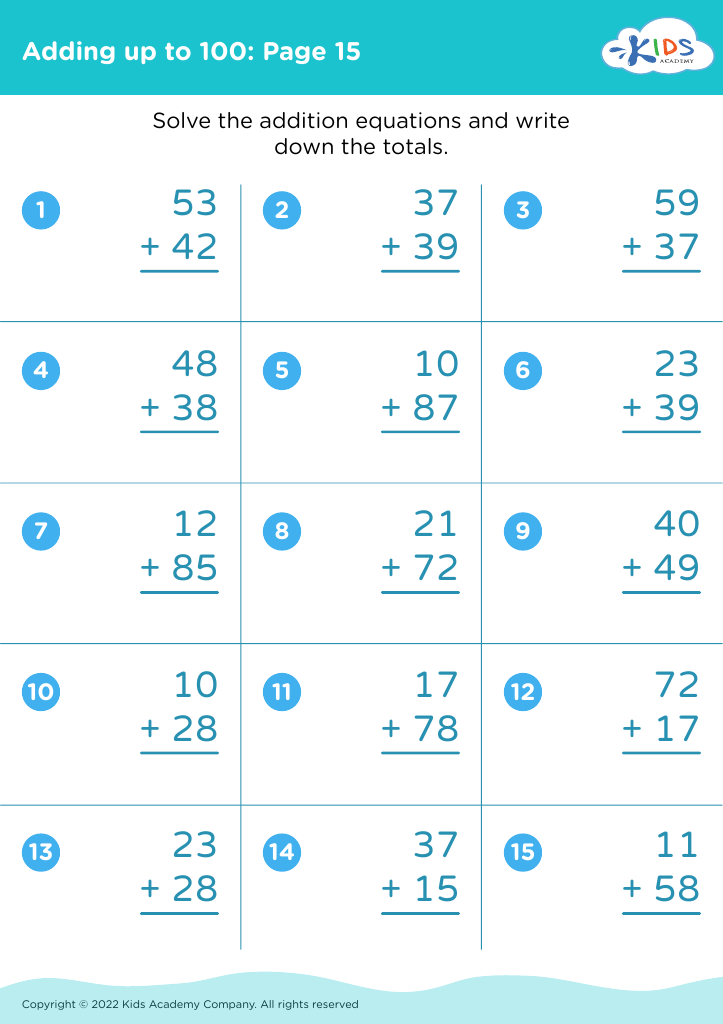
Adding up to 100: Page 15

Adding up to 100: Page 15

Adding up to 100: Page 15
Worksheet
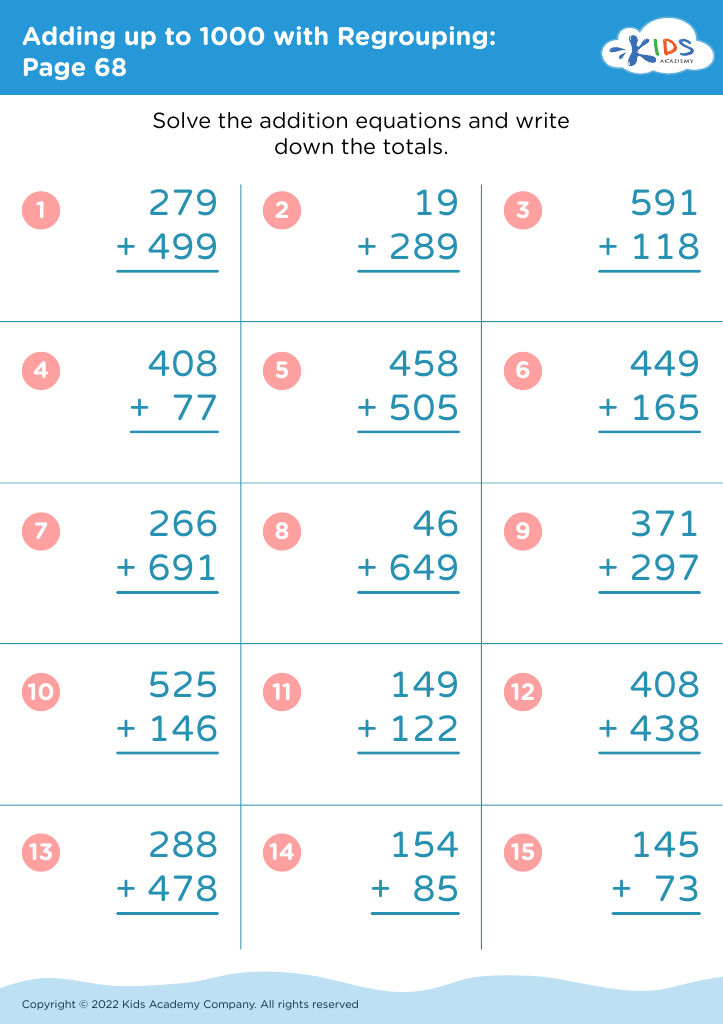
Adding up to 1000 with Regrouping: Page 68
Worksheet
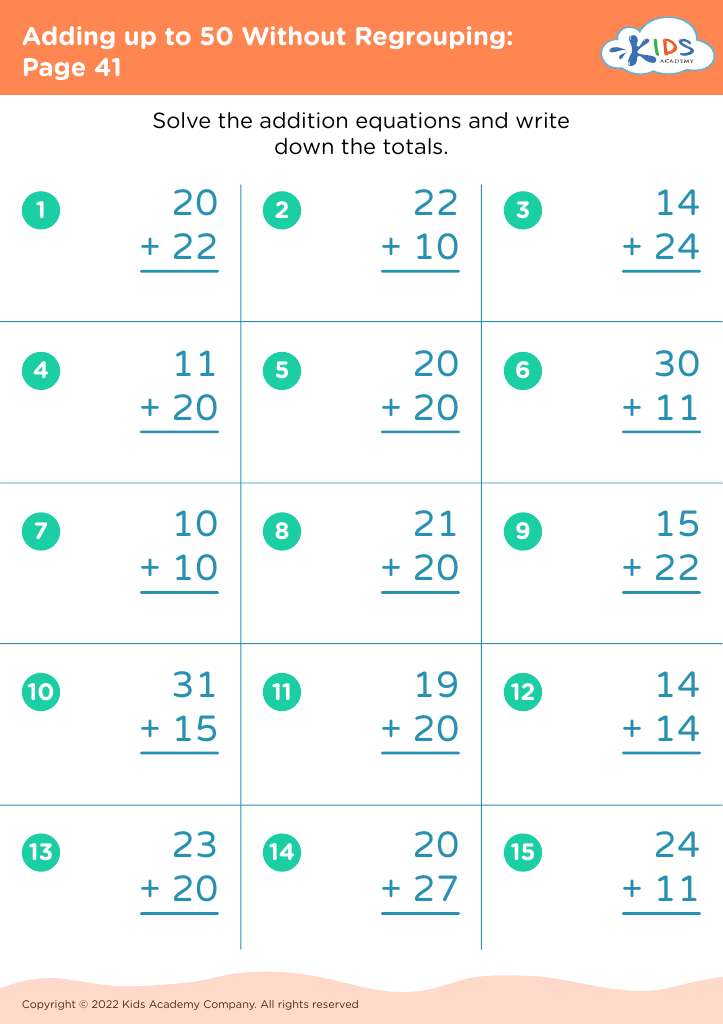
Adding up to 50 Without Regrouping: Page 41
Worksheet
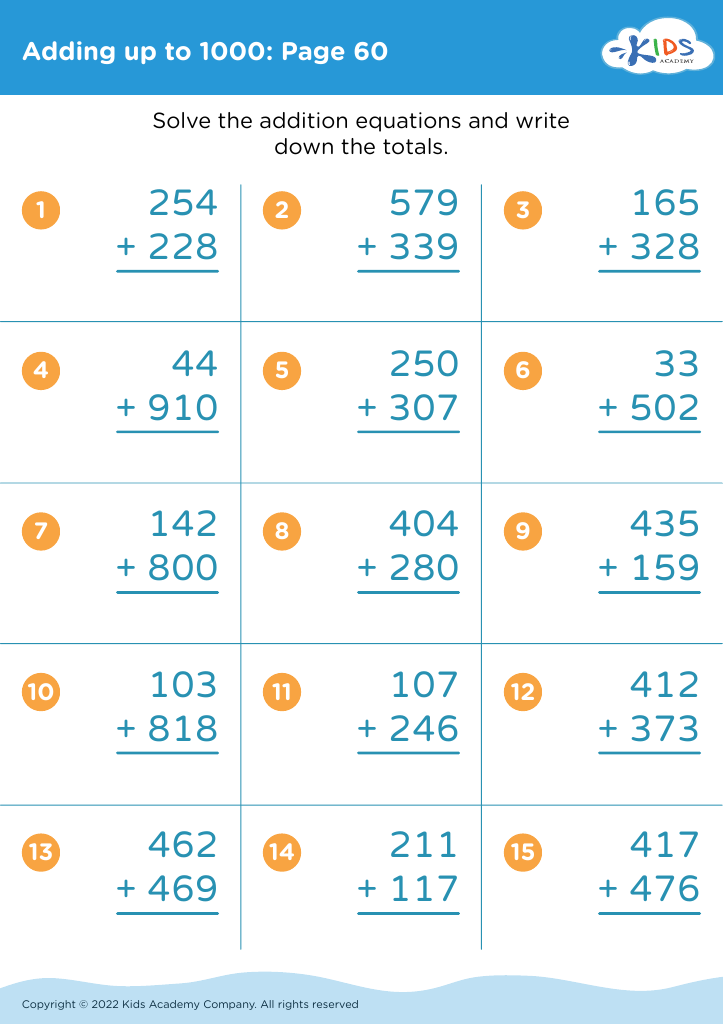
Adding up to 1000: Page 60

Adding up to 1000: Page 60

Adding up to 1000: Page 60
Worksheet
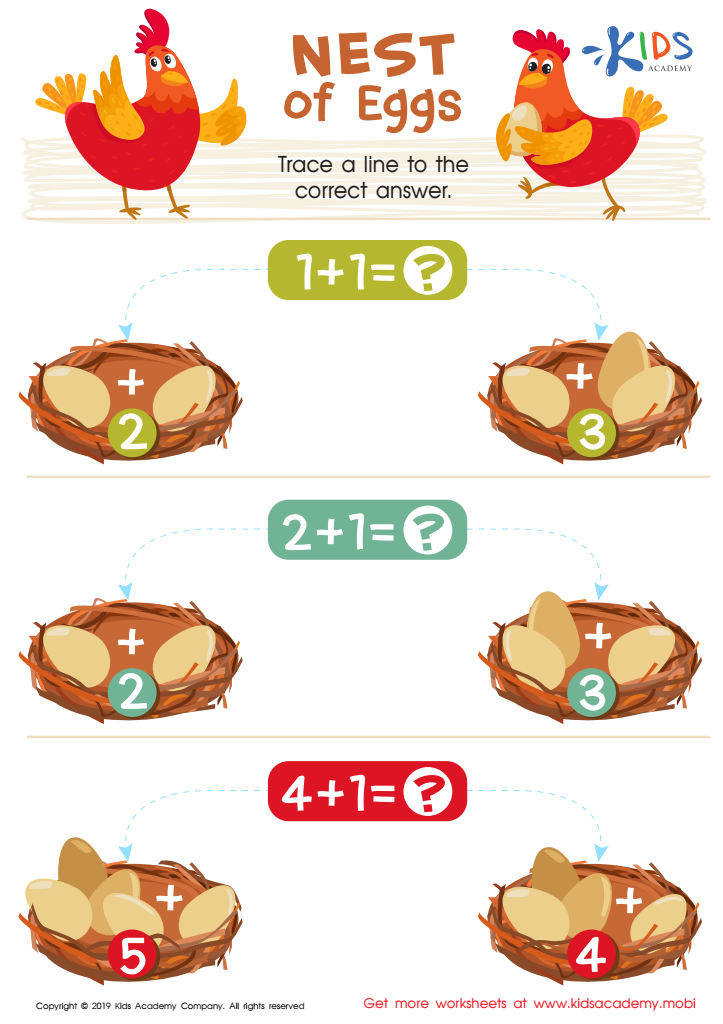
Nest of Eggs Worksheet
Nest of Eggs Worksheet
Help your kids learn math with this worksheet. First discuss the picture with them and then work through the three equations. Encourage them to trace the correct answer afterwards. With your assistance, they'll soon be able to confidently add numbers.
Nest of Eggs Worksheet
Worksheet
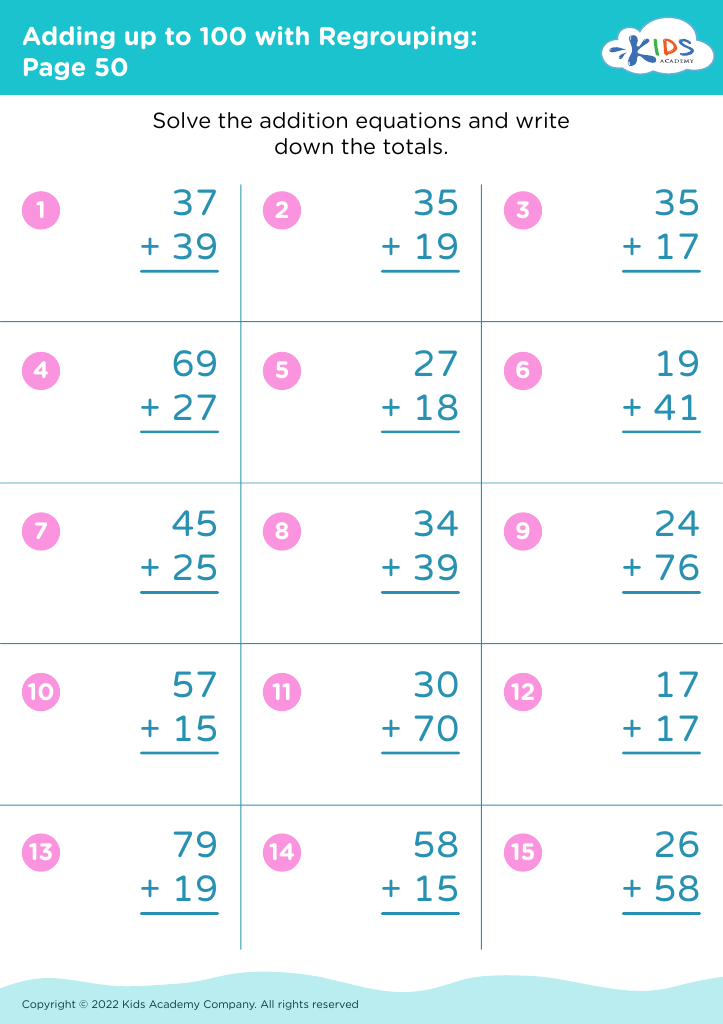
Adding up to 100 with Regrouping: Page 50
Worksheet
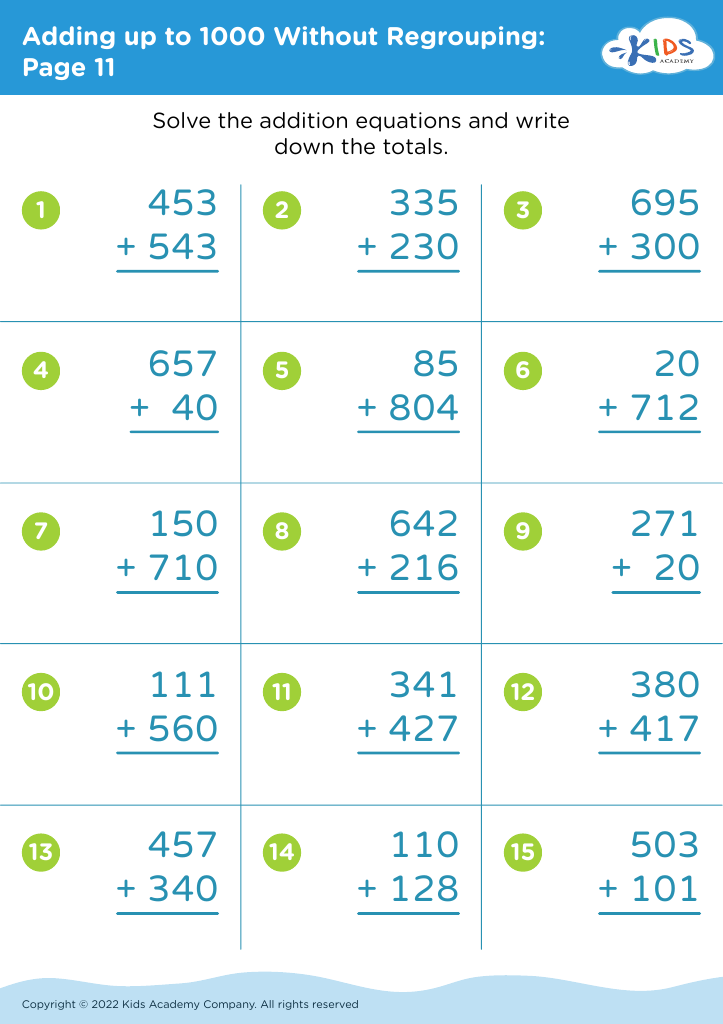
Adding up to 1000 Without Regrouping: Page 11
Worksheet
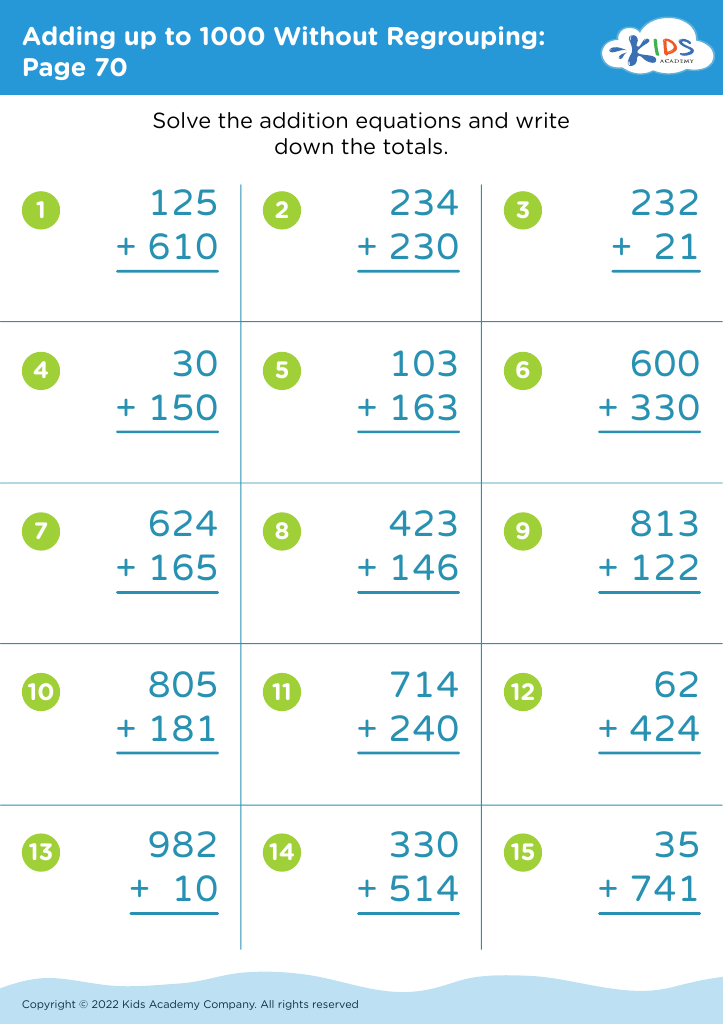
Adding up to 1000 Without Regrouping: Page 70
Worksheet
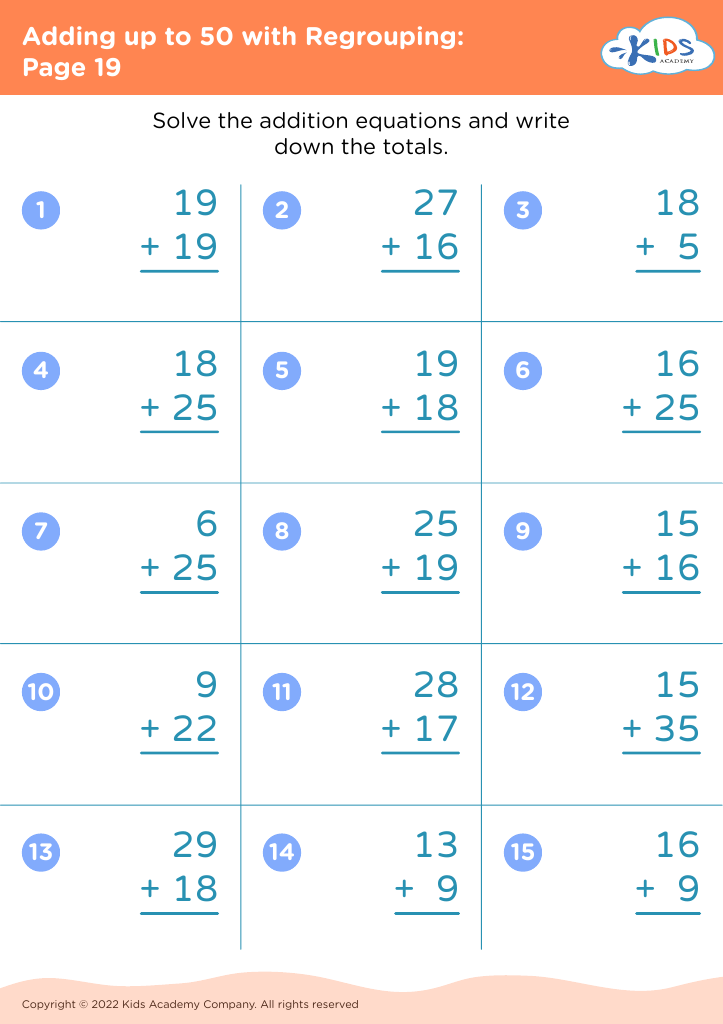
Adding up to 50 with Regrouping: Page 19
Worksheet
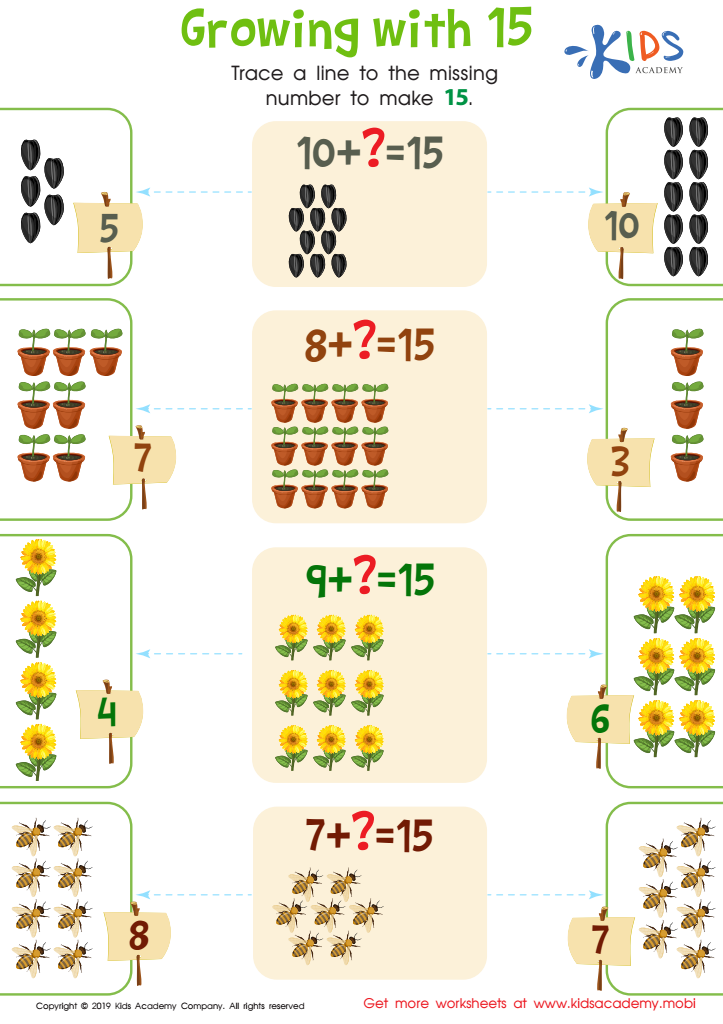
Growing with 15 Worksheet
Growing with 15 Worksheet
Remind your kids that adding different sets of numbers can give the same total (e.g. 2+3=5, 4+1=5). Test their understanding by asking them for more examples. Move onto the worksheet: count objects, then trace the line to the number making a total of 15.
Growing with 15 Worksheet

Worksheet
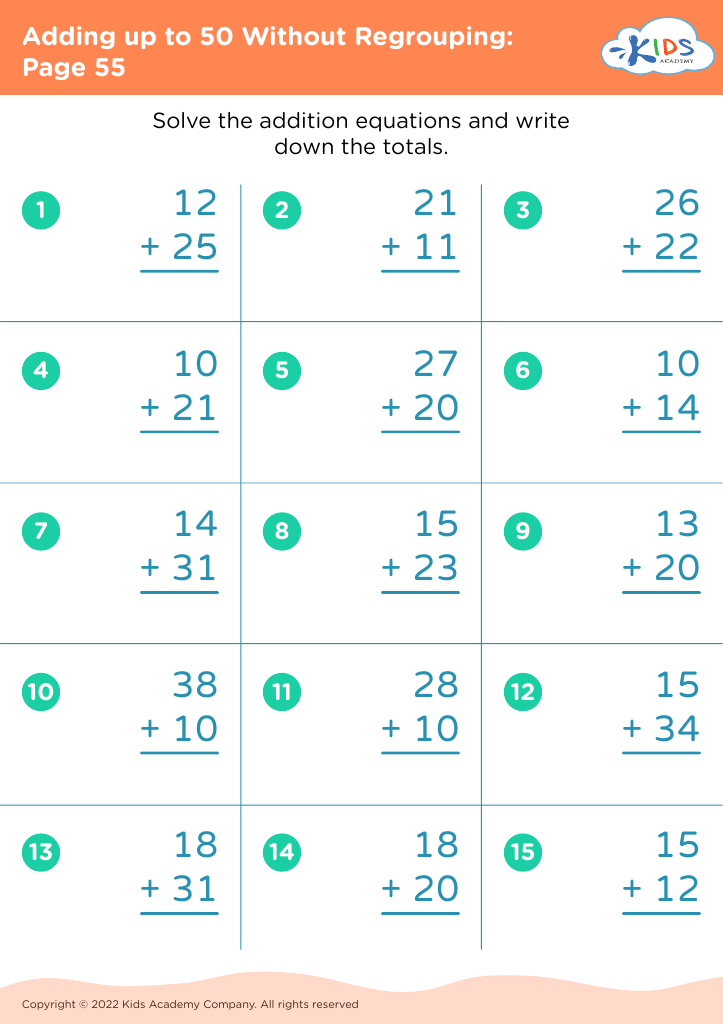
Adding up to 50 Without Regrouping: Page 55
Worksheet
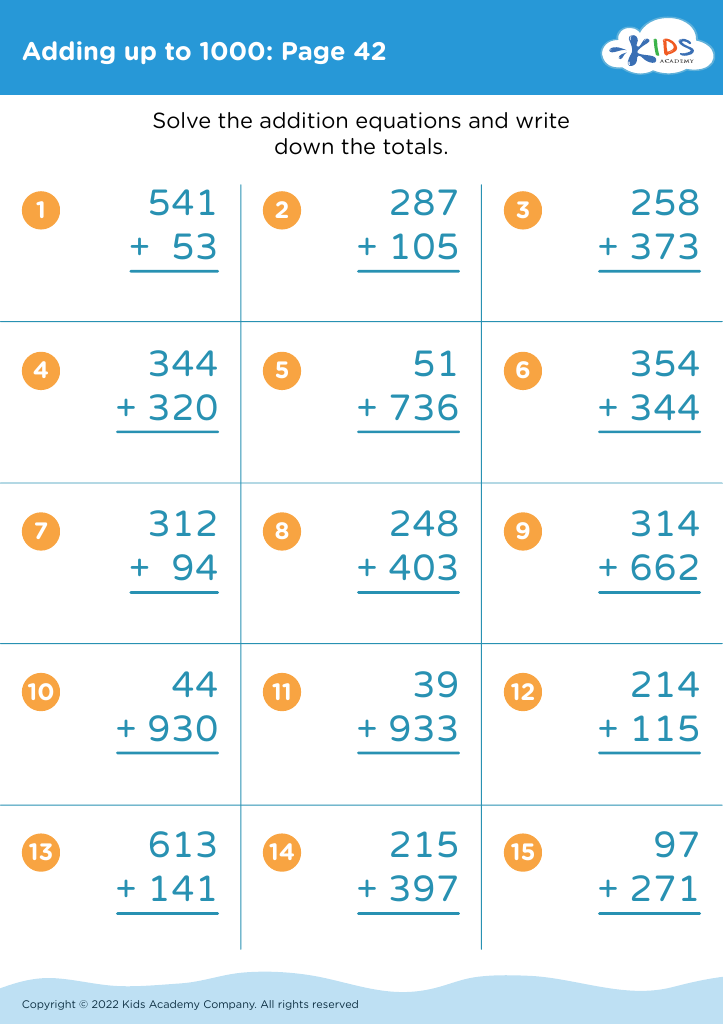
Adding up to 1000: Page 42

Adding up to 1000: Page 42

Adding up to 1000: Page 42
Worksheet
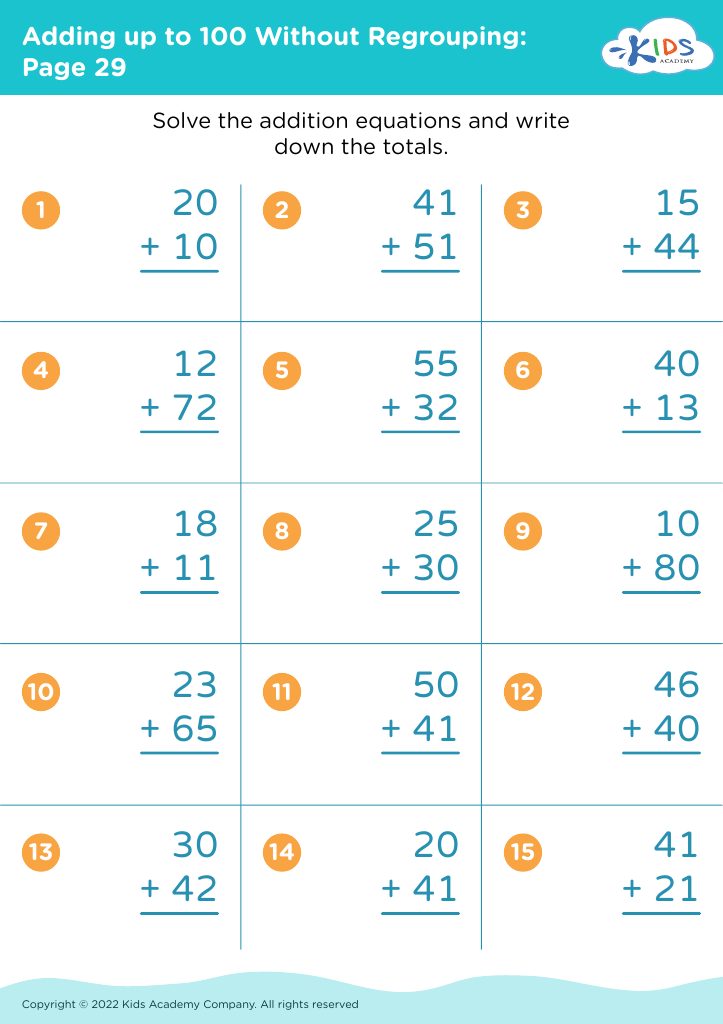
Adding up to 100 Without Regrouping: Page 29
Worksheet
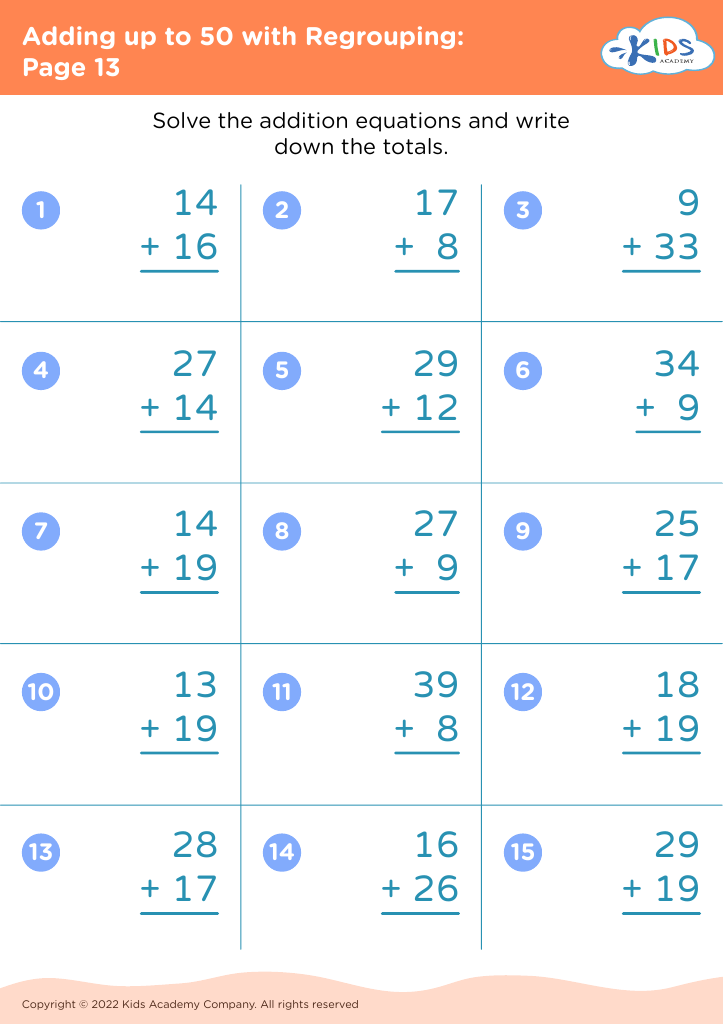
Adding up to 50 with Regrouping: Page 13
Worksheet
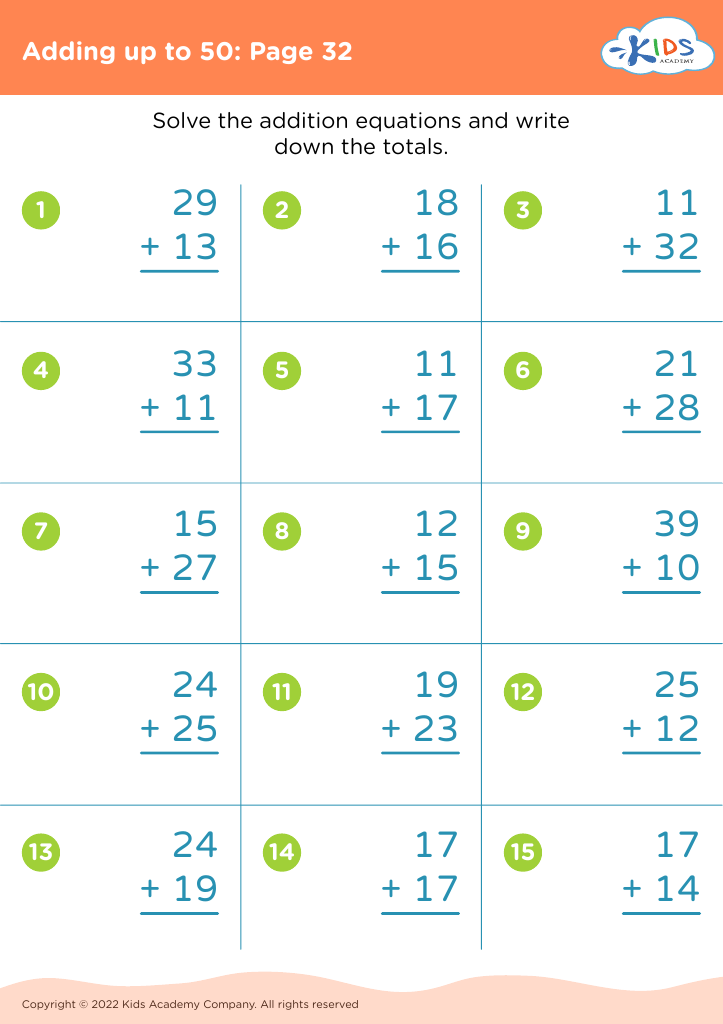
Adding up to 50: Page 32

Adding up to 50: Page 32

Adding up to 50: Page 32
Worksheet


... 4 5

Counting skills and basic addition are foundational concepts crucial for young learners, and it is essential for both parents and teachers to prioritize these skills for children aged 6-7. At this developmental stage, children are generally poised to build on the basics they learned in preschool or kindergarten, such as counting to 20 and recognizing numbers.

Firstly, counting skills form a critical building block for all future mathematical learning. Mastery in counting from 1 to 100, understanding number sequences, and the ability to count by ones, fives, and tens create a solid numerical foundation. Proficiency in these skills helps children understand more complex mathematical operations, such as subtraction, multiplication, and division in the later years.

Basic addition introduces the concept of combining quantities, an essential mathematical operation that supports everyday problem-solving skills and mathematical thinking. Knowing how to add numbers fluently enables children to solve real-world problems, like determining the total number of items they have or figuring out the sum of money they need to buy something.

Moreover, proficiency in early math skills has been linked to higher academic achievement across subjects, indicating strong cognitive development. Confidence in math enhances children’s overall academic self-esteem, encouraging a positive attitude towards learning new topics. Therefore, it is crucial for parents and teachers to diligently support and nurture counting and addition skills at an early age, ensuring long-term academic and cognitive success.