Develop critical thinking Addition Worksheets for Ages 6-7
11 filtered results
-
From - To
Enhance your child's learning with our "Develop Critical Thinking Addition Worksheets for Ages 6-7"! Designed to cultivate essential skills, these worksheets present engaging math challenges that encourage young learners to think critically. By solving addition problems that require analysis and reasoning, kids improve their mathematical understanding while building confidence. Our creative exercises make learning fun, promoting both cognitive development and a love for math. Explore a variety of interactive formats to suit your child’s interests, ensuring that they not only master addition but also develop the problem-solving skills they’ll need for the future. Unlock the potential of your young mathematician today!
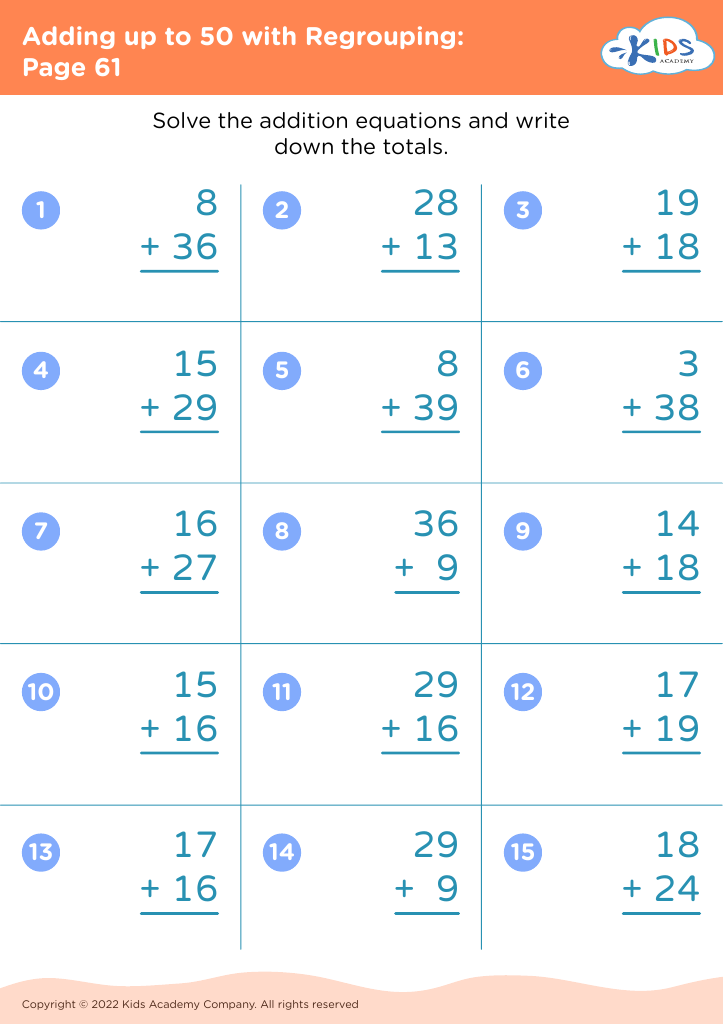
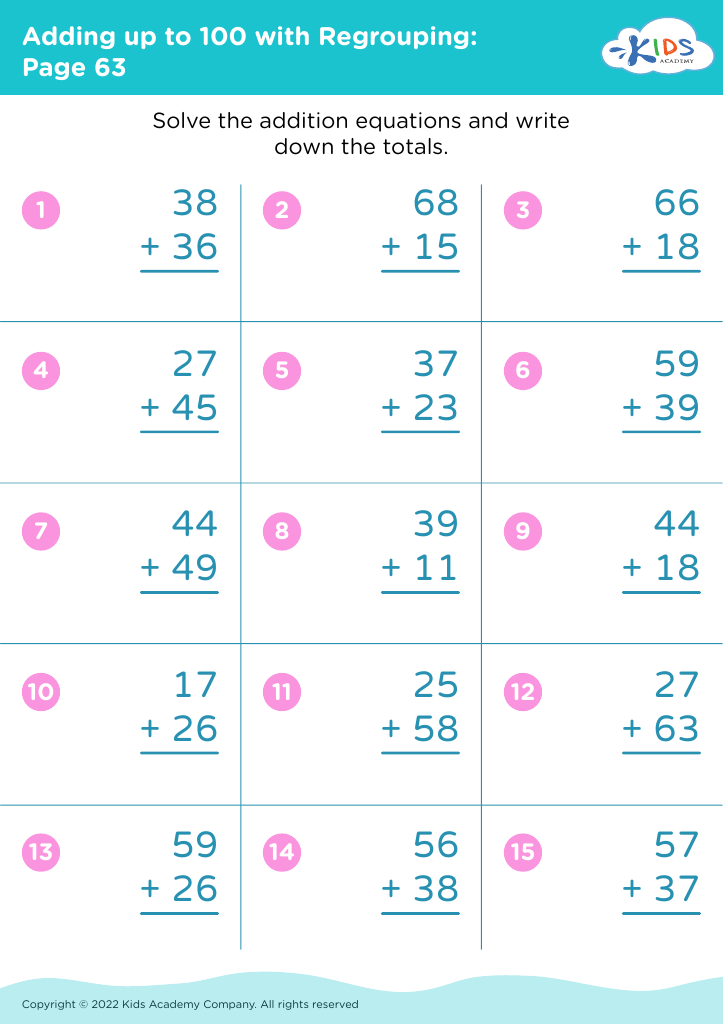
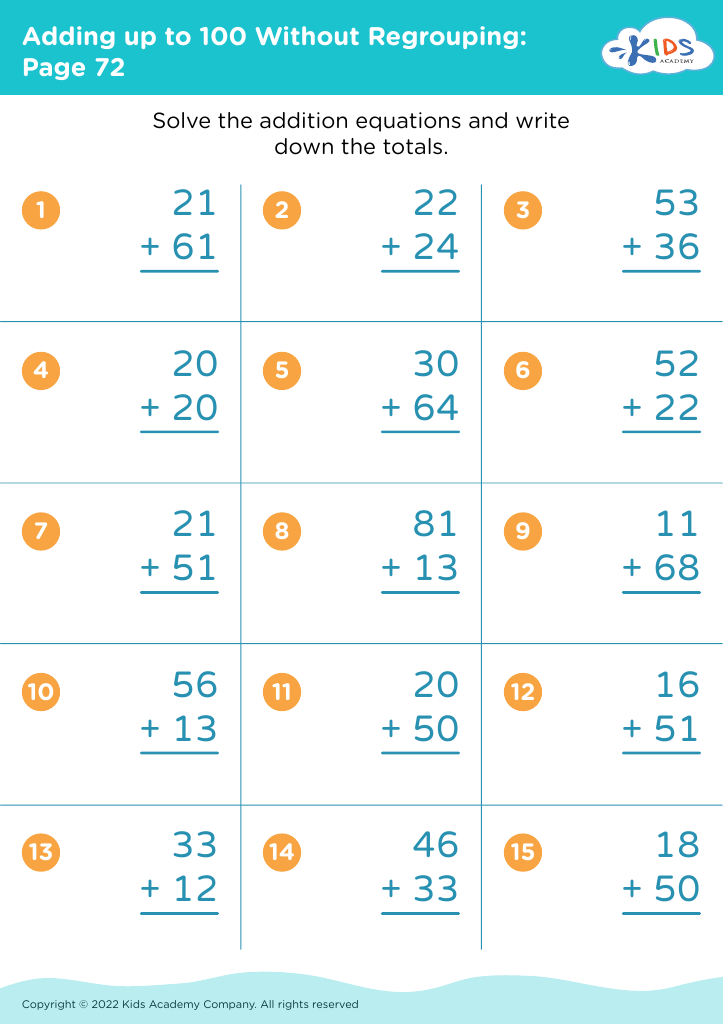
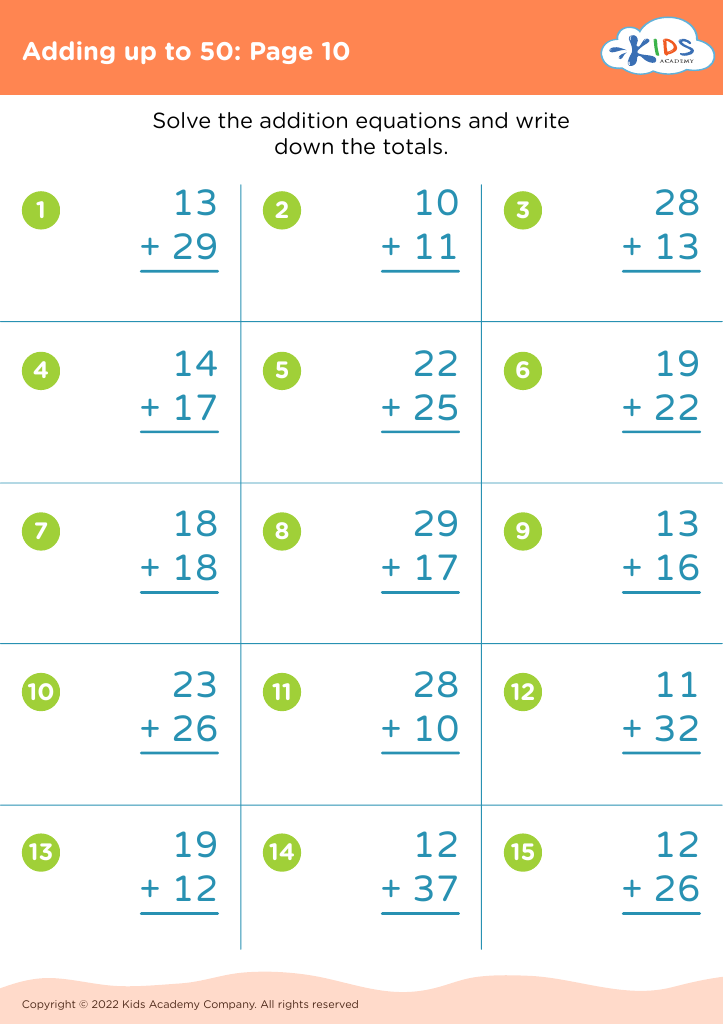
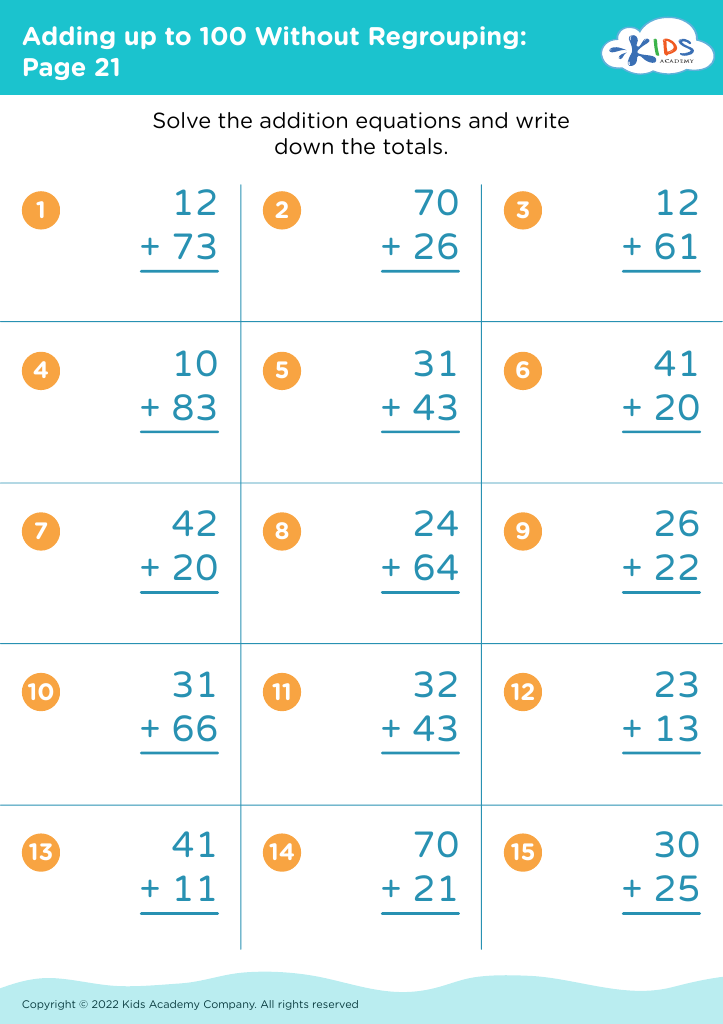
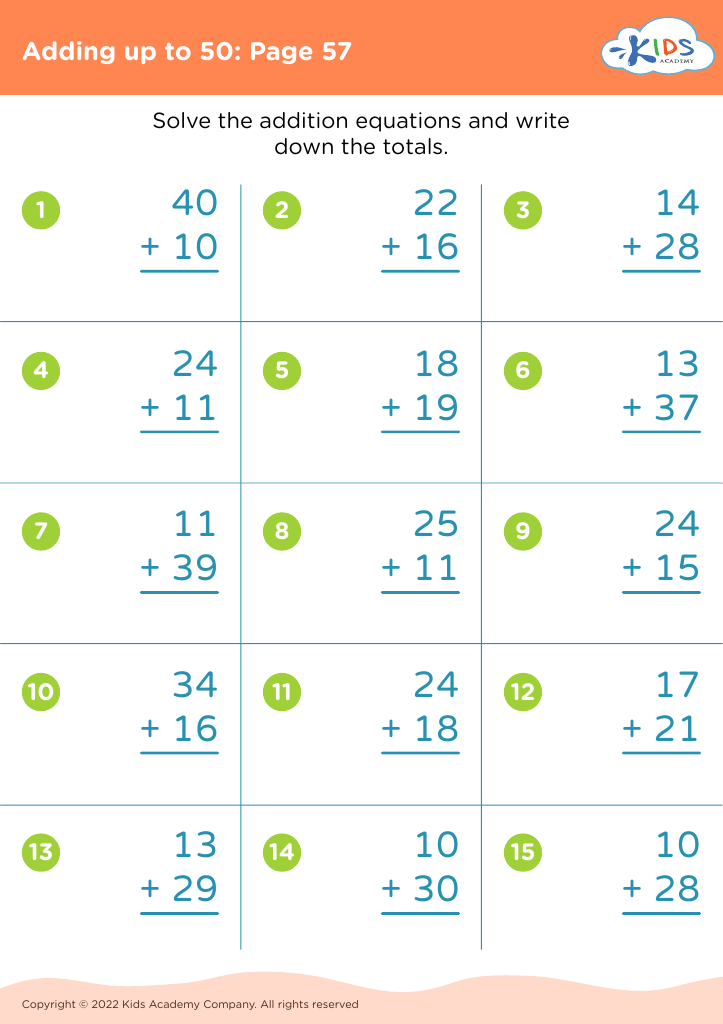
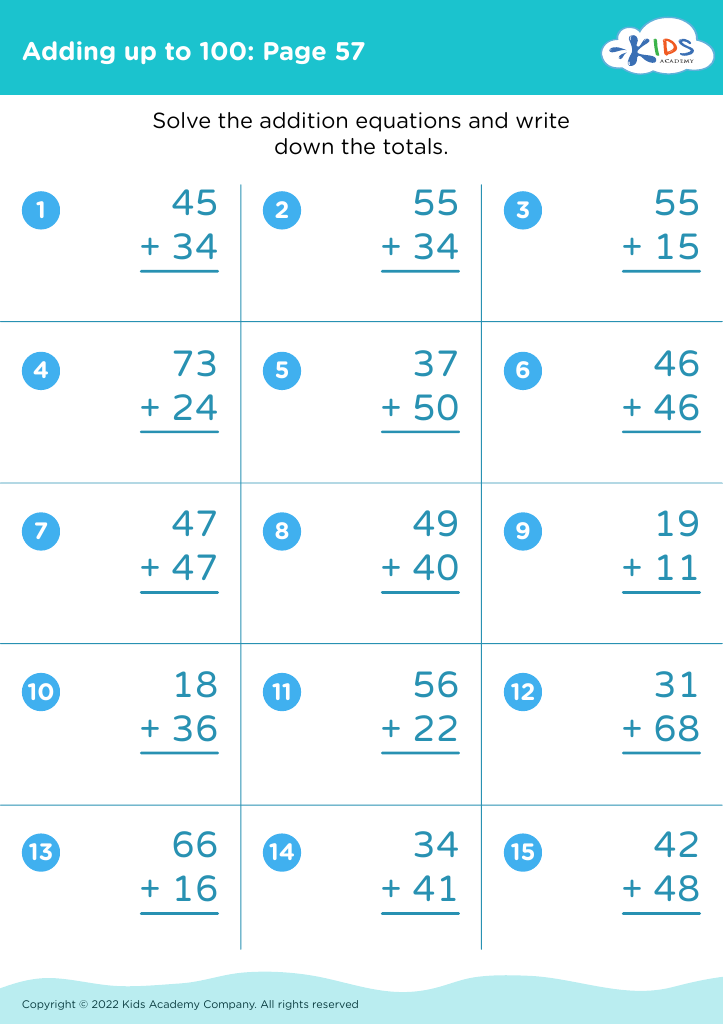
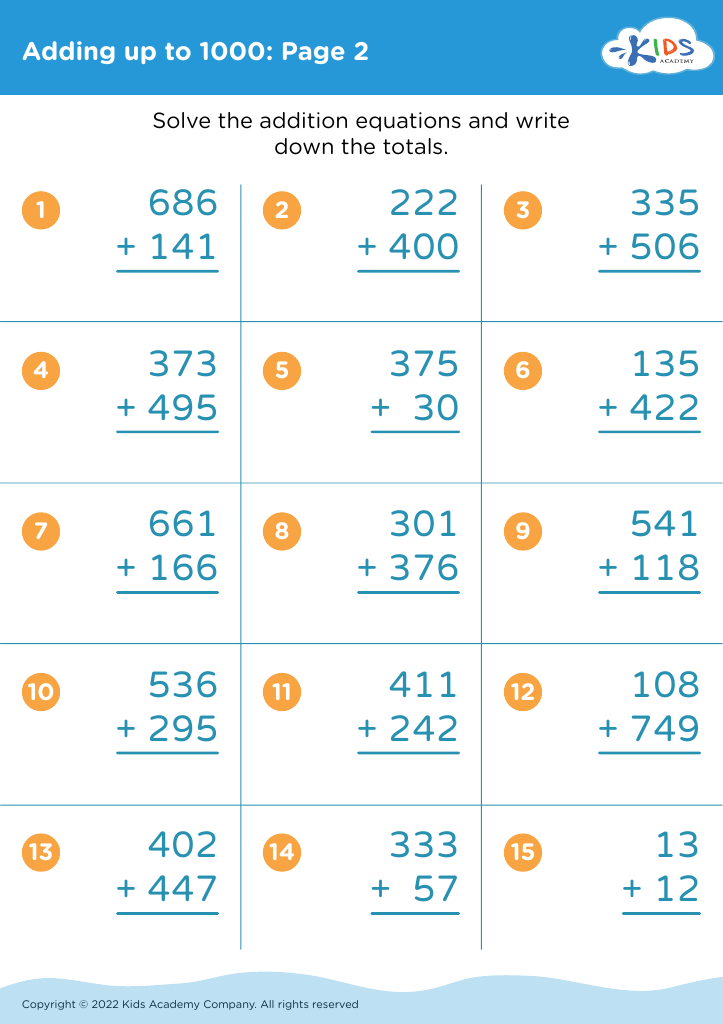
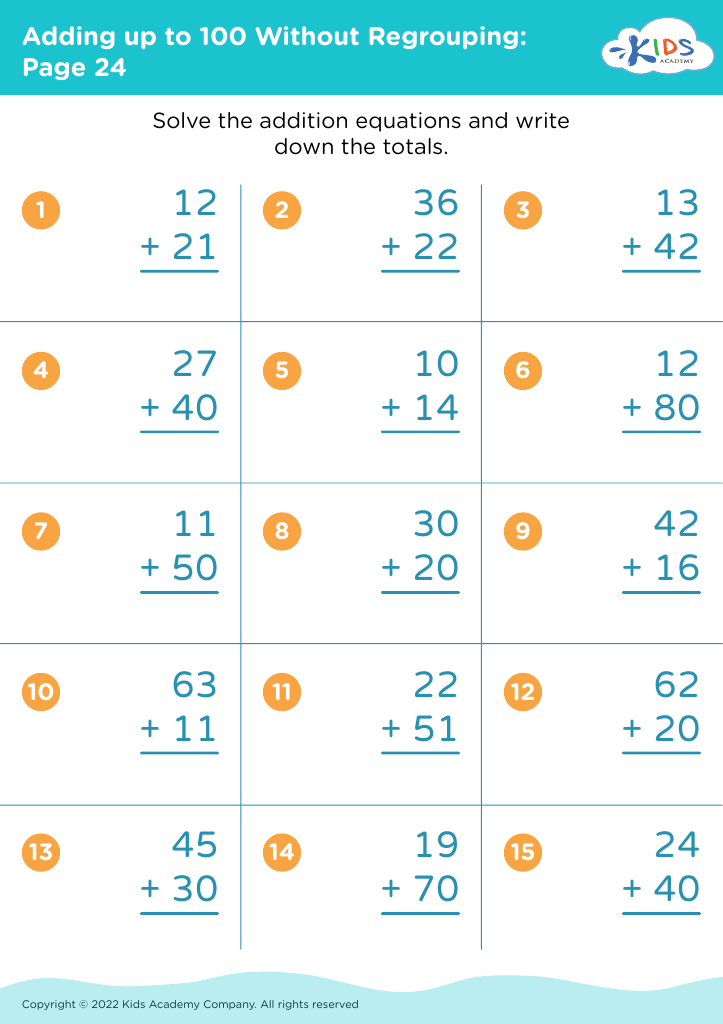
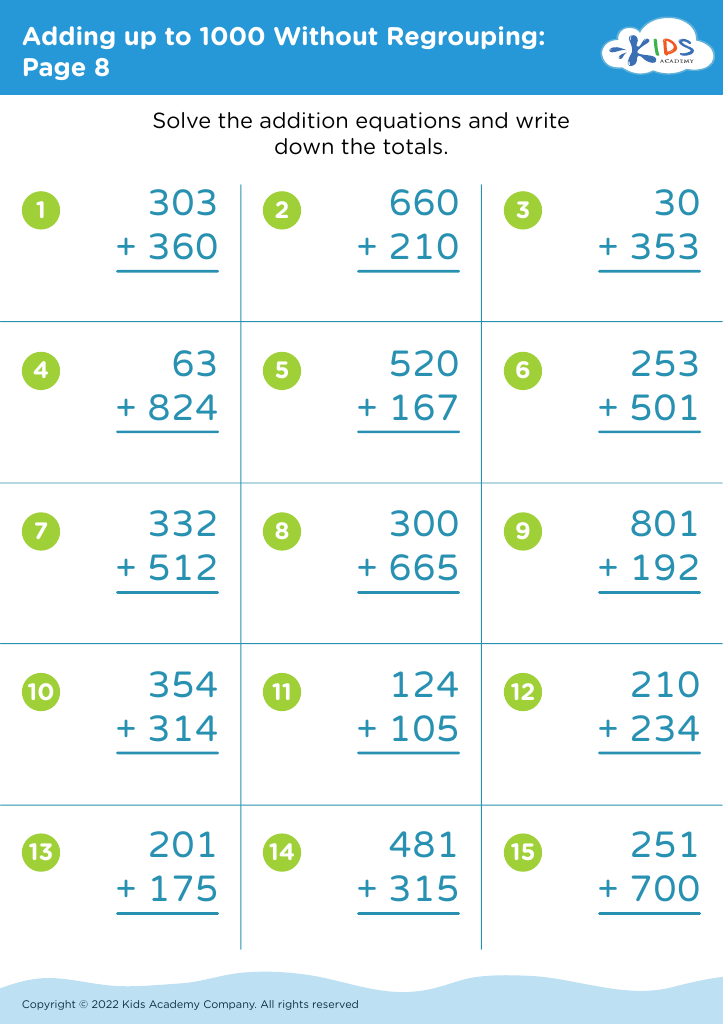
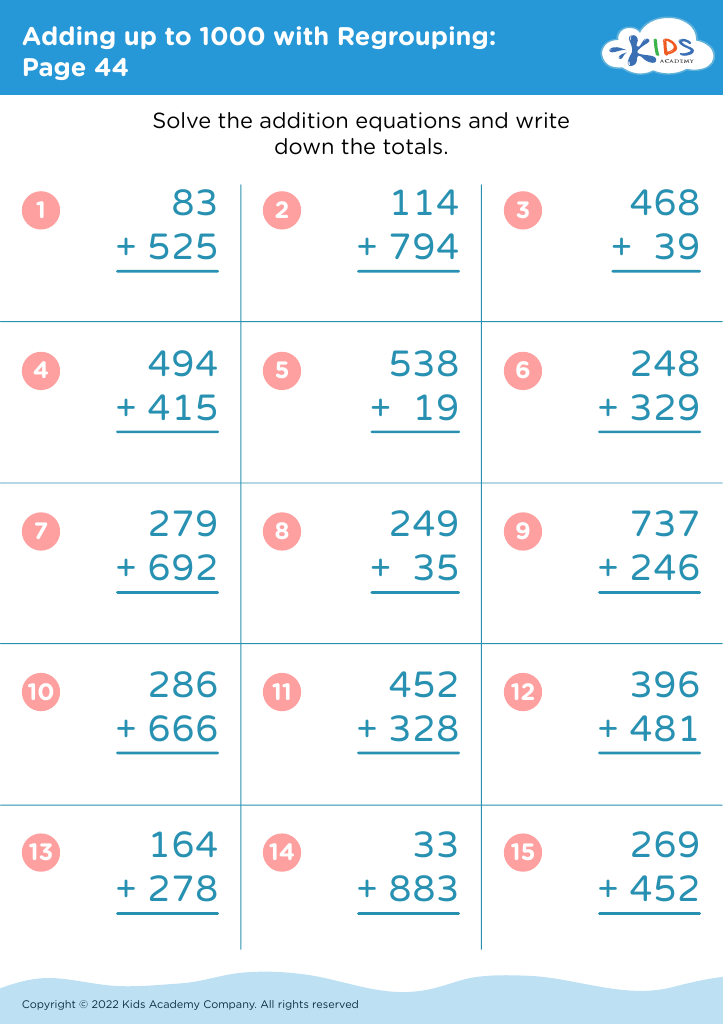








Developing critical thinking skills in young children, particularly regarding mathematical concepts like addition, is vital for their overall academic success and life skills. For children aged 6-7, embracing critical thinking in addition goes beyond memorizing sums. It encourages them to analyze problems, approach tasks creatively, and develop logical reasoning.
Parents and teachers should care about this development because critical thinking fosters a deeper understanding of mathematical concepts, allowing children to apply addition in real-life scenarios. When kids are encouraged to ask questions like “Why does this work?” or “What happens if I change the numbers?” they become active learners rather than passive recipients of information.
Additionally, early critical thinking promotes problem-solving skills, which are essential throughout a child's education and beyond. It prepares them to tackle challenges in various subjects and situations, enhancing their confidence and independence.
Fostering critical thinking also supports children's social-emotional growth by encouraging collaboration and communication during group activities, building relationships, and learning from peers.
In essence, instilling critical thinking through addition not only cultivates competent mathematicians but also well-rounded individuals equipped to navigate the complexities of daily life. Hence, parents and teachers should prioritize its development.








