Filters

20 filtered results

Clear all filters
Favorites
With answer key
Interactive
20 filtered results

Difficulty Level

Grade


Discover the exciting world of multiplication with our "Understanding Multiplication Addition Worksheets" designed specifically for ages 6-7! These engaging and interactive worksheets help young learners grasp fundamental math concepts by linking to their knowledge of addition. As children explore multiplication through fun exercises, they will enhance their number sense, learn multiplication facts, and build a solid arithmetic foundation. Our worksheets feature colorful illustrations and age-appropriate challenges that keep kids motivated and eager to learn. Perfect for home or classroom use, these resources cultivate confidence in math skills while promoting essential problem-solving abilities. Start your child's math journey today!


Check out this FREE Trial Lesson on Addition for age 6-7!

Exactly the Same, or Not

Favorites
With answer key
Interactive
  • 6-7
  • Understanding multiplication
  • Addition
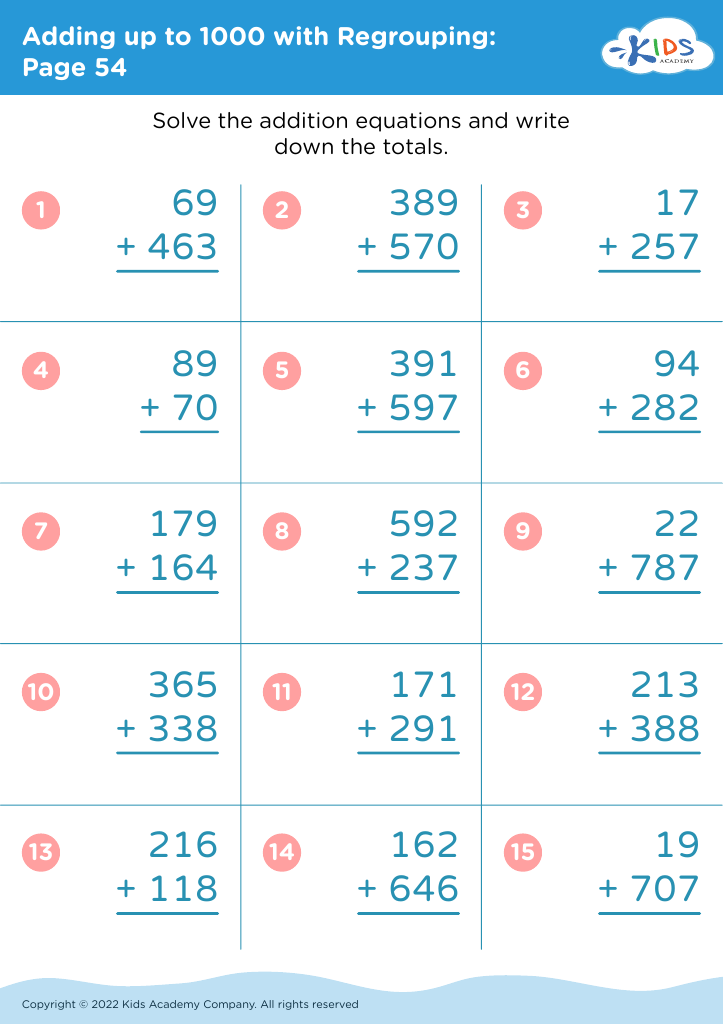
Adding up to 1000 with Regrouping: Page 54
Worksheet
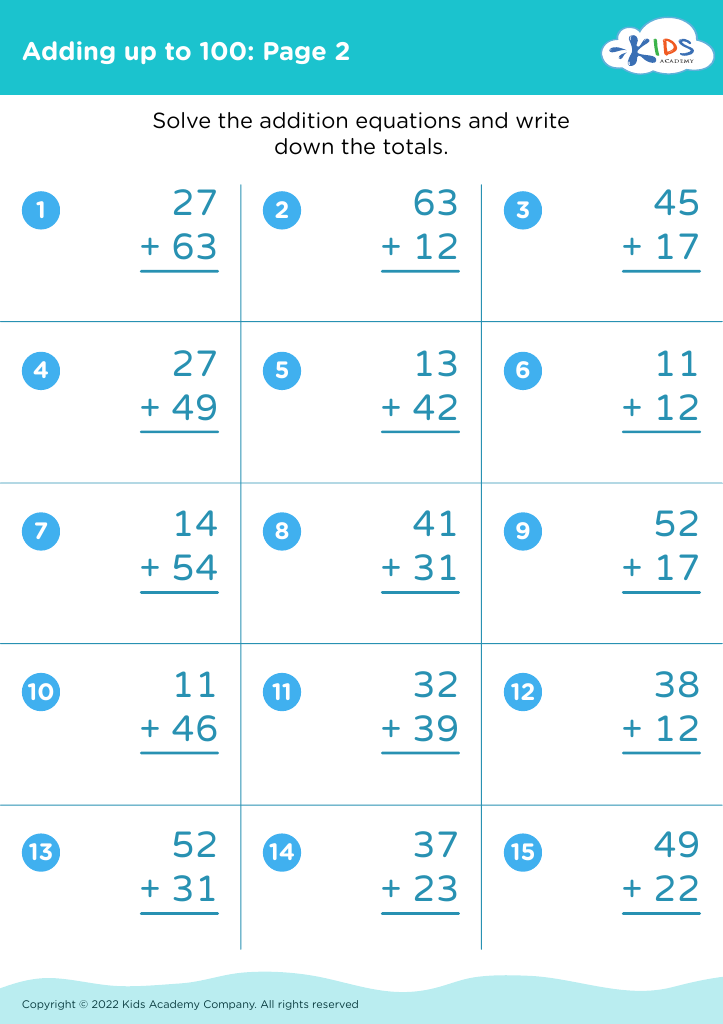
Adding up to 100: Page 2

Adding up to 100: Page 2

Adding up to 100: Page 2
Worksheet
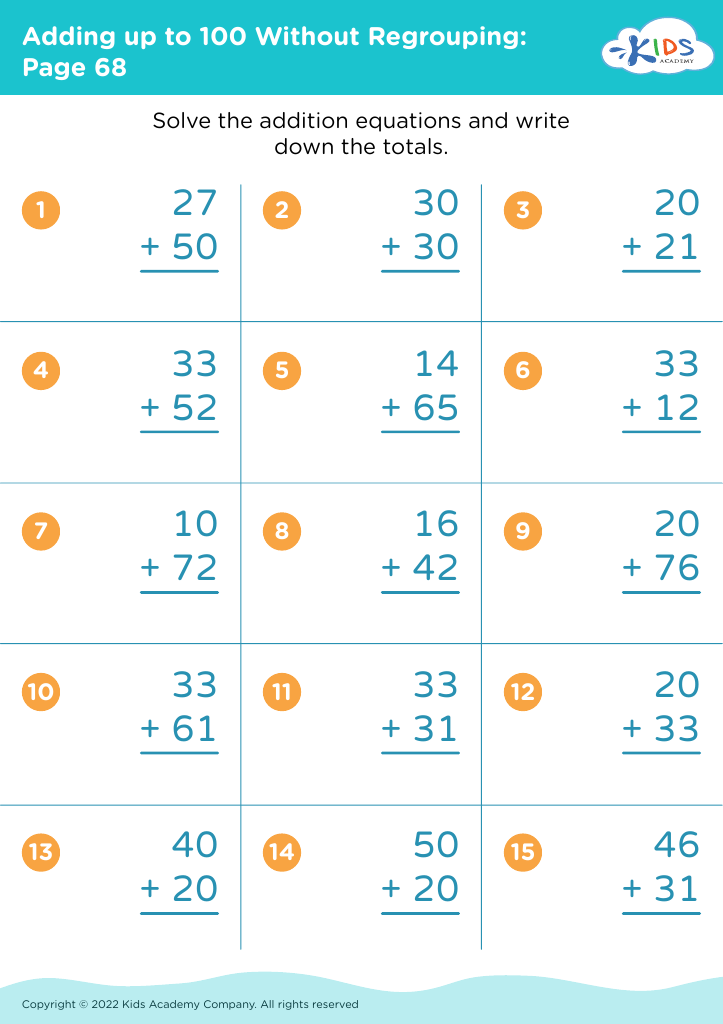
Adding up to 100 Without Regrouping: Page 68
Worksheet
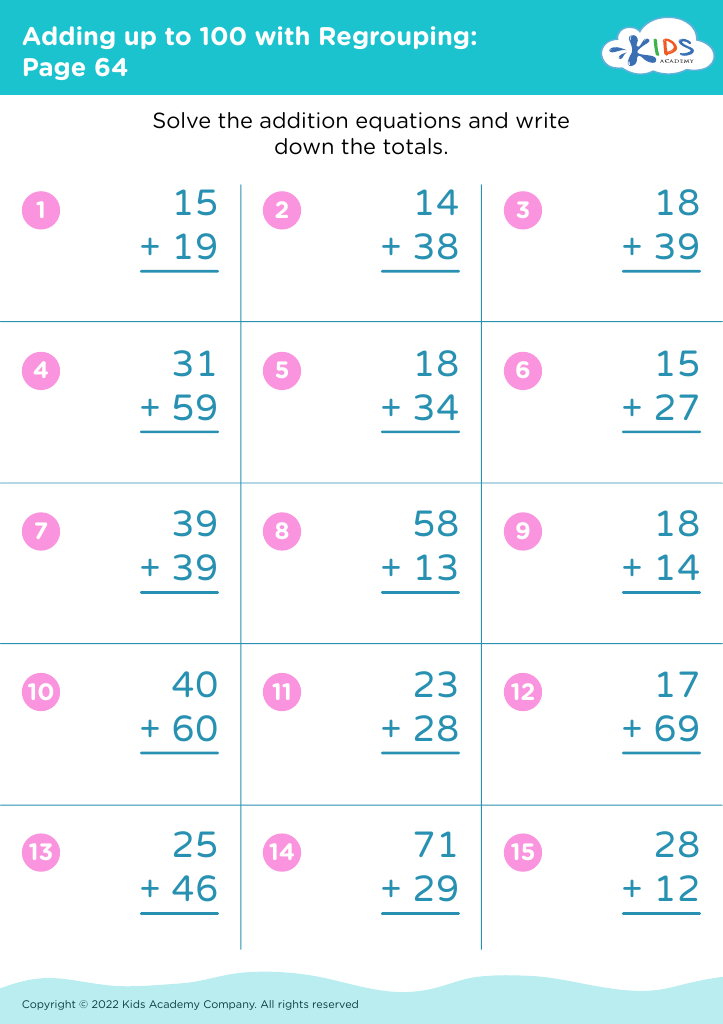
Adding up to 100 with Regrouping: Page 64
Worksheet
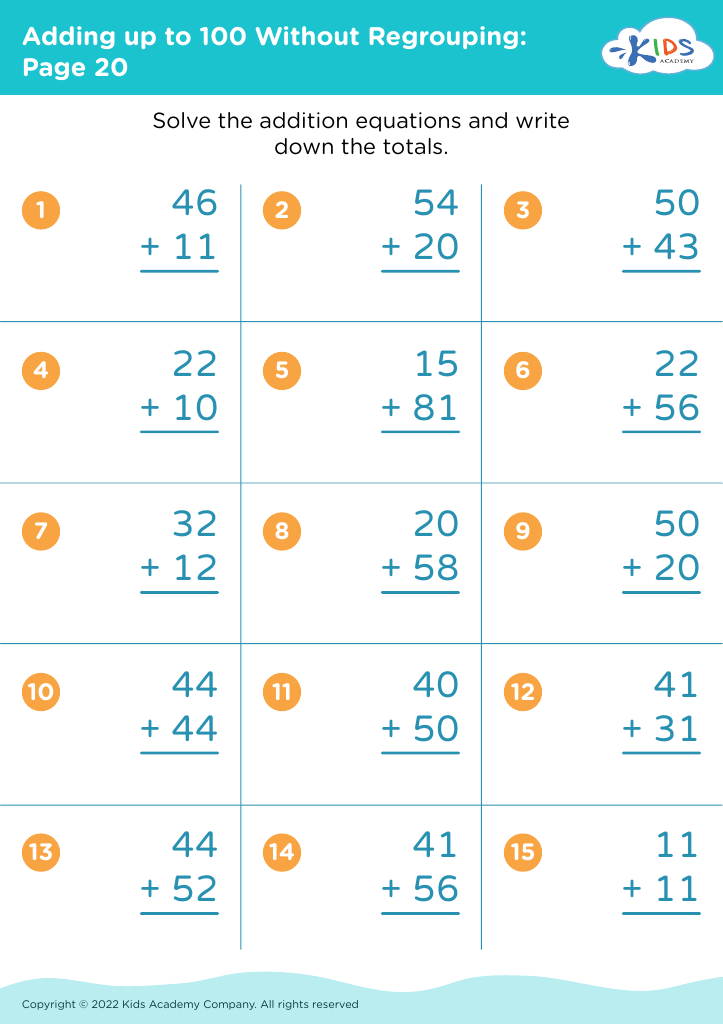
Adding up to 100 Without Regrouping: Page 20
Worksheet
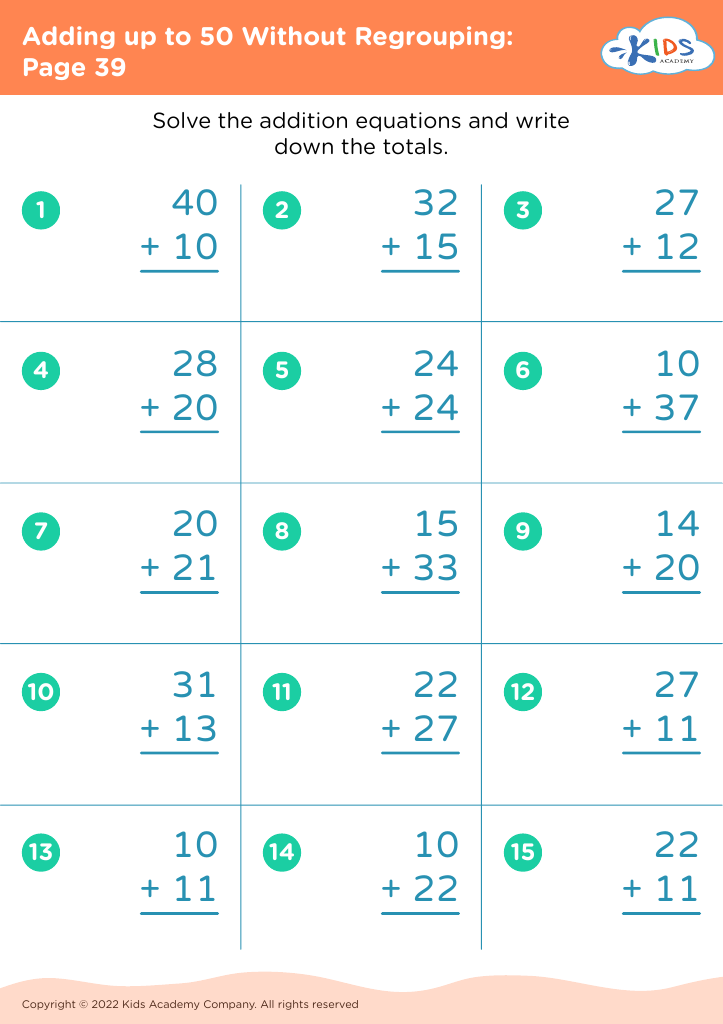
Adding up to 50 Without Regrouping: Page 39
Worksheet
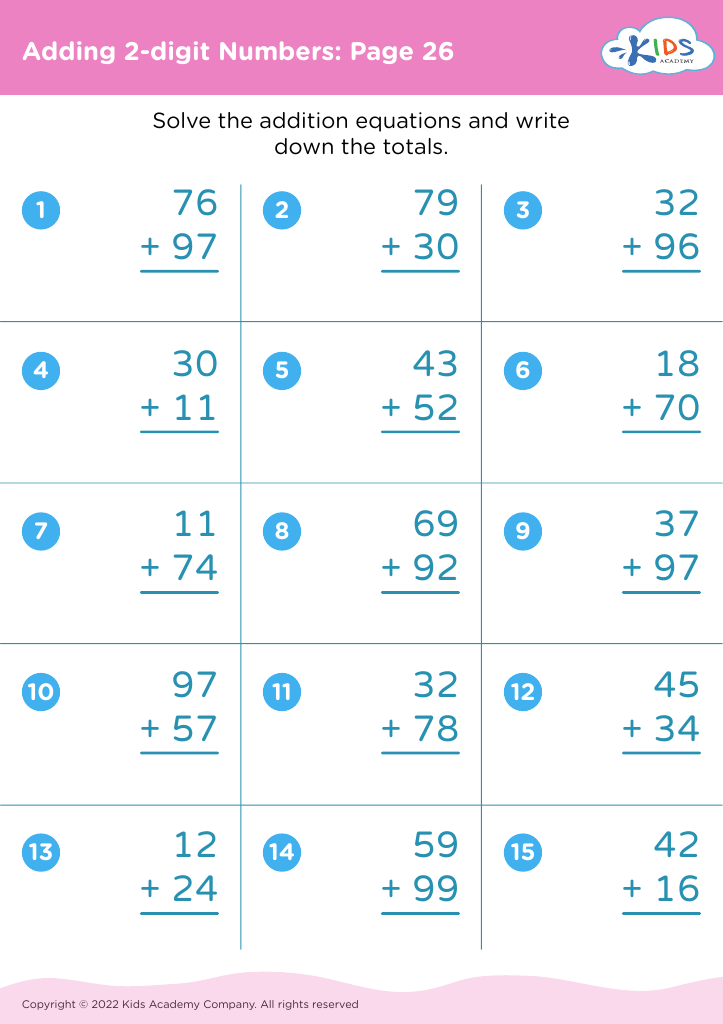
Adding 2-digit Numbers: Page 26

Adding 2-digit Numbers: Page 26

Adding 2-digit Numbers: Page 26
Worksheet
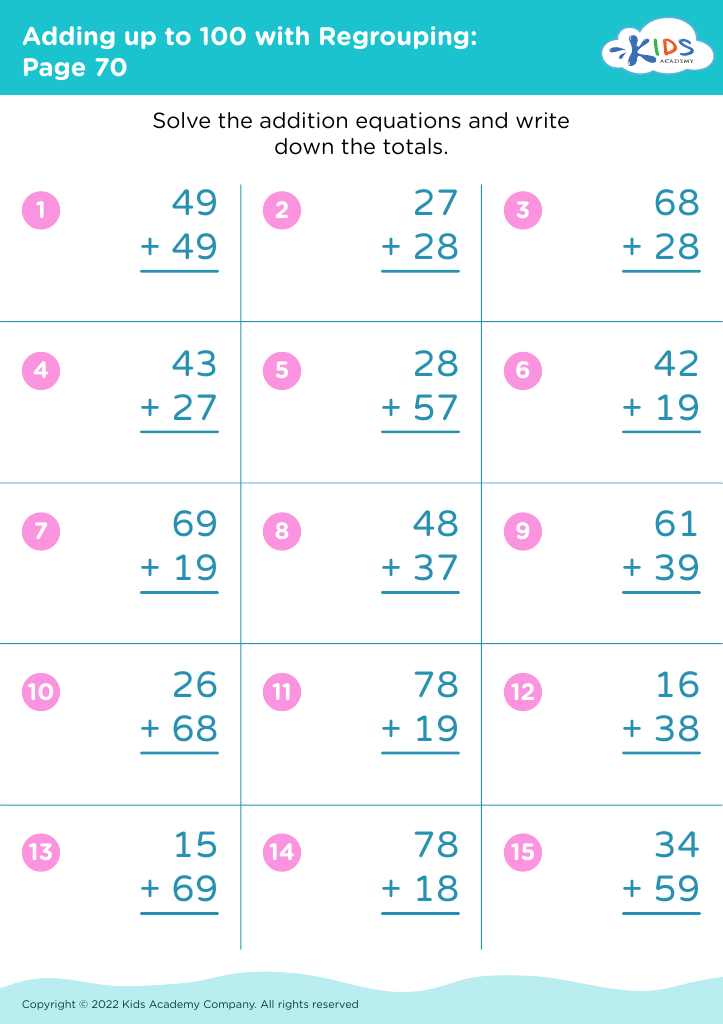
Adding up to 100 with Regrouping: Page 70
Worksheet
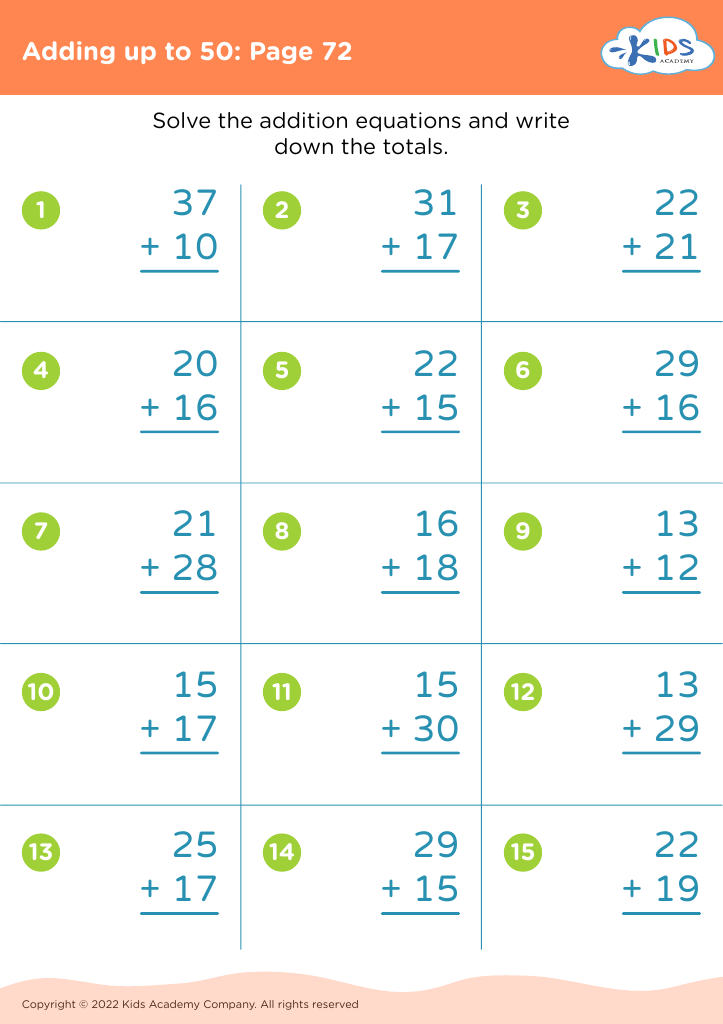
Adding up to 50: Page 72

Adding up to 50: Page 72

Adding up to 50: Page 72
Worksheet
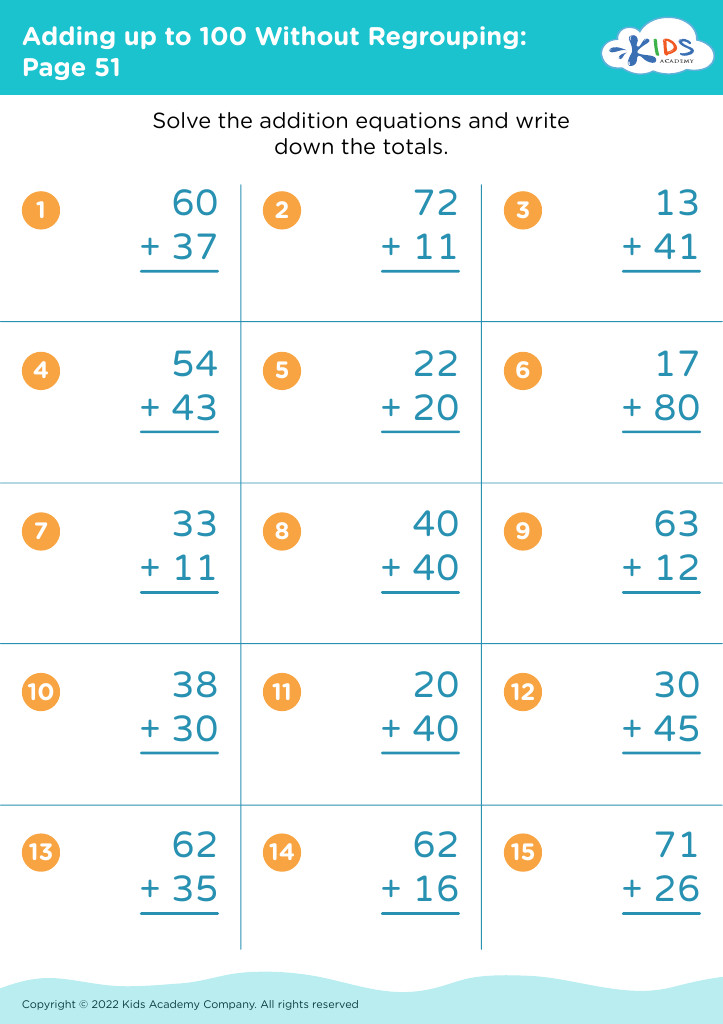
Adding up to 100 Without Regrouping: Page 51
Worksheet
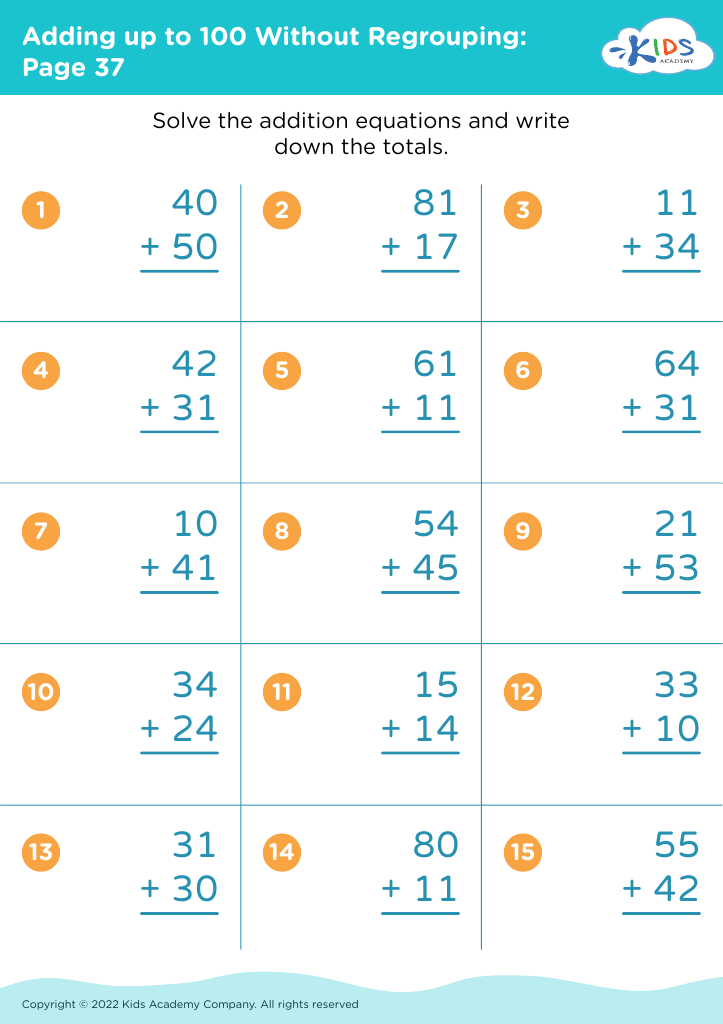
Adding up to 100 Without Regrouping: Page 37
Worksheet
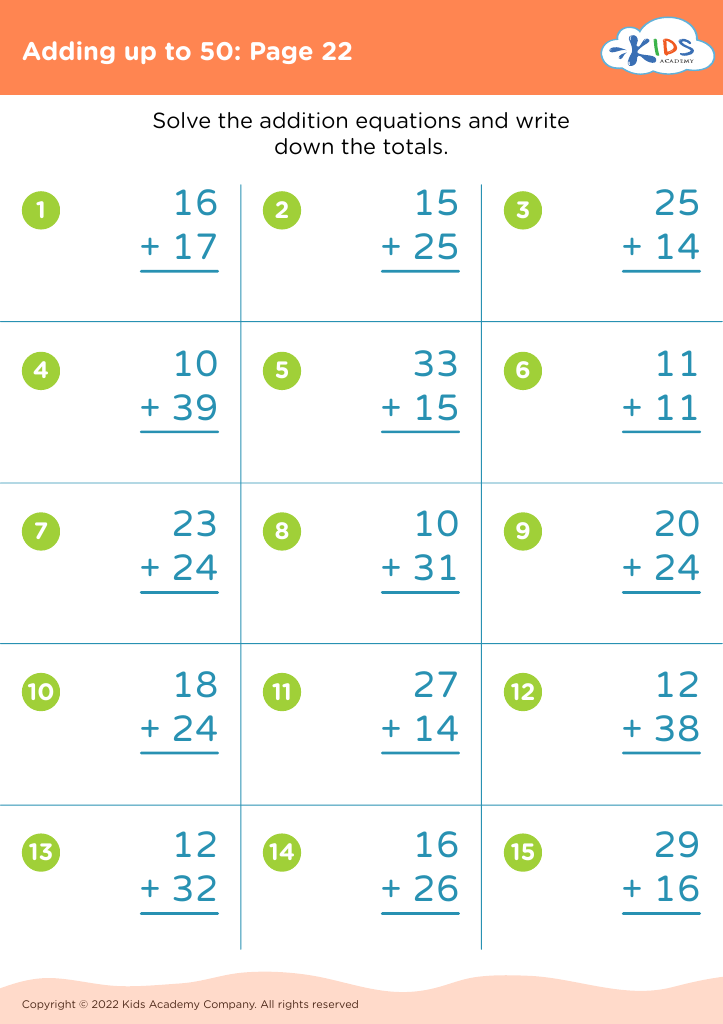
Adding up to 50: Page 22

Adding up to 50: Page 22

Adding up to 50: Page 22
Worksheet
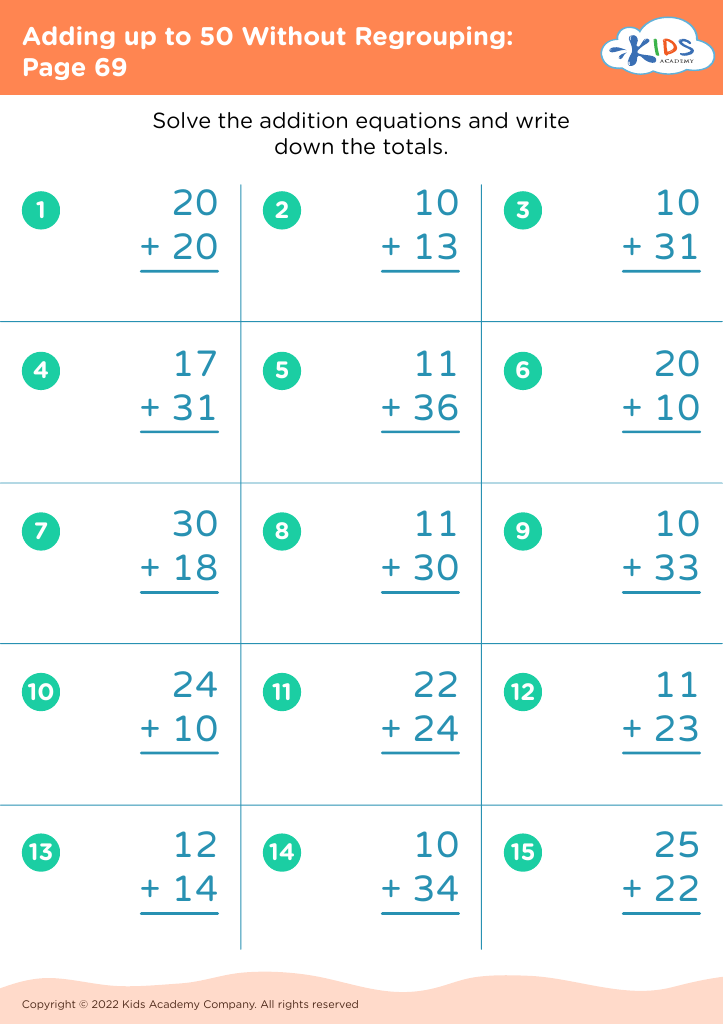
Adding up to 50 Without Regrouping: Page 69
Worksheet
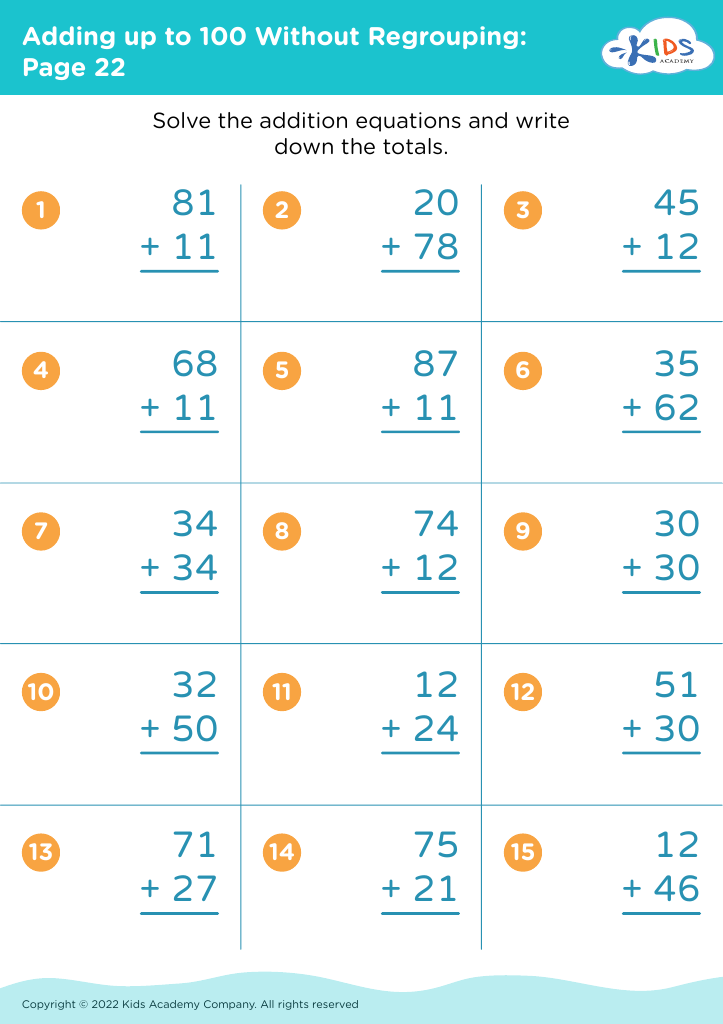
Adding up to 100 Without Regrouping: Page 22
Worksheet
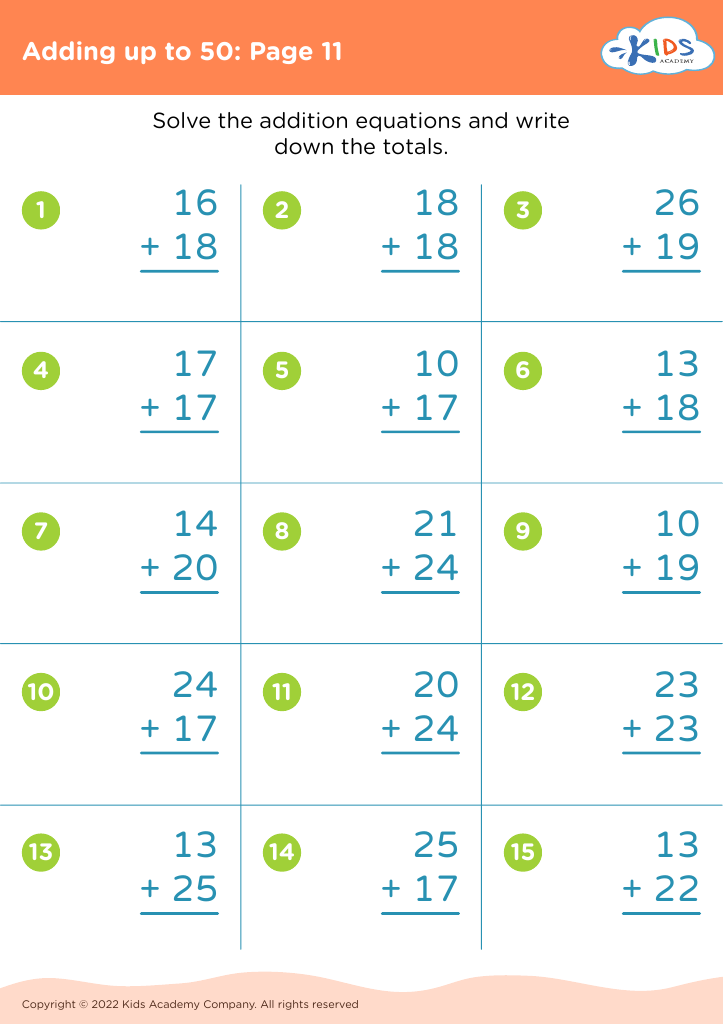
Adding up to 50: Page 11

Adding up to 50: Page 11

Adding up to 50: Page 11
Worksheet
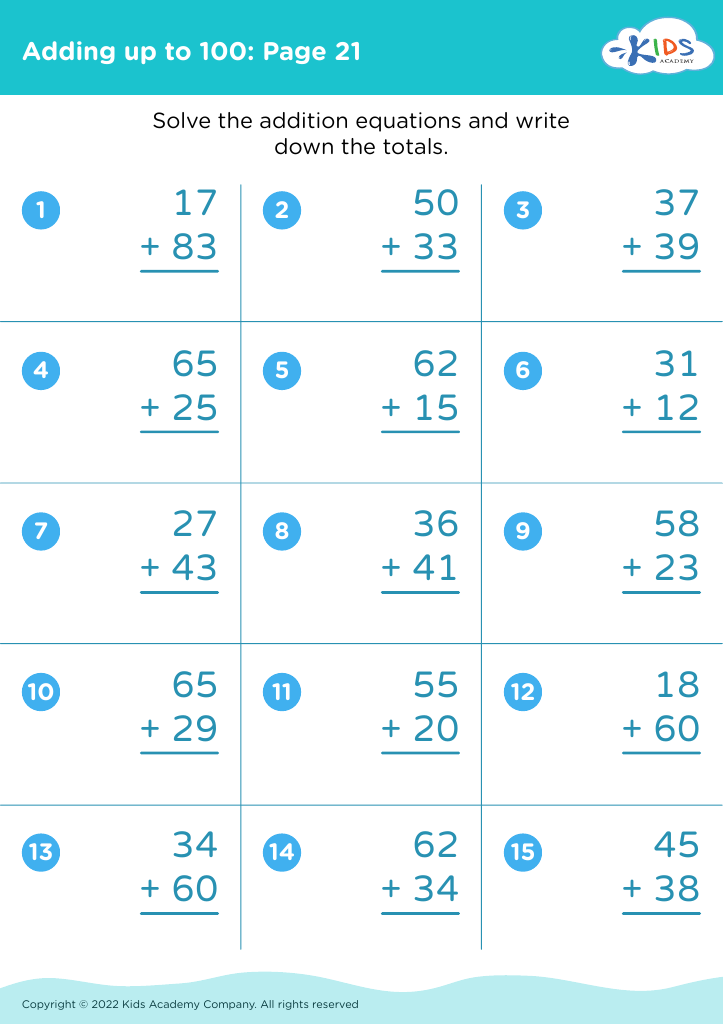
Adding up to 100: Page 21

Adding up to 100: Page 21

Adding up to 100: Page 21
Worksheet
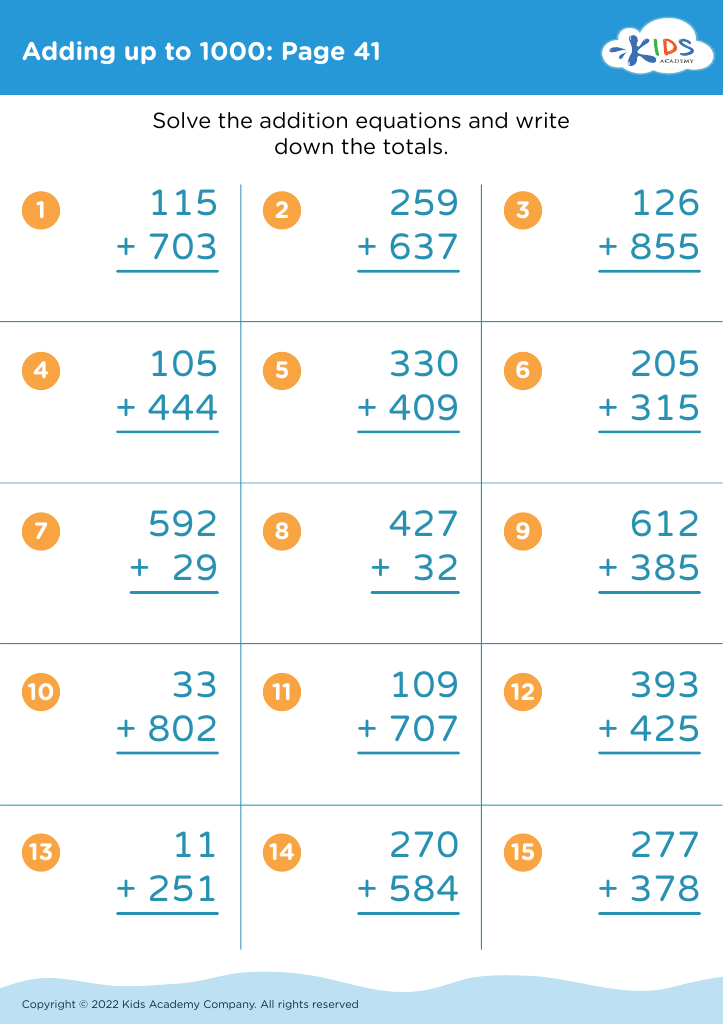
Adding up to 1000: Page 41

Adding up to 1000: Page 41

Adding up to 1000: Page 41
Worksheet
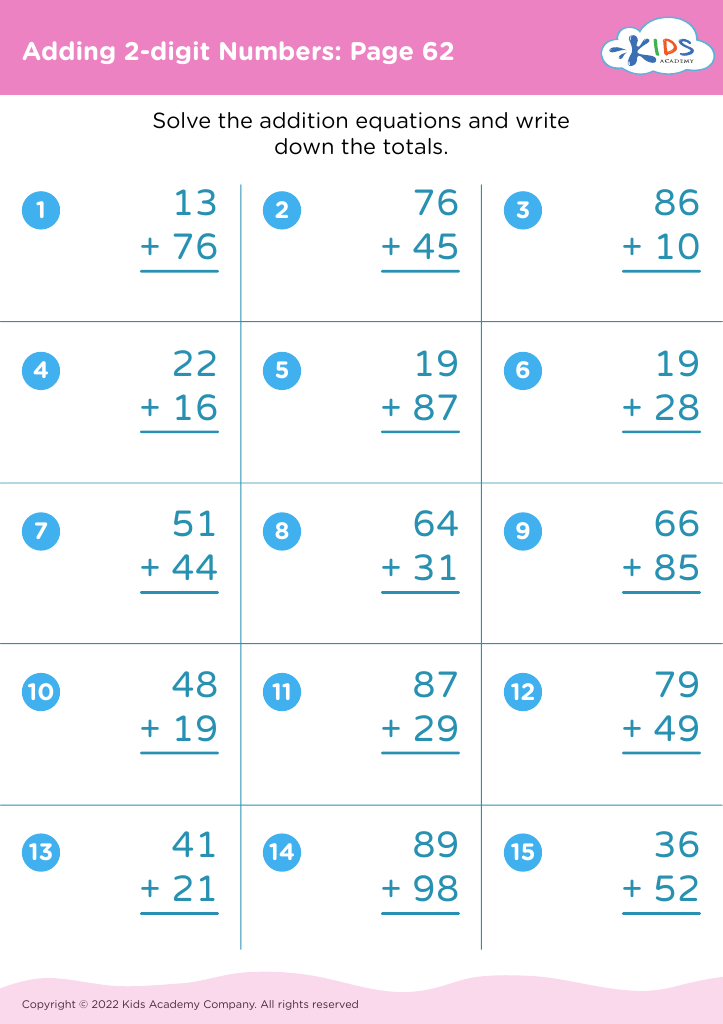
Adding 2-digit Numbers: Page 62

Adding 2-digit Numbers: Page 62

Adding 2-digit Numbers: Page 62
Worksheet
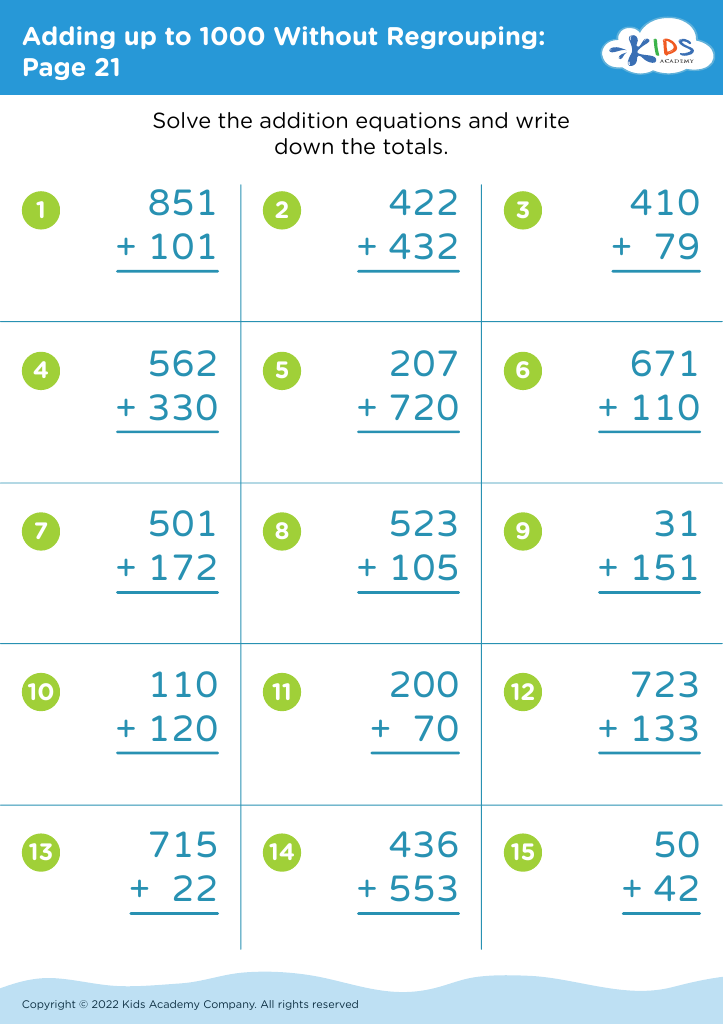
Adding up to 1000 Without Regrouping: Page 21
Worksheet
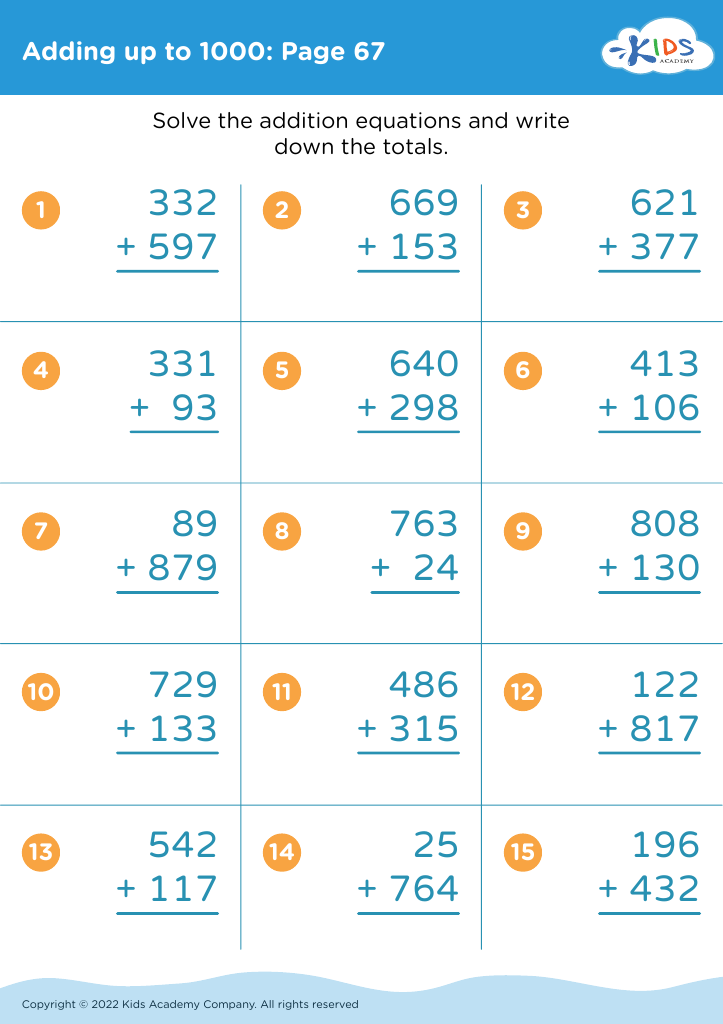
Adding up to 1000: Page 67

Adding up to 1000: Page 67

Adding up to 1000: Page 67
Worksheet


Understanding multiplication and addition is crucial for children aged 6-7 as it forms the foundation for their future math skills. At this stage, children are transitioning from basic number recognition to operational understanding, making mastery of these concepts essential.

Addition introduces the concept of combining quantities, essential for everyday situations—like counting items or determining total costs. It enhances cognitive skills such as problem-solving and critical thinking. Mastery of addition creates confidence and a solid groundwork for more complex math concepts.

Similarly, multiplication begins as repetitive addition and helps children comprehend the concept of groups—an understanding essential for later topics like division and fractions. Learning multiplication sets the stage for dealing with larger numbers and can foster a more profound appreciation for patterns in numbers.

Engaging with these concepts through fun activities, games, and relatable examples helps captivate children’s interest, making learning enjoyable. Moreover, co-learning with parents or teachers promotes a positive attitude towards math and cultivates a supportive learning environment. As a result, this foundational knowledge empowers children to tackle more advanced math topics in the future, enhancing both their academic success and critical thinking abilities. Thus, focusing on multiplication and addition at this tender age is particularly vital.