Understanding subtraction Addition Worksheets for Ages 6-7
7 filtered results
-
From - To
Explore our engaging "Understanding Subtraction Addition Worksheets" designed specifically for children aged 6-7. These worksheets provide a fun and interactive way for young learners to grasp the concept of subtraction while reinforcing their addition skills. With colorful illustrations and relatable examples, children will enjoy practicing basic subtraction through visual aids and hands-on activities. Our carefully crafted exercises aim to foster a solid mathematical foundation, enhancing critical thinking and problem-solving abilities. Ideal for home or classroom learning, these worksheets help keep students motivated while reinforcing essential math concepts. Dive into the world of numbers and make learning subtraction enjoyable today!
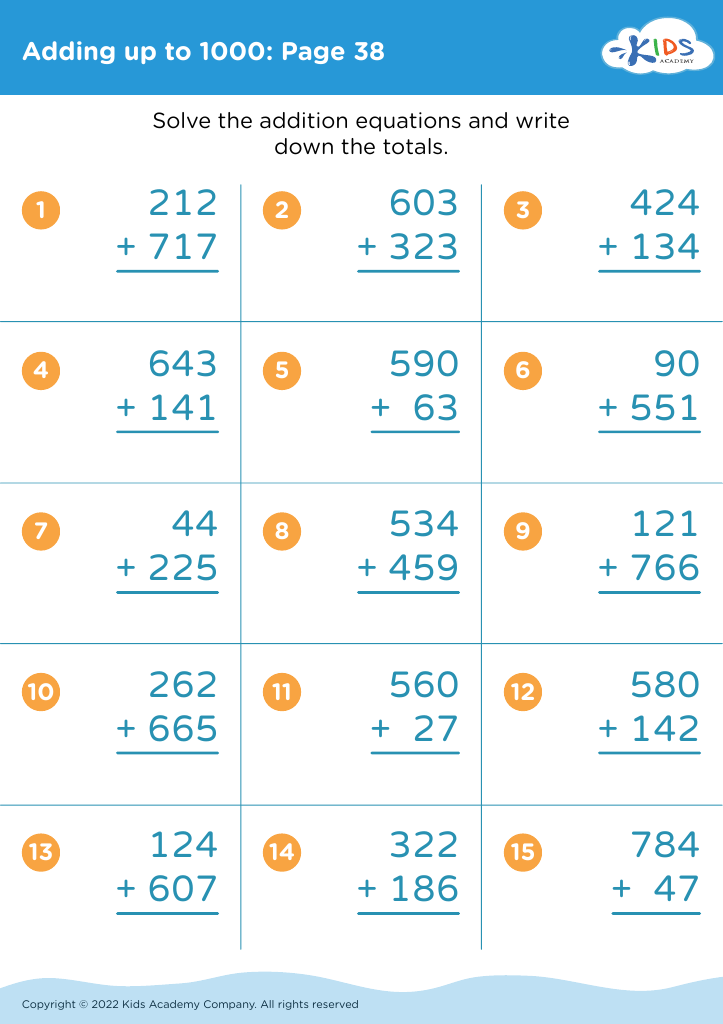
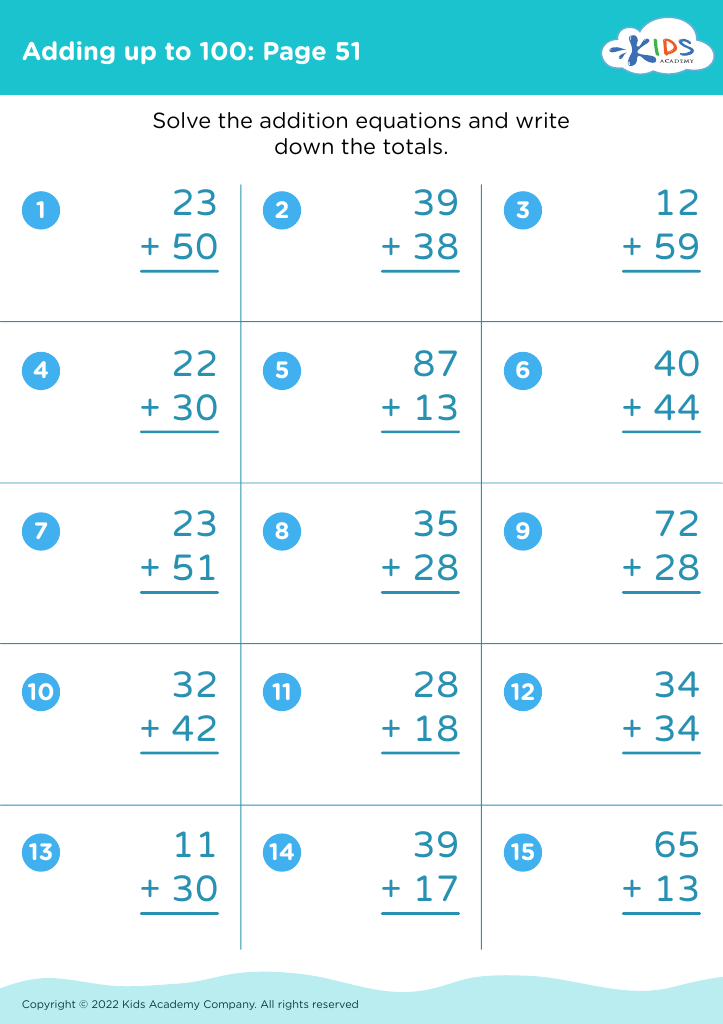
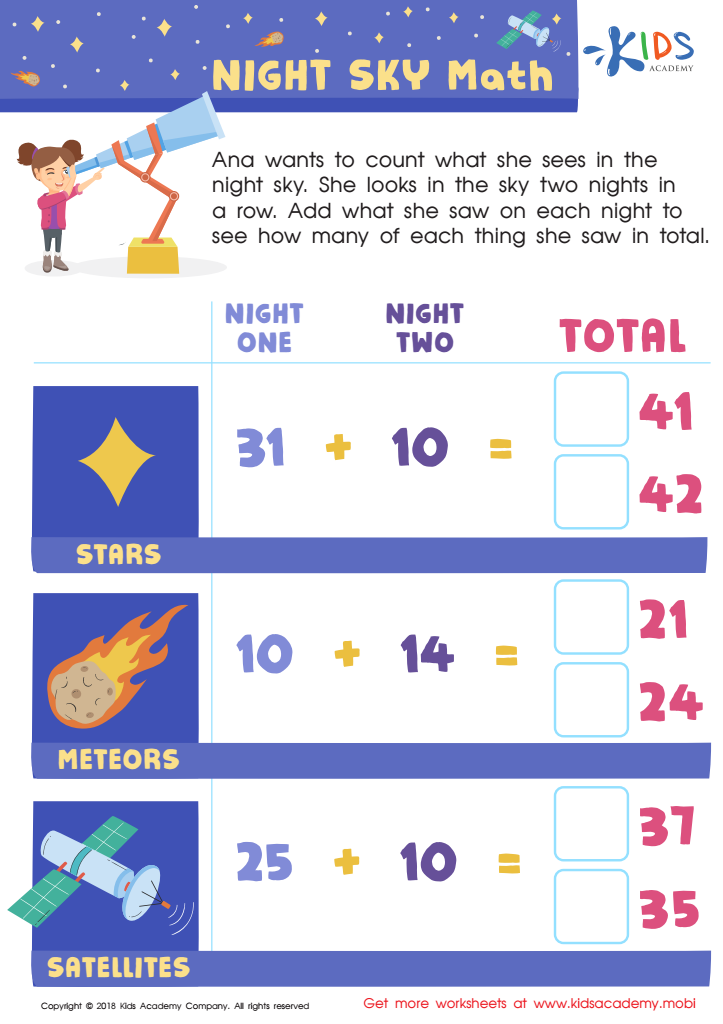
Night Sky Math Worksheet
 Assign to My Students
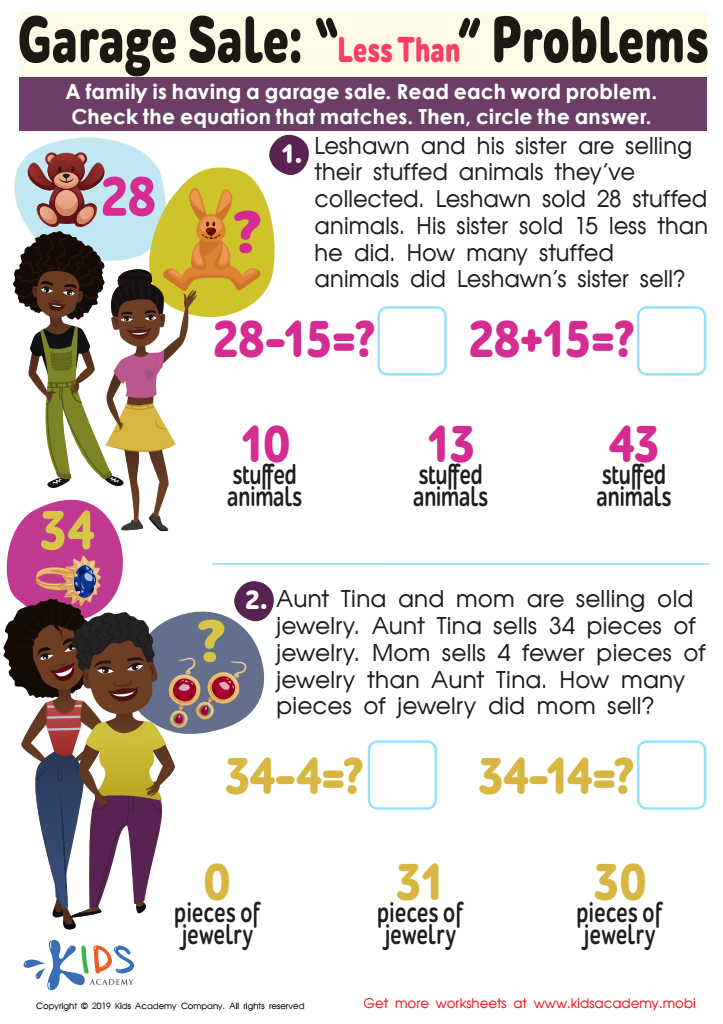
Garage Sale Less Than Worksheet
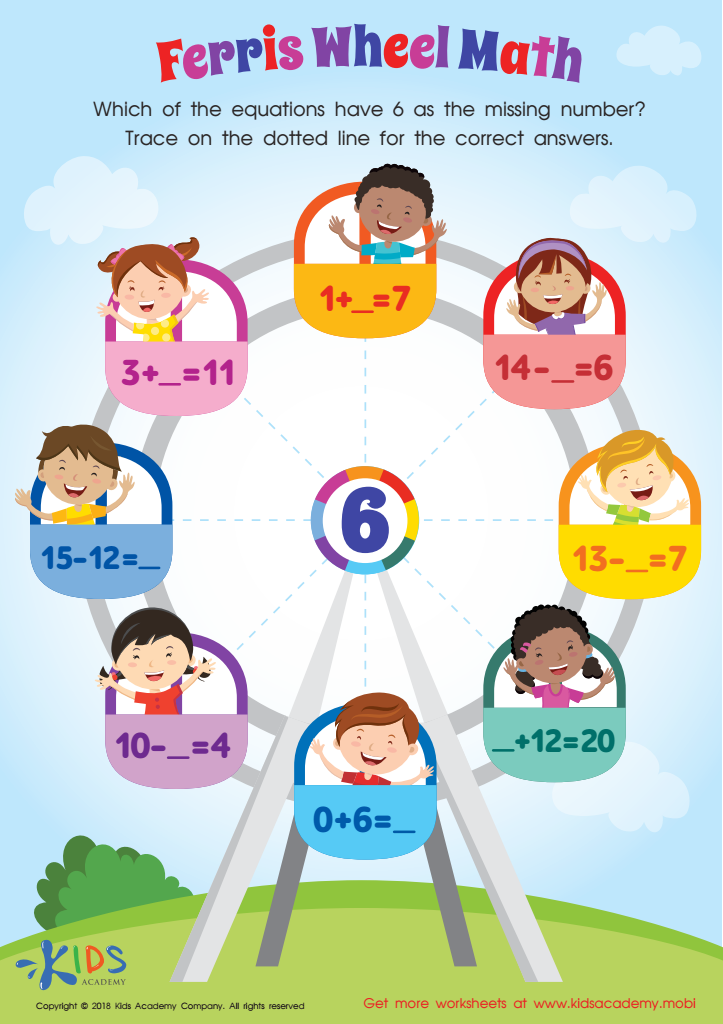
Missing Number: Ferris Wheel Math Worksheet
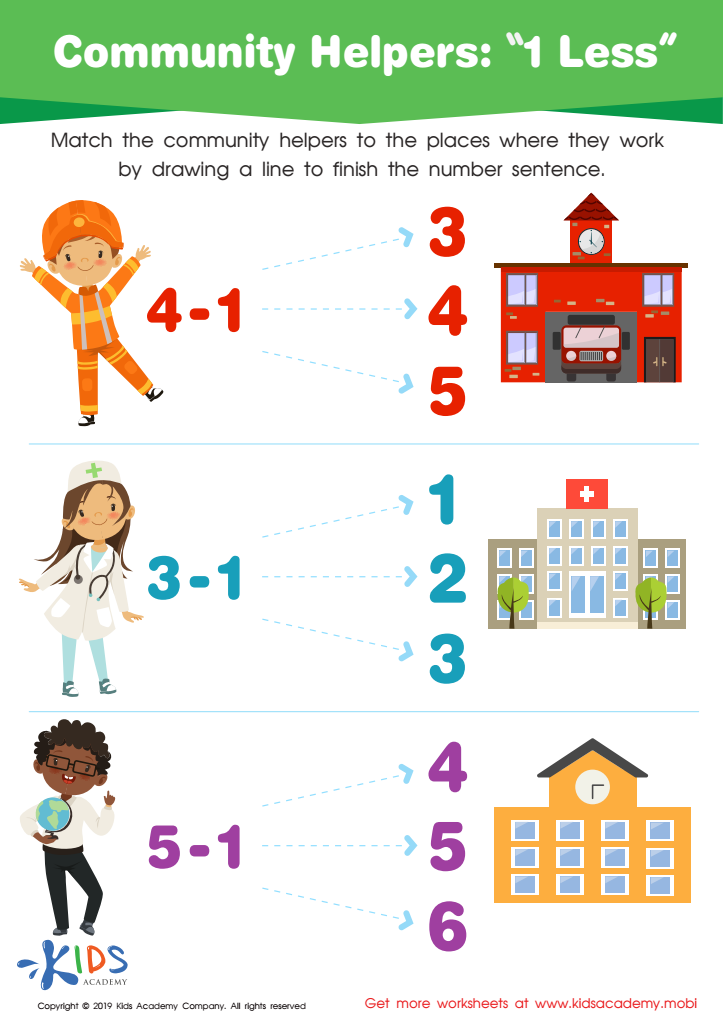
Community Helpers: 1 less Worksheet
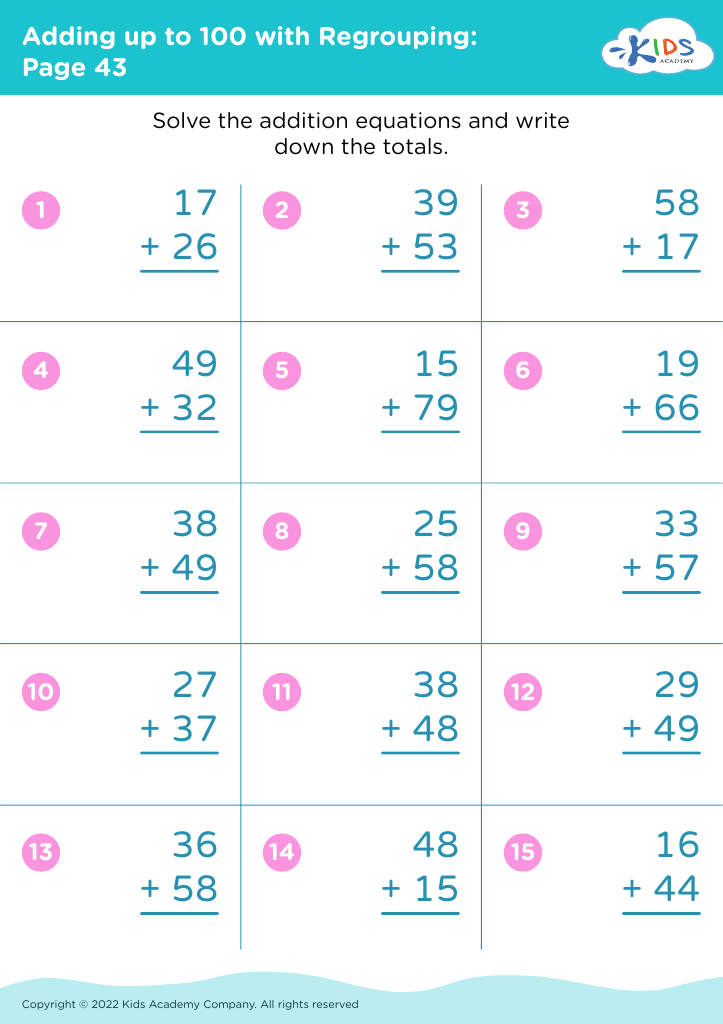








Understanding subtraction and addition is crucial for children aged 6-7 as it lays the foundation for their mathematical development. At this age, children are transitioning from intuitive counting to more formal mathematical concepts. Mastering these fundamental operations enhances cognitive skills, promotes problem-solving abilities, and builds confidence in their math capabilities.
Parents and teachers should prioritize teaching these concepts because early proficiency leads to long-term success in not just mathematics, but also in other subjects relying on logical reasoning and analytical skills. Furthermore, addition and subtraction are interconnected; a solid understanding of one reinforces the other and creates a cohesive learning experience.
Beyond academics, proficiency in these basic operations supports everyday decision-making, financial literacy, and critical thinking—a skill set children will utilize throughout their lives. Additionally, when children struggle with these concepts at a young age, it can lead to ongoing math anxiety and aversion to learning.
By fostering a supportive and engaging environment for understanding addition and subtraction, parents and teachers can instill a passion for learning, ensure a smooth progression to more complex math, and ultimately prepare children for future educational challenges. Early support in these fundamental areas is an investment in children's lifelong learning and success.








