Color Identification Geometry Worksheets for Ages 6-7
4 filtered results
-
From - To
Discover engaging Color Identification Geometry Worksheets designed for ages 6-7! These printable worksheets from Kids Academy blend fun and learning, helping young children enhance their geometry skills. By identifying and coloring shapes, kids improve shape recognition, color matching, and fine motor skills. Each activity is thoughtfully crafted to captivate children's interest while reinforcing essential math concepts. Our colorful worksheets are perfect for classroom use or fun at home. Boost your child's confidence and knowledge with these enjoyable resources, making math learning both exciting and effective! Visit Kids Academy today and get started on a geometric adventure.
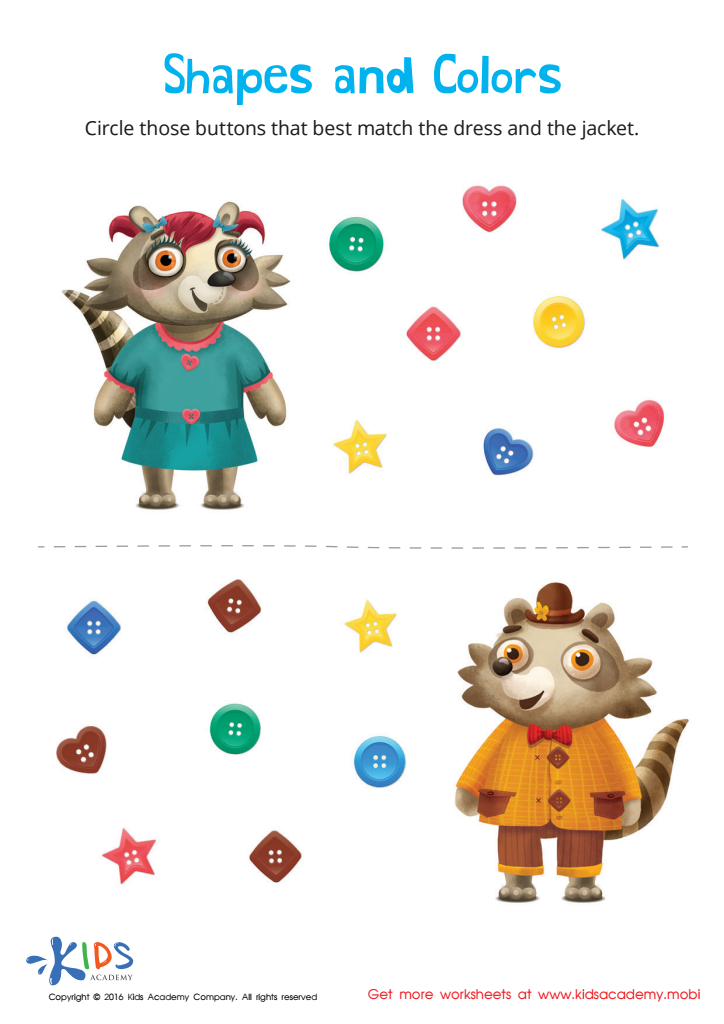
Matching: Shapes and Colors Worksheet











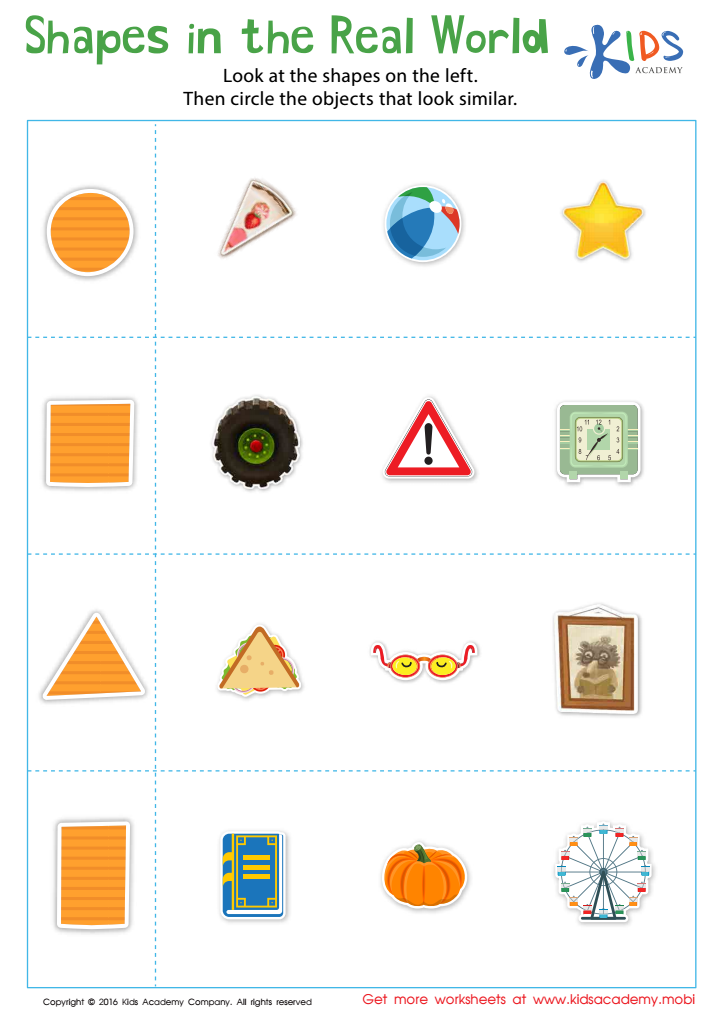
Shapes in the Real World Worksheet
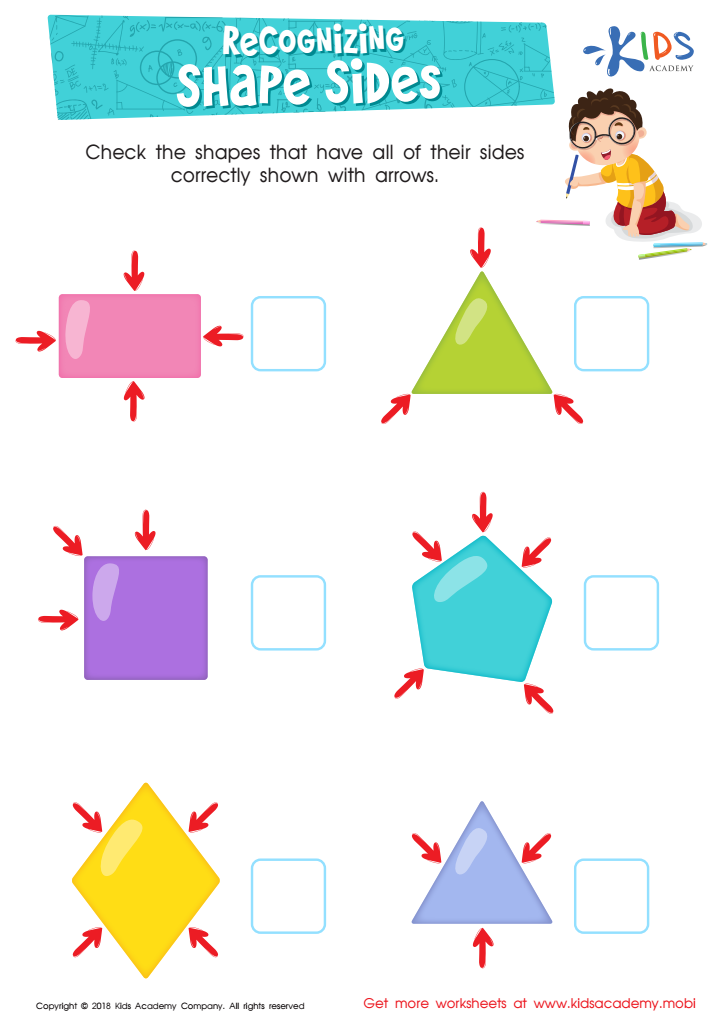
Recognizing Shape Sides Worksheet
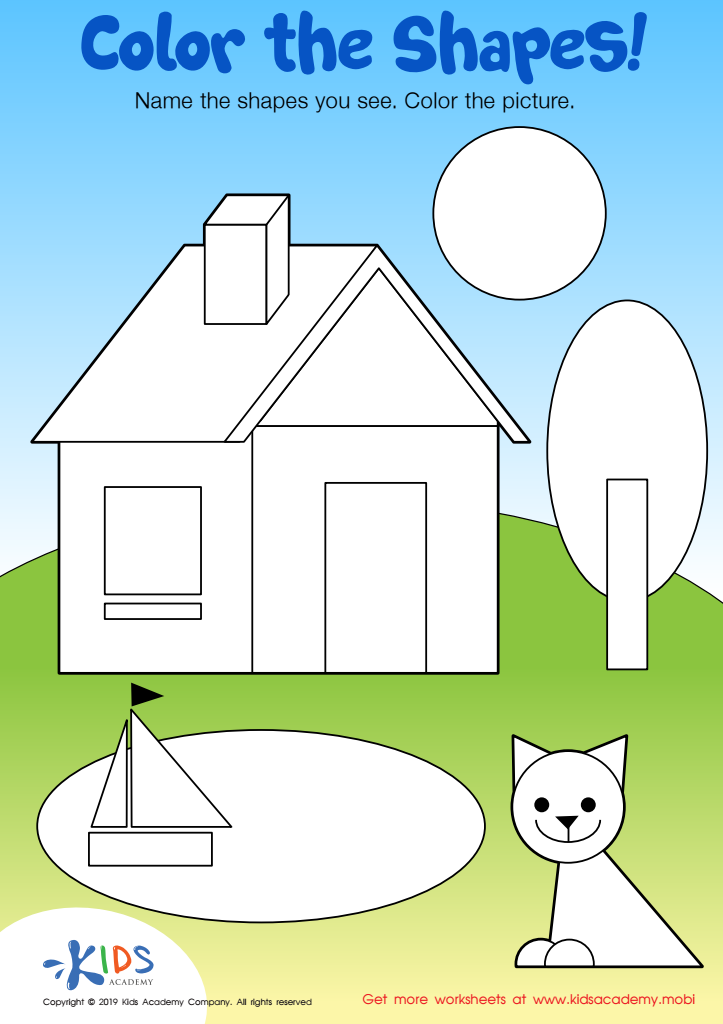
Color the Shapes Worksheet
 Assign to My Students








Color Identification Geometry is a fundamental part of early childhood education, particularly for children ages 6-7. Parents and teachers should care about this aspect of learning because it plays a critical role in cognitive, motor, and social development. Firstly, recognizing and distinguishing colors helps to sharpen visual perception, a crucial skill for reading and writing. Secondly, integrating geometry with color identification strengthens spatial awareness and problem-solving abilities. When children are asked to identify shapes and their respective colors, they learn to categorize and organize information, laying the groundwork for mathematical thinking.
Moreover, these activities enhance fine motor skills. Handling colored geometric shapes involves manipulation which boosts hand-eye coordination and dexterity. Socially, collaborative tasks involving color identification promote teamwork and communication skills. For instance, a simple task of sorting colored shapes into groups can teach children to cooperate, share ideas, and follow instructions.
Additionally, integrating colors and shapes brings a fun and engaging dimension to learning, keeping children motivated. Overall, Color Identification Geometry is not just about recognizing colors and shapes but is essential for the holistic development of young minds, making it a pivotal area that both parents and teachers should emphasize.








