Spatial Orientation Geometry Worksheets for Ages 6-7
3 filtered results
-
From - To
Explore our engaging Spatial Orientation Geometry Worksheets designed specifically for children aged 6-7! These printable resources help young learners develop essential spatial awareness skills, laying a strong foundation for geometric concepts. Our worksheets feature a variety of fun activities that encourage critical thinking, problem-solving, and visual understanding. Children will enjoy navigating shapes, identifying patterns, and honing their ability to visualize objects in space. Ideal for homework, classroom exercises, or at-home learning, these worksheets are crafted to make geometry enjoyable and accessible. Enhance your child’s mathematical journey with our captivating Spatial Orientation Geometry Worksheets today!
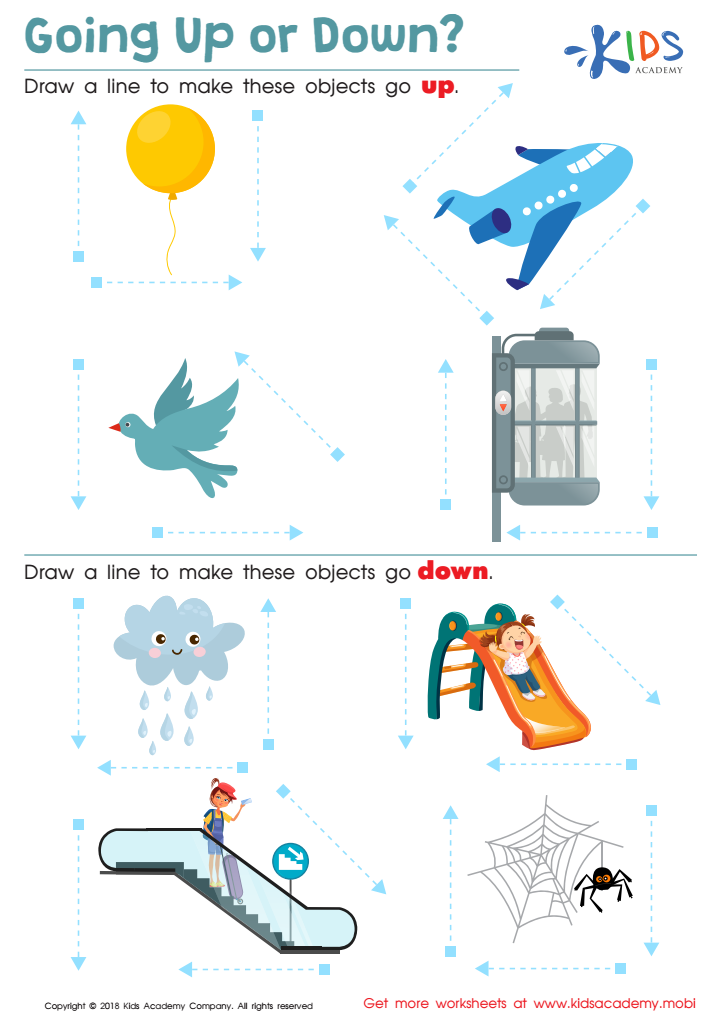
Going up or Down? Worksheet
 Assign to My Students











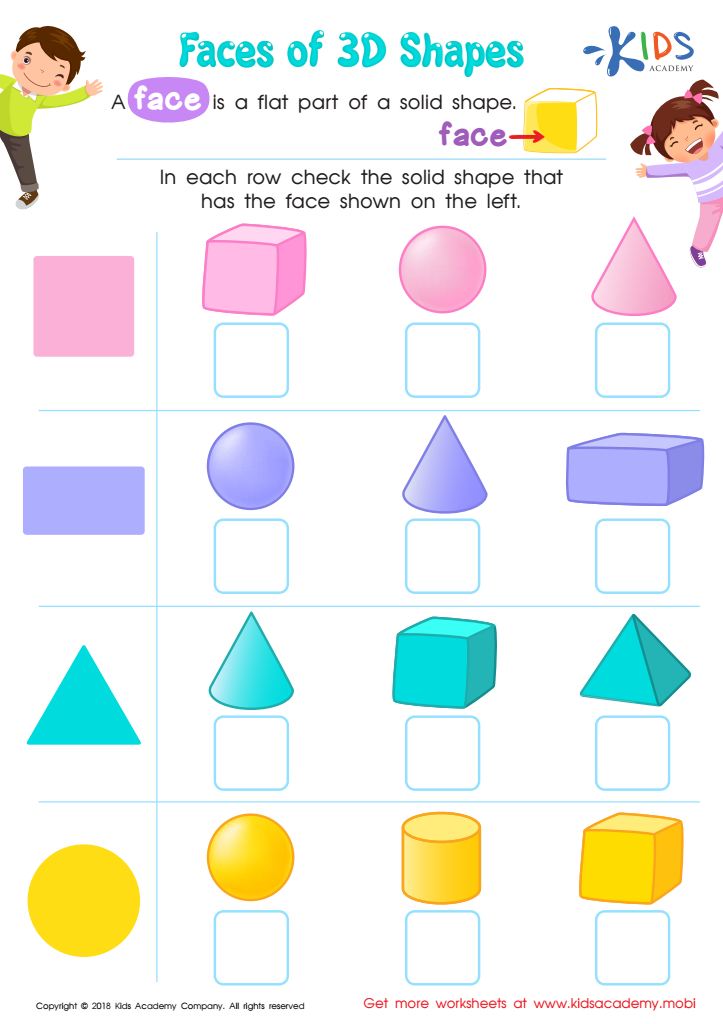
Faces of 3D Shapes Worksheet
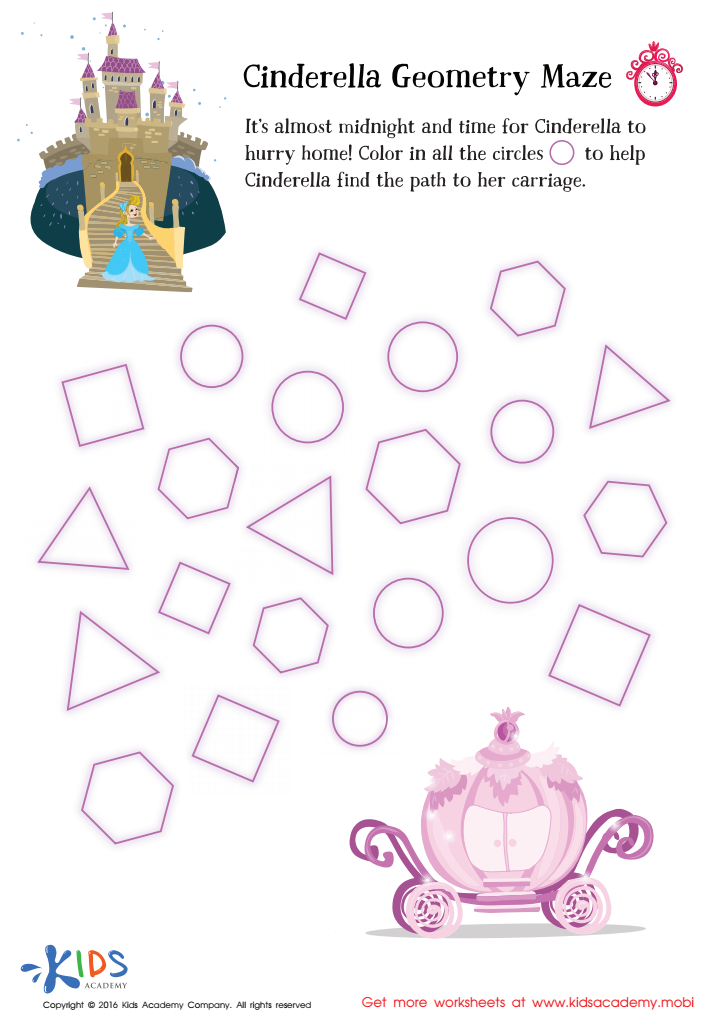
Cinderella Geometry Maze Worksheet








Spatial orientation geometry is fundamental for children aged 6-7 as it lays the groundwork for critical thinking and problem-solving skills. At this developmental stage, children begin to understand how objects relate to each other in space, which is essential for various everyday tasks, such as navigating their environment and organizing spaces.
Understanding spatial orientation fosters spatial awareness, which is crucial in mathematics. It helps children visualize shapes, patterns, and sizes, allowing them to grasp concepts of area, volume, and geometry more effectively in later grades. Moreover, skills gained from exploring spatial relationships through activities like puzzles, building blocks, or drawing promote cognitive development, creativity, and fine motor skills.
Additionally, engaging with spatial orientation enhances children's communication skills, as they learn to describe positions and directions, thereby enriching their language use. In a world increasingly reliant on technology, such as mapping systems and design software, spatial understanding is ever more significant.
By recognizing the importance of spatial orientation geometry, parents and teachers can better support children's learning experiences, aiding in their academic success and laying a foundation for future critical thinking and analytical skills.








