
Visual perception improvement Geometry Worksheets for Ages 6-7
3 filtered results
Difficulty Level
Grade
Age
-
From - To
Subject
Activity
Standards
Enhance your child's visual perception skills with our engaging Geometry Worksheets designed for ages 6-7! These carefully crafted worksheets help young learners develop essential visual recognition, spatial awareness, and shape identification skills in a fun and interactive way. Each worksheet offers a variety of activities, including shape sorting, pattern recognition, and matching exercises, promoting critical thinking and problem-solving abilities. Perfect for at-home learning or classroom activities, our visual perception improvement resources are tailored to meet the developmental needs of early grade students. Download these worksheets today and watch your child's confidence and understanding in geometry grow!
Favorites
With answer key
Interactive
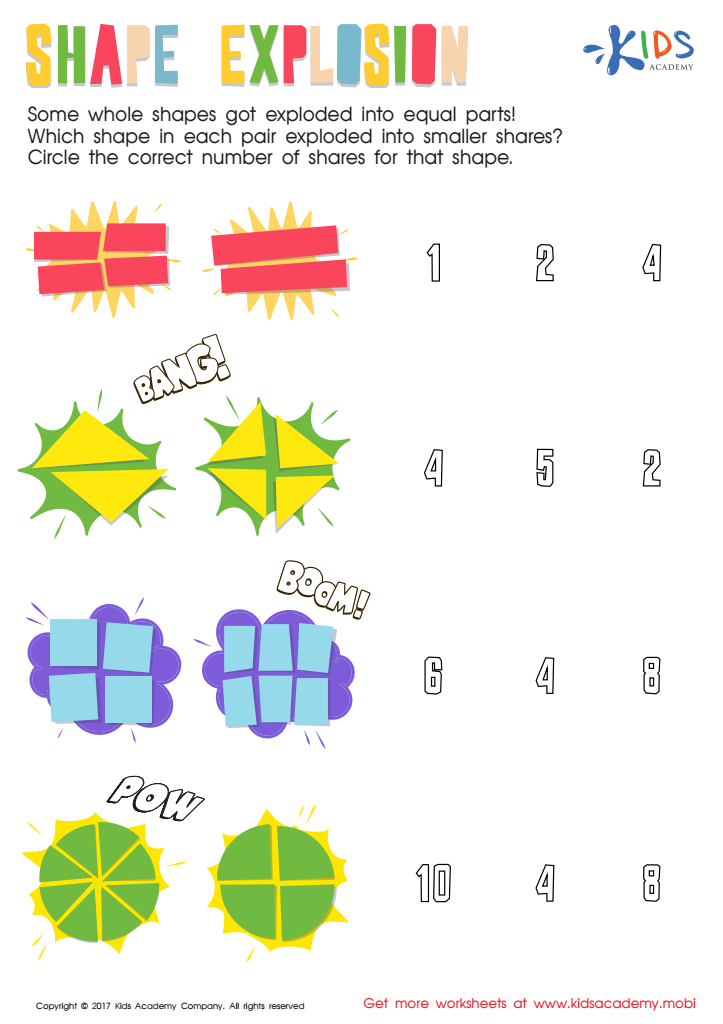
Shape Explosion Worksheet
This worksheet shows students how some shapes explode into two or more equal parts. On the left side are four shapes, each splitting into two or more parts. Ask your child to point out which shape has the smaller share, and help them circle the correct number of shares.
 Assign to My Students
Shape Explosion Worksheet
Worksheet











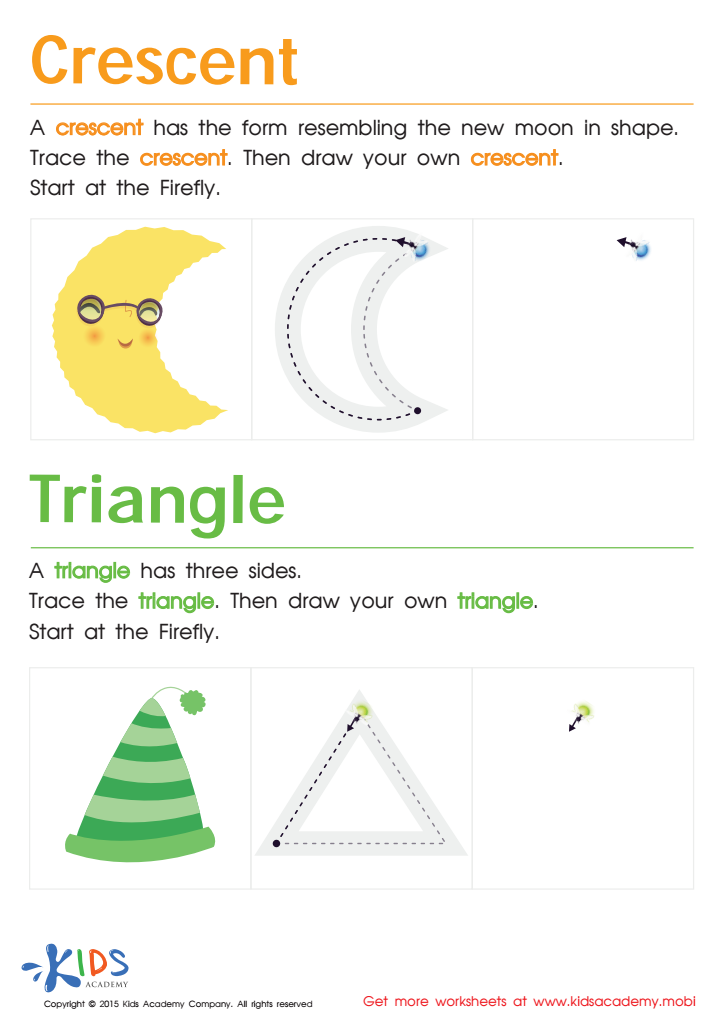
Learning to Draw Crescents And Triangles Worksheet
Help your kids draw a crescent and triangle with this free printable worksheet! Start by tracing a crescent in the form of the new moon, and then teach them that a triangle has three sides and looks like a hat. Find more geometry practice worksheets at Kids Academy!
Learning to Draw Crescents And Triangles Worksheet
Worksheet
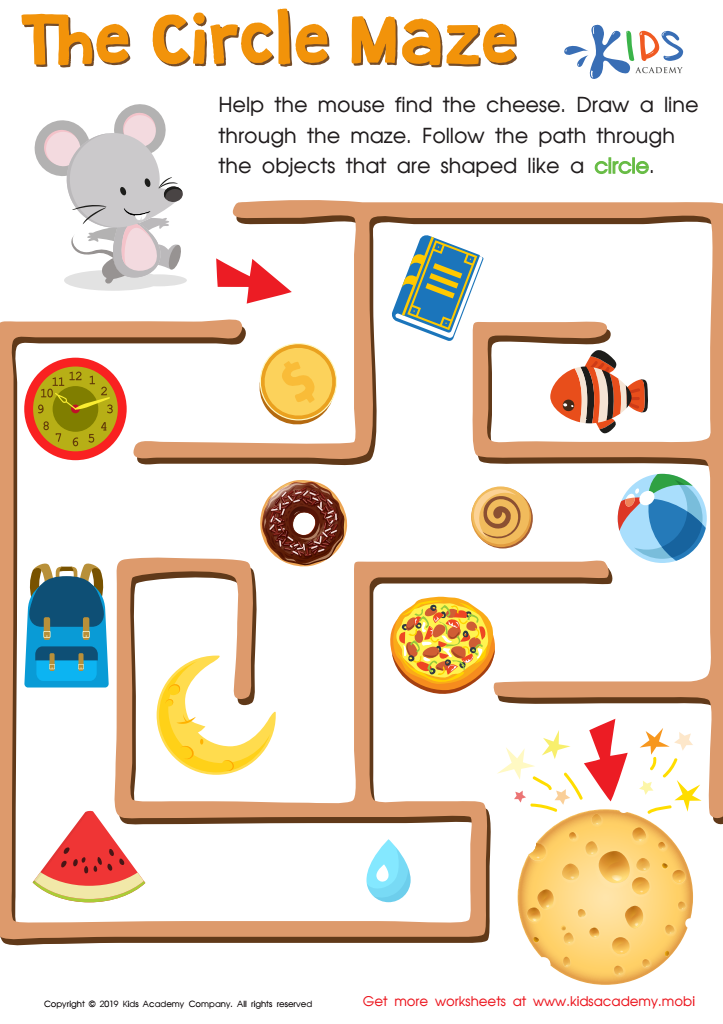
The Circle Maze Worksheet
Kids can have fun learning shapes with this maze worksheet. They can help the mouse find its cheese by tracing the path of a circle through the maze. This printable is great for classroom learning or as an activity at home.
The Circle Maze Worksheet
Worksheet
Join Kids Academy for Free
Who is primarily going to use this learning content?








Visual perception plays a crucial role in a child's overall development, especially in areas like geometry and spatial understanding. For children aged 6-7, developing strong visual perception skills can enhance their ability to recognize shapes, understand spatial relationships, and develop critical problem-solving skills. These skills are essential not only for geometry but also for reading, writing, and even daily tasks.
Parents and teachers should care about improving visual perception in this age group because it sets the foundation for future learning. Strong visual perception aids in distinguishing between different shapes and sizes, which is important for math skills and learning concepts like symmetry, patterns, and measurements.
Moreover, children's experiences during early education influence their attitudes towards learning and confidence in their abilities. Engaging in activities that enhance visual perception, such as puzzles, drawing, or using visual aids, can make learning enjoyable and interactive. This enthusiasm can lead to a lifelong love of math and science.
By focusing on visual perception improvement in geometry, parents and teachers not only equip children with essential academic skills but also foster a well-rounded approach to learning that encourages curiosity, exploration, and resilience in problem-solving. This attention to visual learning can yield significant benefits in a child's educational journey.








