
Basic Counting Numbers Worksheets for Ages 6-7
3 filtered results
Difficulty Level
Grade
Age
-
From - To
Subject
Activity
Standards
Explore our engaging Basic Counting Numbers Worksheets designed for children aged 6-7! These worksheets enhance numerical understanding and counting skills through fun and interactive activities. Perfect for early learners, our resources encourage children to practice counting, recognizing numbers, and completing simple math challenges. Each worksheet incorporates colorful visuals and themes to make learning enjoyable. Ideal for both classroom settings and at-home learning, these materials cater to various learning styles, ensuring a well-rounded math foundation. Download now and watch your child's confidence grow as they master basic counting alongside their peers! Start your journey to math success today!
Favorites
With answer key
Interactive
 Assign to My Students
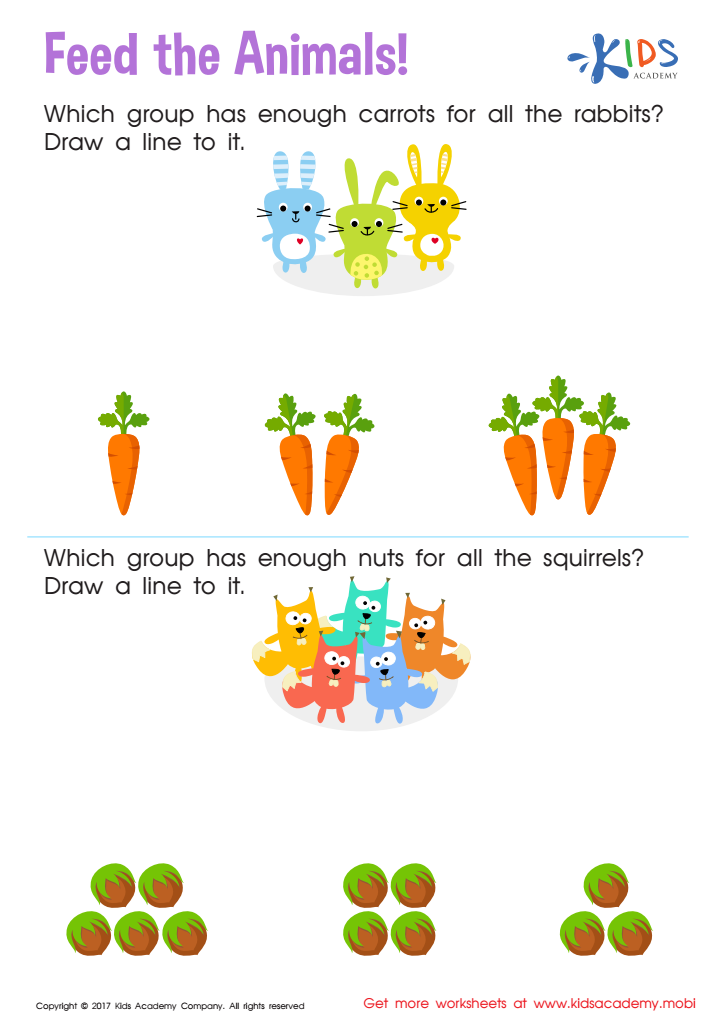
Count and Match: Feed the Animals Worksheet
Learning and growing involves more than just numbers, phonics and comparison. This Feed the Animals worksheet helps kids to exercise their reasoning skills. They must work out how many rabbits and carrots there are, and then repeat the process for the squirrels. This encourages problem solving and counting skills.
Count and Match: Feed the Animals Worksheet
Worksheet
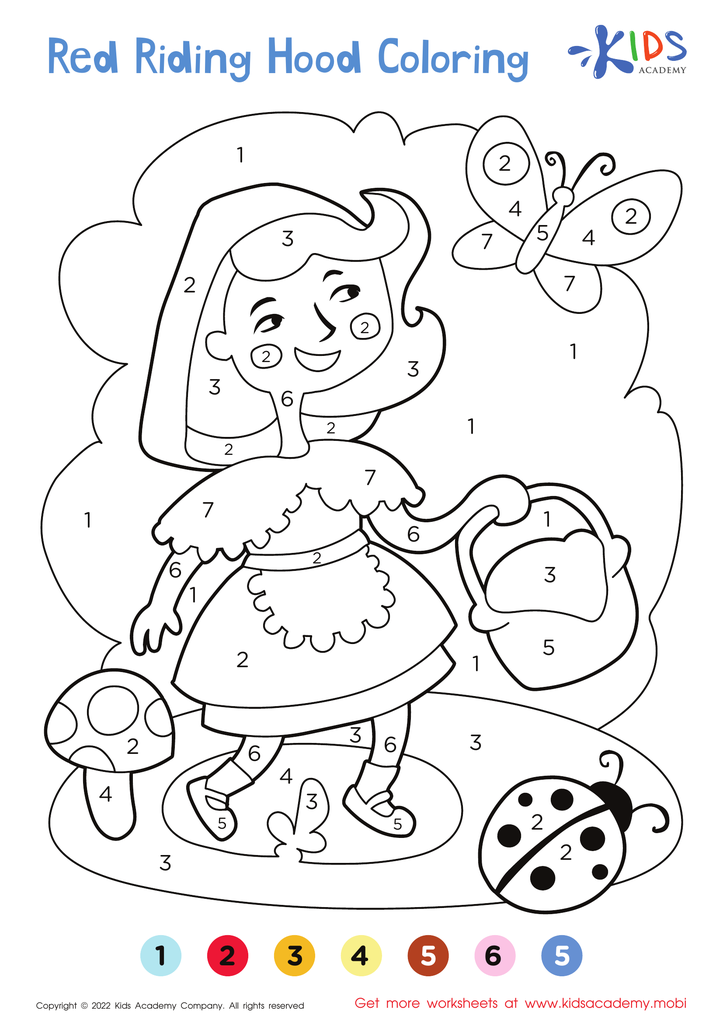
Little Red Riding Hood – Coloring by Numbers
Download this free PDF page and enjoy coloring Little Red Riding Hood. It's an easy and fun activity that everyone can do - just follow the numbers! Get your colored pencils ready and have a blast. 80 words.
Little Red Riding Hood – Coloring by Numbers
Worksheet
Join Kids Academy for Free
Who is primarily going to use this learning content?







Basic counting numbers are foundational to a child's mathematical understanding and cognitive development, particularly for children ages 6-7. At this age, children begin to grasp numeracy concepts that are crucial for their academic success. Learning how to count establishes a sense of number sense, which aids in later subjects such as addition, subtraction, and even more complex mathematical operations.
Moreover, recognizing and understanding basic counting fosters critical thinking and problem-solving skills. It helps children to categorize and quantify their environment, improving their ability to make sense of the world around them. Counting can also enhance fine motor skills through activities such as counting objects or using fingers to represent numbers.
From a social-emotional perspective, mastering basic counting builds a sense of achievement and confidence in young learners. This self-esteem is pivotal as they progress in their education, encouraging a positive attitude toward learning. For parents and teachers, engaging children in counting activities is an opportunity for bonding, making math enjoyable, and promoting a lifelong love of learning. Thus, investing time in teaching basic counting numbers lays the groundwork for future academic success and personal growth, making it essential for parents and teachers to emphasize.








