
Enhancing math skills Numbers Worksheets for Ages 6-7
5 filtered results
Difficulty Level
Grade
Age
-
From - To
Subject
Activity
Standards
Discover our "Enhancing Math Skills Numbers Worksheets" designed specifically for children aged 6-7. These engaging printable resources aim to build foundational math comprehension through fun and interactive activities. Your child will explore the essential concepts of numbers, counting, and simple arithmetic while boosting confidence and retention. Our worksheets feature vibrant illustrations and a variety of exercises, catering to different learning styles. Ideal for home or classroom use, these materials help create a positive learning experience that fosters a love for math. Equip your little learners with the skills they need to succeed in math, ensuring they are well-prepared for future challenges.
Favorites
With answer key
Interactive
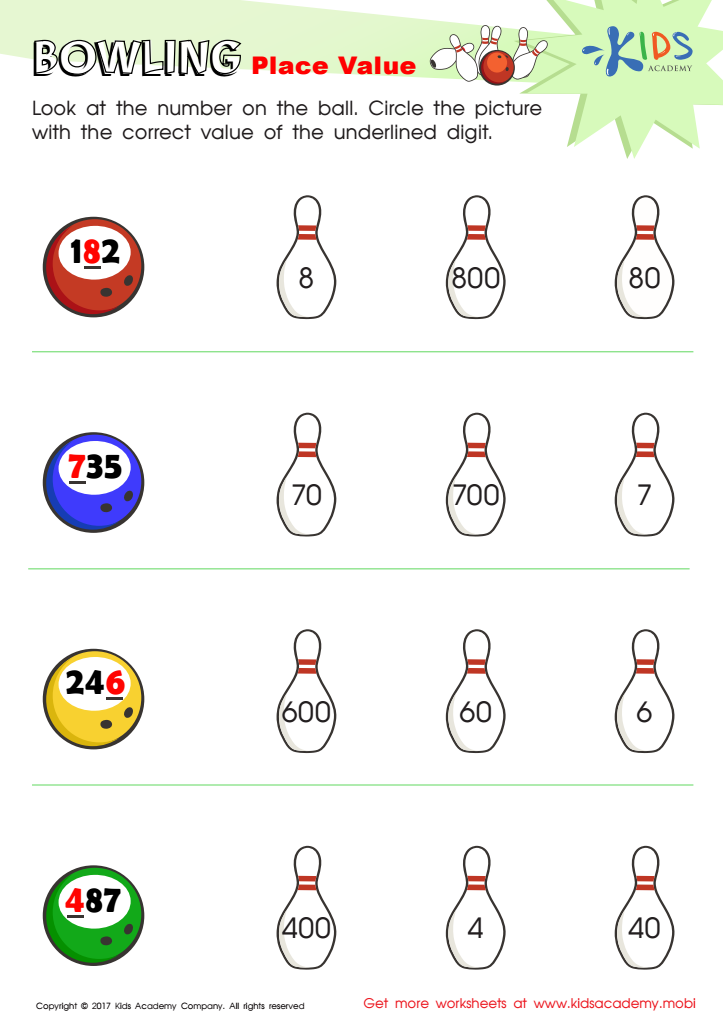
Place Value Worksheet
Try this place value worksheet to help your 2nd grader understand place value in a more meaningful way.
 Assign to My Students
Place Value Worksheet
Worksheet
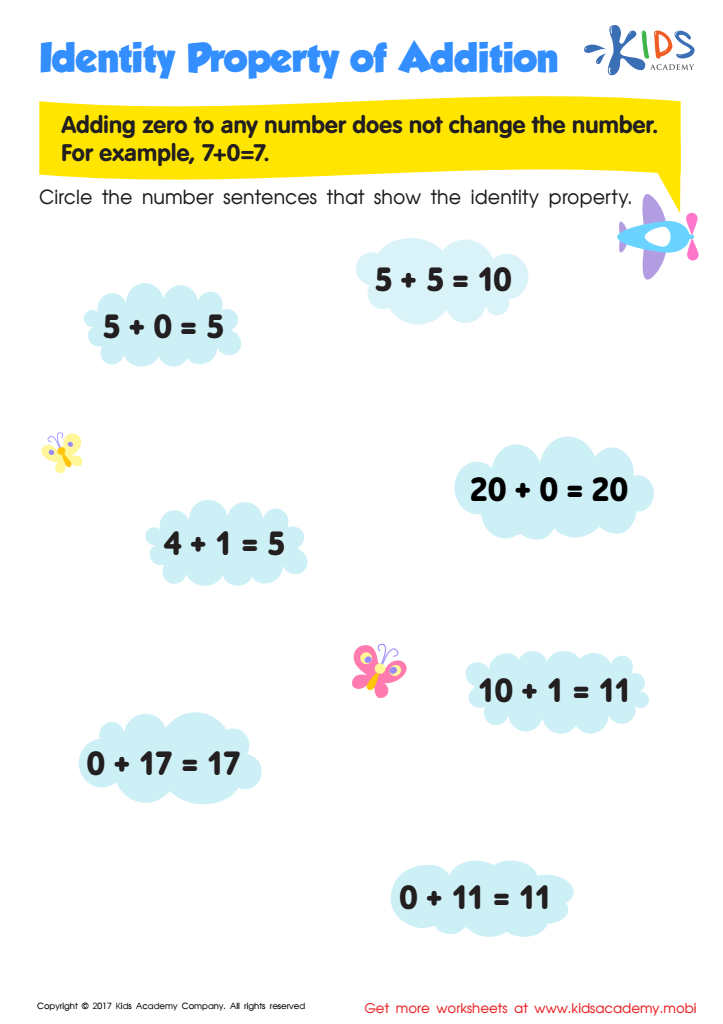
Identity Property of Addition Worksheet
Kids must learn the identity property of addition in math. It states that adding zero to an equation does not change the number. A great way to help kids understand this concept is with a Kids Academy worksheet. It encourages kids to identify which number sentences demonstrate the identity property of addition. Doing so builds vital mental math skills for fast addition.
Identity Property of Addition Worksheet
Worksheet
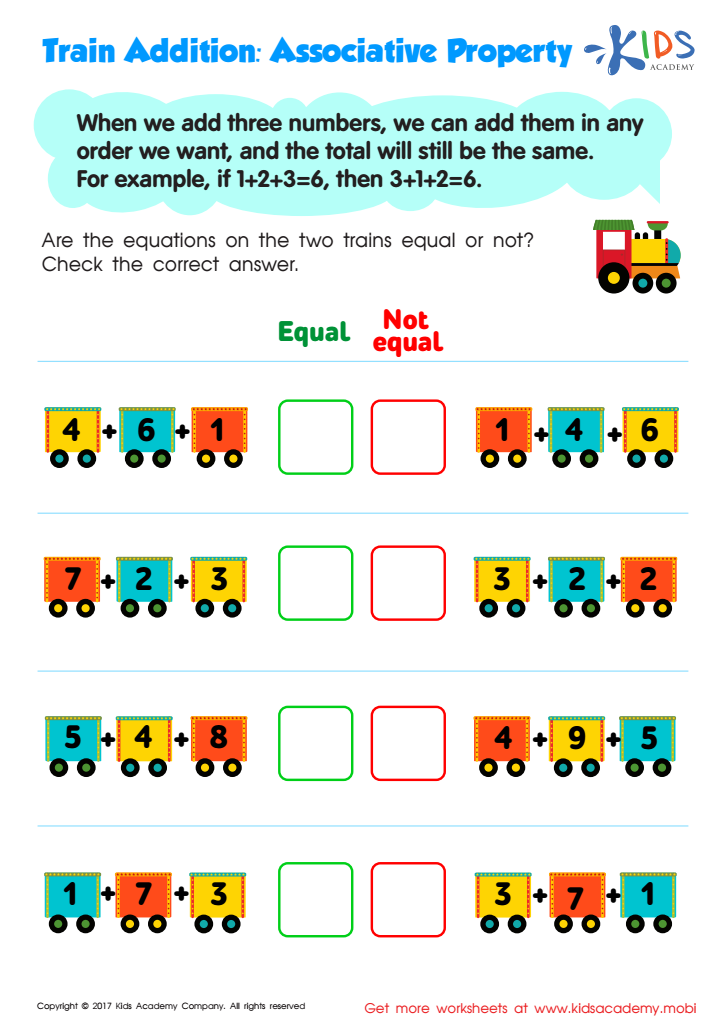
Train Addition: Associative Property Worksheet
The associative property of addition lets us add numbers in any order. Total will remain the same. Help kids practice this pre-algebra skill with a train-themed worksheet. It will help them understand if the equations are equal using this property.
Train Addition: Associative Property Worksheet
Worksheet
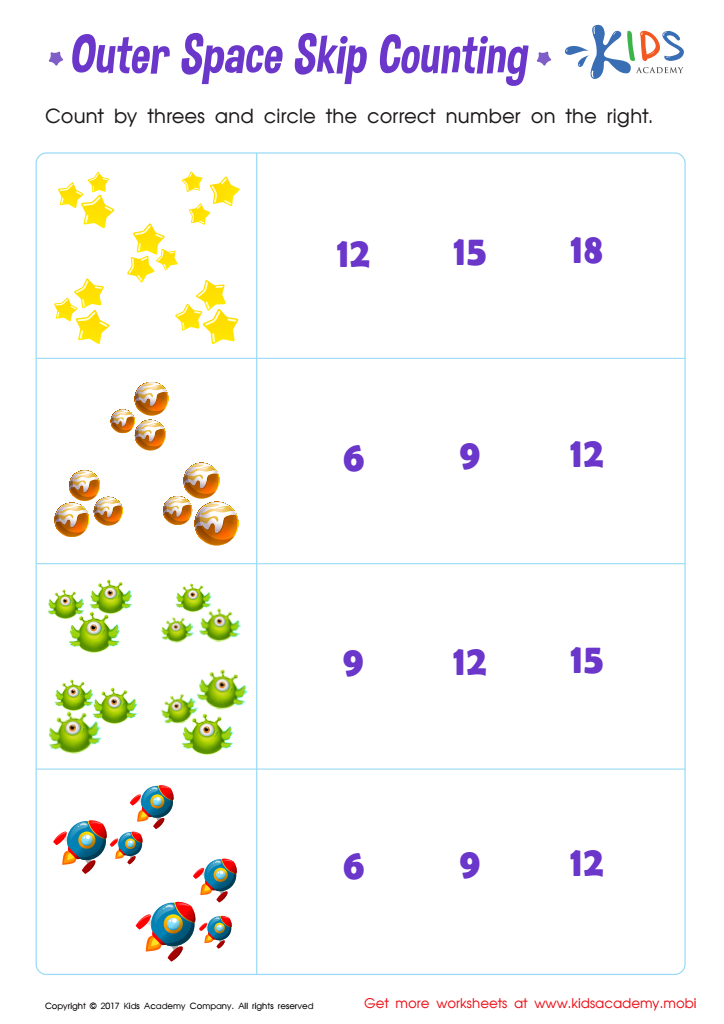
Skip Counting by 3s: Outer Space Skip Counting Printable
Want to set your child up for math success? Get them this printable worksheet that helps them practice counting in groups of 3’s, building a foundation for more advanced math skills. Skipping counting helps kids master logical reasoning and cognitive skills, making a connection between counting objects individually and in groups. The colorful images will keep them engaged and having fun - without realizing how hard they're working!
Skip Counting by 3s: Outer Space Skip Counting Printable
Worksheet
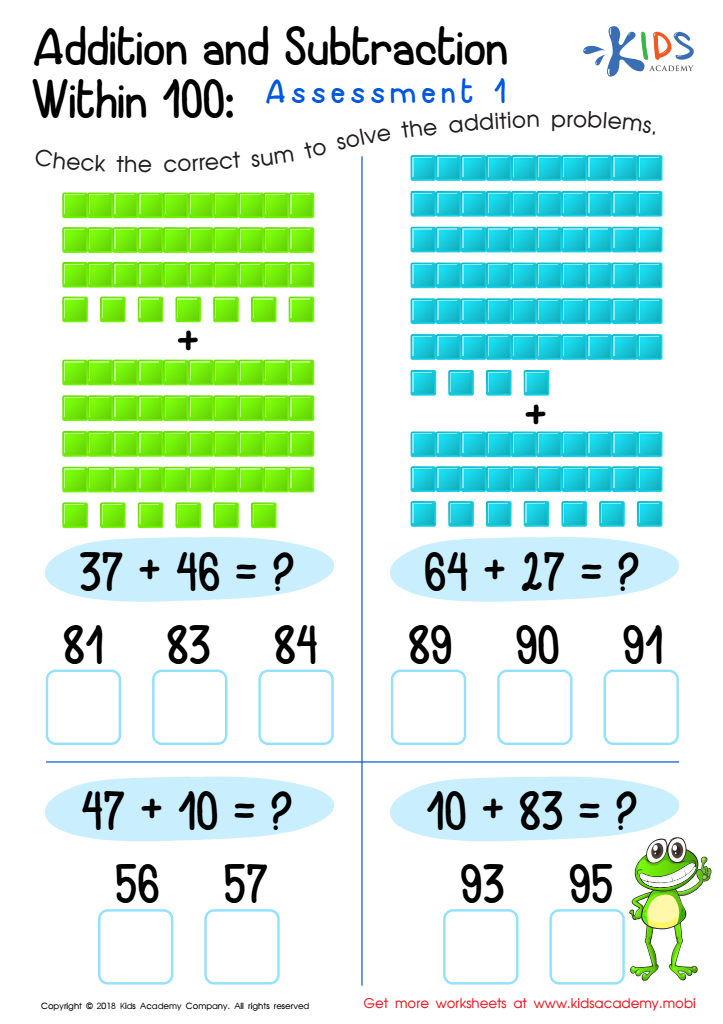
Addition and Subtraction Within 1: Assessment 1 Worksheet
Help your kids develop their math skills with this worksheet! Addition and subtraction can be daunting for young learners, but you can make it easier for them with this pdf. Use it to check the correct sum and help them solve the addition problems. This is a great way to get them ready to be future great mathematicians.
Addition and Subtraction Within 1: Assessment 1 Worksheet
Worksheet
Join Kids Academy for Free
Who is primarily going to use this learning content?







Enhancing math skills in children aged 6-7 is crucial for several reasons. At this developmental stage, students are beginning to grasp fundamental concepts, including addition, subtraction, and the basics of measurement and geometry. This solid foundation not only builds confidence but also prepares them for more complex mathematical concepts in later grades.
Engaging children in mathematics at this age helps to promote critical thinking and problem-solving skills. These cognitive skills are essential across various academic subjects and everyday life situations. Additionally, a strong grasp of math enhances literacy skills, as many concepts, like time, money, and trading, involve numerical understanding.
Furthermore, improved math skills can positively influence a child's self-esteem. Children who succeed in math are more likely to feel competent and capable, which translates to a more positive attitude toward learning in general.
Finally, early math proficiency is linked to better academic outcomes, with research indicating a direct correlation between early mathematics skills and future success in higher-level math courses. By prioritizing math development in children aged 6-7, parents and teachers lay the groundwork for lifelong learning and create a brighter educational journey.








