Handwriting Skills Numbers Worksheets for Ages 6-7
5 filtered results
-
From - To
Enhance your child's handwriting prowess with our "Handwriting Skills Numbers Worksheets for Ages 6-7." These engaging worksheets are expertly crafted to help young learners develop fine motor skills, number recognition, and proper number formation. Each activity is designed to make learning fun and interactive, ensuring that children build confidence while mastering essential writing techniques. Perfect for both classroom and at-home use, these resources support early math education and prepare kids for future academic success. Download today and watch your child excel in their handwriting and number skills with ease and enthusiasm.
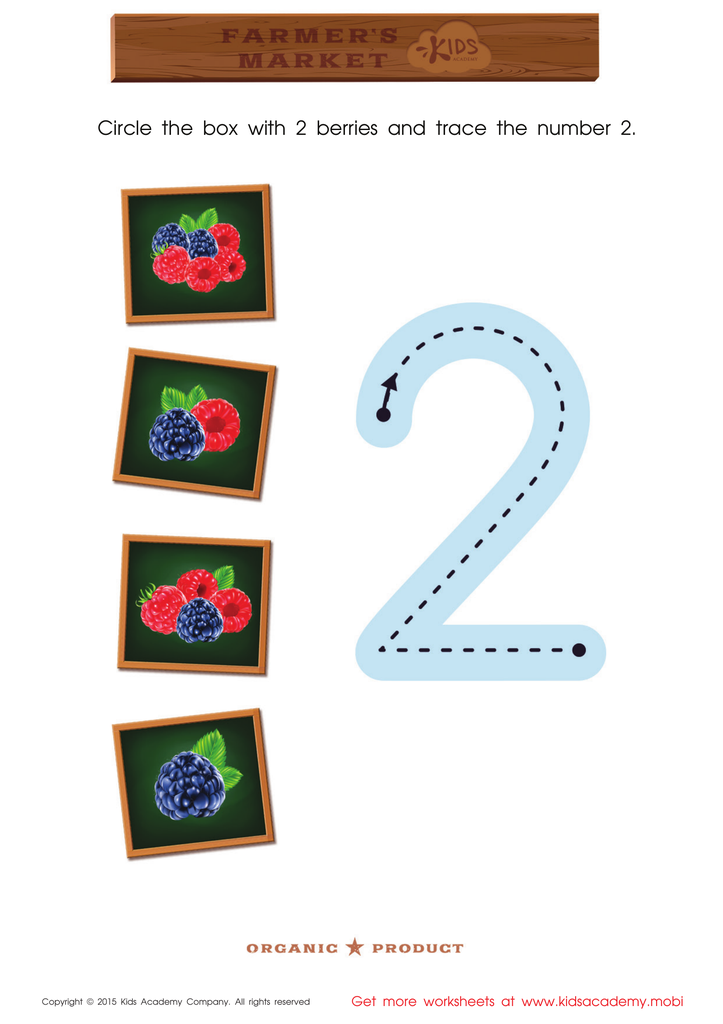
Count the Berries and Trace the Number 2 Printable
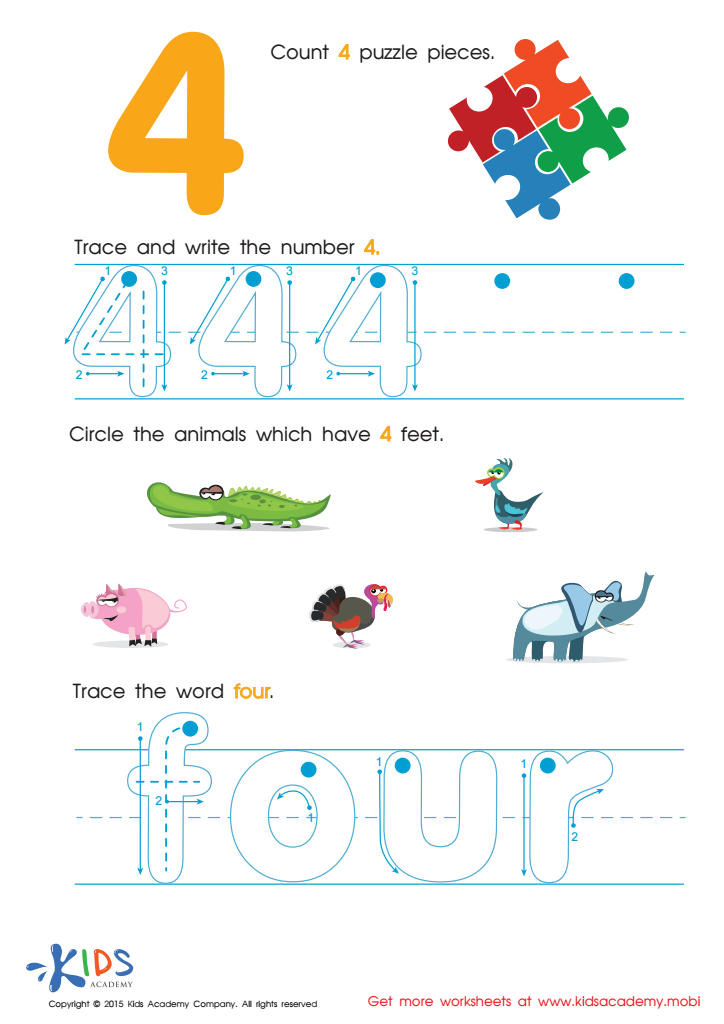
Teaching Children to Write Number 4 Worksheet
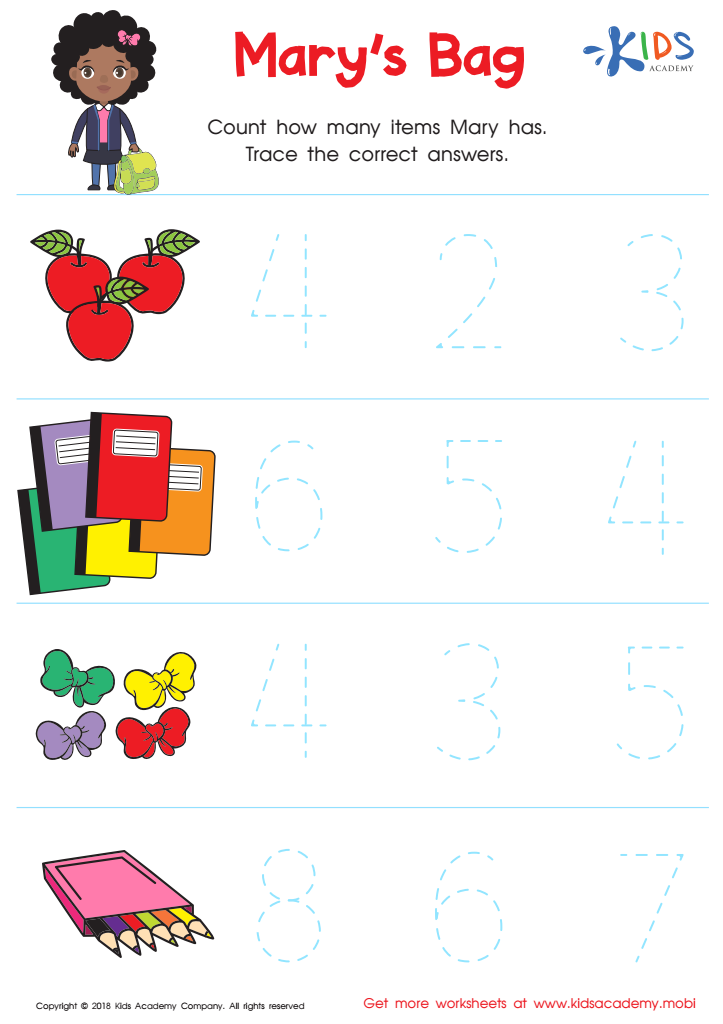
Kindergarten Number Tracing: Mary's Bag Worksheet
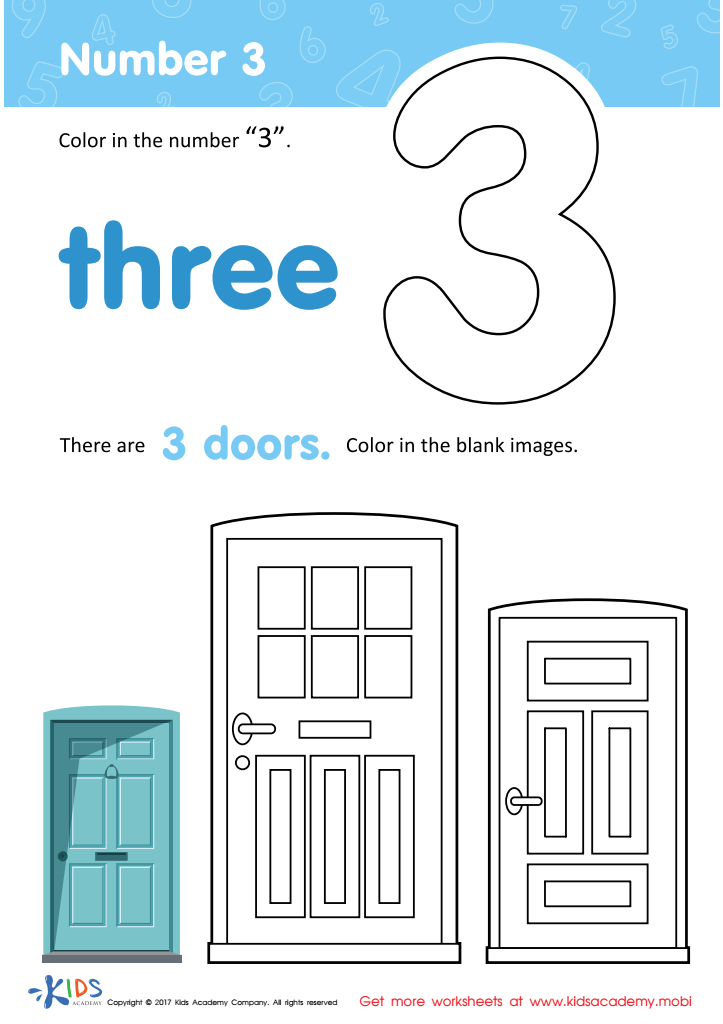
Number 3 Worksheet
 Assign to My Students
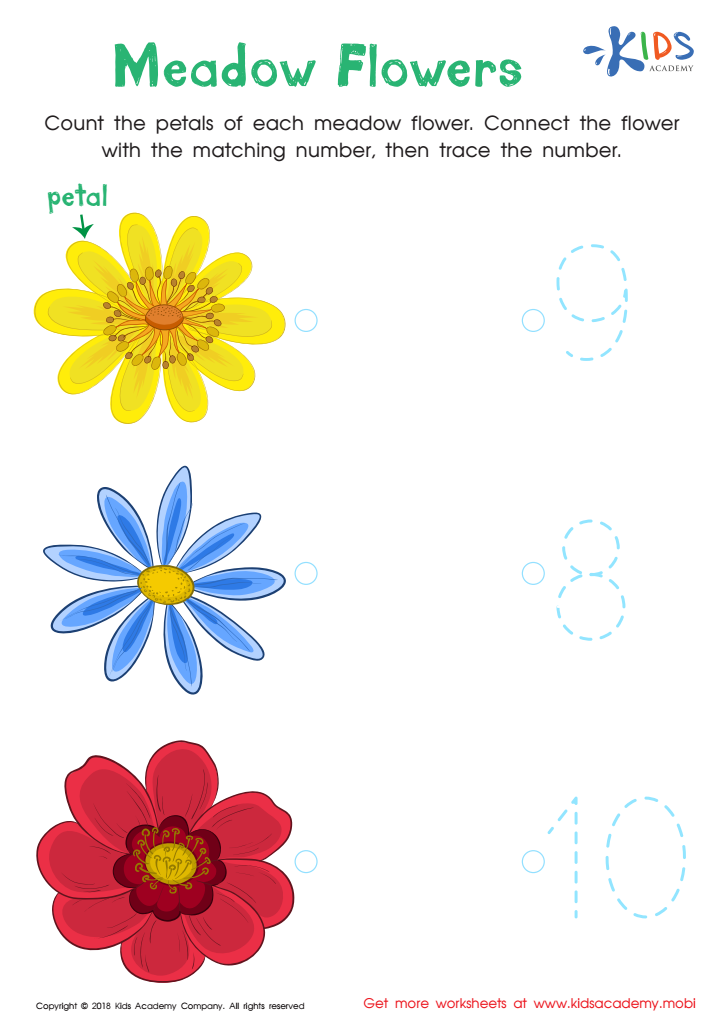
Kindergarten Number Tracing: Medow Flowers Worksheet








Handwriting skills are an essential aspect of early childhood education, especially for children aged 6-7, as they lay the foundational groundwork for academic success. During this formative period, children transition from playful scribbles to more structured writing, often encountering numbers for the first time. Mastery of handwriting skills for numbers helps in multiple dimensions.
Firstly, accurate handwriting aids cognitive development. Writing numbers correctly reinforces math concepts, enabling children to engage effectively in basic arithmetic. Secondly, it promotes fine motor skills; the coordination involved in writing sharpens a child’s hand-eye coordination and dexterity, vital for overall growth and development. Thirdly, legible handwriting instills confidence in young learners. Successfully writing numbers allows them to express themselves clearly, fostering a sense of achievement and boosting their self-esteem.
Teachers and parents ought to emphasize handwriting because it directly impacts academic performance. Poorly written numbers can lead to misunderstandings or errors in mathematical operations. Interventions and practice at this age ensure clarity and comprehension in their future math learning journey. Moreover, positive habits formed early tend to persist, hence reinforcing the importance of establishing good handwriting techniques in children. Ultimately, investing time and effort in refining these skills can result in long-term educational and personal benefits for young learners.








