Pattern recognition Numbers Worksheets for Ages 6-7
4 filtered results
-
From - To
"Pattern Recognition Numbers Worksheets for Ages 6-7" are designed to enhance young learners' mathematical skills by identifying and understanding number patterns. These engaging and visually appealing worksheets help children recognize sequences, predict missing numbers, and develop logical thinking. By working through a variety of exercises, students will strengthen their ability to analyze numerical patterns, laying a strong foundation for future math success. Ideal for both classroom and at-home learning, these worksheets make mastering math fun and interactive. Prepare your child for advanced math concepts with Kids Academy’s expertly crafted pattern recognition activities.
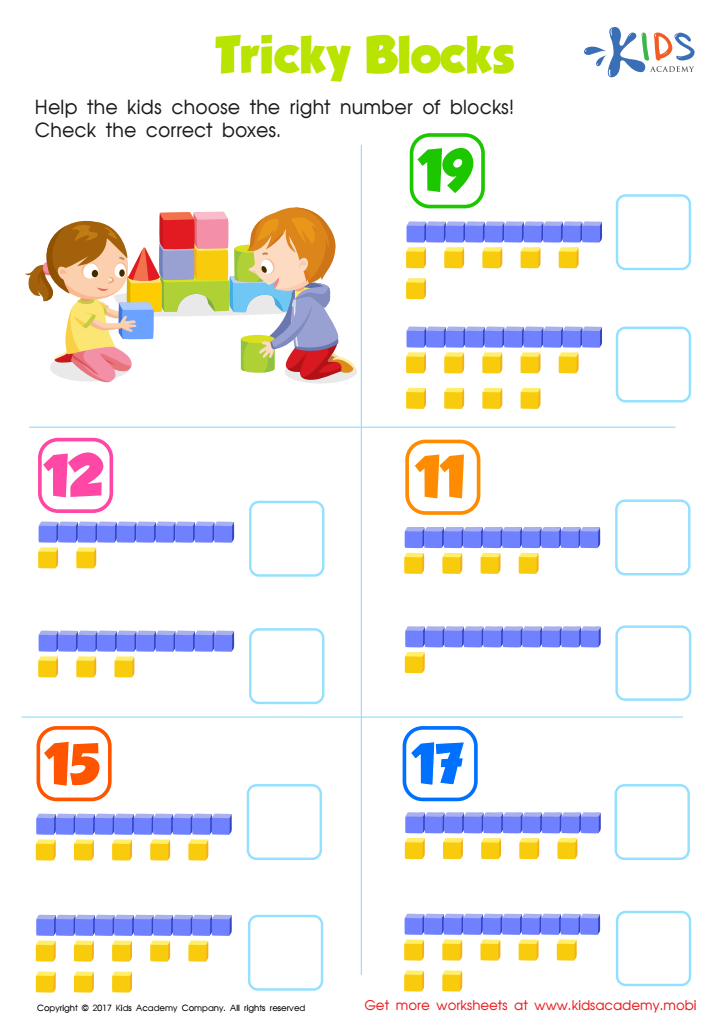
Tricky Blocks Worksheet
 Assign to My Students
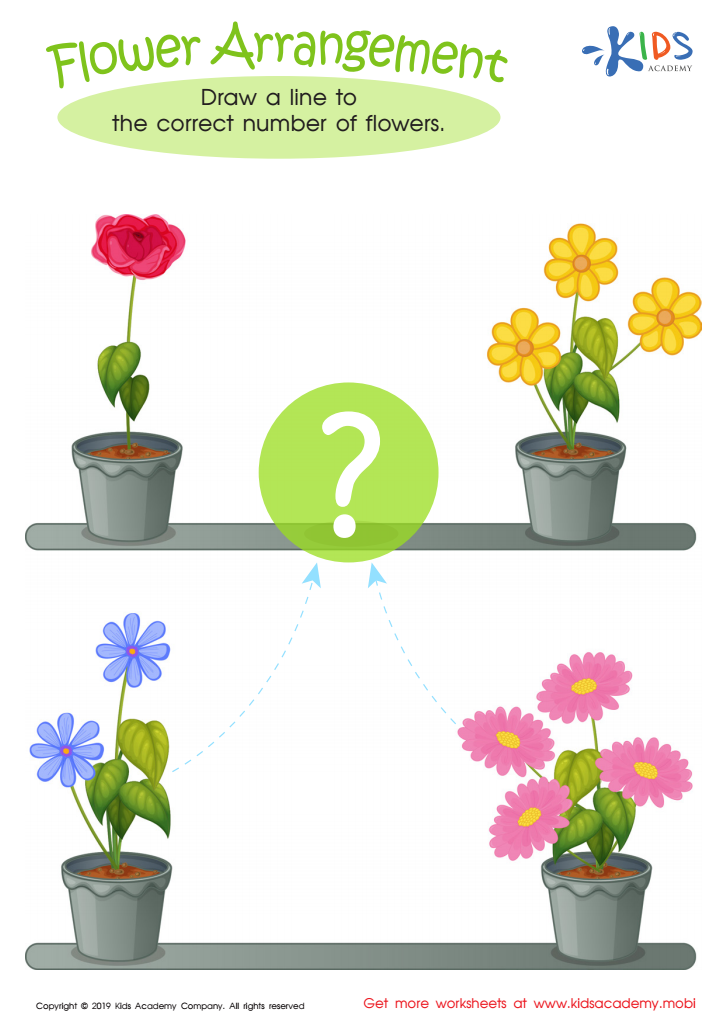
Flower Arrangement Worksheet
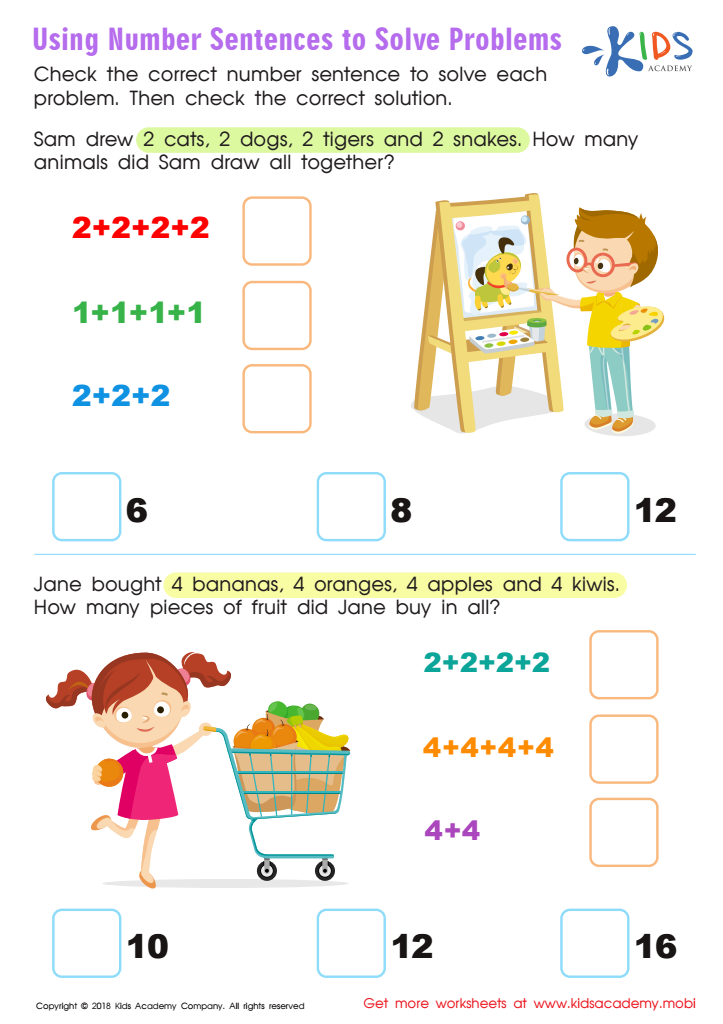
Using Number Sentences to Solve Problems Worksheet
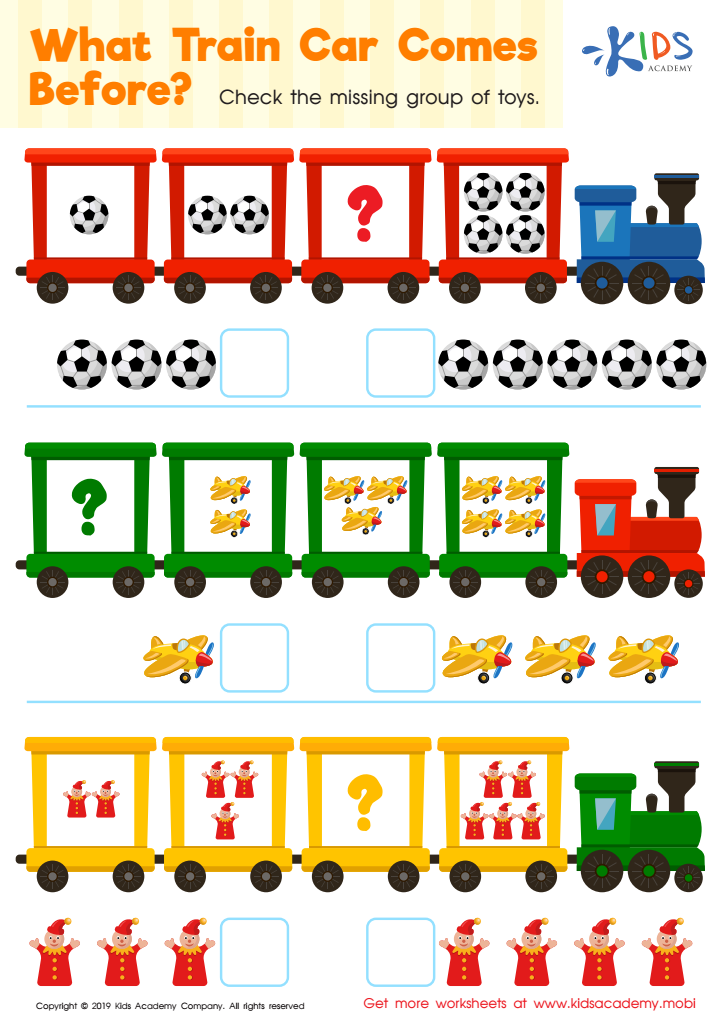
What Train Car Comes Before? Worksheet







Pattern recognition in numbers is crucial for children aged 6-7 because it lays the foundation for higher-level mathematical thinking and problem-solving skills. This stage, often the first grade, is when children start to encounter more structured math lessons. Recognizing patterns helps children understand what numbers represent and how they relate to each other, making abstract concepts more concrete.
When kids identify and extend number patterns, they enhance their logical reasoning abilities. It boosts their confidence, encourages a love for learning, and makes future math challenges less daunting. They learn to predict and make educated guesses, skills essential not just in math, but in science, reading, and even social interactions.
Moreover, understanding patterns is directly linked to topics like addition, subtraction, multiplication, and division. It helps in recognizing sequences, such as the order of numbers, skip counting, and recognizing odd and even numbers. These are essential for advancing in their math education.
For parents and teachers, fostering this skill through games, activities, and regular practice nurtures curiosity and resilience in finishing tasks. Engaging children in identifying and creating patterns makes learning fun and interactive, creating a strong math foundation that supports their academic journey.








