Recognizing number patterns Numbers Worksheets for Ages 6-7
4 filtered results
-
From - To
Discover the joy of learning with our "Recognizing Number Patterns" worksheets, specially designed for children aged 6-7. These engaging resources help young learners identify and extend number patterns through fun exercises and colorful illustrations. Students will enhance their mathematical skills by recognizing sequences, spotting similarities, and completing patterns, all while developing critical thinking abilities. Perfect for at-home practice or classroom activities, our worksheets cater to diverse learning styles and stimulate curiosity. Dive into a world of numbers, patterns, and problem-solving with our printable worksheets, making math both enjoyable and educational for your young learners!
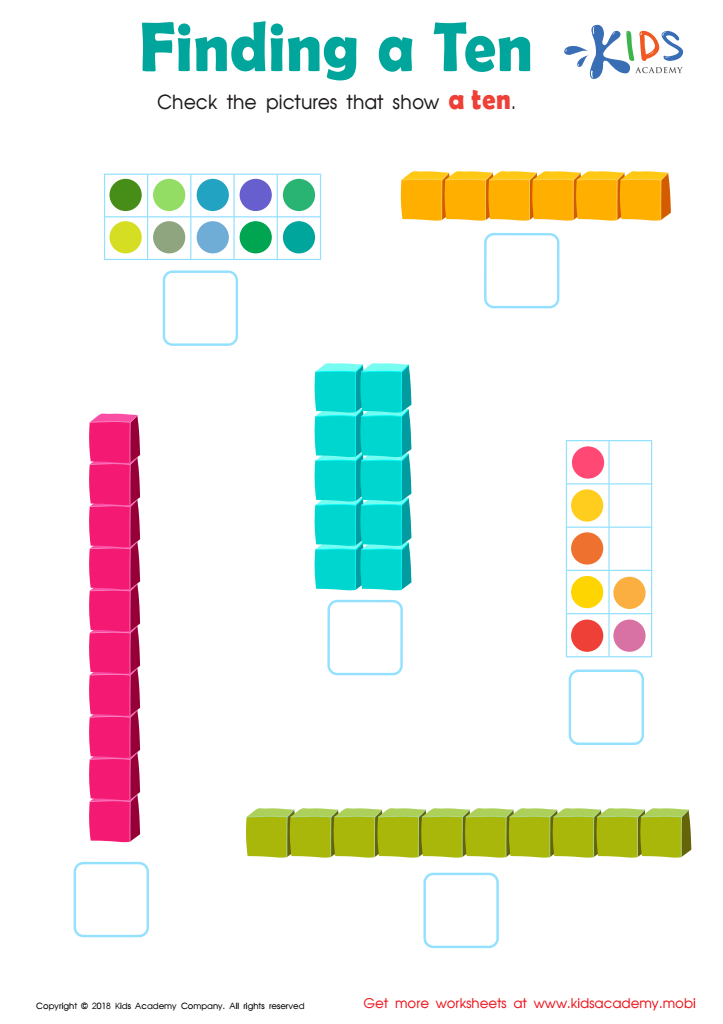
Finding a Ten Worksheet
 Assign to My Students
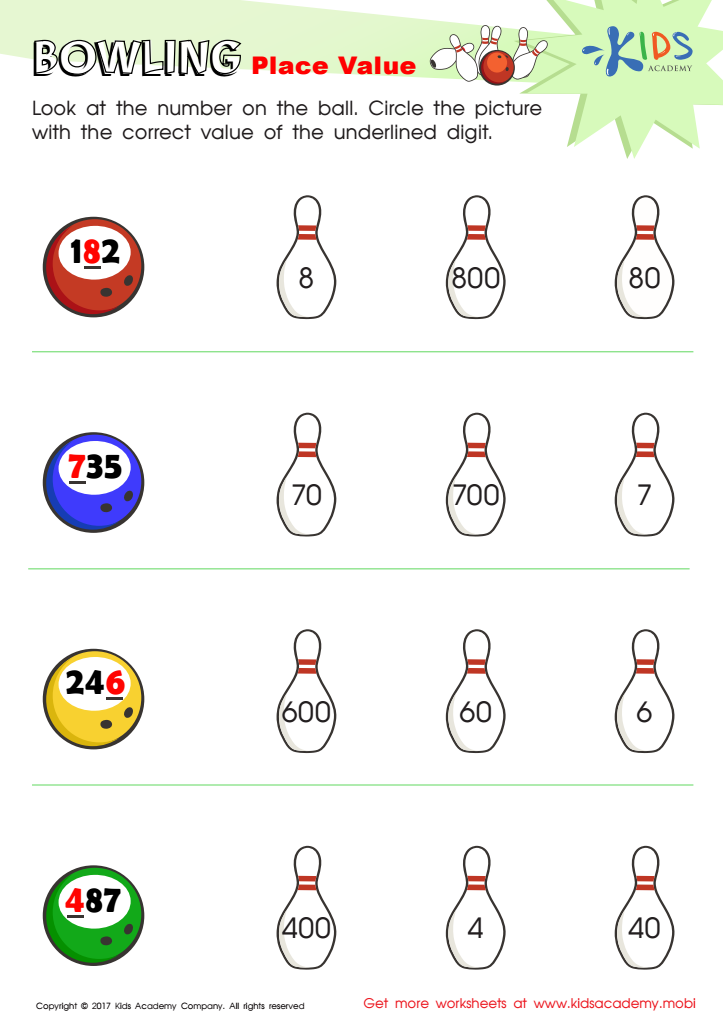
Place Value Worksheet
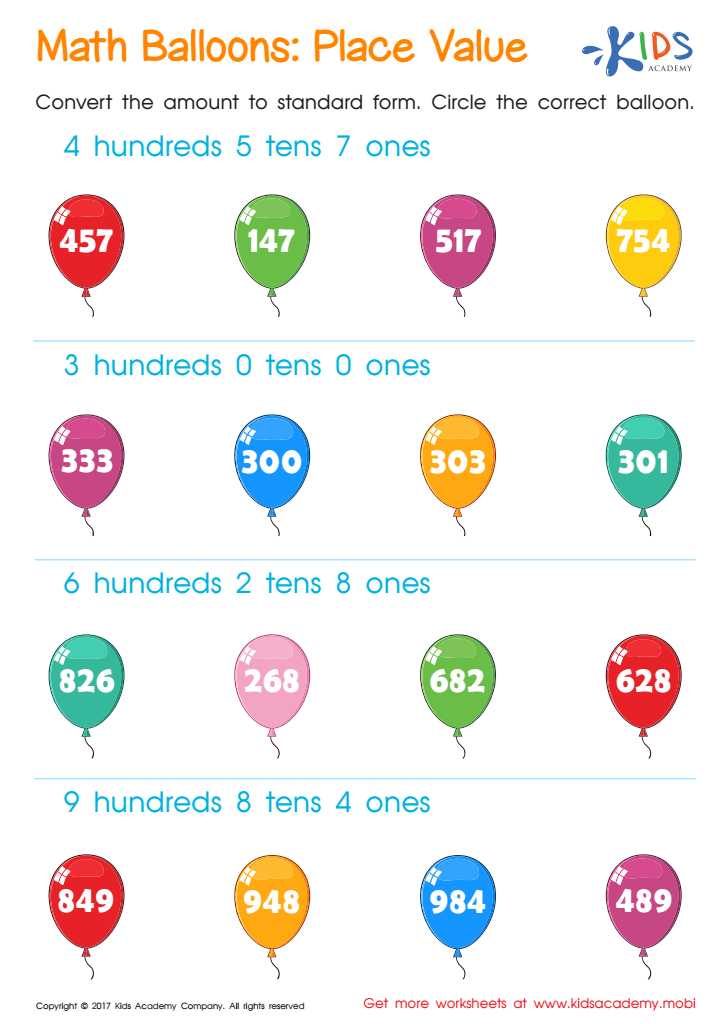
Place Value Printable Worksheet
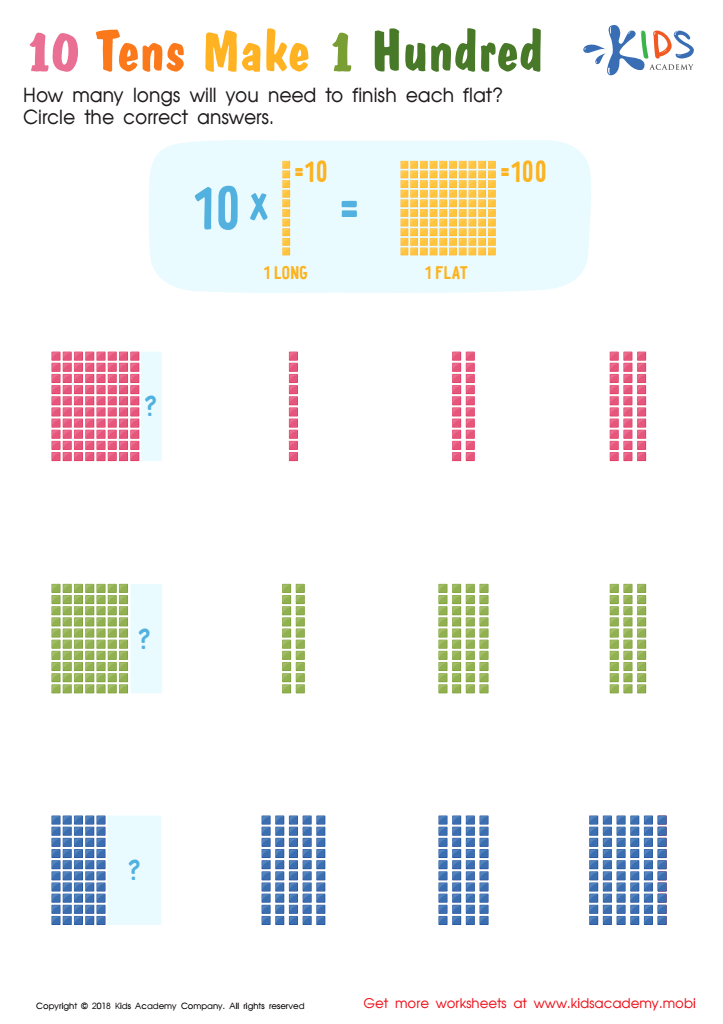
10 Tens Make 1 Hundred Worksheet







Recognizing number patterns is crucial for children aged 6-7 as it lays the foundation for mathematical understanding and problem-solving skills. At this age, children are beginning to grasp basic arithmetic operations, and identifying patterns helps them make connections between numbers, enhancing their number sense. When children learn to recognize patterns, they become more adept at predicting outcomes, which is key for mastering addition, subtraction, and even the beginnings of multiplication and division.
For parents and teachers, fostering this skill can significantly boost a child's confidence and engagement in math. Patterns can be visually engaging and can relate to real-world scenarios, making math more relatable and enjoyable. By working with patterns, children boost their cognitive skills, promoting critical thinking and analytical reasoning. It can also support numeracy skills by reinforcing sequences and the relationships between numbers, fostering deeper comprehension beyond rote memorization.
Moreover, recognizing patterns fosters creativity and a sense of accomplishment in children. Encouraging them to identify and create patterns, be it numbers, shapes, or colors, cultivates enthusiasm for learning. Engaging with this fundamental skill ensures a smoother transition as kids move on to more complex mathematical concepts later in their education.








