
Spatial awareness Numbers Worksheets for Ages 6-7
6 filtered results
Difficulty Level
Grade
Age
-
From - To
Subject
Activity
Standards
Boost your child’s spatial recognition with our engaging "Spatial Awareness Numbers Worksheets" designed for ages 6-7. These interactive worksheets from Kids Academy help young learners develop essential skills in understanding numbers through fun, hands-on activities. Children will enhance their ability to recognize, analyze, and organize spatial information, laying a critical foundation for future math success. Perfect for at-home learning or classroom use, our worksheets feature colorful, kid-friendly designs that make mastering numbers enjoyable and effective. Unlock your child's potential with Kids Academy and watch their confidence in mathematics soar!
Favorites
With answer key
Interactive
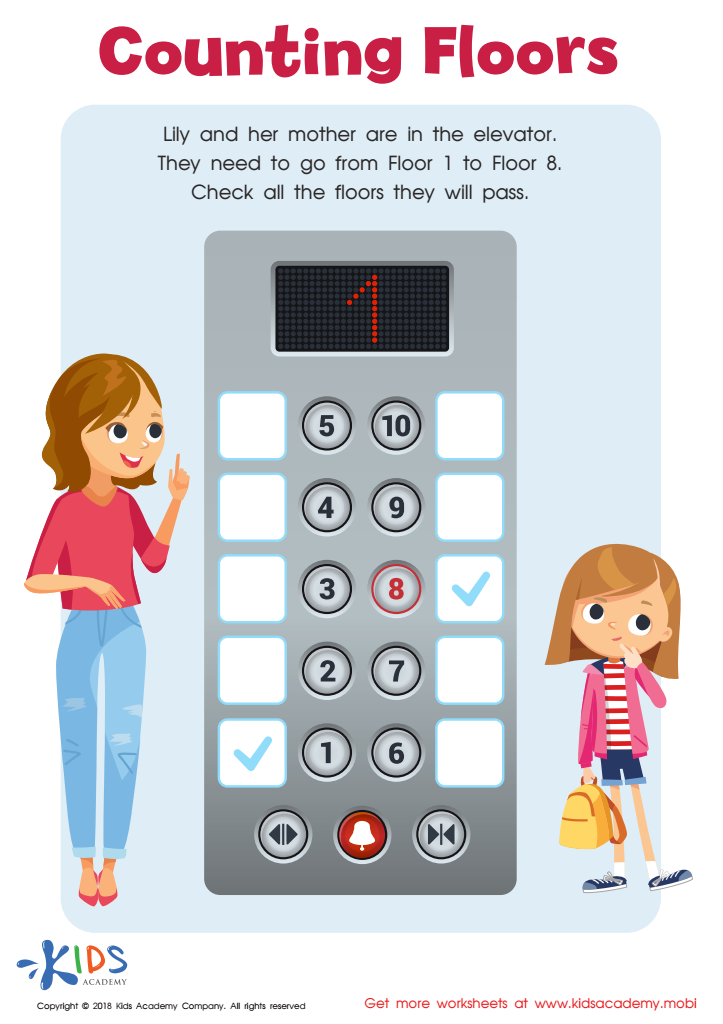
Counting Floors Worksheet
Take your kids on an elevator ride and have them help you. With this worksheet, little ones meet Lily and her mom. They're taking an elevator from Floor 1 to Floor 8. Ask them to check the floors they pass and help the two reach their destination.
 Assign to My Students
Counting Floors Worksheet
Worksheet
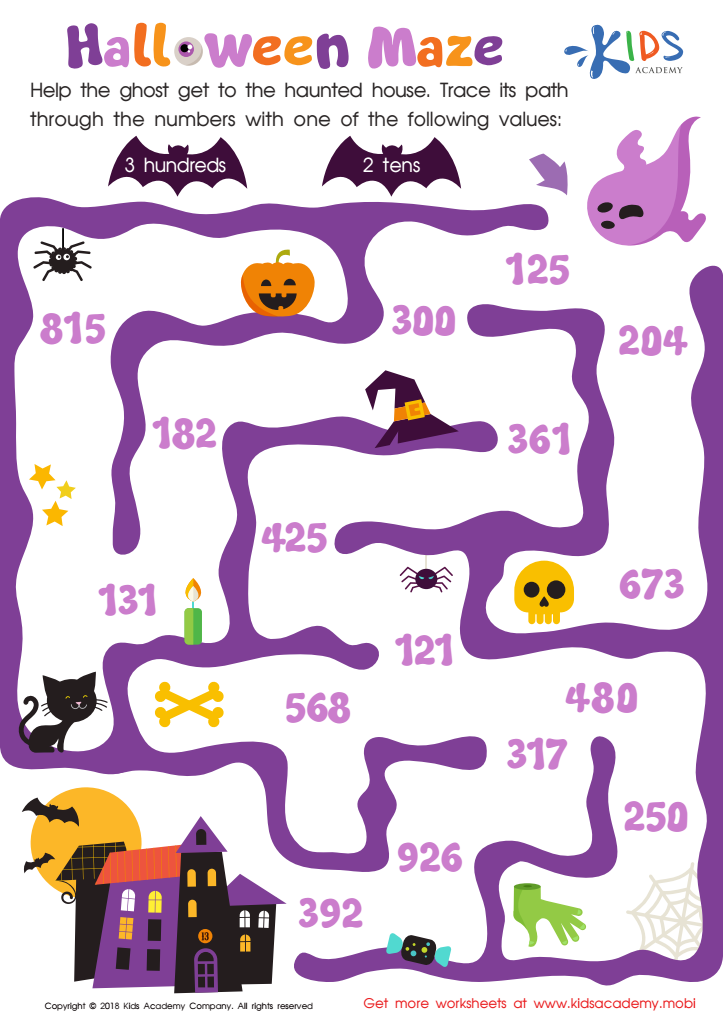
Place Value: Halloween Maze Worksheet
Kids who love haunted houses and Halloween will love this worksheet! Help the ghost reach its haunted house by tracing the path of 3 hundreds or 2 hundreds numbers. At the end is the ghost's spooky home. Have fun!
Place Value: Halloween Maze Worksheet
Worksheet
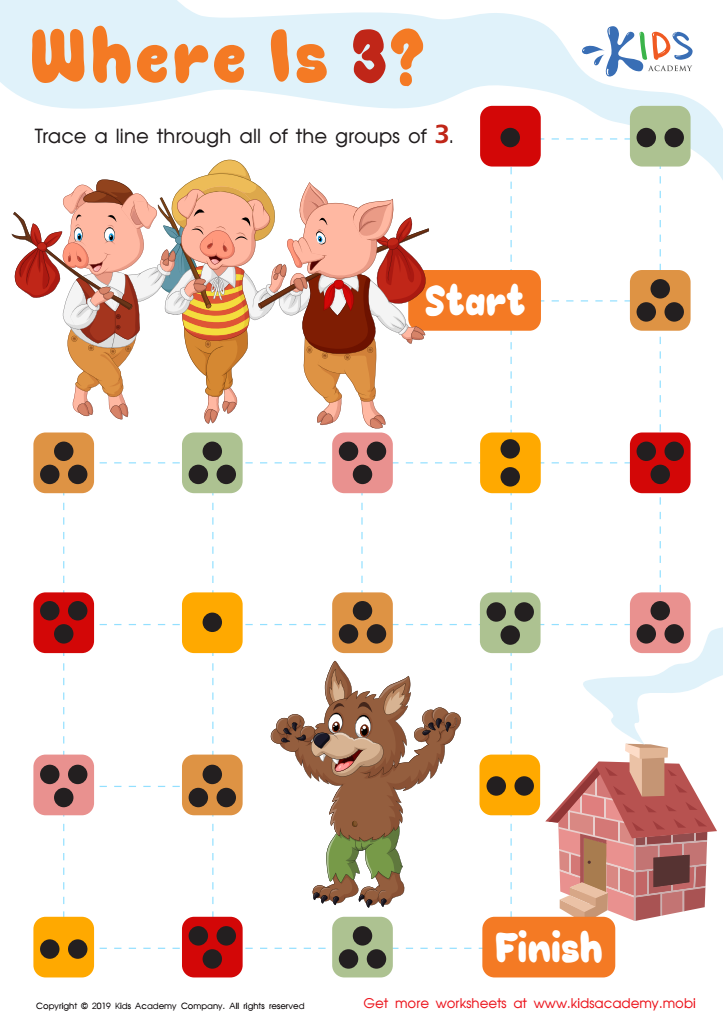
Where Is 3? Worksheet
Let your little mathematician join the Three Little Pigs on an adventure! With this free worksheet, they'll guide the pigs through a maze of numbered bricks, using one-to-one representation to get to the sturdy house. Have fun helping the piggy friends past the wolf!
Where Is 3? Worksheet
Worksheet
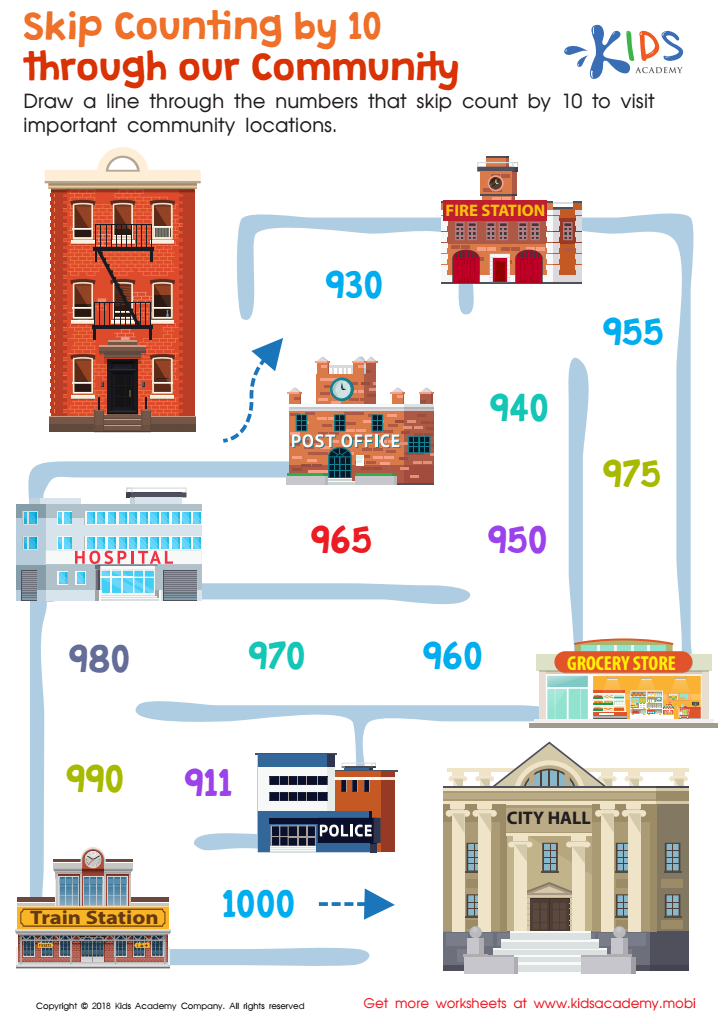
Skip Counting by 10 Through Our Community Worksheet
Our kids need to 'make a ten' and skip count by tens to boost their speed and accuracy in math. This cool, free worksheet takes them on a journey through their local community to practice counting by tens. They'll work on social studies and fine motor skills while having fun with the maze they get to count by tens in!
Skip Counting by 10 Through Our Community Worksheet
Worksheet
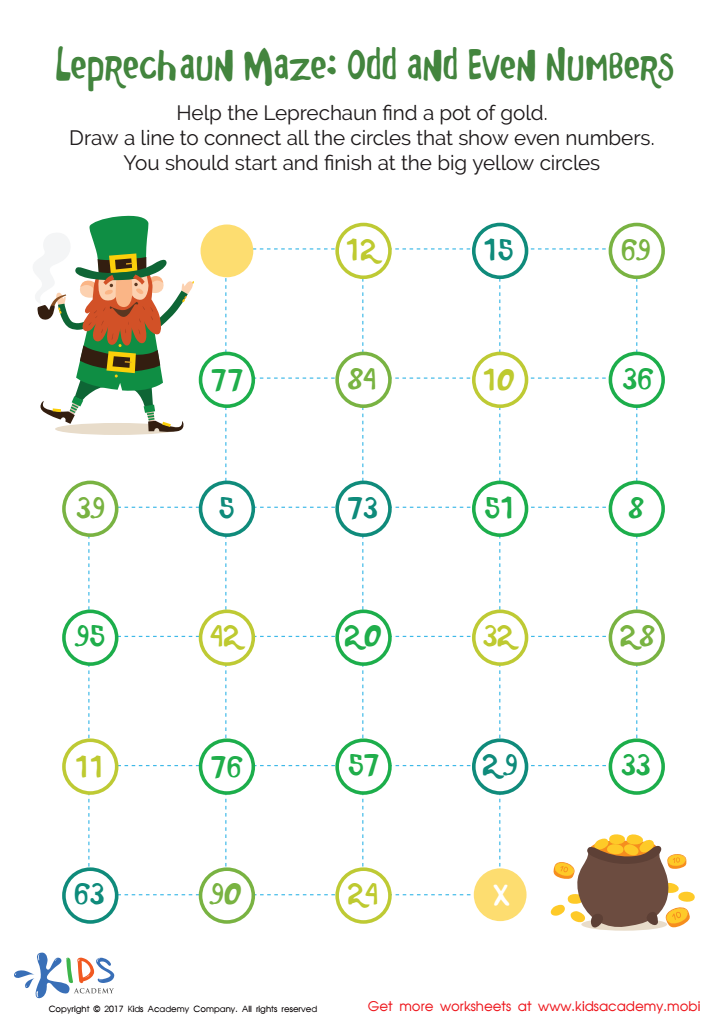
Leprechaun Maze Printable
Help the leprechaun find his pot of gold! Challenge your learner with this St. Patrick's Day worksheet. Let them identify odd or even numbers in the maze and connect the dots. It will be a fun way to celebrate St. Patrick's Day!
Leprechaun Maze Printable
Worksheet
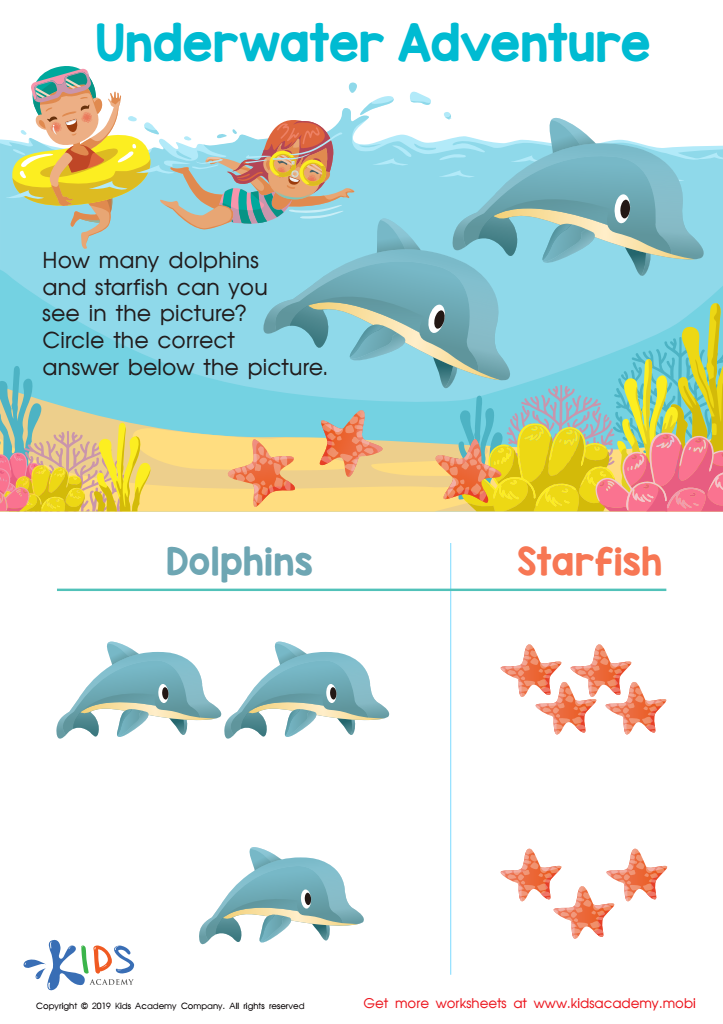
Underwater Adventure Worksheet
Kids can explore the ocean without realizing they're doing math! This free worksheet takes them on an underwater adventure with dolphins and starfish. They count using pictures and answer questions by circling the right images. Along the way, they'll have a blast!
Underwater Adventure Worksheet
Worksheet
Join Kids Academy for Free
Who is primarily going to use this learning content?







Spatial awareness is understanding the position of objects in space and how one relates to them. When 6-7 year-olds develop strong spatial awareness skills, it translates to numerous academic and everyday life benefits. Integrating spatial awareness with numbers enhances children's mathematical thinking and problem-solving abilities.
One compelling reason parents and teachers should prioritize spatial awareness linked with numbers is that it establishes a foundation for geometry and advanced math concepts. For instance, understanding shapes and understanding how to measure and compare them are inherently spatial activities correlated with numerical values. Additionally, spatial reasoning skills contribute significantly to subjects like science and engineering, where visualizing and manipulating objects are crucial.
Moreover, spatial awareness nurtures better navigation and coordination skills. It leads to improved performance in not just academics but also in physical activities, puzzle-solving, and everyday tasks. This foundational knowledge promotes holistic cognitive development, fostering critical thinking, attention, and memory.
Practically, emphasizing spatial awareness with numbers in early education can make math feel more intuitive and engaging. Activities like building blocks, drawing maps, or describing the location of objects help solidify these concepts. As children naturally interact with their environment, integrating these skills can transform mundane moments into valuable educational opportunities, setting them on a path to academic success and lifelong learning.








