Understanding quantity Numbers Worksheets for Ages 6-7
4 filtered results
-
From - To
Discover a range of engaging and educational worksheets designed to help children aged 6-7 comprehend quantity and numbers. Our "Understanding Quantity Numbers Worksheets" facilitate the development of essential math skills through interactive activities, including counting, comparing, and identifying quantities. These worksheets encourage hands-on learning and reinforce concepts through fun illustrations and relatable scenarios. Designed with age-appropriate challenges, they support young learners in building their confidence and proficiency in math. Whether at home or in the classroom, these resources are perfect for enhancing number sense and promoting a solid foundation for future mathematical success. Explore our comprehensive collection today!
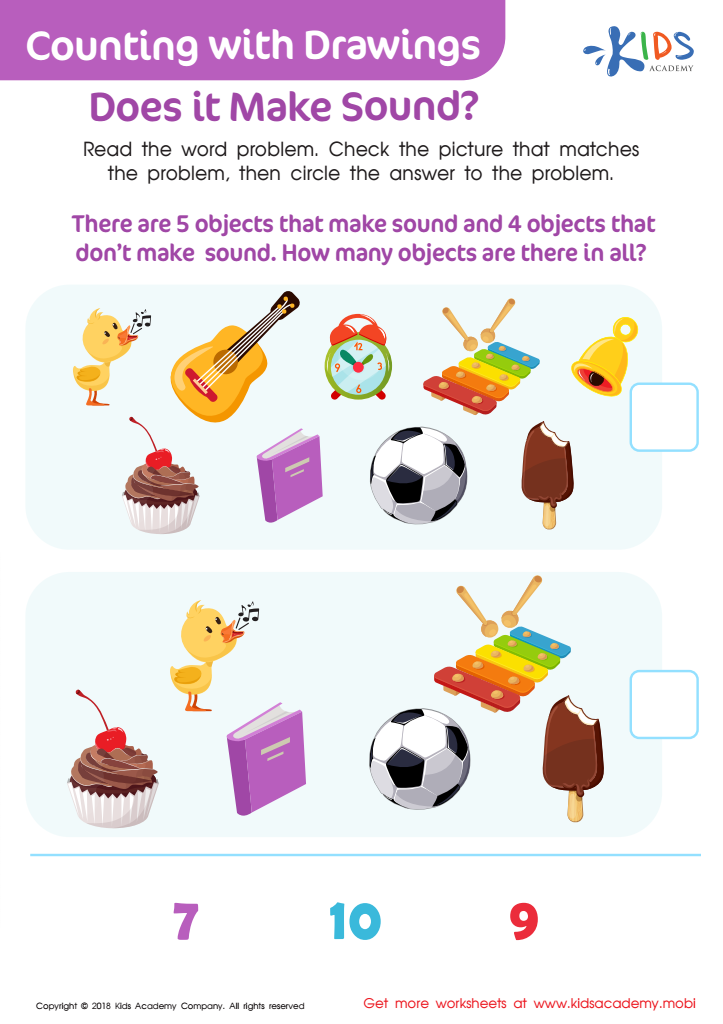
Counting With Drawings. Does It Make Sound? Worksheet
 Assign to My Students
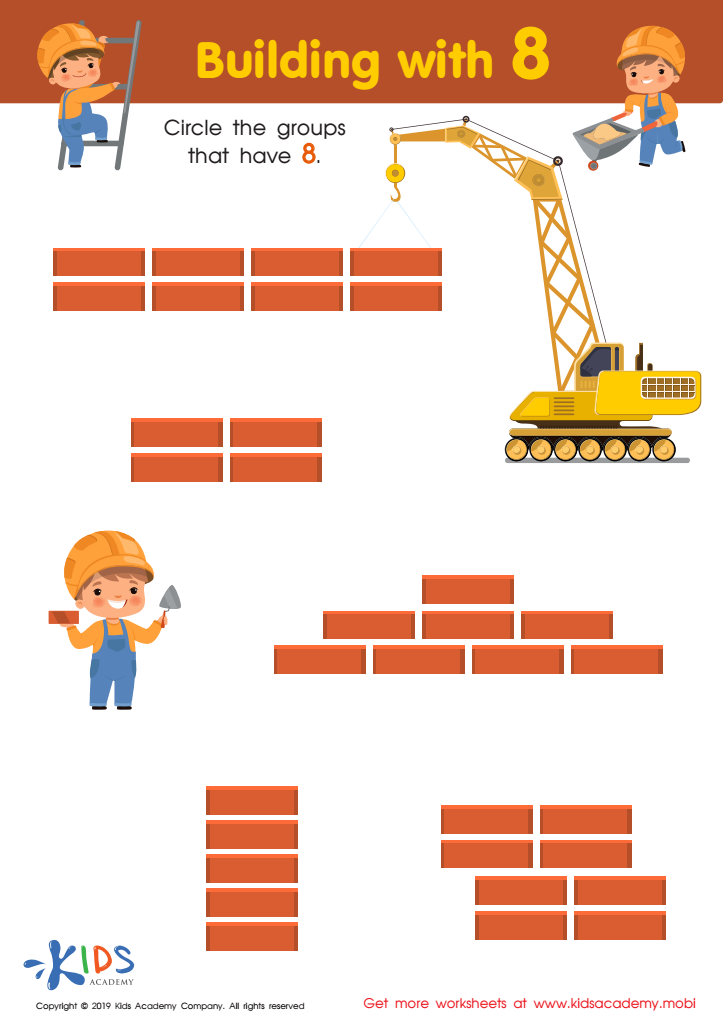
Building with 8 Worksheet
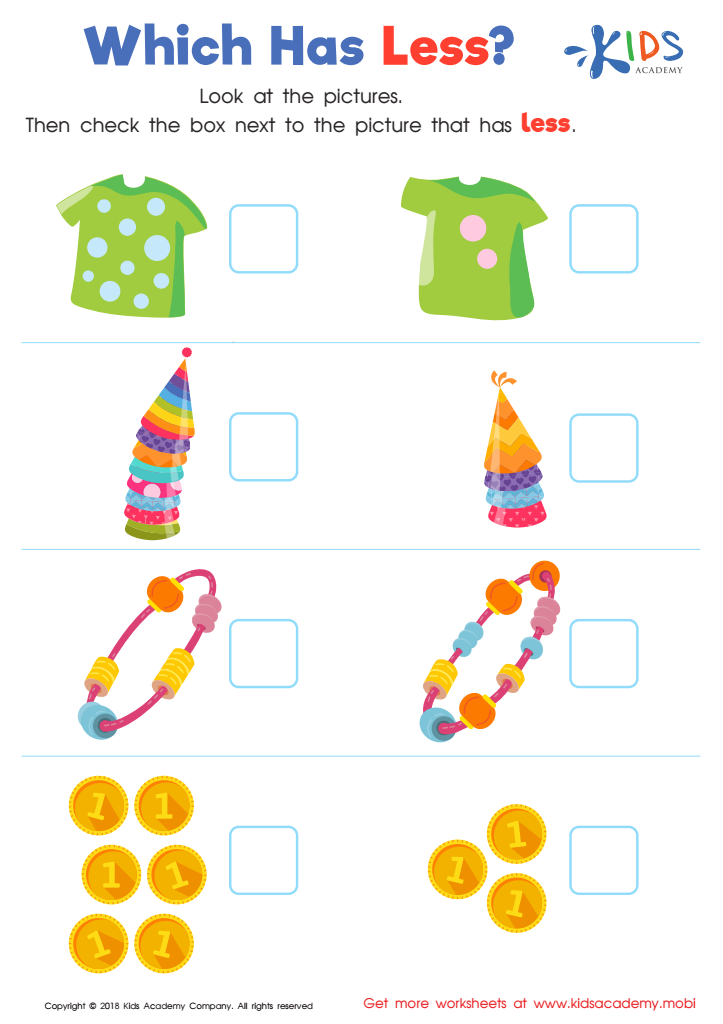
Which Has Less? Worksheet
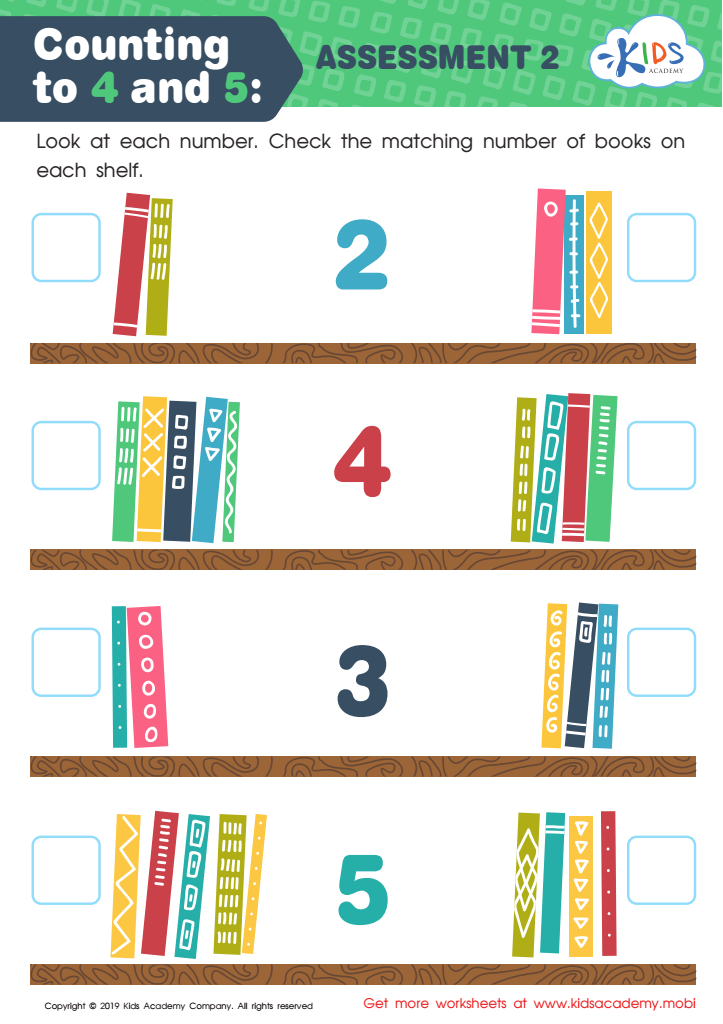
Counting to 4 and 5: Assessment 2 Worksheet



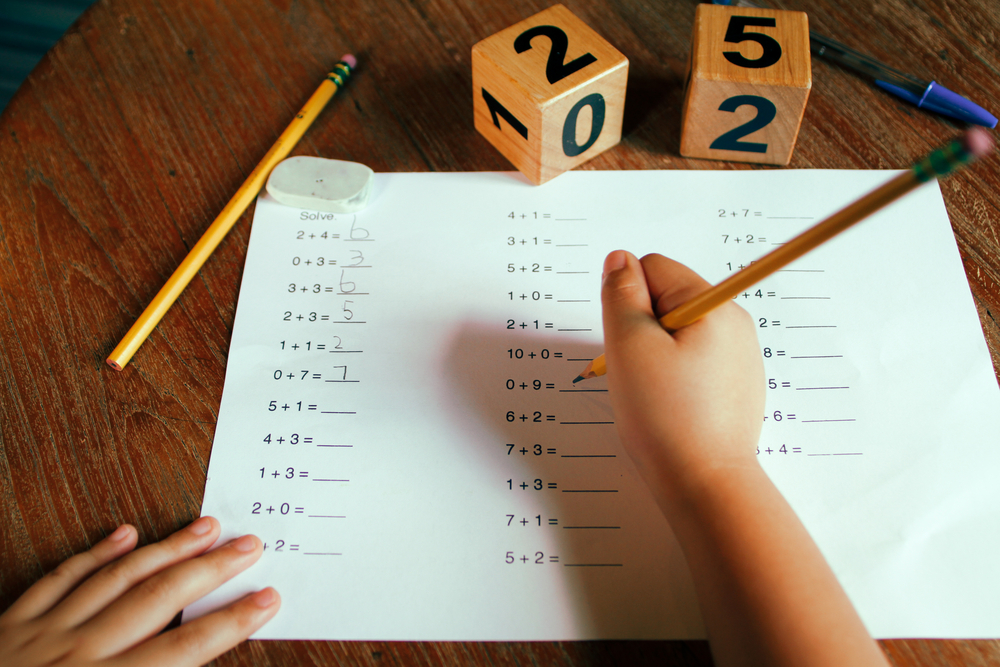




Understanding quantity and numbers is fundamental for children aged 6-7, as it forms the foundation for their mathematical skills and overall cognitive development. At this age, children begin to grasp essential concepts such as counting, comparing quantities, and recognizing number patterns, which are crucial for problem-solving and critical thinking.
Teaching children to understand quantity helps them make sense of the world around them. For instance, when children learn to count objects, they develop one-to-one correspondence, enabling them to relate numbers to real-life situations. This skill empowers them to navigate daily activities, like managing time, measuring ingredients for cooking, or understanding money when shopping.
Furthermore, awareness of quantity fosters a growth mindset. It encourages children to explore and experiment with numbers, ultimately building their confidence in tackling mathematical challenges. Moreover, parents and teachers play an essential role by providing activities that support this understanding, like using everyday materials for counting and engaging in games that promote number recognition.
Incorporating these teachings not only lays the groundwork for future math learning but also enhances children's social and emotional development, as they learn to collaborate with peers in problem-solving. Therefore, supporting children’s understanding of quantity is vital in their holistic educational journey.








