Explore our engaging Basic Math Operations Worksheets designed for children aged 6-7! These worksheets provide a fun and interactive way for young learners to grasp essential math concepts, including addition, subtraction, multiplication, and division. Each activity is tailored to enhance problem-solving skills and build confidence in arithmetic fundamentals. Our colorful worksheets are perfect for reinforcing classroom learning at home. With easy-to-follow instructions and varying difficulty levels, children will enjoy practicing math while developing a solid foundation for future studies. Whether for homeschool use or enrichment, our worksheets make learning math enjoyable and effective! Start your math adventures today!

Check out this FREE Trial Lesson on Math for age 6-7!

1 Step Subtraction Word Problems - Using Drawings to Write Equations

Favorites
With answer key
Interactive
  • 6-7
  • Basic math operations
  • Math
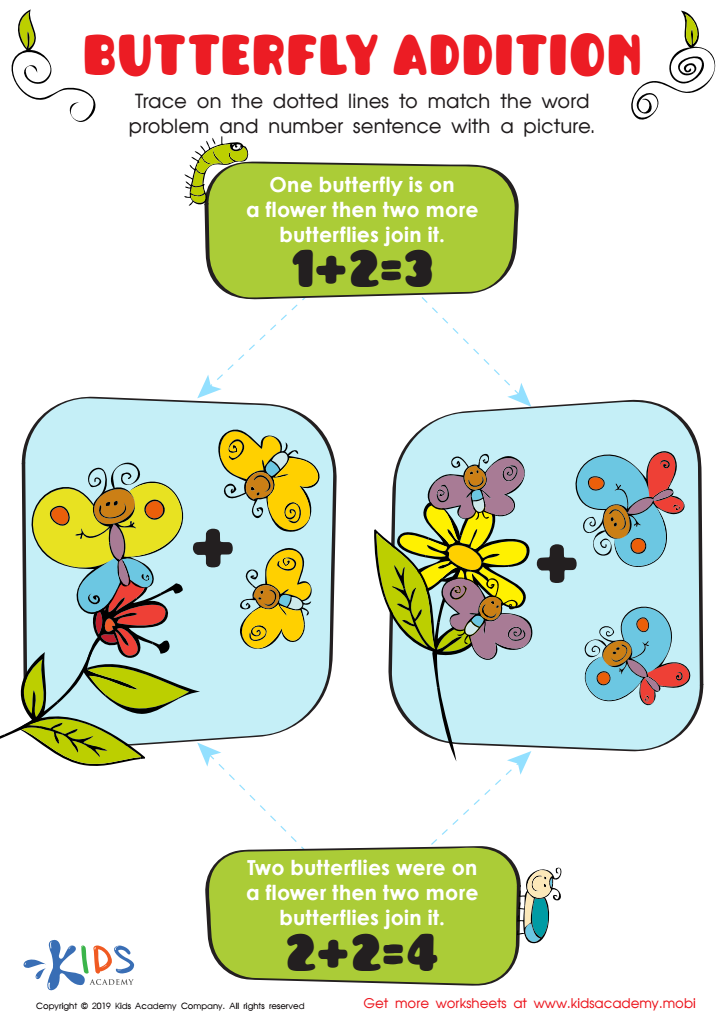
Butterfly Addition Worksheet

Butterfly Addition Worksheet

This tracing sheet is great for kids to work on math skills and have fun too. Read the word problems to them, then help them trace the dotted lines to match the problem and number sentence to a picture. Not only is it educational, it's beautiful too - your kids will love learning about butterflies!
Butterfly Addition Worksheet
Worksheet
Fruit Math: Picture Graphs Worksheet

Fruit Math: Picture Graphs Worksheet

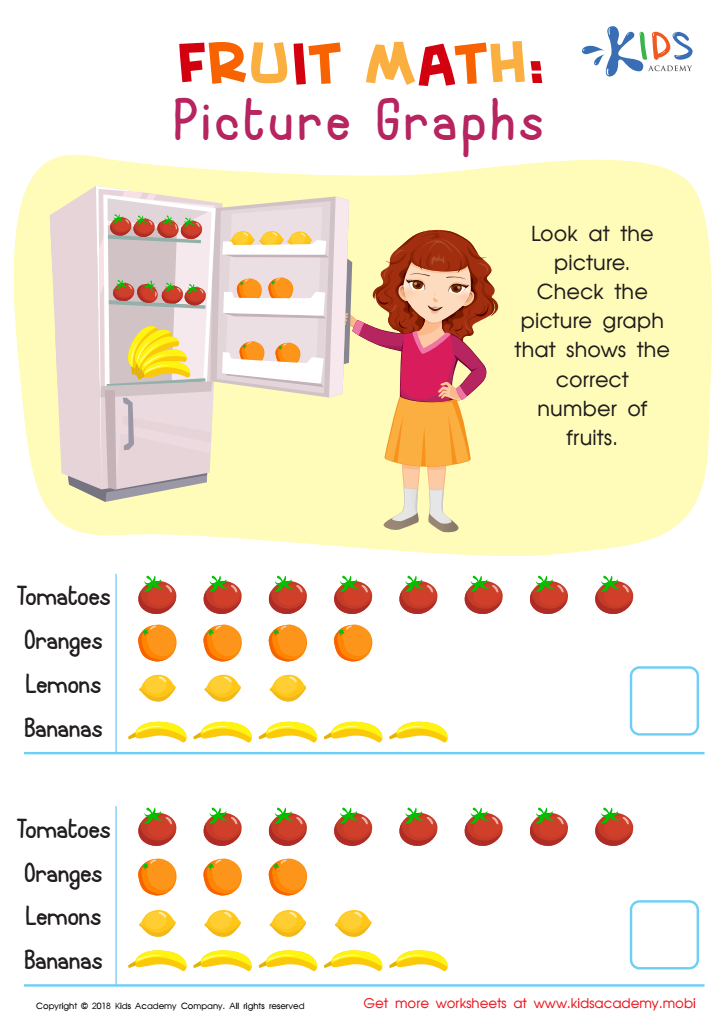
Help your child learn to draw graphs by having them look at pictures. Ask them to identify a graph that accurately portrays the data and have them explain why. This will prepare them to easily draw more complex graphs in the future. For example, have them look at the picture with the number of fruits in the colorful worksheet and explain why the graph is accurate.
Fruit Math: Picture Graphs Worksheet
Worksheet
Connect the Dots Numbers 1-10 PDF

Count with the Captain Connect Dots Worksheet
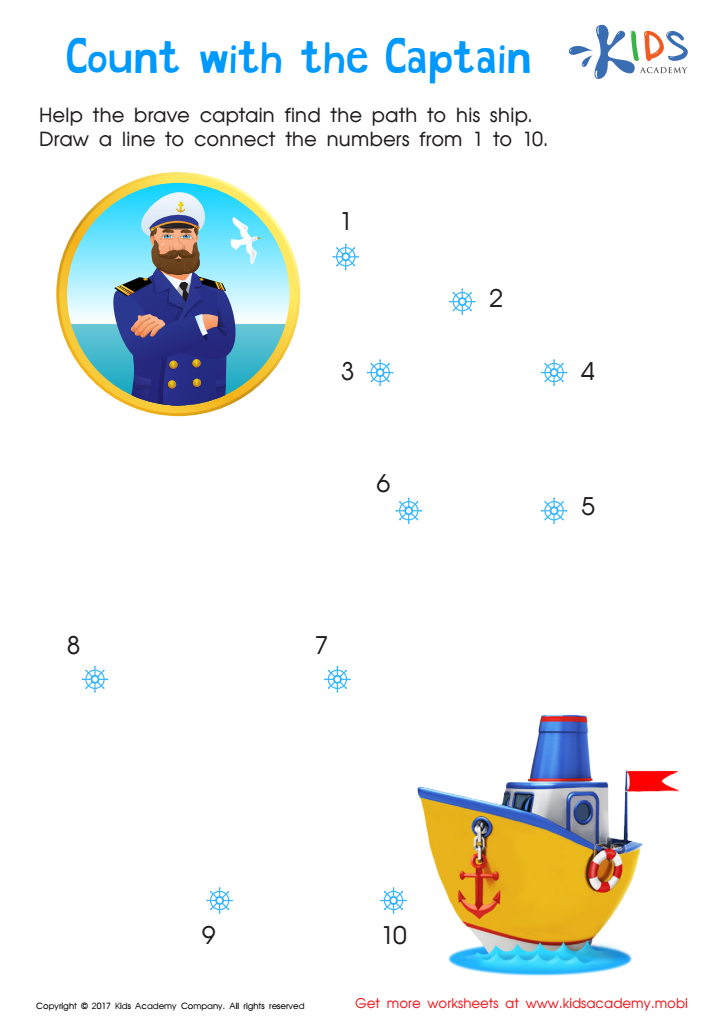
All aboard! Help the captain set sail with this fun connect the dots numbers 1-10 PDF! Motivate your child to practice counting and numeracy, as they help the captain find his way to his ship. Problem solving skills and recognition of numbers in print are also developed. Reward your child after completion and they'll be unaware of the skills honed.
Count with the Captain Connect Dots Worksheet
Worksheet
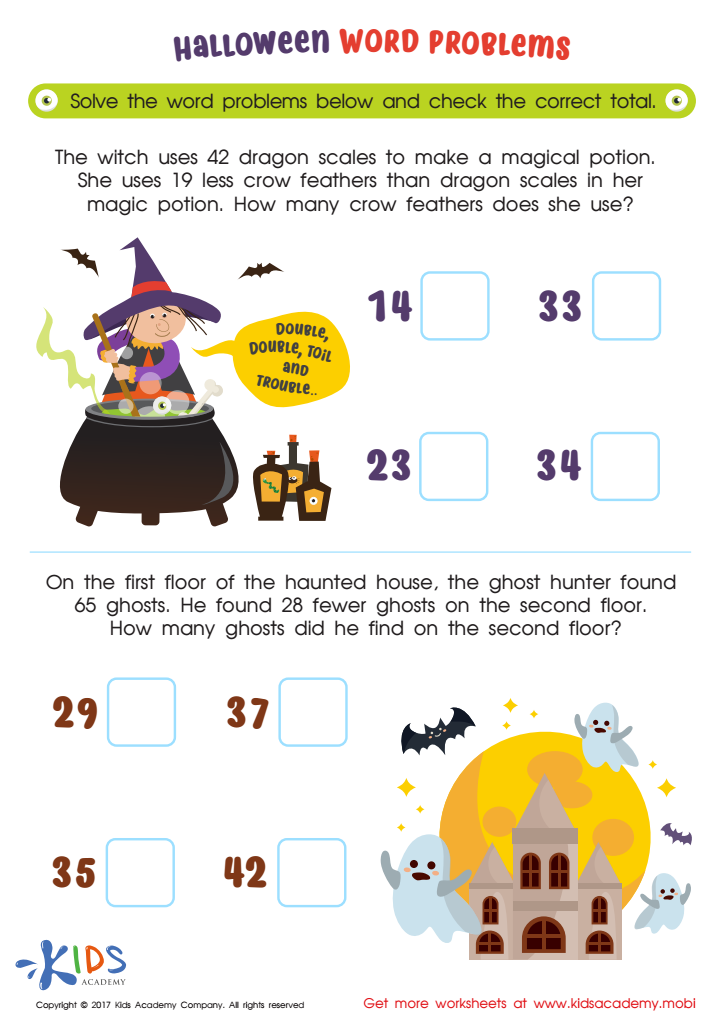
Halloween word problems for 2nd grade

Halloween Word Problems Printable

Ghosts, witches, and other spooky characters make these problems exciting and interactive. Get ready to have some math fun!
Halloween Word Problems Printable
Worksheet
Santa Tally Chart Worksheet

Santa Tally Chart Worksheet

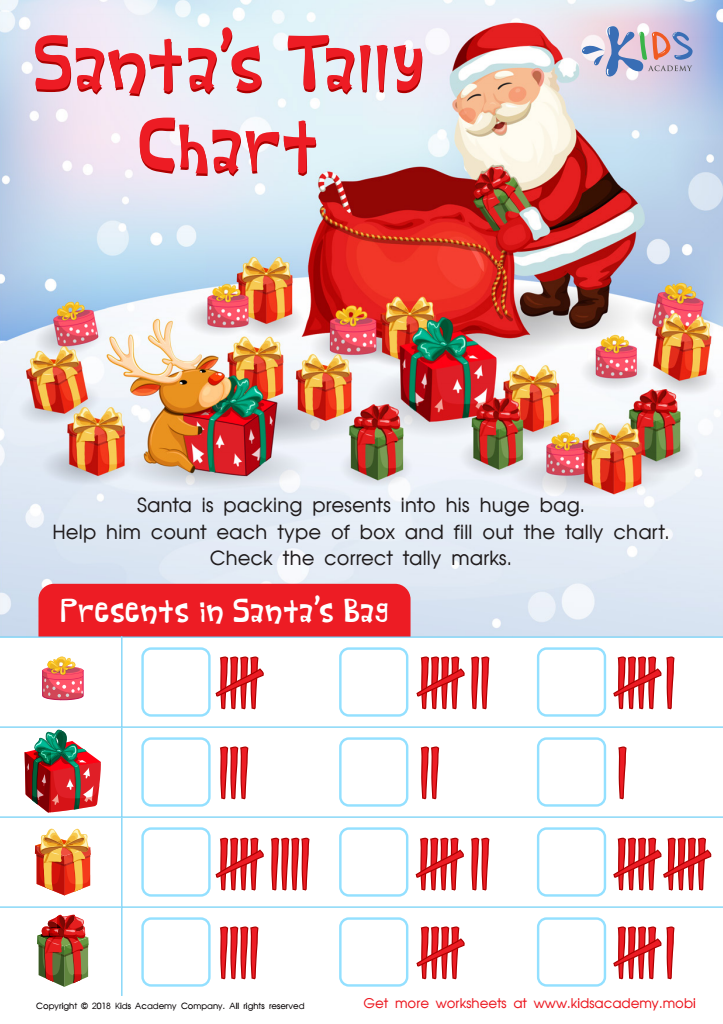
Santa's got a big bag of gifts to count! Kids can help with this fun PDF worksheet, practicing visual recognition and representation skills while they sort and tally the presents. They'll also work on charting as they fill in the tally chart and send Santa off for a happy holiday. Ho, Ho, Ho!
Santa Tally Chart Worksheet
Worksheet
Word Problems: Assessment 2 Worksheet

Word Problems: Assessment 2 Worksheet

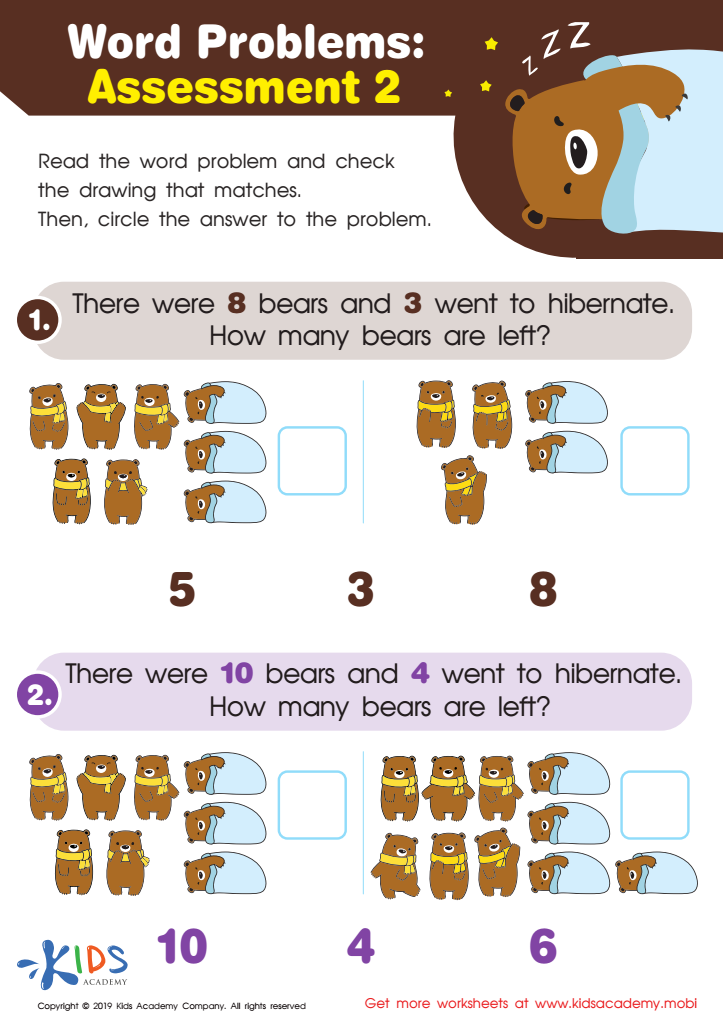
This bear-themed worksheet is a great way to test subtraction skills. Have your child read the word problems and match the correct drawing with the answer. It's a fun way to quiz them without them even knowing. Enjoy counting cute snoozing bears! (80 words)
Word Problems: Assessment 2 Worksheet

Worksheet
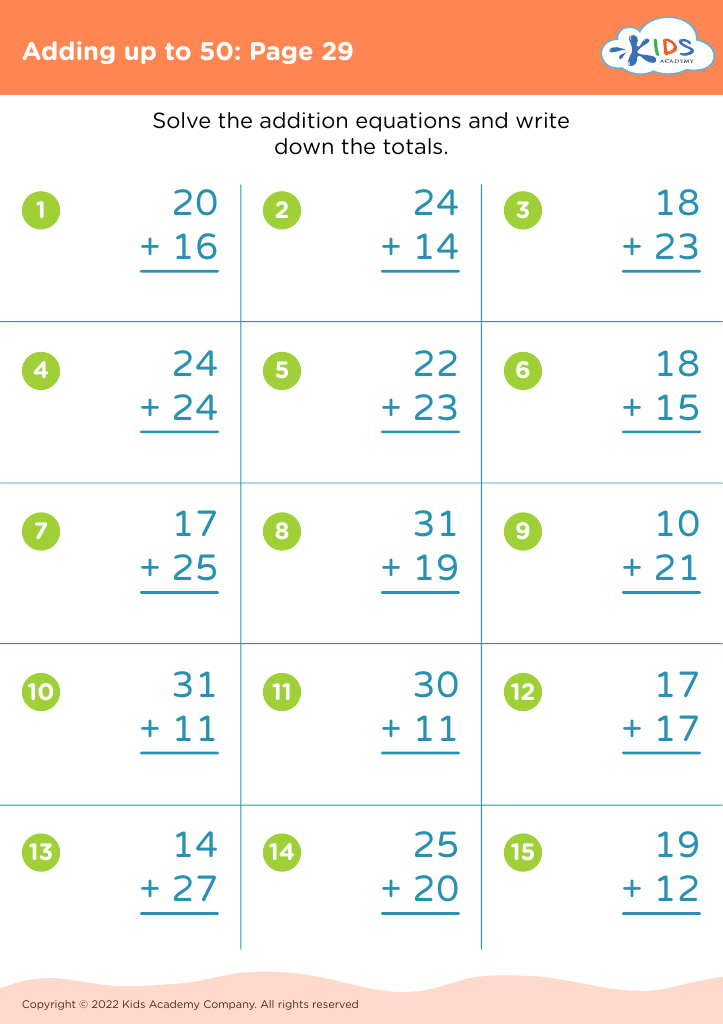
Adding up to 50: Page 29

Adding up to 50: Page 29

Adding up to 50: Page 29
Worksheet


Basic math operations, such as addition, subtraction, multiplication, and division, are fundamental skills that serve as the foundation for all future mathematical learning. For children aged 6-7, grasping these concepts is crucial as it not only boosts their academic performance but also enhances their cognitive development. At this age, children are naturally curious and eager to learn, making it the perfect time for them to develop a solid understanding of these basic operations.

Parents and teachers should care about fostering these skills because proficiency in basic math allows children to tackle more complex mathematical concepts with confidence and ease. This helps build a positive attitude towards math, reducing anxiety often associated with this subject later in school. Moreover, everyday life scenarios—such as calculating change or understanding time—require these skills, making them essential for developing critical life skills.

Encouraging practice in a supportive environment also promotes problem-solving capabilities and logical thinking, key aspects of cognitive growth. Ultimately, instilling these foundational skills at an early age will set children up for long-term success, ensuring they feel competent and prepared in both their academic and everyday endeavors.