Comparative analysis Math Worksheets for Ages 6-7
4 filtered results
-
From - To
Explore our engaging Comparative Analysis Math Worksheets designed for children aged 6-7. These worksheets focus on enhancing critical thinking and analytical skills by helping young learners compare quantities, numbers, and objects. Tailored to align with educational standards, our resources encourage kids to identify the concepts of "more than," "less than," and "equal to" through fun activities and vibrant visuals. Ideal for classroom use or at-home practice, the worksheets promote essential early math skills while fostering confidence in problem-solving. Give your child the tools they need for foundational success in mathematics with our user-friendly worksheets that inspire learning through play!
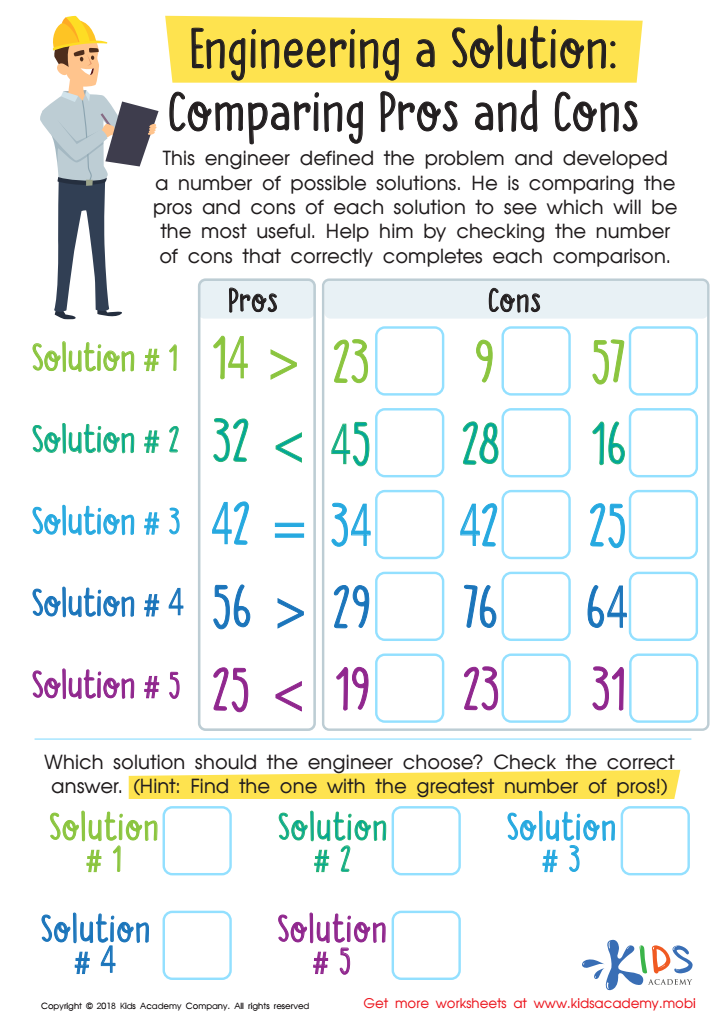
Engineering a Solution: Comparing Pros and Cons Worksheet
 Assign to My Students
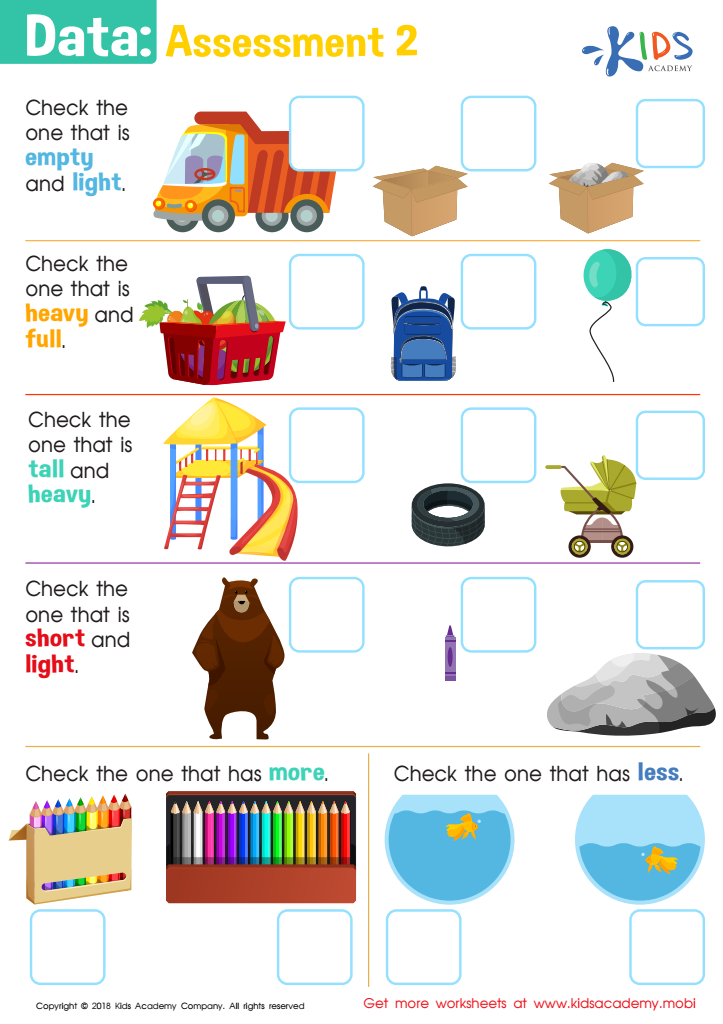
Data: Assessment 2 Worksheet
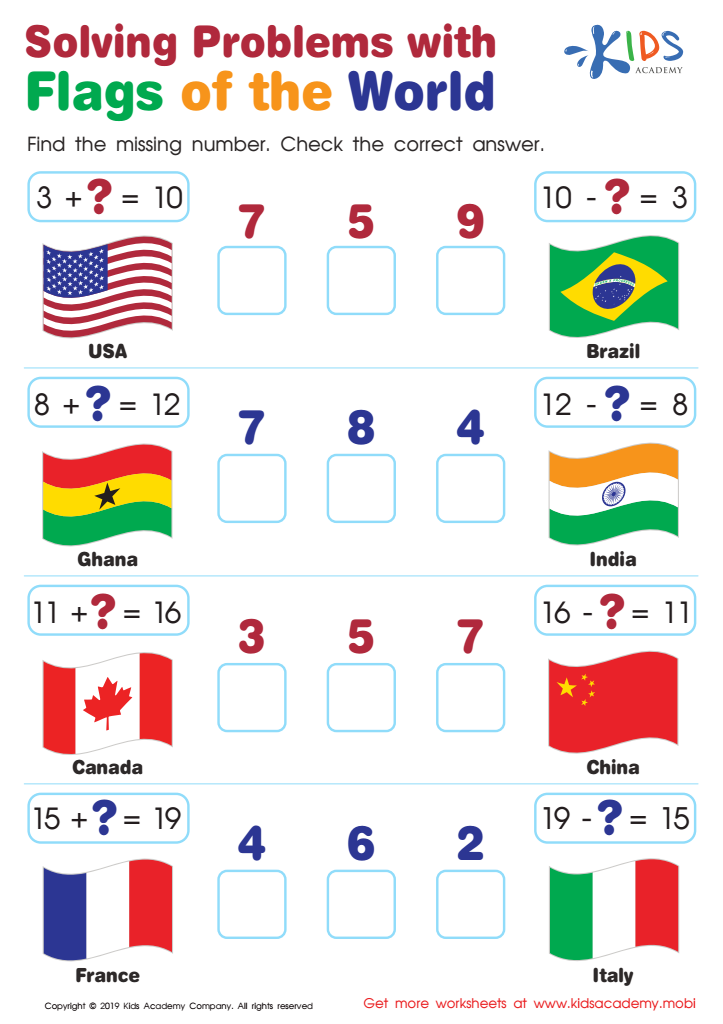
Solving Problems with Flags of the World Worksheet








Parents and teachers should care about comparative analysis in math for ages 6-7 because it lays the groundwork for critical thinking and problem-solving skills crucial for later academic success. At this age, children are developing foundational numerical concepts. Engaging in comparative analysis enables them to learn how to distinguish between numbers, quantities, and relationships.
By comparing different sets of objects or numbers, children embody the essential skill of making comparisons, which enhances their understanding of more and less, greater and smaller. This not only sharpens their quantitative reasoning but also fosters mathematical vocabulary that is key for effective communication. Moreover, mastering these skills at such an early age boosts confidence and motivation in math, setting a positive trajectory for lifelong learning habits.
Additionally, comparative analysis aligns with various educational standards and prepares children for more complex operations like addition and subtraction, concepts of multiplication, and even basic fractions in subsequent grades. For teachers and parents, understanding this aspect of math education enables them to provide targeted support, reinforcing these critical skills through engaging activities and discussions, ultimately paving the way for success in math and related disciplines.








