
Logical reasoning skills Math Worksheets for Ages 6-7
3 filtered results
Difficulty Level
Grade
Age
-
From - To
Subject
Activity
Standards
Enhance your child's critical thinking with our engaging Logical Reasoning Skills Math Worksheets for ages 6-7. Designed to challenge young minds, these printables offer unique puzzles and problems that develop important analytical skills. From pattern recognition to problem-solving exercises, each worksheet fosters logical thinking while reinforcing fundamental math concepts. Perfect for classroom or home use, our expertly crafted activities ensure learning is both fun and effective. Watch your child build confidence and excel in math with these stimulating worksheets from Kids Academy. Explore our collection now to give your child a head start in mastering logical reasoning.
Favorites
With answer key
Interactive
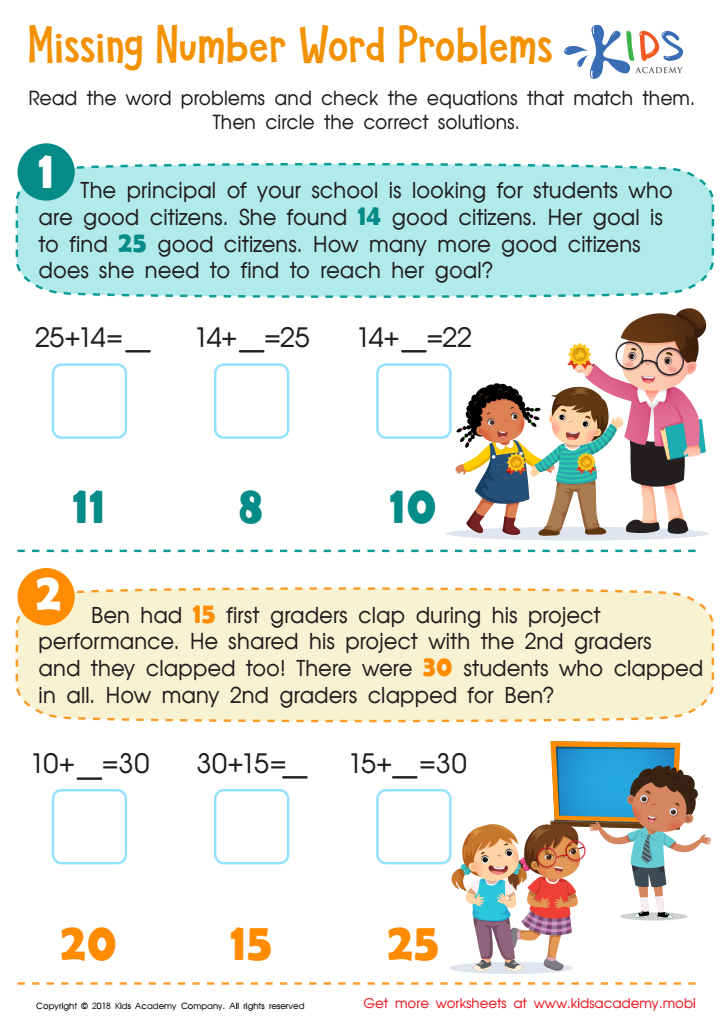
Missing Number Word Problems Worksheet
Read the word problems in this worksheet to your students. Help them understand the meaning, then translate the text into equations. Check the equations for accuracy, circle the correct solutions, and support your child as they learn to solve word problems.
 Assign to My Students
Missing Number Word Problems Worksheet
Worksheet
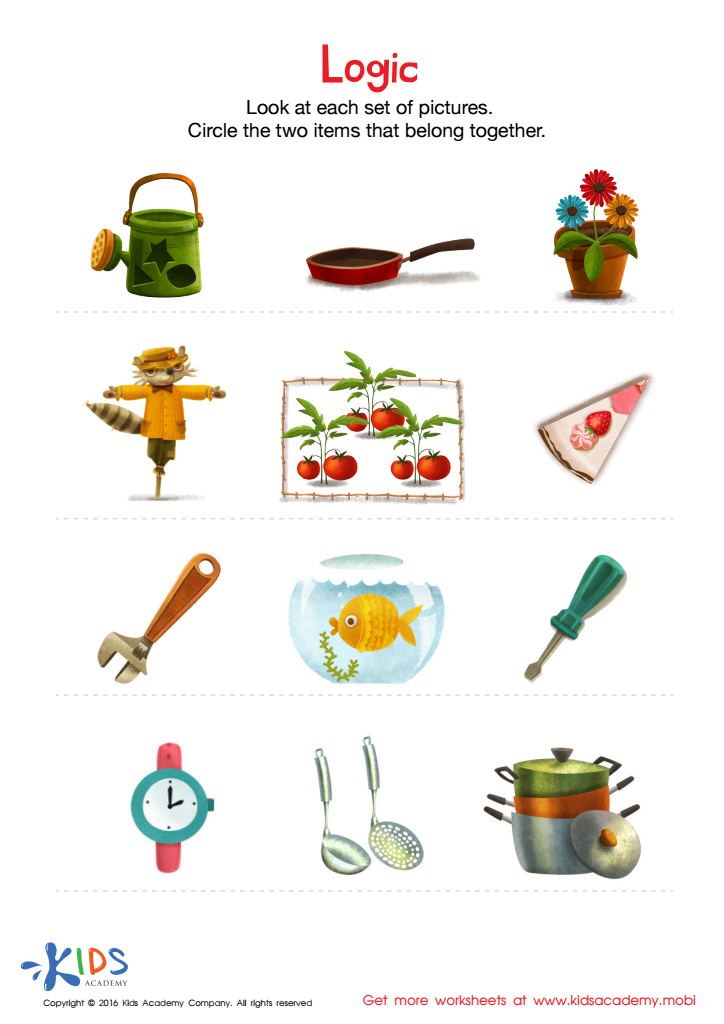
Logic Game Sorting Worksheet
Start your child's logic and reasoning development early with this fun matching worksheet! Through cute images and simple conversations, your little one can learn problem-solving, categorization, and matching skills. Plus, it's a great way for children to explore how items are used in real life. Try it and watch them boost skills with ease and fun!
Logic Game Sorting Worksheet
Worksheet
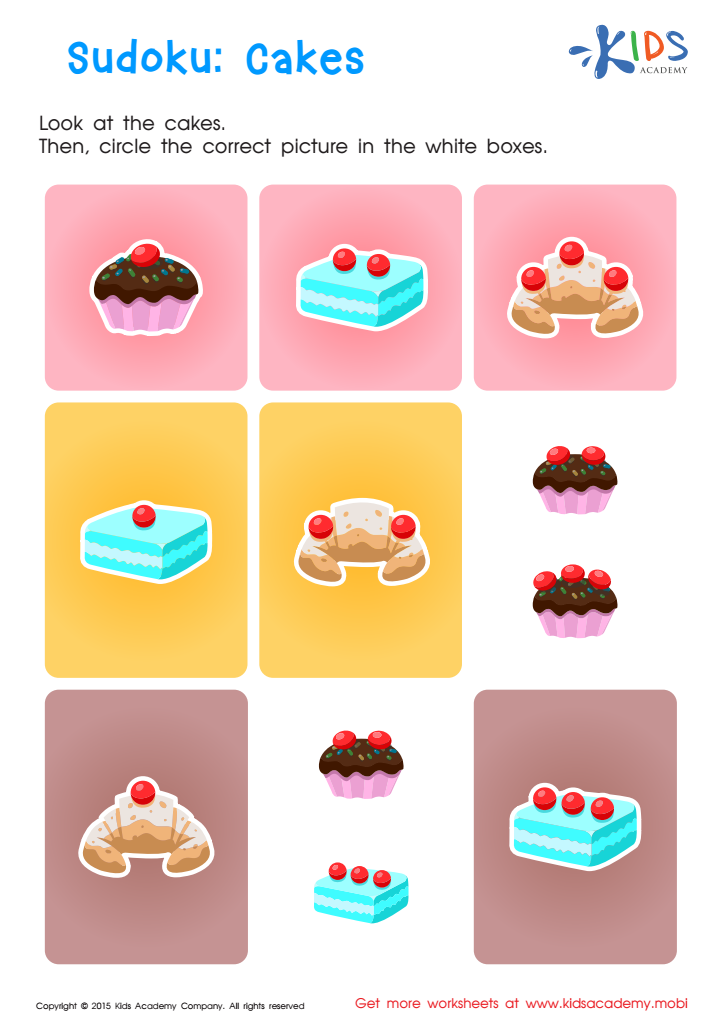
Sudoku Worksheet
Playing sudoku helps kids develop pattern and logic recognition, key skills for problem solving. Get your free printable PDF worksheet and begin the fun!
Kids can have fun and build problem-solving skills with this exciting sudoku PDF worksheet! Adults love solving sudoku puzzles, so get your free printable PDF and start your child early with this vibrant and challenging puzzle. They'll learn to recognize patterns and form logical reasoning, essential for future problem solving. Try it out today!
Sudoku Worksheet
Worksheet
Join Kids Academy for Free
Who is primarily going to use this learning content?


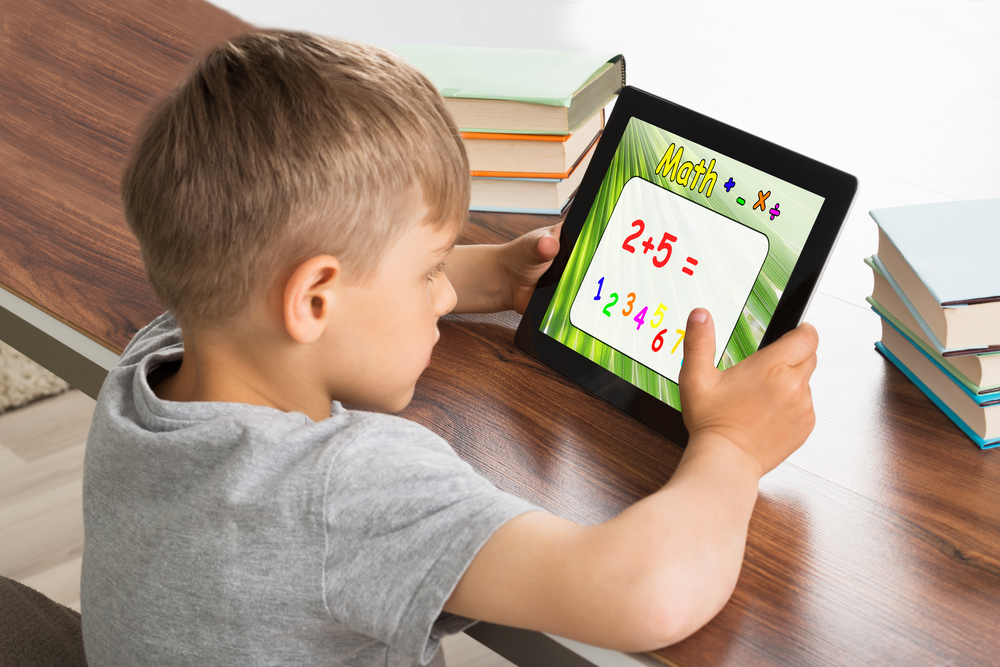




Logical reasoning skills in math are crucial for children ages 6-7, as they form the foundation for more advanced mathematical thinking and problem-solving abilities. At this age, children are naturally curious and are developing their cognitive abilities, making it the perfect time to introduce them to logical reasoning.
Logical reasoning helps young learners understand mathematical concepts beyond rote memorization. When children engage in activities that promote logical thinking, such as sorting objects, recognizing patterns, or solving simple puzzles, they begin to see relationships and connections between numbers and ideas. This foundational understanding is essential for more complicated math topics they’ll encounter in later years, such as algebra and geometry.
Additionally, fostering logical reasoning skills enhances critical thinking and decision-making abilities. It encourages children to think methodically and approach problems in a structured way, which is beneficial not just in math but across all areas of learning and everyday life. It helps them become more independent thinkers, capable of analyzing situations and making informed decisions.
Parents and teachers should care about nurturing these skills because they set children on a path to academic success and equip them with tools necessary for lifelong learning and problem-solving. Developing these skills early can lead to greater confidence and enthusiasm in math, fostering a positive attitude toward learning that can influence a child's educational journey well beyond the early years.








