Number counting Math Worksheets for Ages 6-7
3 filtered results
-
From - To
Explore our engaging Number Counting Math Worksheets designed for children aged 6-7! These printable resources help young learners enhance their counting skills through fun and interactive activities. Each worksheet supports children's understanding of numbers through exercises such as counting objects, number matching, and simple addition. Our materials are aligned with educational standards, ensuring they provide the right level of challenge for developing young minds. Perfect for home practice or classroom use, these worksheets encourage independent learning while making math enjoyable. Enrich your child's early mathematical journey and spark their love for numbers today! Access a variety of vibrant and engaging worksheets now!
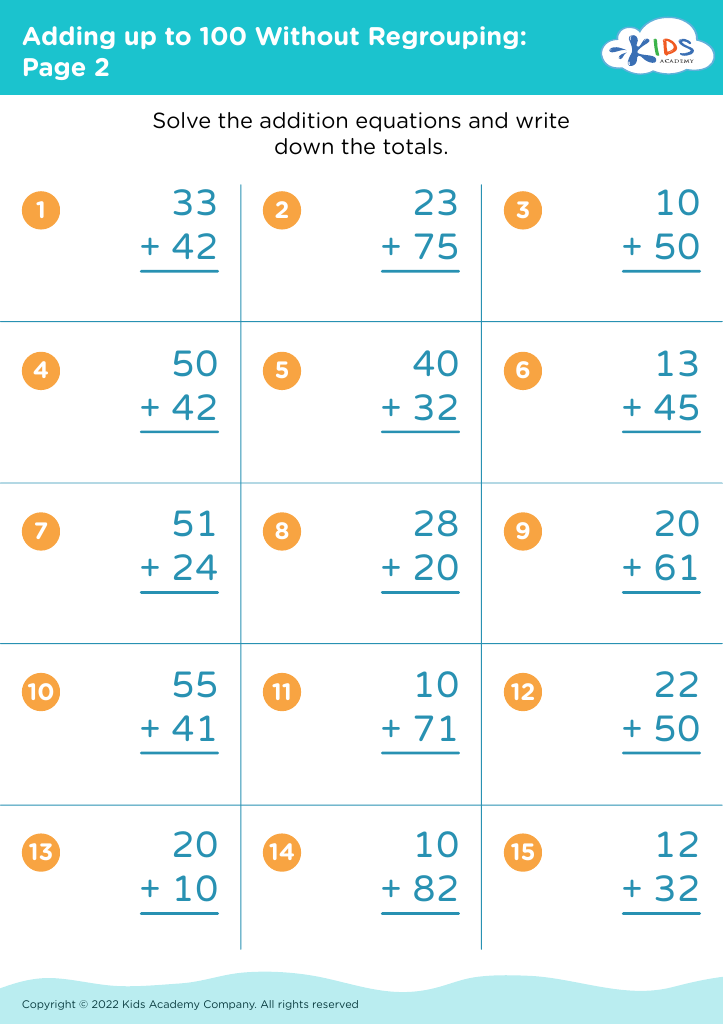
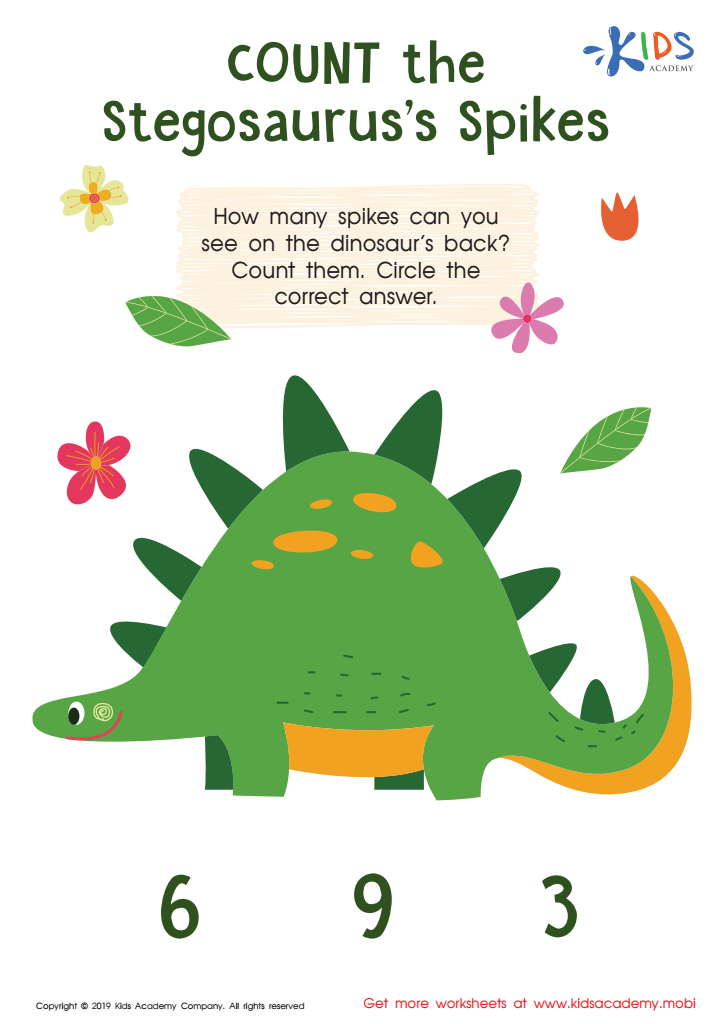
Count the Stegosaurus's Spikes Worksheet
 Assign to My Students
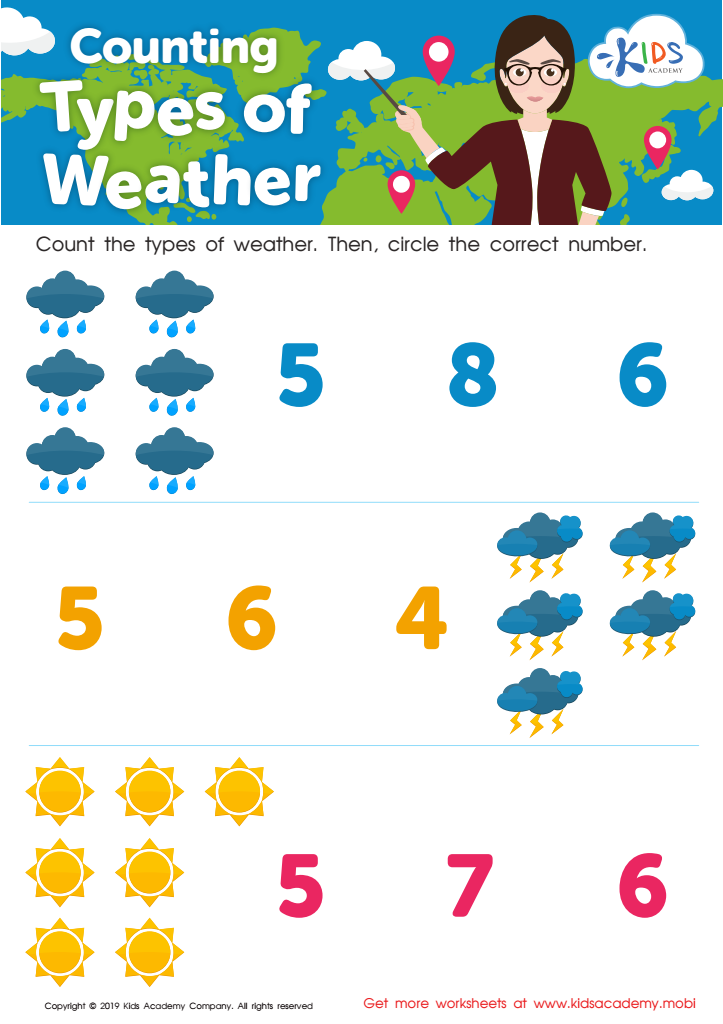
Counting Types of Weather Worksheet








Number counting math is crucial for children aged 6-7 as it lays the foundation for their mathematical understanding and skills. At this age, children are developing essential cognitive abilities, and grasping basic counting equips them with the tools necessary for more complex mathematical concepts later on. Engaging in counting activities encourages critical thinking, problem-solving, and logical reasoning.
Moreover, number counting fosters a sense of number sense—an intuitiveness associated with understanding quantities and their relationships. This skill is important not just in academics, but also in everyday life, from managing money to telling time and measuring ingredients while cooking.
From a developmental perspective, counting enhances fine motor skills and language development. As children verbalize numbers and about quantities, they build vocabulary while reinforcing the concept of sequence and order—a vital aspect of learning in all subject areas.
Furthermore, parents and teachers can utilize counting to create engaging and playful learning experiences. Simple games, visual aids, and group activities promote collaboration and social skills among peers. Overall, prioritizing counting in early education nurtures confident, capable learners prepared for future mathematical challenges and everyday problem-solving.








