
Recognizing shapes Math Worksheets for Ages 6-7
32 filtered results
Difficulty Level
Grade
Age
-
From - To
Subject
Activity
Standards
Welcome to our "Recognizing Shapes Math Worksheets for Ages 6-7" page! Designed to make learning fun, these engaging printable worksheets help young learners develop essential skills in shape recognition. Our age-appropriate activities feature vibrant visuals and interactive exercises that effectively reinforce concepts while keeping kids motivated. Children will explore basic shapes like circles, squares, and triangles through tracing, drawing, and identifying tasks. With easy-to-follow instructions and a variety of challenges, these worksheets support early math development and prepare students for future learning. Dive into the world of shapes with our interactive resources and watch your child thrive in their mathematical journey!
Favorites
With answer key
Interactive
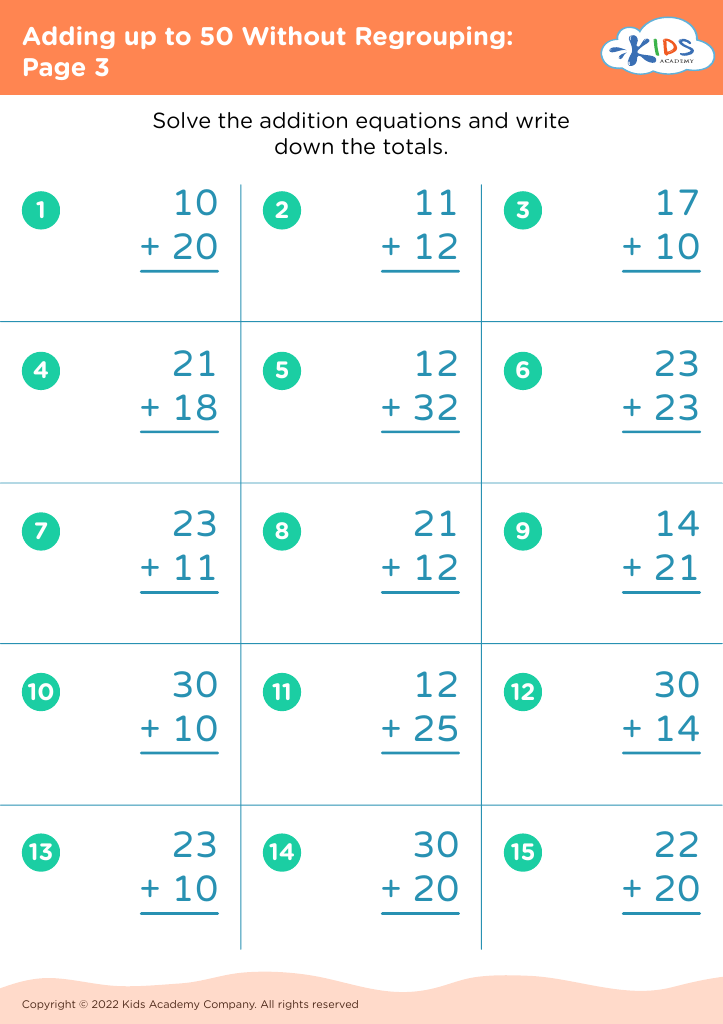
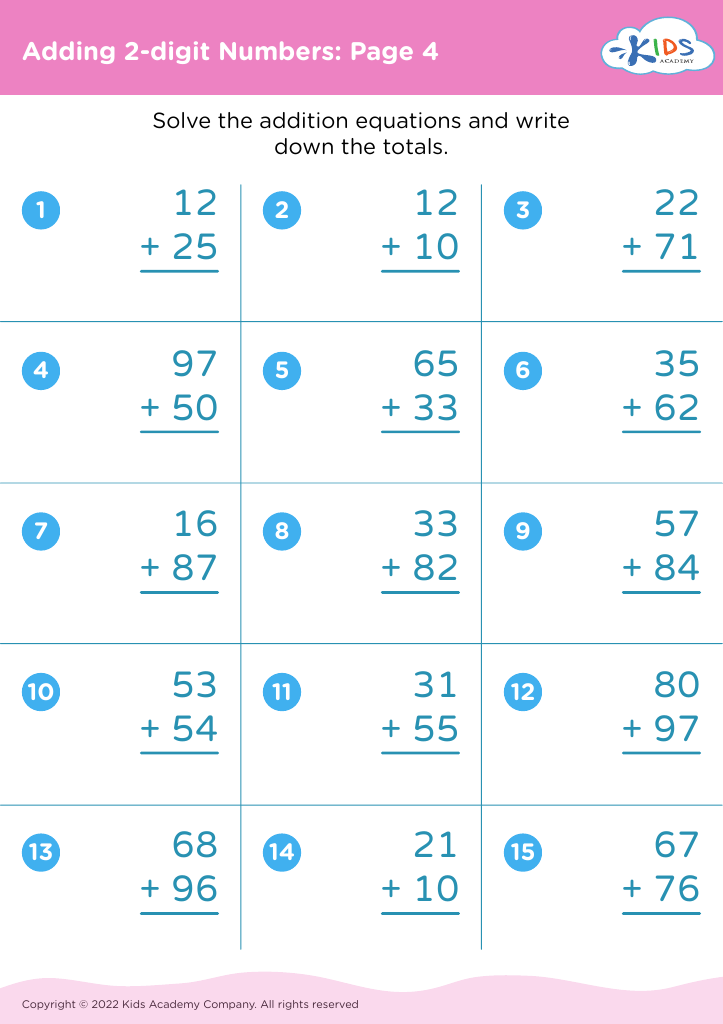
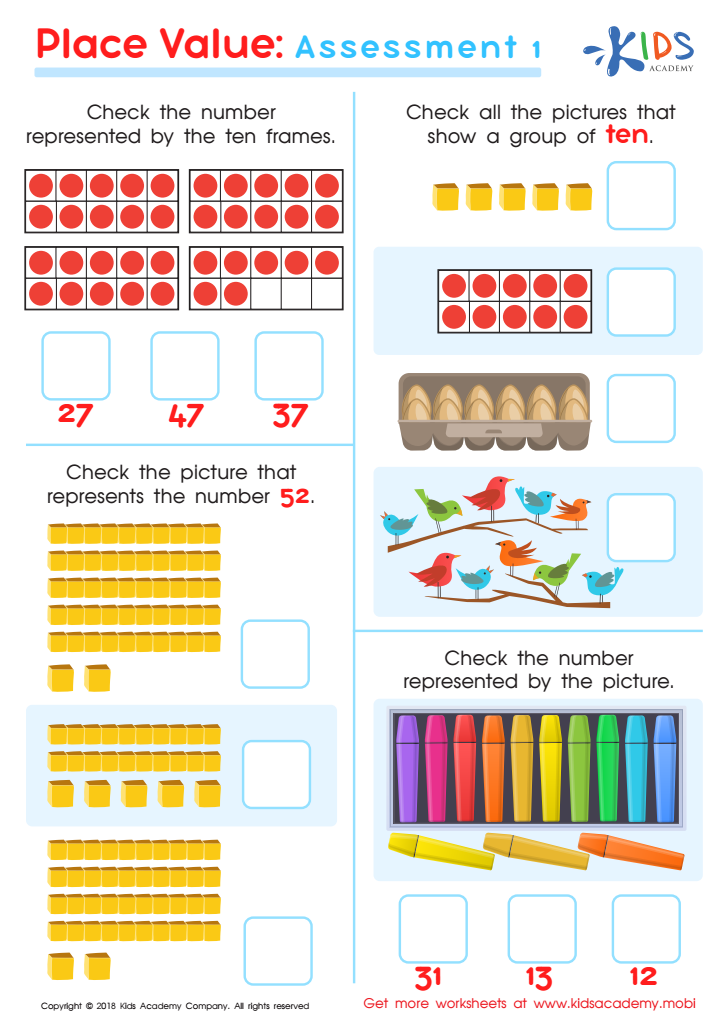
Place Value: Assessment 1 Worksheet
Assess your child's place value and number representation with this PDF worksheet. It lets them count and compare numbers and practice chiseling numbers into groups of ten. It's a great way to identify any concepts that need to be reinforced.
 Assign to My Students
Place Value: Assessment 1 Worksheet
Worksheet
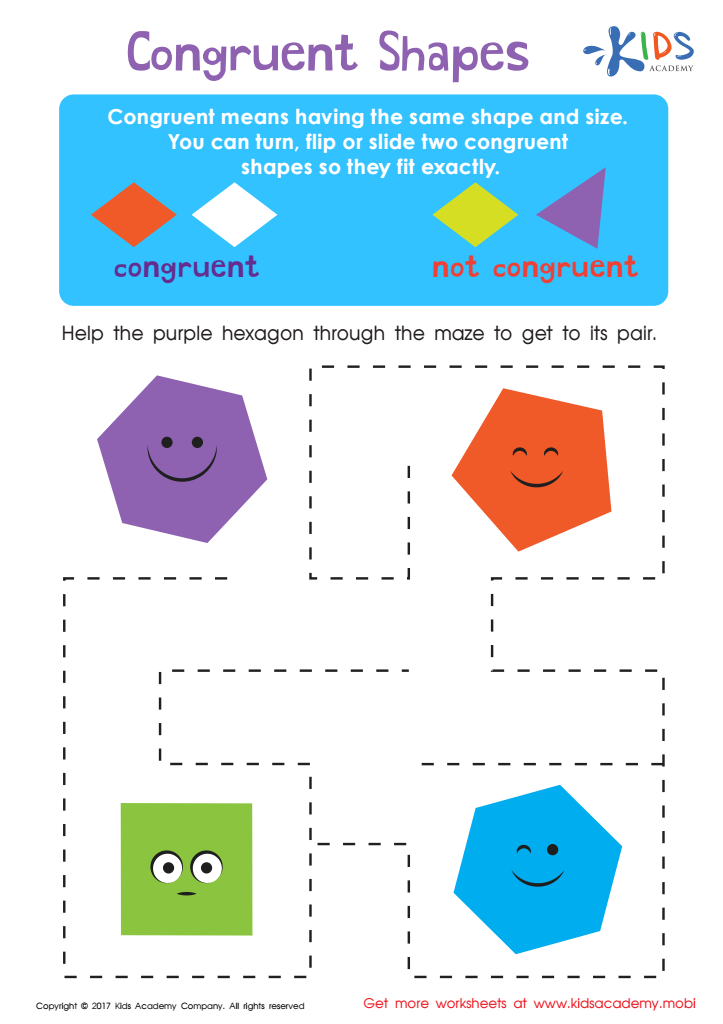
Congruent Shapes Worksheet
Help your child find the twin of the purple hexagon! This congruent shapes worksheet is great for increasing vocabulary while challenging mental rotation skills.
Congruent Shapes Worksheet
Worksheet
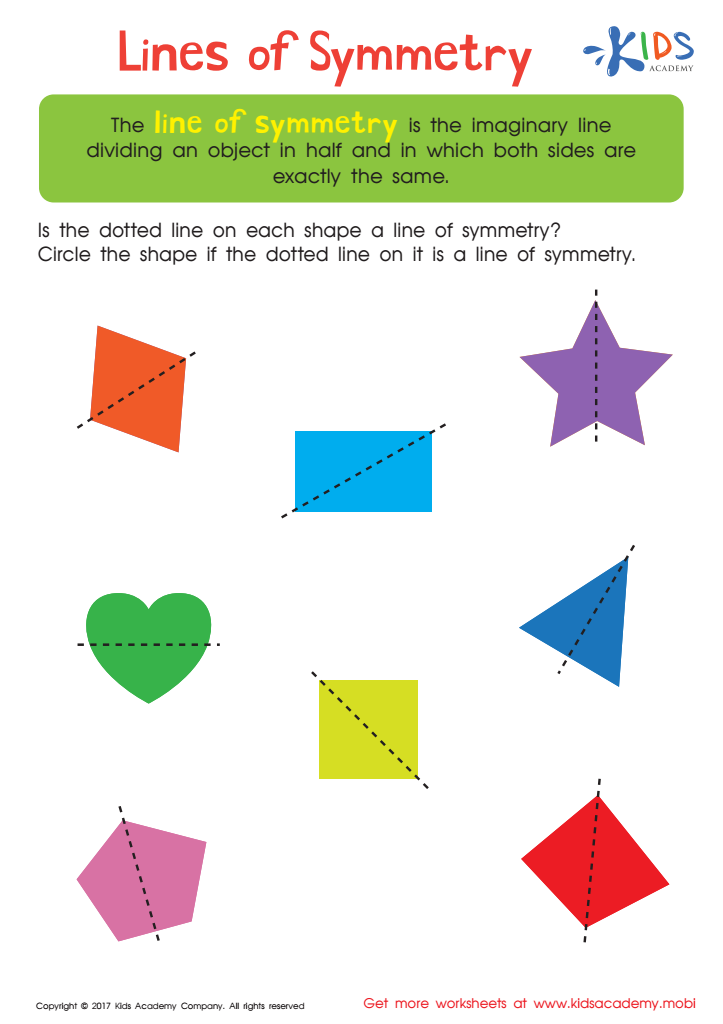
Lines of Symmetry Printable
Symmetry is a key math concept that kids must learn to develop their geometry skills. This fun worksheet helps build this skill, by encouraging kids to recognize symmetrical shapes and find equal parts.
Lines of Symmetry Printable
Worksheet
Join Kids Academy for Free
Who is primarily going to use this learning content?








Recognizing shapes is a foundational skill in early mathematics that significantly impacts a child's cognitive development. For parents and teachers of children aged 6-7, understanding shapes is not only about geometry; it enhances critical thinking, spatial awareness, and problem-solving abilities. When children learn to identify and differentiate between shapes, such as triangles, squares, and circles, they develop a mental framework that aids in more complex mathematical concepts.
Moreover, learning about shapes stimulates creativity and encourages hands-on exploration. Activities involving sorting, classifying, and building with shapes engage children actively, making learning fun and experiential. This skill also has real-world implications, as understanding shapes helps children navigate their environment and recognize patterns that are fundamental in fields like art, science, and technology.
Finally, mastering shape recognition lays the groundwork for more intricate math skills, including measurement and basic geometry, which children will encounter later in their education. By nurturing this knowledge, parents and teachers empower children to build a robust mathematical understanding, fostering a lifelong appreciation for learning and inquiry. Supporting shape recognition will lead to success in mathematics and broader educational experiences, equipping children with skills they will utilize throughout their lives.








