Recognizing shapes Math Worksheets for Ages 6-7 - Page 2
32 filtered results
-
From - To
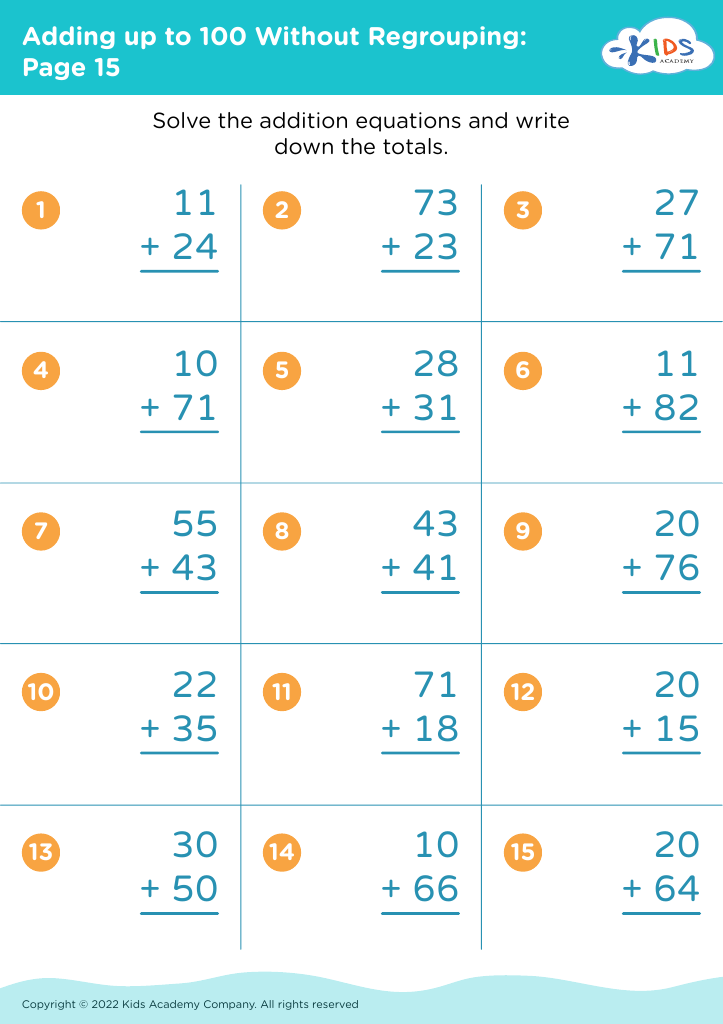
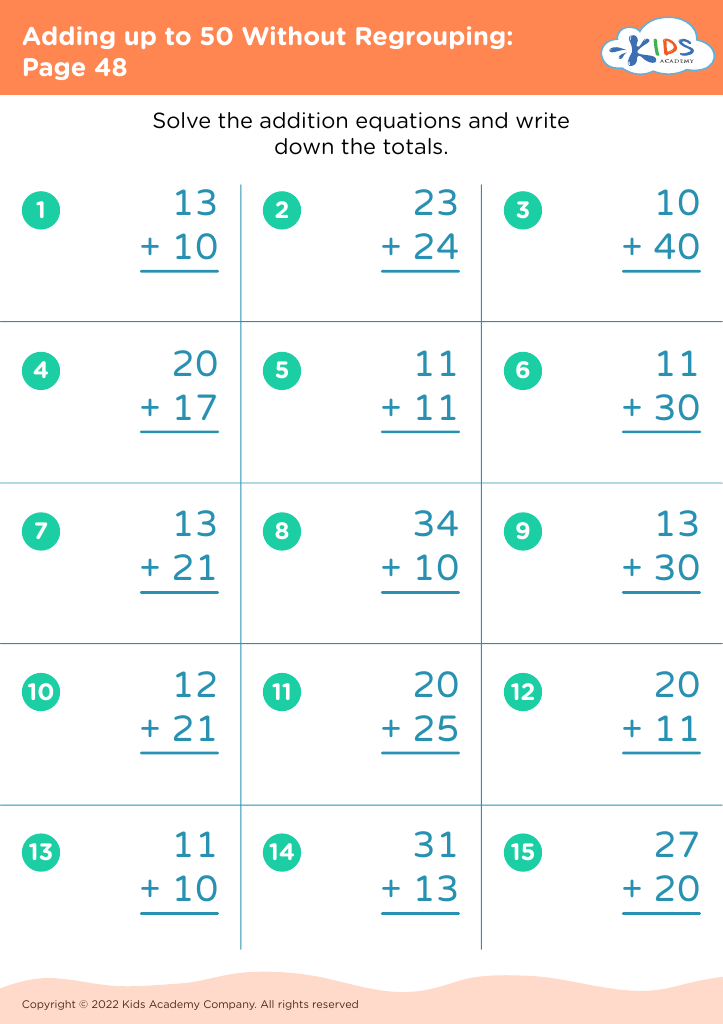
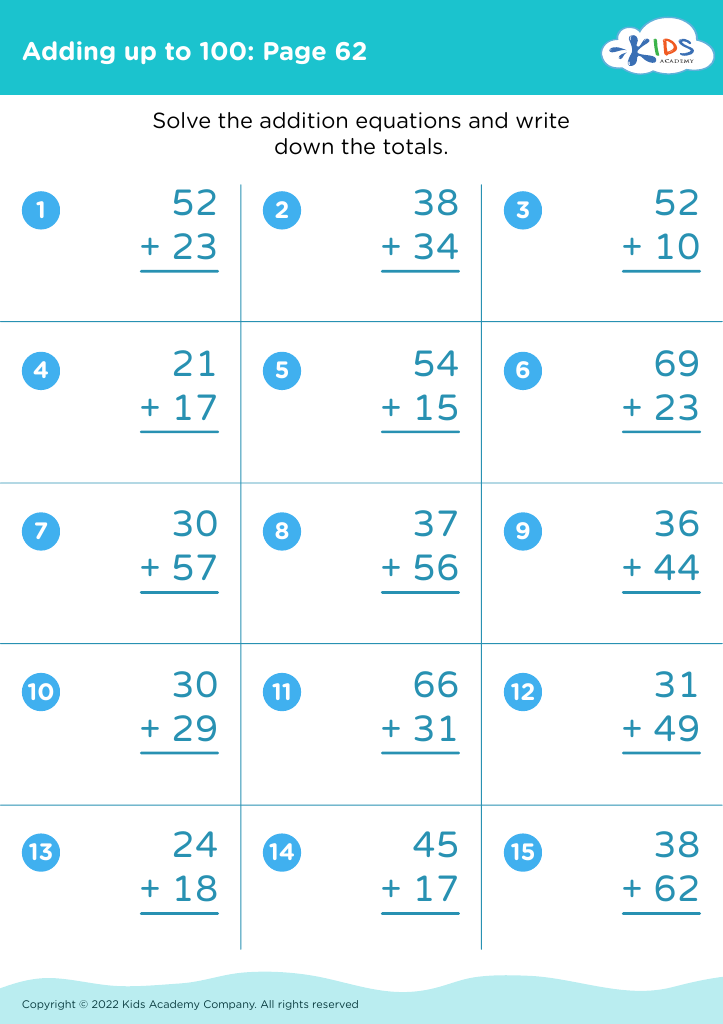
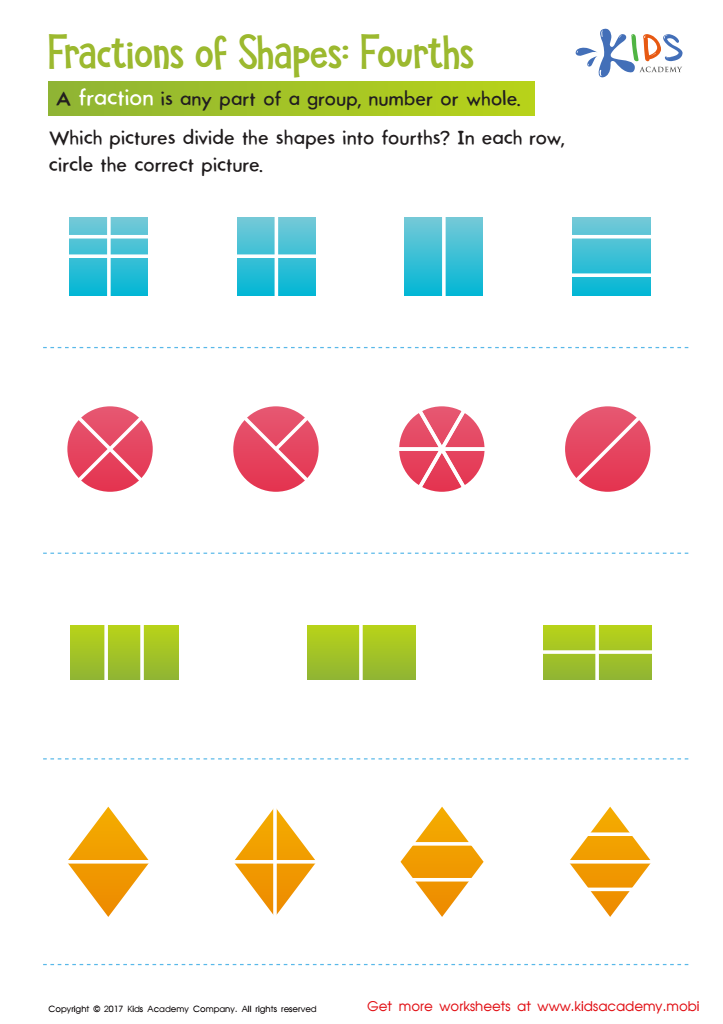
Fractions of Shapes Worksheet
 Assign to My Students




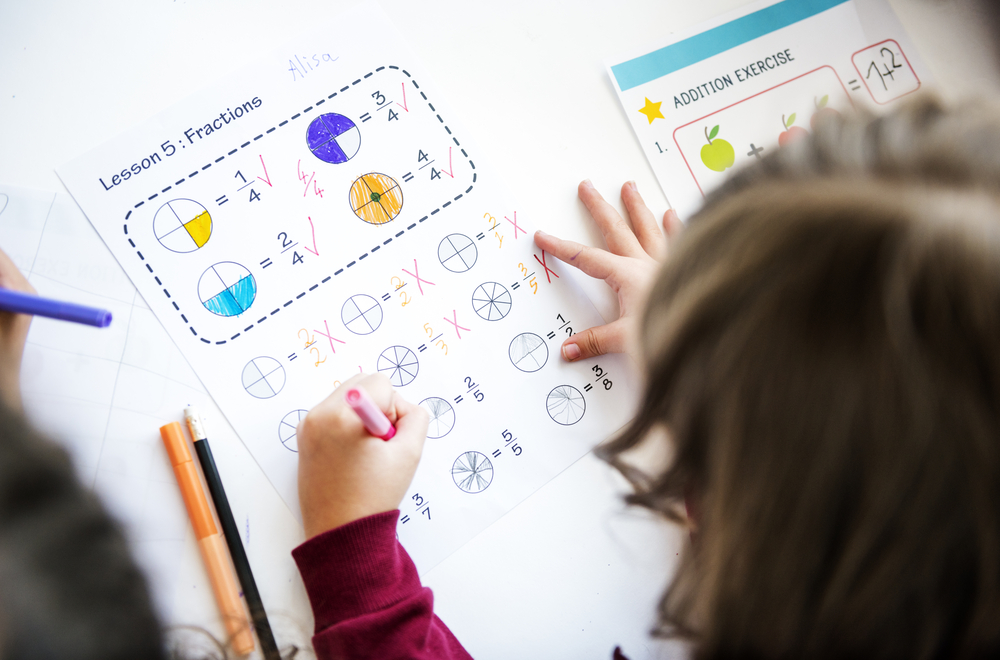



Recognizing shapes is a foundational skill in early mathematics that significantly impacts a child's cognitive development. For parents and teachers of children aged 6-7, understanding shapes is not only about geometry; it enhances critical thinking, spatial awareness, and problem-solving abilities. When children learn to identify and differentiate between shapes, such as triangles, squares, and circles, they develop a mental framework that aids in more complex mathematical concepts.
Moreover, learning about shapes stimulates creativity and encourages hands-on exploration. Activities involving sorting, classifying, and building with shapes engage children actively, making learning fun and experiential. This skill also has real-world implications, as understanding shapes helps children navigate their environment and recognize patterns that are fundamental in fields like art, science, and technology.
Finally, mastering shape recognition lays the groundwork for more intricate math skills, including measurement and basic geometry, which children will encounter later in their education. By nurturing this knowledge, parents and teachers empower children to build a robust mathematical understanding, fostering a lifelong appreciation for learning and inquiry. Supporting shape recognition will lead to success in mathematics and broader educational experiences, equipping children with skills they will utilize throughout their lives.








