
Understanding instructions Math Worksheets for Ages 6-7
3 filtered results
Difficulty Level
Grade
Age
-
From - To
Subject
Activity
Standards
Discover our engaging "Understanding Instructions Math Worksheets" designed for children ages 6-7! These worksheets provide a fun and interactive way to help young learners develop essential skills in following directions and comprehending mathematical instructions. With colorful visuals and age-appropriate tasks, kids will enhance their ability to interpret instructions while strengthening their foundational math skills, such as addition, subtraction, and problem-solving. Downloadable and printable, our worksheets encourage independent learning and ensure that children gain confidence in their math abilities. Perfect for home or classroom use, these resources support your child's educational journey through playful and meaningful activities!
Favorites
With answer key
Interactive
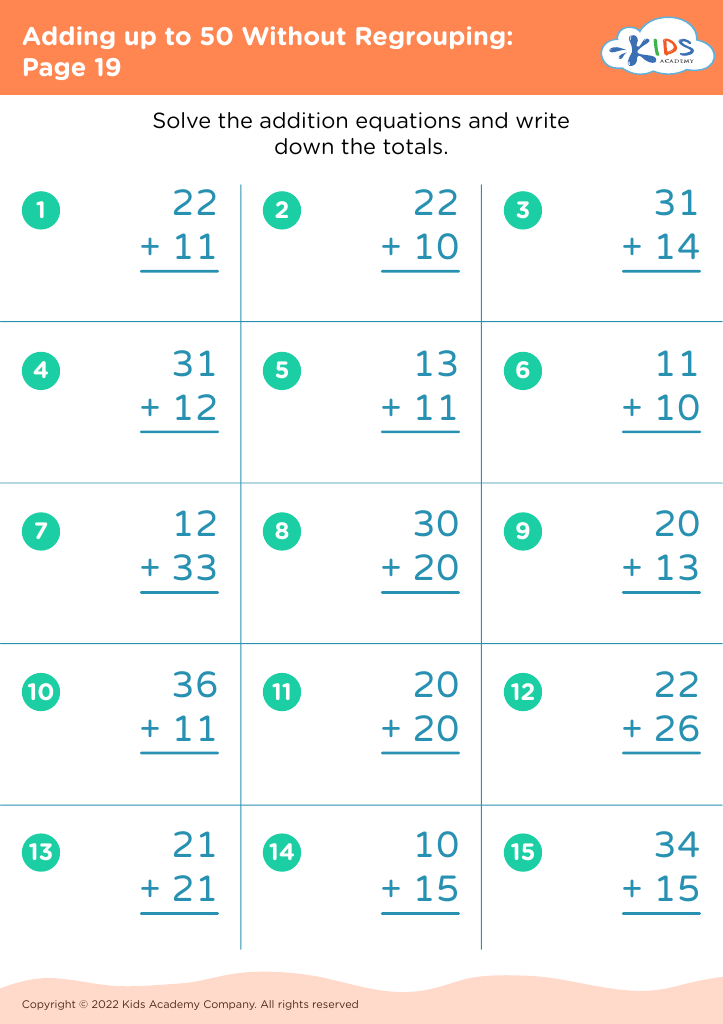
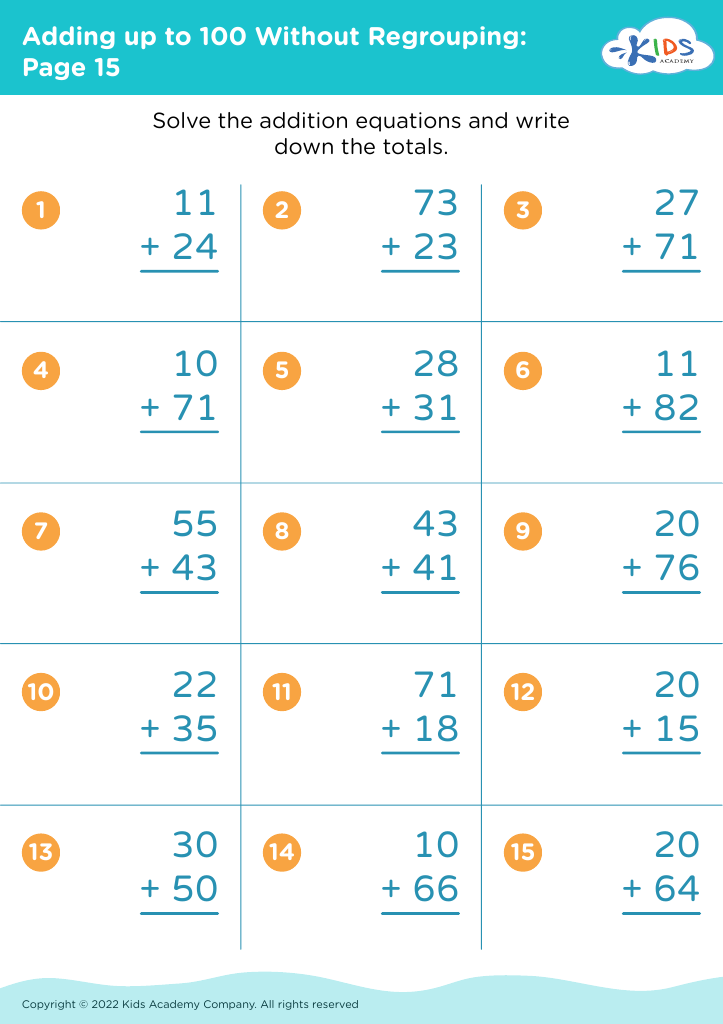
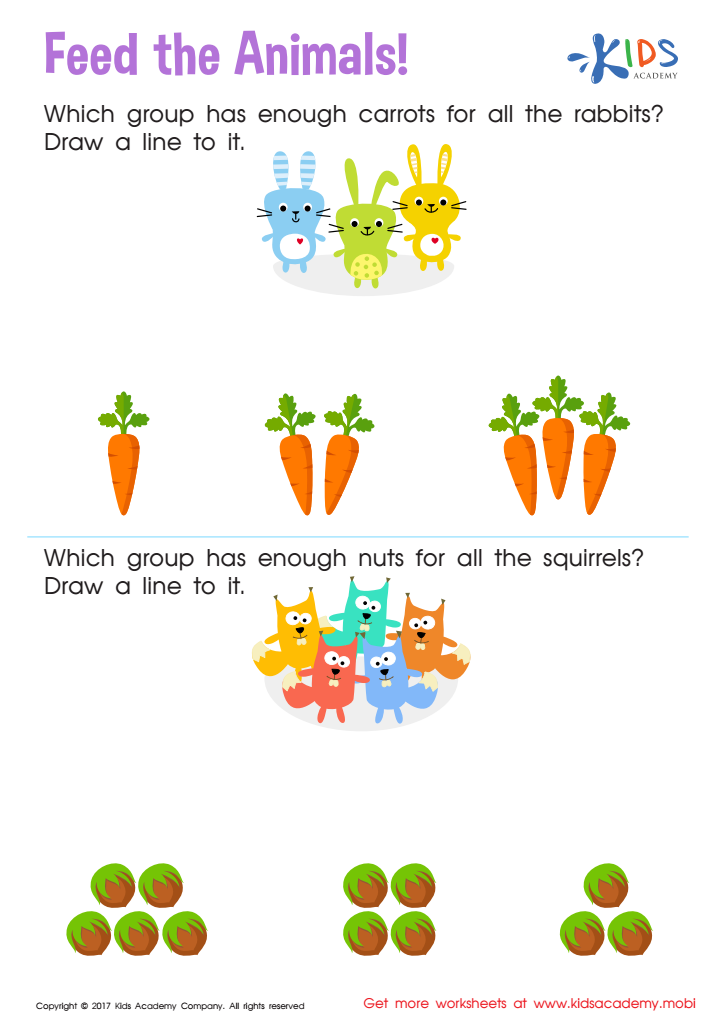
Count and Match: Feed the Animals Worksheet
Learning and growing involves more than just numbers, phonics and comparison. This Feed the Animals worksheet helps kids to exercise their reasoning skills. They must work out how many rabbits and carrots there are, and then repeat the process for the squirrels. This encourages problem solving and counting skills.
 Assign to My Students
Count and Match: Feed the Animals Worksheet
Worksheet
Join Kids Academy for Free
Who is primarily going to use this learning content?



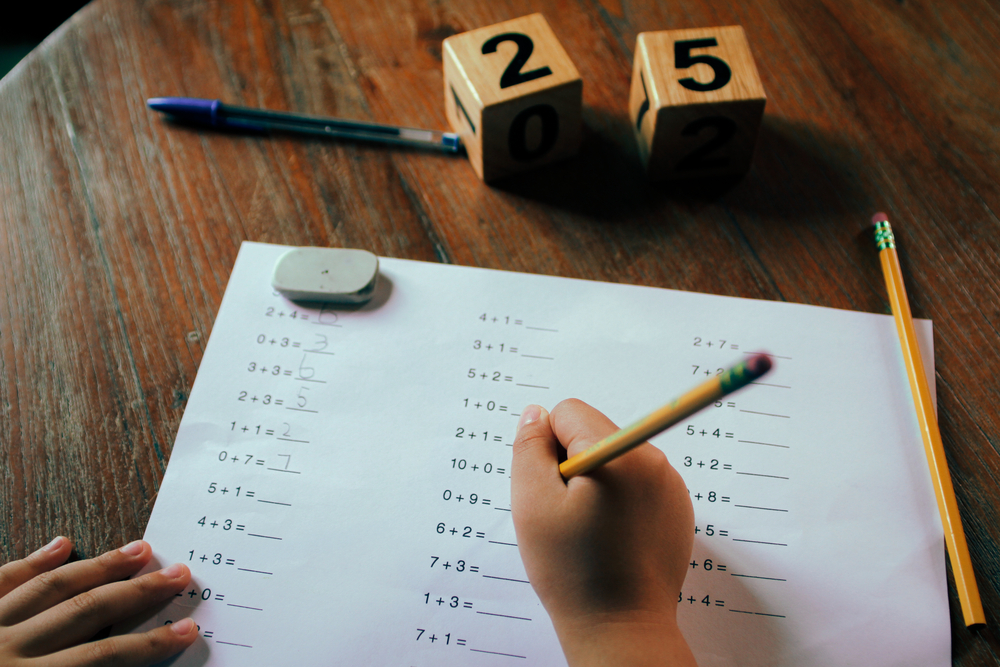



Understanding instructions in math is crucial for children aged 6-7, as it lays the foundation for their academic and cognitive development. At this critical stage, children are transitioning from concrete to abstract thinking. Mastery of instructions helps them grasp fundamental concepts such as addition, subtraction, shapes, and measurements. When parents and teachers ensure that children understand and follow instructions, they enhance their problem-solving skills and boost their confidence.
Clear comprehension of mathematical instructions aids in reducing frustration and anxiety around math learning. Children who can interpret tasks correctly are more likely to engage productively, promoting a positive attitude towards math. It fosters independence, enabling them to tackle assignments and challenges confidently, which builds resilience.
Moreover, the ability to understand and execute instructions is linked to improved cognitive skills, including focus, memory, and critical thinking. For teachers, recognizing students' abilities to follow directions serves as a valuable assessment tool, guiding tailored instruction and support.
Ultimately, when parents and teachers emphasize the importance of understanding instructions in math, they empower children to become successful learners and instill a lifelong appreciation for mathematics. Teaching these skills in early education can have lasting benefits in their academic journey.








