Comparing lengths Measurement Worksheets for Ages 6-7
14 filtered results
-
From - To
Explore our engaging "Comparing Lengths Measurement Worksheets" designed specifically for children ages 6-7! These worksheets provide a fun and interactive way for young learners to understand measurement concepts. Through colorful illustrations and real-life scenarios, kids will practice comparing lengths of various objects, developing essential math skills while building confidence. Ideal for homeschool or classroom settings, our worksheets cater to different learning styles and help reinforce measurement vocabulary. With easy-to-follow prompts, children will learn how to accurately identify and compare long and short items, making math both enjoyable and educational. Start your child's journey to mastering measurement today!
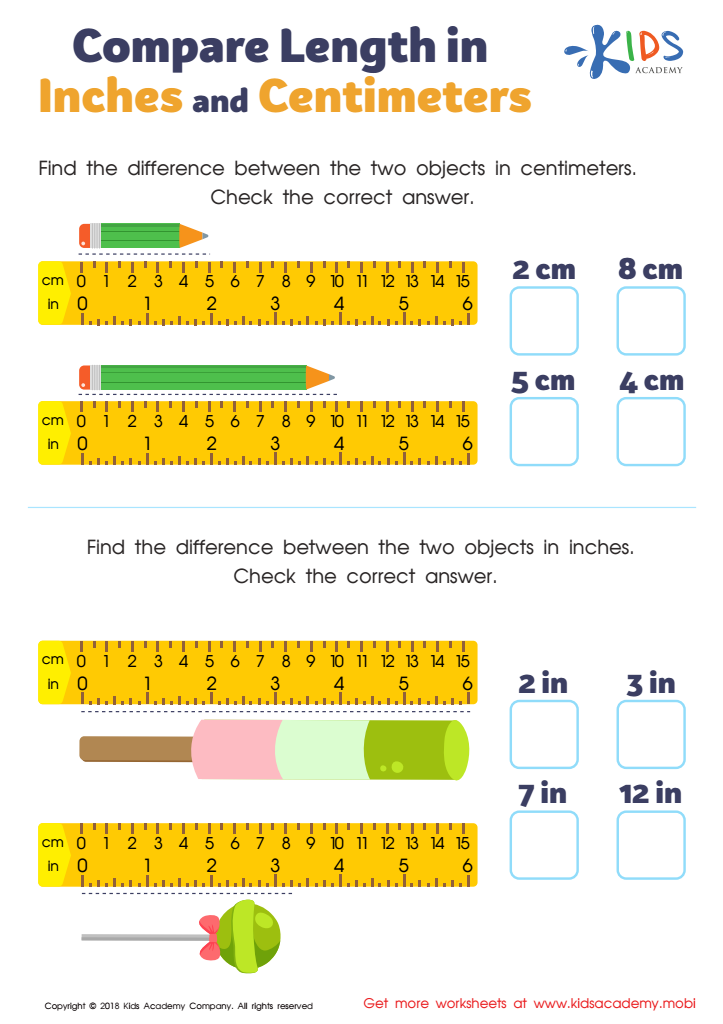
Compare Length in Inches and Centimeters Worksheet
 Assign to My Students
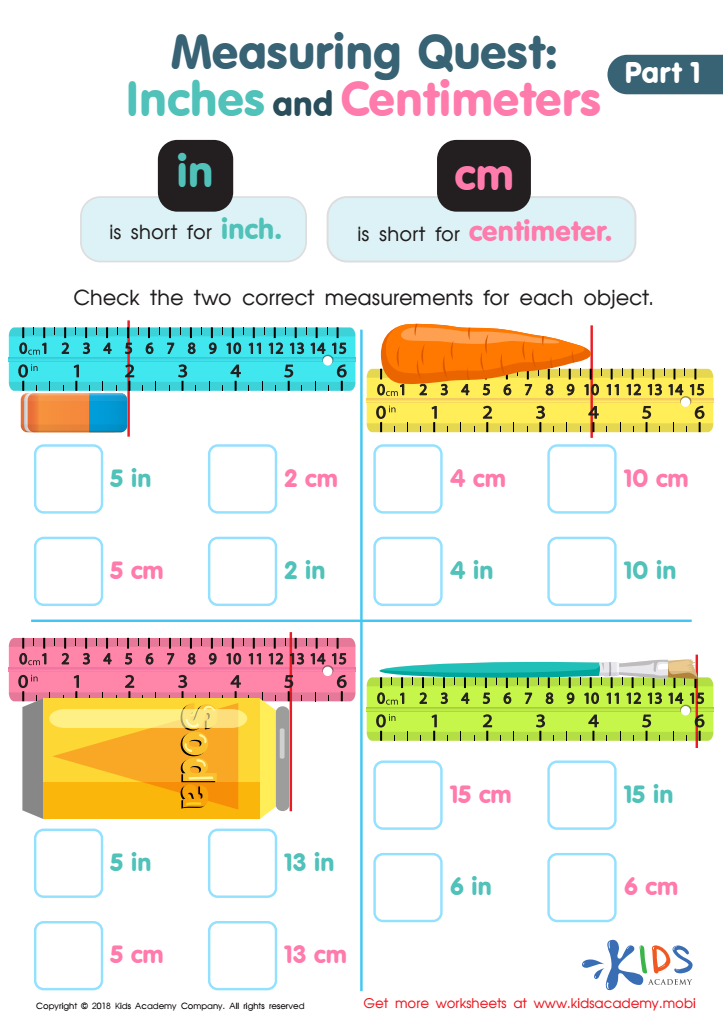
Measuring Quest: Inches and Centimeters Worksheet
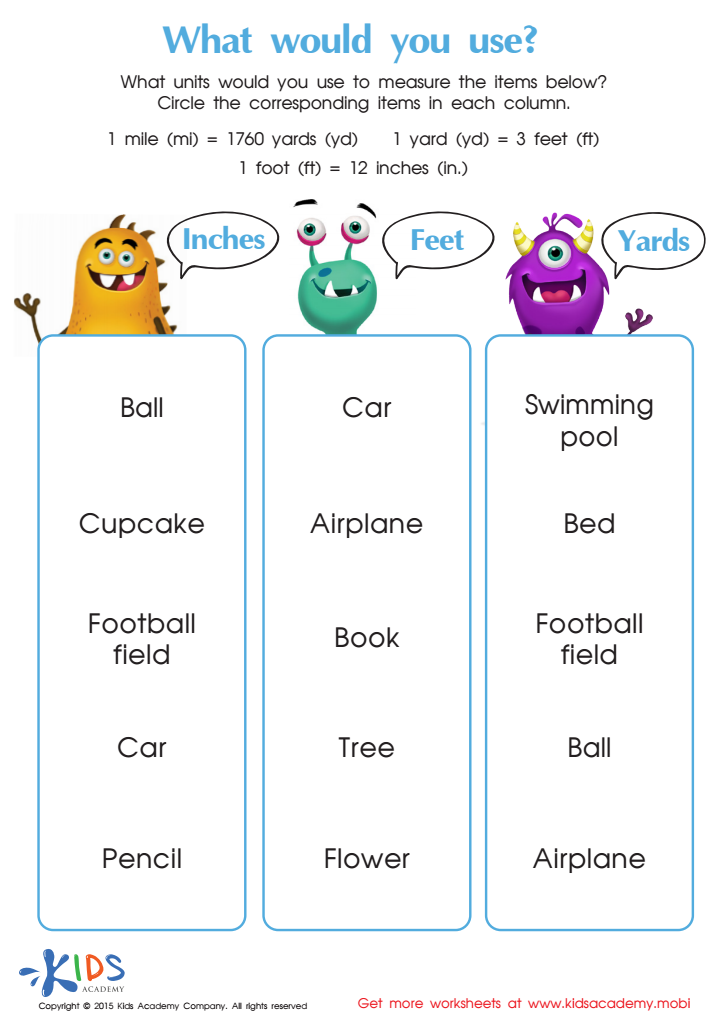
Learning about measuring objects in inches, feet and yards Worksheet
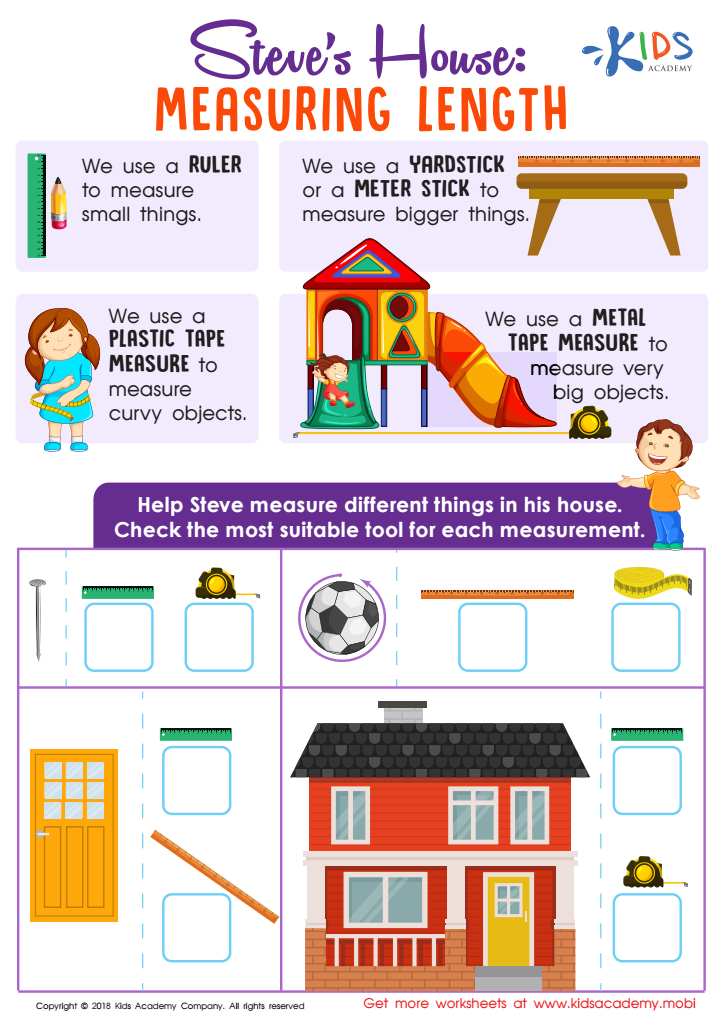
Steve's House: Measuring Length Worksheet
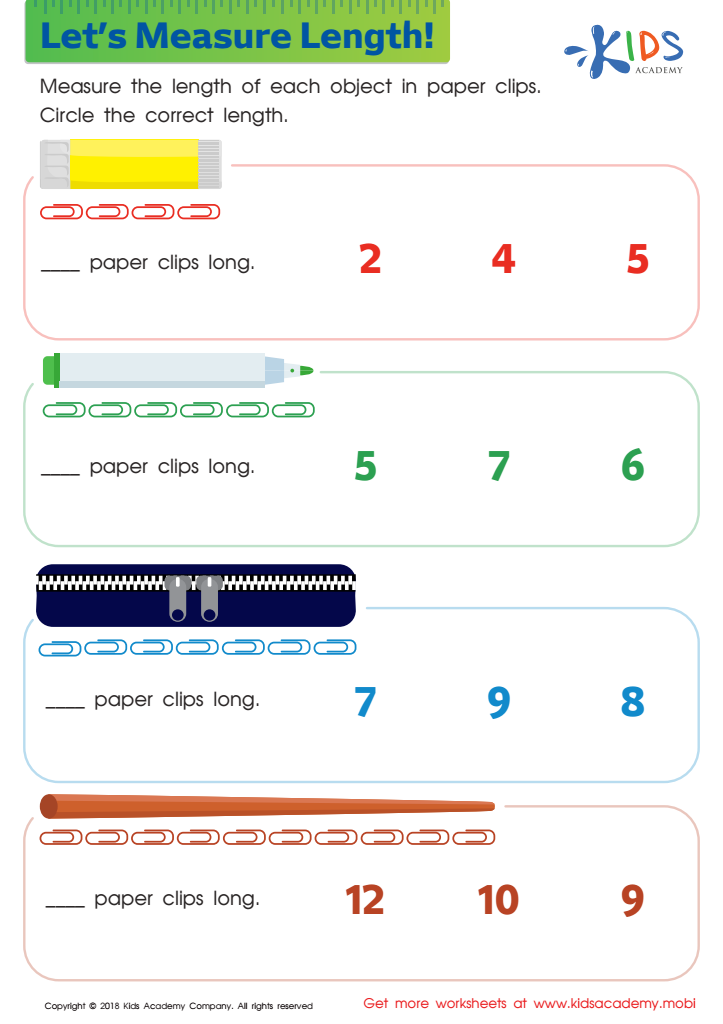
Lets Measure Length Worksheet
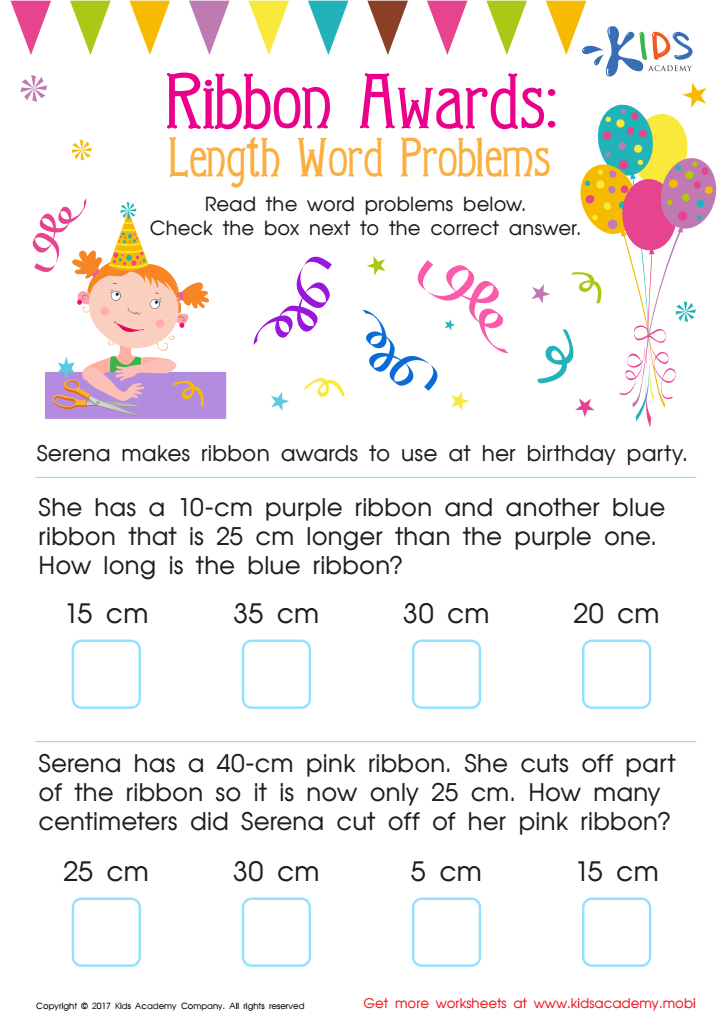
Length Word Problems Worksheet
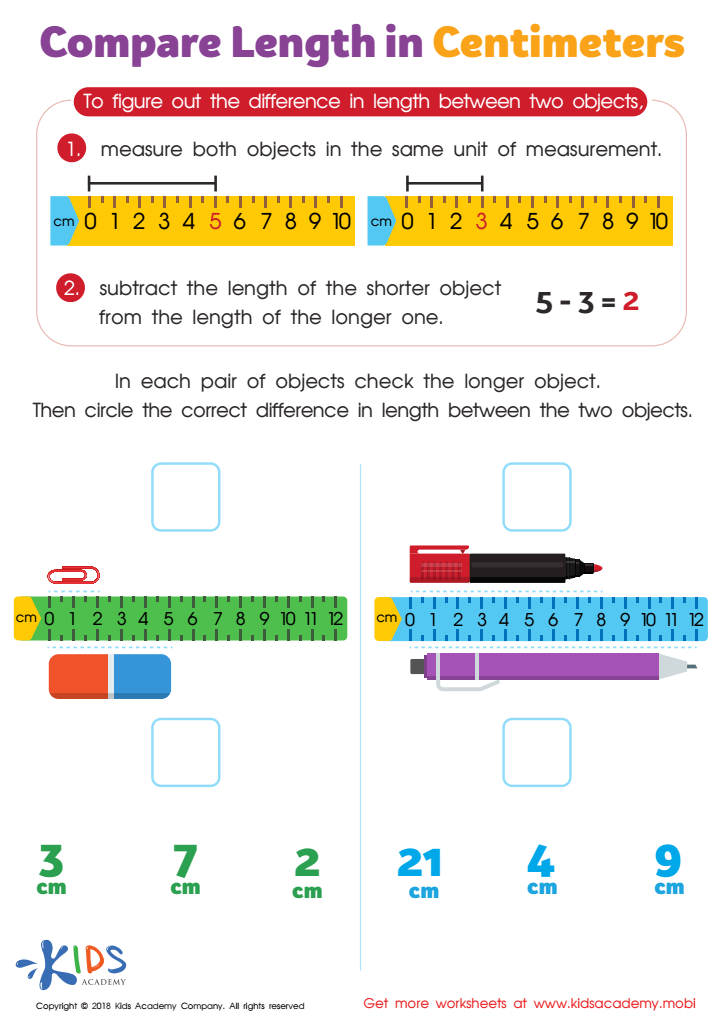
Compare Length in Centimeters Worksheet
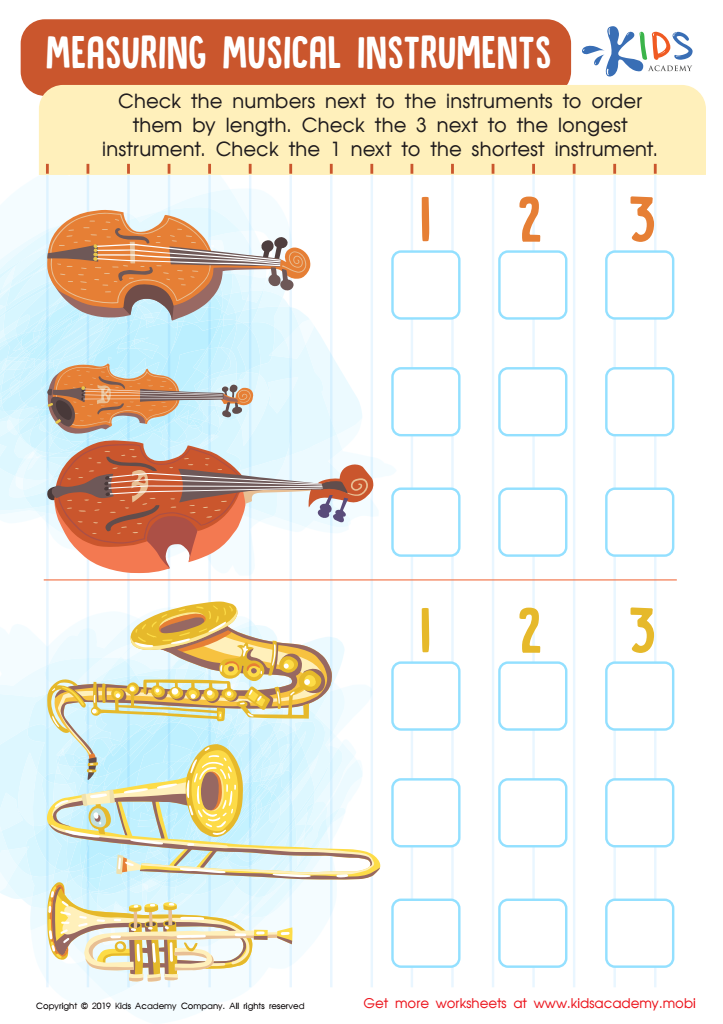
Measuring Musical Instruments Worksheet
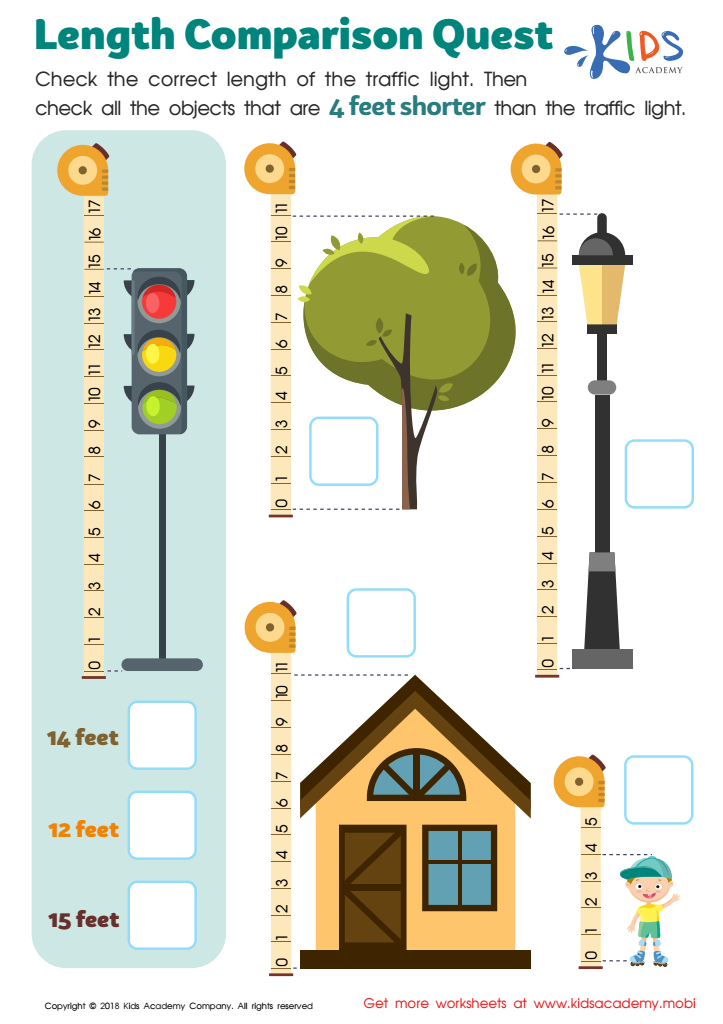
Length Comparison Quest Worksheet
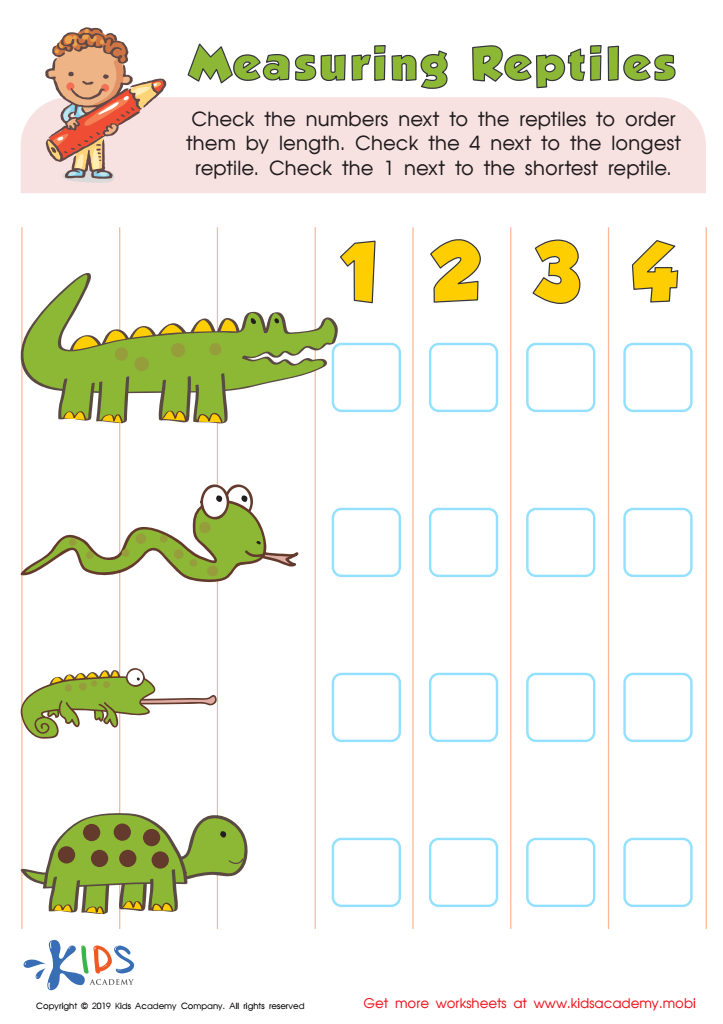
Measuring Reptiles Worksheet
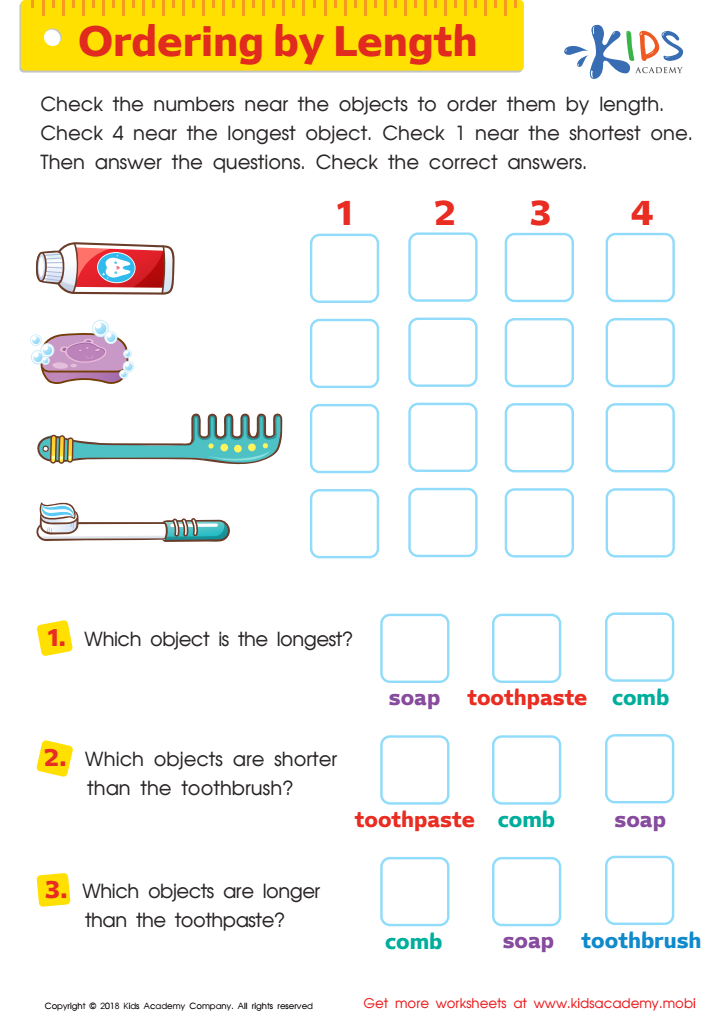
Ordering by Length Worksheet
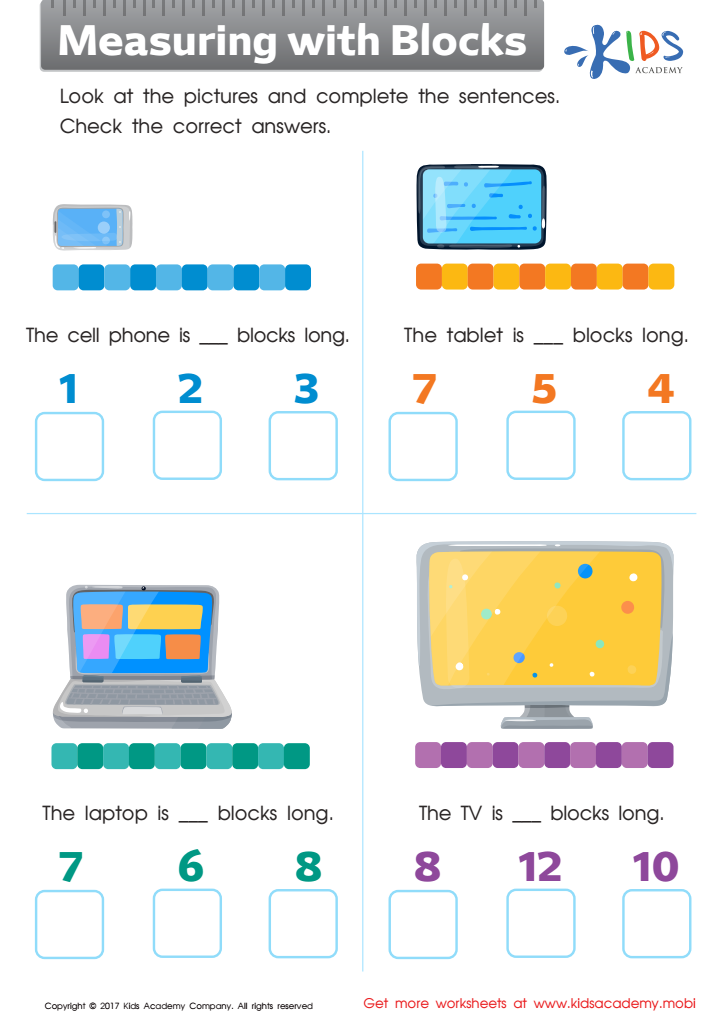
Measuring with Blocks Worksheet
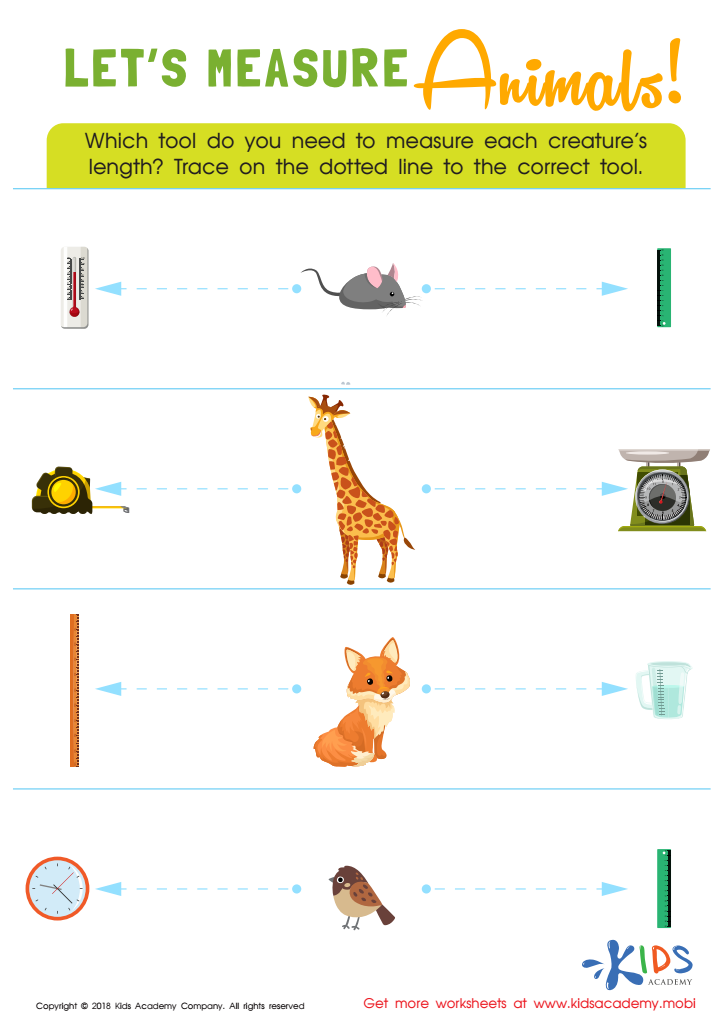
Let's Measure Animals! Worksheet
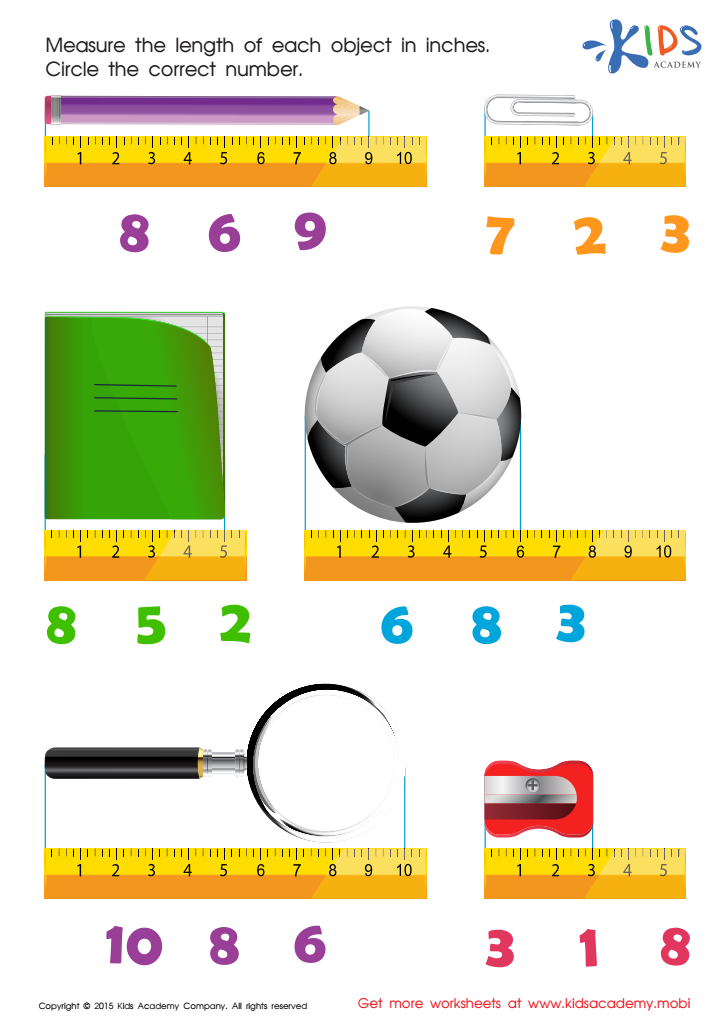
Learning measuring objects in inches Worksheet








Comparing lengths is a crucial skill for children aged 6-7, as it lays the foundation for their understanding of measurement and enhances their critical thinking abilities. At this developmental stage, kids are naturally curious and start exploring the world around them; comparing lengths nurtures this curiosity. It helps them make sense of their environment by enabling them to relate measurements to real-life objects and scenarios, whether that's determining which pencil is longer or how much taller a friend stands compared to them.
Moreover, this skill supports the learning of essential mathematical concepts, fostering a sense of numbers and quantity. It encourages children to use comparative language, strengthening their vocabulary and communication skills. Engaging in length measurement activities can also enhance fine motor skills as they manipulate rulers, tape measures, or other measuring tools.
For parents and teachers, facilitating activities that involve comparing lengths is an opportunity to promote hands-on learning, making mathematics tangible and relevant. This engagement not only boosts children's confidence in math but also fosters a positive attitude towards learning. Ultimately, mastering the concept of length comparison builds a strong foundation for more complex mathematical concepts encountered in later grades, paving the way for future academic success.








